


What Is the Faceless Assessment Scheme? How It Changes Your Income Tax Return Experience
What Is the Faceless Assessment Scheme? How It Changes Your Income Tax Return Experience
What Is the Faceless Assessment Scheme?
For many taxpayers, filing an income tax return is no longer just about calculating income and paying the right amount of tax. There is also the possibility that the Income Tax Department may select the return for detailed verification or scrutiny. This is where the Faceless Assessment Scheme becomes important. If you regularly file an income tax return, understanding this system can help you respond to tax notices confidently and avoid unnecessary stress. For professional assistance with your ITR Filing, GST Wale can help you prepare and submit your return correctly.
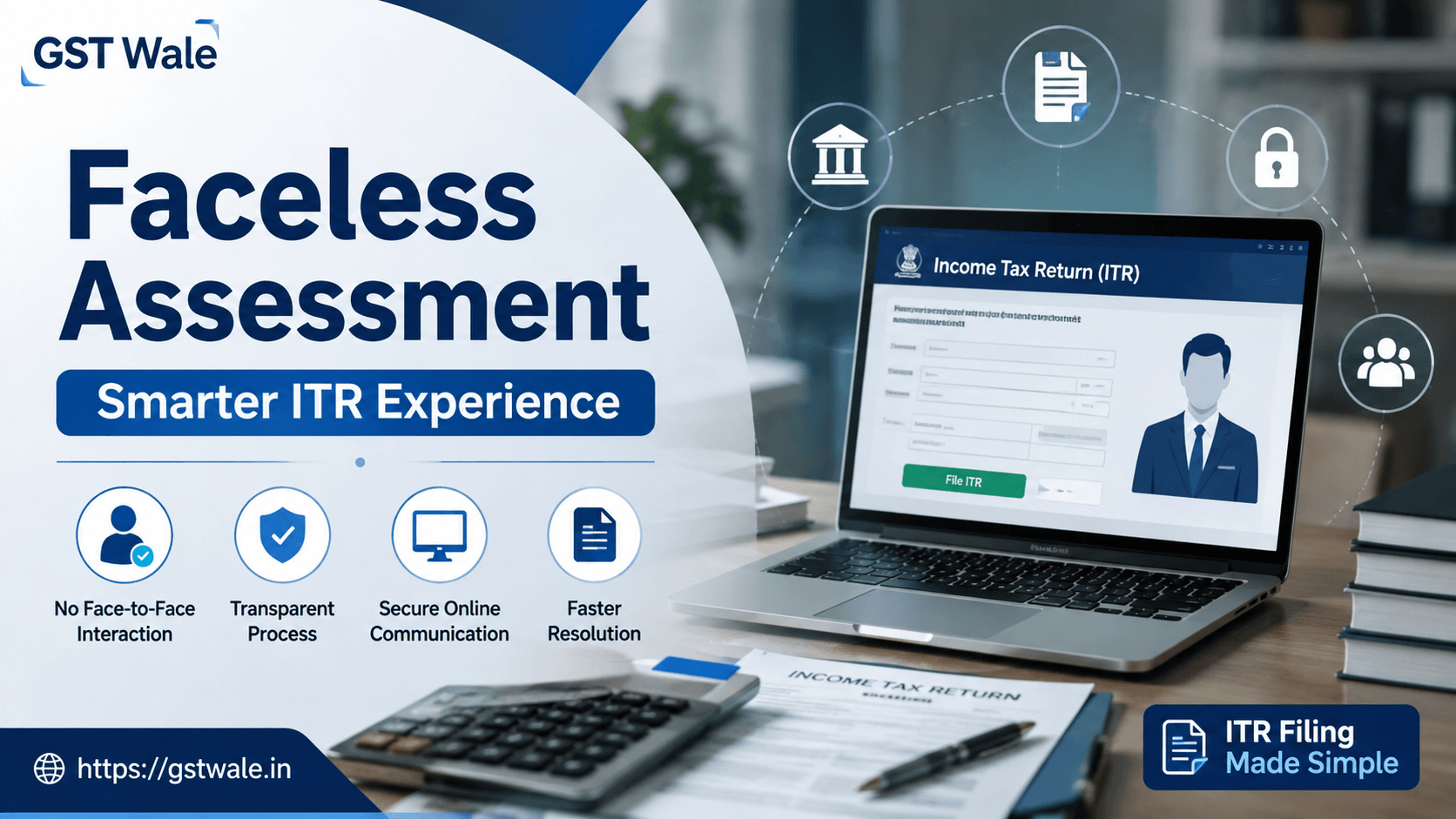
The Faceless Assessment Scheme is designed to make income tax assessments more technology-driven, transparent and less dependent on direct interaction between taxpayers and tax officers. Under the current framework, eligible assessments are handled electronically through a centralised system, with cases allocated through an automated process. The objective is to promote objective evaluation and reduce unnecessary personal interface.
The faceless assessment framework continues under the new income-tax law as well. The Income Tax Department has clarified that the existing faceless assessment scheme continues without interruption under the new Act.
How Does Faceless Assessment Work for an Income Tax Return?
Traditionally, taxpayers associated an income tax assessment with a particular Assessing Officer and the jurisdiction where the taxpayer lived or carried on business. Faceless assessment changes this experience considerably.
Under the system, the case can be assigned through an automated allocation mechanism to an Assessment Unit. The taxpayer generally communicates electronically through the designated income-tax portal rather than visiting an office personally.
The process involves different specialised units, including:
- National Faceless Assessment Centre
- Assessment Units
- Verification Units
- Technical Units
- Review Units
The central cell or National Faceless Assessment Centre coordinates communication between these units and the taxpayer. The Income Tax Department describes the system as both "faceless" and "jurisdiction-less" because assessment work is performed by teams rather than simply by one local Assessing Officer.
This means your income tax return may be examined by an assessment team located elsewhere, depending on the automated allocation of the case.
Why Was the Faceless Assessment Scheme Introduced?
The primary objective is to make tax administration more consistent, transparent and technology-enabled.
A taxpayer may sometimes worry that personal interaction could influence the way a case is handled. By reducing physical interaction and using automated allocation, the system aims to create a more standardised assessment environment.
Some important objectives include:
Objective Evaluation
The system encourages objective evaluation of information submitted by taxpayers. Assessment Units can analyse documents, income details, deductions, investments and other information available on record.
Tax Transparency
Digital communication creates a documented trail of notices, submissions and responses. This can improve tax transparency because taxpayers can maintain records of what was requested and what they submitted.
Reduced Physical Interaction
Most communication takes place electronically. This can save taxpayers the time and expense involved in repeatedly visiting tax offices.
Dynamic Jurisdiction
The concept of dynamic jurisdiction means taxpayers are not necessarily dependent on one local officer for the assessment. Automated allocation can route cases to appropriate assessment teams.
The Income Tax Department states that faceless assessments use automated allocation and electronic proceedings, with technology also supporting review and standardisation.
What Changes After You File an Income Tax Return?
The biggest practical change is that taxpayers need to become more careful about monitoring their electronic communications.
Suppose Rahul, a small business owner, files his income tax return showing ₹18 lakh of business income. A few months later, he receives a notice asking him to provide details supporting certain expenses.
Under the faceless system, Rahul does not generally need to identify or personally meet a particular Assessing Officer. He needs to log into the income-tax portal, understand the notice, collect the required documents and submit an appropriate response within the specified time.
This makes the process convenient, but it also increases the taxpayer's responsibility.
Ignoring an electronic notice simply because there was no phone call or physical letter can create serious problems.
Step-by-Step: What Should You Do If Your Income Tax Return Is Selected?
1. Check the Notice Carefully
Read the notice from beginning to end. Identify the assessment year, notice section, response deadline and specific information requested.
Do not assume that every notice is asking for the same documents.
2. Match the Notice With Your Income Tax Return
Compare the questions in the notice with the information reported in your income tax return.
For example, if the department asks about a deduction, check the deduction claimed in the return and keep the supporting evidence ready.
3. Prepare Supporting Documents
Depending on the case, documents may include:
- Bank statements
- Salary or income records
- Investment proofs
- Property-related documents
- Business expense records
- TDS certificates
- Loan documents
- Books of accounts and invoices
Only submit relevant and accurate documents. Sending unnecessary information can sometimes make the explanation more complicated.
4. Submit a Clear Written Explanation
A good response should directly answer the questions raised by the department. Avoid vague statements.
If there is a genuine mistake in your income tax return, do not try to hide it. Take professional advice and determine the correct way to address the issue.
5. Keep Proof of Submission
Maintain copies of your response and supporting documents. The electronic system provides acknowledgement of successful submissions, making record keeping particularly important.
Can You Still Get a Personal Hearing?
"Faceless" does not necessarily mean that a taxpayer can never communicate orally with tax authorities.
Where a variation prejudicial to the taxpayer is proposed and an opportunity is provided to respond, the taxpayer or authorised representative can request a personal hearing. Where permitted, the hearing is conducted through video conferencing or video telephony rather than requiring a traditional physical appearance.
This is an important protection because some matters are easier to explain verbally, particularly where the facts are complicated.
How Does It Affect Your Income Tax Return Experience?
For an ordinary taxpayer, the filing process itself may not feel dramatically different simply because the assessment system is faceless. The bigger difference appears if the return is selected for scrutiny, verification, reassessment or another assessment proceeding.
The experience becomes more digital and documentation-focused.
You should therefore develop a few simple habits:
Keep Your Records Organised
Do not wait until a notice arrives before looking for bank statements, invoices, investment proofs or other documents.
Monitor Your Registered Contact Details
Make sure your registered mobile number and email address are active. Important electronic communication may be sent through the income-tax system and associated alerts.
Respond Within the Deadline
A technically correct response submitted after the deadline can still create difficulties. Always check the response date mentioned in the notice.
Take Professional Advice for Complex Cases
If the notice involves substantial additions, unexplained transactions, business expenses, property transactions, international transactions or complicated deductions, professional assistance can help you present the facts properly.
Is Faceless Assessment Better for Taxpayers?
For many taxpayers, it can be.
The system can reduce physical visits, create a digital record of communication and make case allocation less dependent on a particular local officer. Specialised Assessment, Verification, Technical and Review Units can also bring different expertise into the assessment process.
However, taxpayers should not interpret faceless assessment as an automatic approval mechanism. A return still needs to contain accurate information. If the department finds discrepancies, it can ask questions and seek supporting evidence.
In other words, technology makes the process easier to access, but it does not remove the taxpayer's responsibility.
FAQs About Faceless Assessment and Income Tax Return
Is every income tax return subject to faceless assessment?
No. Faceless assessment applies to specified assessment proceedings under the applicable law and notified scope. Certain categories, such as specified central charges and international taxation cases, can be outside the regular faceless framework.
Will I have to visit the Income Tax Office?
Generally, faceless proceedings are designed to eliminate physical interaction. Where a personal hearing is allowed, it can generally be conducted through video conferencing or video telephony under the prescribed procedure.
What happens if I do not respond to a notice?
Ignoring a notice can have serious consequences. The assessment may proceed based on the information available with the department, and in applicable cases, best-judgment assessment or other consequences may follow.
Does faceless assessment mean my income tax return is automatically accepted?
No. Faceless assessment changes how assessment is conducted; it does not guarantee acceptance of the income tax return. Information reported in the return can still be examined and verified.
Should I take professional help for a tax notice?
If the notice is straightforward, you may be able to respond yourself. However, if significant income, deductions, business transactions or proposed additions are involved, consulting a qualified tax professional can reduce the risk of an incomplete or inappropriate response.
Make Your Income Tax Return Compliance Stronger
The Faceless Assessment Scheme represents a major shift in how taxpayers interact with the Income Tax Department. Instead of depending heavily on physical meetings and a particular jurisdictional officer, the process relies on electronic communication, automated allocation and specialised assessment teams.
For anyone filing an income tax return, the key lesson is simple: digital tax compliance requires better digital discipline. Keep your documents organised, monitor the income-tax portal, respond to notices on time and provide clear explanations supported by evidence.
At GST Wale, we believe tax compliance should be understandable, practical and stress-free. Whether you are filing an income tax return or dealing with a tax-related notice, getting the right professional guidance at the right time can make a significant difference. Choose GST Wale for reliable tax and compliance support and handle your income tax responsibilities with greater confidence.
 Previous