


Your Rights as a Taxpayer: How to File a Revised Return After an Erroneous ITR Filing
Your Rights as a Taxpayer: How to File a Revised Return After an Erroneous ITR Filing
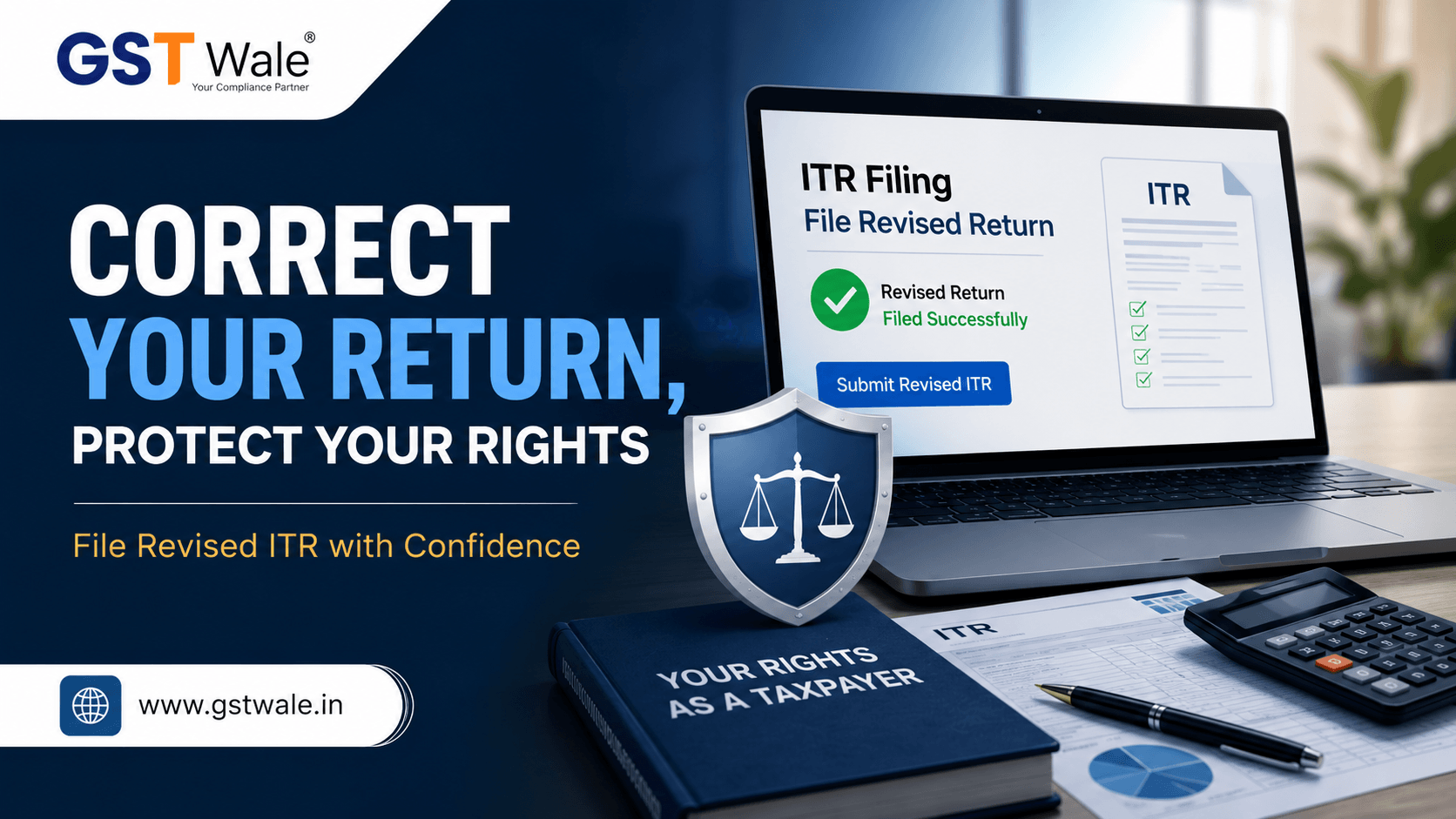
Making mistakes during itr filing is more common than most taxpayers think. Whether you are a salaried employee, freelancer, business owner, or startup founder, even a small omission can create unnecessary stress later. Many taxpayers panic after realizing they entered incorrect income details, selected the wrong tax regime, forgot to claim deductions, or missed reporting certain transactions.
The good news is that the Income Tax Act gives taxpayers the right to rectify genuine mistakes through a revised ITR. At GST Wale, we regularly help clients correct such errors smoothly without unnecessary penalties or notices. If you are planning your ITR Filing, understanding the revised return process can save you from future complications.
In this article, we will explain everything you need to know about revised itr filing, including timelines, legal provisions, step-by-step correction methods, and practical tips.
What Is a Revised Return in itr filing?
A revised ITR is a corrected version of your originally filed income tax return. If you discover any mistake after submission, you can file a fresh return with accurate details under Section 139(5) of the Income Tax Act.
This provision is especially useful when taxpayers notice:
- Incorrect income details
- Wrong bank account information
- Missed deductions under Section 80C or 80D
- Errors in capital gains reporting
- Incorrect tax calculations
- Omission of interest income
- Selection of the wrong ITR form
The revised itr filing process allows you to voluntarily fix errors before the department raises objections.
Understanding Section 139(5)
Section 139(5) is the legal provision that allows taxpayers to revise their filed return.
Who Can File a Revised ITR?
Any taxpayer who has already completed itr filing can revise the return if:
- The original return was filed within the due date or even belatedly
- There is an omission or wrong statement in the filed return
- The taxpayer wants to make a genuine mistake correction
Time Limit for Filing Revised Return
A revised ITR can generally be filed before:
- 31st December of the relevant assessment year, or
- Before completion of assessment by the Income Tax Department
For example, if you filed your return for FY 2025-26, you can revise it within the permitted timeline prescribed for AY 2026-27.
Common Mistakes During itr filing
At GST Wale, we often see taxpayers making avoidable mistakes during itr filing. Some of the most common errors include:
Incorrect Income Reporting
Many individuals forget to include:
- Freelance income
- Interest from savings accounts
- Fixed deposit interest
- Rental income
- Capital gains from stocks or crypto
Claiming Wrong Deductions
Sometimes taxpayers claim deductions without proper documentation or miss eligible deductions completely.
Wrong Tax Regime Selection
Choosing between old and new tax regimes without proper calculation is another frequent issue.
Mismatch With Form 26AS or AIS
If your reported income does not match Form 26AS or Annual Information Statement (AIS), the department may issue notices later.
Bank Account Errors
Incorrect IFSC code or account number can delay refunds significantly.
Why Revising Your ITR Is Important
Ignoring errors in itr filing can create bigger problems later. Filing a revised ITR demonstrates transparency and compliance.
Avoid Income Tax Notices
Most tax notices are generated because of mismatched information or omissions.
Prevent Penalties and Interest
Timely tax amendment through revised filing may help reduce additional liabilities.
Faster Refund Processing
Correct information ensures smooth processing of refunds.
Maintain Clean Tax Compliance
Good compliance history helps individuals and businesses during:
- Loan applications
- Visa processing
- Startup funding
- Government tenders
Step-by-Step Process for Revised itr filing
Let us understand how taxpayers can file a revised ITR correctly.
Step 1: Visit the Income Tax Portal
Go to the official income tax e-filing portal and log in using your PAN credentials.
Step 2: Select “File Revised Return”
Under the e-file section, choose:
- Income Tax Return
- Relevant assessment year
- Revised Return under Section 139(5)
Step 3: Enter Original Return Details
You must provide:
- Original acknowledgement number
- Date of original filing
This helps the department link your revised ITR with the previous submission.
Step 4: Correct the Mistakes
Update the incorrect information carefully.
Examples include:
- Adding omitted income
- Correcting deduction claims
- Revising tax paid details
- Updating bank account information
Step 5: Recalculate Tax Liability
After correction, the system automatically recalculates:
- Tax payable
- Refund amount
- Interest liability
If additional tax is due, pay it before final submission.
Step 6: Verify the Revised Return
Complete e-verification through:
- Aadhaar OTP
- Net banking
- Bank account verification
- Digital signature
Without verification, the revised itr filing remains incomplete.
Practical Example of Revised itr filing
Suppose Mr. Sharma, a salaried employee in Noida, completed his itr filing in July. Later, he realized he forgot to report ₹45,000 interest income from fixed deposits.
Instead of waiting for a notice, he filed a revised ITR under Section 139(5), added the missing income, paid the small additional tax, and avoided future complications.
This is a perfect example of responsible tax compliance.
Important Points Taxpayers Must Remember
Revised Return Replaces Original Return
Once accepted, the revised ITR becomes your final valid return.
Multiple Revisions Are Allowed
You can revise the return multiple times within the allowed timeline if additional mistakes are discovered.
Keep Supporting Documents Ready
Maintain records for:
- Deduction proofs
- Salary slips
- Capital gains statements
- Tax payment challans
Do Not Delay Corrections
The earlier you make a mistake correction, the lower the risk of notices or penalties.
Difference Between Belated Return and Revised Return
Many taxpayers confuse these two concepts.
| Basis | Belated Return | Revised Return |
|---|---|---|
| Purpose | Filed after due date | Correct errors in filed return |
| Applicable Section | Section 139(4) | Section 139(5) |
| Main Objective | Late compliance | Mistake correction |
| Can Be Revised? | Yes | Yes |
Understanding this distinction is essential for proper itr filing compliance.
FAQs on Revised itr filing
Can I revise my itr filing after receiving refund?
Yes, taxpayers can revise returns even after receiving refunds, provided the revision timeline is still open.
Is there any penalty for filing revised ITR?
Generally, there is no penalty solely for filing a revised ITR. However, additional tax and interest may apply if income was underreported.
Can revised itr filing trigger scrutiny?
A genuine correction usually does not create problems. In fact, voluntary compliance reflects positively.
What if I entered wrong bank details?
You should immediately file a revised ITR with updated bank information to avoid refund issues.
Is original acknowledgement number mandatory?
Yes, the original acknowledgement number is essential while filing a revised return under Section 139(5).
Expert Advice From GST Wale
Tax laws are becoming increasingly technology-driven. The Income Tax Department now cross-checks information through AIS, TDS records, GST data, and banking transactions. Even minor omissions can get detected automatically.
That is why taxpayers should approach itr filing carefully and review all financial records before submission. If an error still happens, filing a revised ITR promptly is always the smarter choice.
At GST Wale, we help salaried individuals, professionals, startups, and businesses manage accurate tax compliance with practical guidance and timely support.
Errors during itr filing are not the end of the road. The Income Tax Act provides taxpayers with the legal right to correct genuine mistakes through revised returns under Section 139(5). Whether the issue involves omitted income, incorrect deductions, or tax amendment requirements, timely correction can protect you from penalties and notices.
The key is to act quickly, maintain transparency, and ensure accurate reporting. If you are unsure about the revised itr filing process or need expert assistance, GST Wale is here to simplify the entire process for you.
Get professional support from GST Wale today and ensure your tax compliance remains smooth, accurate, and stress-free.
 Previous