


How to Handle Cryptocurrency and NFT Tax Computations in ITR 3
How to Handle Cryptocurrency and NFT Tax Computations in ITR 3
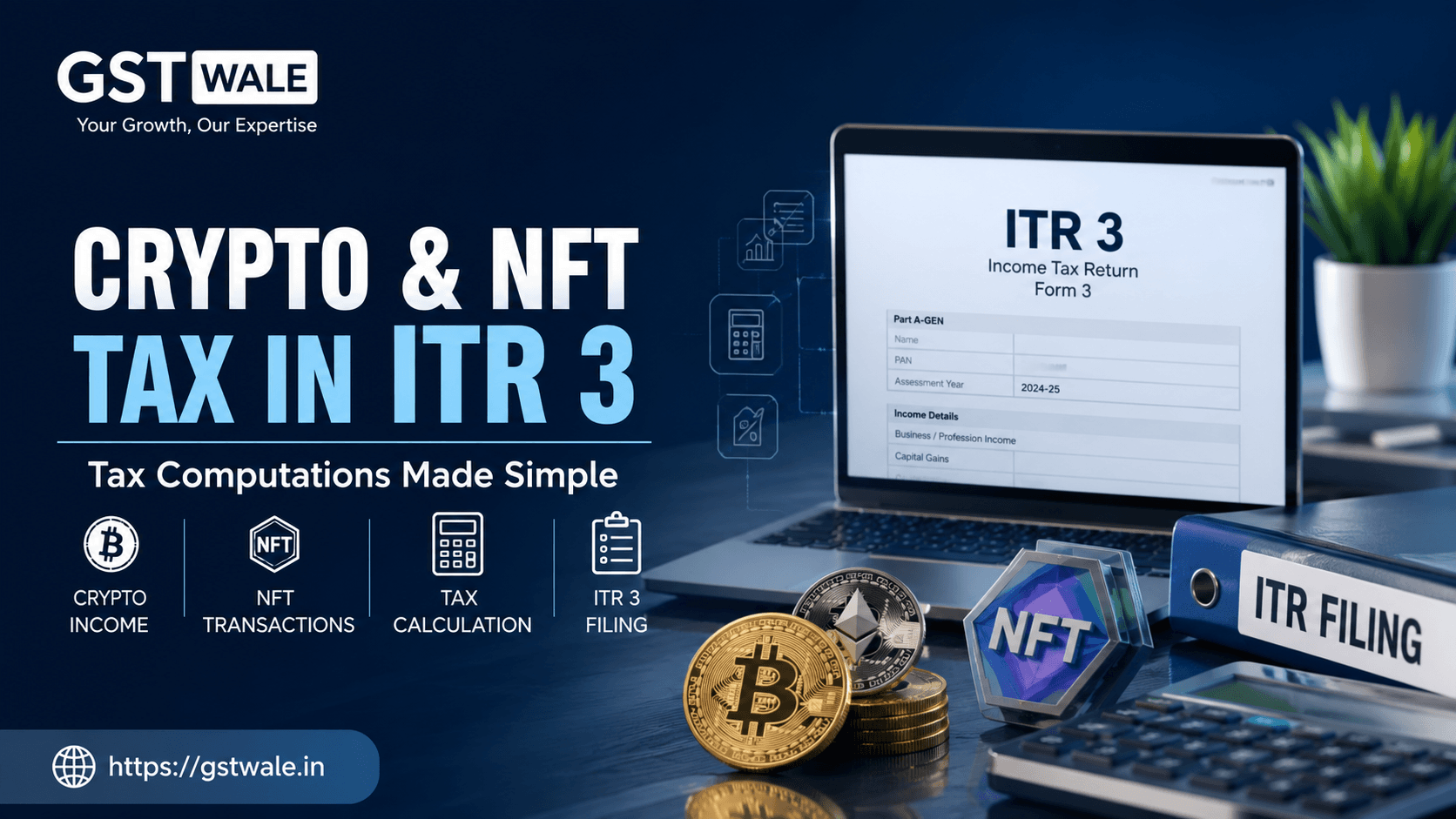
Cryptocurrency and NFTs have become popular investment options in India, but they have also introduced new tax responsibilities. If you earn income from buying, selling, or transferring virtual digital assets, understanding how to report them correctly in itr 3 is essential. Filing the wrong details can result in notices, penalties, or unnecessary scrutiny from the Income Tax Department.
At GST Wale, we regularly help taxpayers understand complex tax provisions in a simple way. If you need professional assistance with ITR Filing, our experts can guide you through the complete process and ensure your return is accurate and compliant with the latest tax rules.
Why Cryptocurrency Reporting in ITR 3 Is Important
The Income Tax Act introduced specific provisions for Virtual Digital Assets (VDAs), including cryptocurrencies and NFTs. If you have business income, professional income, or crypto transactions that fall under the applicable category, itr 3 may be the appropriate income tax return form for reporting your income.
Whether you trade regularly, receive crypto as payment, or sell NFTs, accurate reporting in your itr form is essential. Proper disclosure reduces the chances of receiving tax notices and ensures compliance with Indian tax laws.
What Are Virtual Digital Assets?
Virtual Digital Assets include digital assets such as:
- Bitcoin
- Ethereum
- Solana
- Stablecoins
- Non-Fungible Tokens (NFTs)
- Other cryptocurrencies recognised under Indian tax provisions
Each transfer or sale of these assets may have tax implications, making proper calculations before filing itr 3 extremely important.
Who Should Use ITR 3 for Cryptocurrency Income?
itr 3 is generally applicable for individuals and Hindu Undivided Families (HUFs) having income from business or profession. If cryptocurrency trading forms part of your business activities or professional receipts, this income tax return form may be applicable depending on your overall income profile.
Examples include:
- Professional crypto traders.
- Individuals receiving cryptocurrency as business consideration.
- Businesses dealing in digital assets.
- Professionals accepting crypto payments.
If your income sources differ, choosing the correct itr form should always be done after reviewing your complete financial situation.
Tax Rules for Cryptocurrency and NFTs
Flat Tax Rate
Income arising from the transfer of cryptocurrencies and NFTs is generally taxed at a flat rate of 30%, subject to applicable surcharge and cess. This rate applies regardless of your income slab.
No Deduction of Expenses
Except for the cost of acquisition, most expenses related to crypto trading cannot be claimed as deductions while computing taxable income.
Loss Adjustment Restrictions
Losses from cryptocurrency transactions generally cannot be adjusted against other income heads or carried forward to future years under the applicable provisions.
TDS on Certain Transactions
Specified cryptocurrency transactions may also attract Tax Deducted at Source (TDS) as per applicable provisions, making accurate record keeping even more important before preparing itr 3.
How to Compute Cryptocurrency Income in ITR 3
Step 1: Collect Complete Transaction History
Download transaction statements from every crypto exchange or wallet you have used during the financial year.
Your records should include:
- Date of purchase
- Date of sale
- Purchase value
- Sale value
- Transaction fees
- Wallet transfers
- NFT purchase and sale records
Step 2: Calculate Sale Value
Determine the total amount received on selling each cryptocurrency or NFT.
Step 3: Deduct Cost of Acquisition
Only the purchase cost of the asset is generally allowed while computing taxable income.
Step 4: Compute Taxable Income
Subtract the acquisition cost from the sale consideration to arrive at taxable gains.
Step 5: Report Correctly in ITR 3
Ensure all applicable disclosures are made while preparing your itr 3. Double-check values before submitting your income tax return form.
Example of Cryptocurrency Tax Calculation
Suppose Mr. Raj purchased Bitcoin for ₹2,00,000 and later sold it for ₹3,20,000.
- Purchase Cost: ₹2,00,000
- Sale Value: ₹3,20,000
- Taxable Income: ₹1,20,000
The taxable gain of ₹1,20,000 would generally be taxed at the applicable flat rate prescribed for Virtual Digital Assets along with surcharge and cess, wherever applicable.
This income should be reported correctly while filing itr 3.
Taxation of NFTs in ITR 3
NFTs are also treated as Virtual Digital Assets for taxation purposes. Whether you create, purchase, or sell NFTs, every taxable transaction should be properly documented.
If NFT transactions form part of your business activities, reporting them accurately in itr 3 becomes even more important. Keep invoices, marketplace statements, blockchain transaction IDs, and payment proofs safely for future verification.
Documents Required Before Filing ITR 3
Before starting your it filing, keep these documents ready:
- PAN and Aadhaar
- Bank statements
- Crypto exchange statements
- NFT marketplace reports
- TDS certificates, if applicable
- Purchase invoices
- Wallet transaction records
- Business books of accounts
Common Mistakes to Avoid While Filing ITR 3
- Ignoring small cryptocurrency transactions.
- Not reporting NFT sales.
- Incorrect calculation of acquisition cost.
- Claiming deductions that are not permitted.
- Failing to reconcile exchange statements.
- Using the wrong itr form.
- Submitting incomplete transaction records.
Best Practices for Accurate Cryptocurrency Tax Compliance
Maintaining organised records throughout the year makes tax filing much easier. Instead of waiting until the last moment, reconcile every trade regularly. Keep screenshots, wallet addresses, exchange reports, and transaction IDs securely stored. These records can be valuable if the Income Tax Department seeks clarification.
Before you file it returns online, carefully verify all crypto-related entries with your exchange statements. If you have traded across multiple platforms, consolidate the data to avoid duplication or omission. Accurate reporting while filing your income tax return form helps ensure a smooth assessment process.
Many taxpayers also prefer using the official portal for income tax return online filing after reviewing all computations. A final verification before submission can prevent costly errors later.
Frequently Asked Questions
1. Is cryptocurrency income taxable in India?
Yes. Income arising from the transfer of cryptocurrencies and other Virtual Digital Assets is taxable under the applicable provisions of the Income Tax Act and must be reported correctly in the appropriate return.
2. Can I adjust cryptocurrency losses against salary income?
Generally, losses from cryptocurrency transactions cannot be adjusted against other heads of income or carried forward under the current tax provisions.
3. Should NFT transactions also be reported?
Yes. NFTs are treated as Virtual Digital Assets, and taxable transfers should be disclosed accurately while filing the applicable return.
4. Can I claim internet charges or trading expenses?
Generally, only the cost of acquisition is allowed while computing taxable income from cryptocurrency transfers. Most other expenses are not deductible.
5. How can I avoid mistakes while filing ITR 3?
Maintain complete transaction records, verify exchange reports, calculate gains carefully, choose the correct return, and review every entry before submitting itr 3.
As cryptocurrency and NFT investments continue to grow, proper tax compliance has become more important than ever. Filing itr 3 accurately requires careful calculation of taxable income, complete transaction records, and proper disclosure of every eligible crypto transaction. A small mistake today can lead to unnecessary notices and additional compliance later.
At GST Wale, our experienced tax professionals simplify complex tax rules and help individuals, professionals, and businesses file accurate income tax returns with confidence. If you want expert guidance for cryptocurrency taxation, NFT reporting, or complete itr 3 filing, connect with GST Wale today and ensure your return is accurate, compliant, and submitted on time.
 Previous