


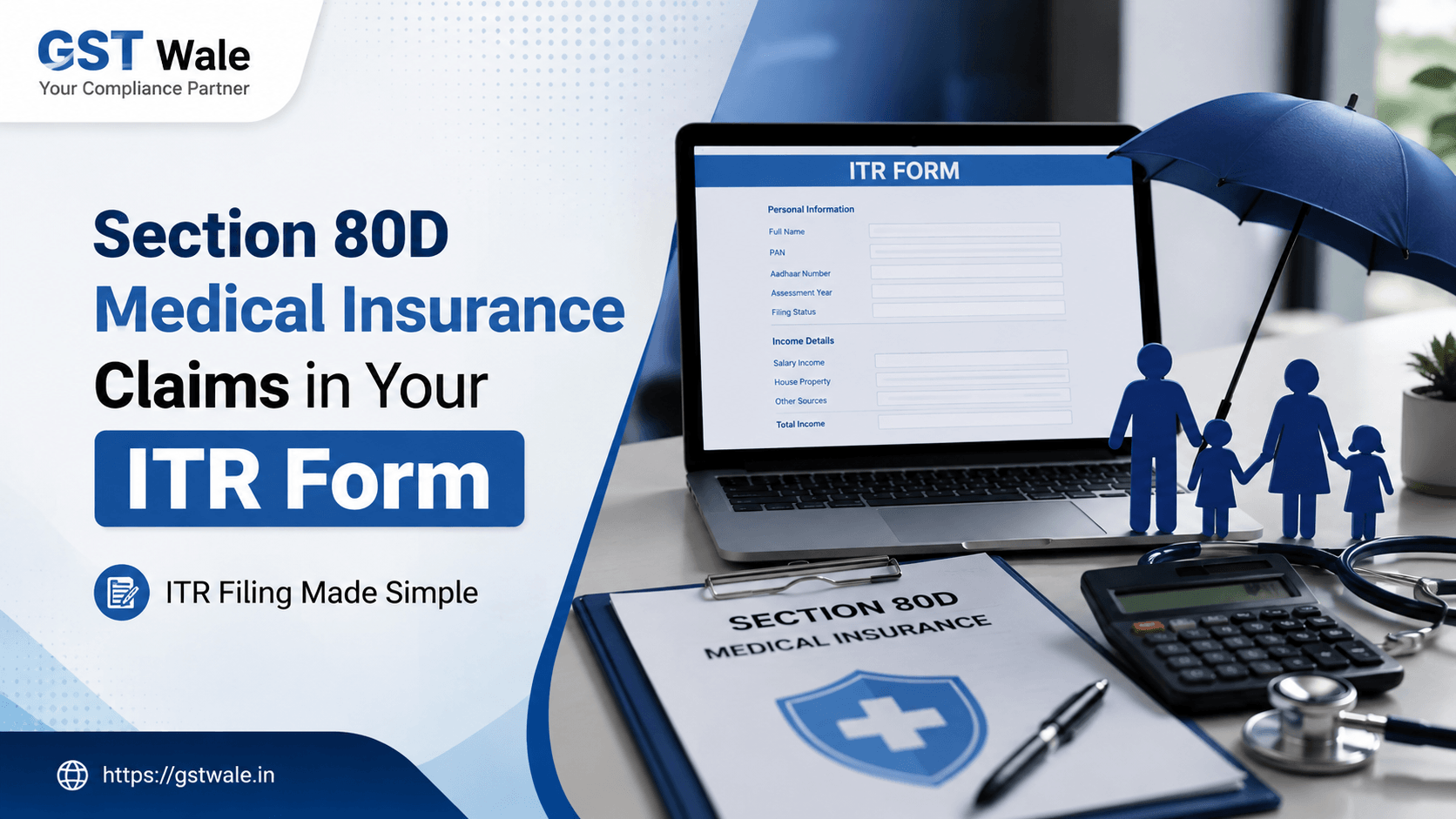
A Deep Dive Into Section 80D Medical Insurance Claims in Your ITR Form
A Deep Dive Into Section 80D Medical Insurance Claims in Your ITR Form
A Deep Dive Into Section 80D Medical Insurance Claims in Your ITR Form
Filing your itr form is not just about reporting your income and paying taxes. It is also an opportunity to claim legitimate deductions that can significantly reduce your tax liability. One of the most valuable tax-saving provisions available to taxpayers is Section 80D of the Income Tax Act, which allows deductions for medical insurance premiums and certain healthcare expenses.
Whether you are filing your income tax return form for the first time or have years of experience with it filing, understanding Section 80D can help you save more while staying fully compliant with tax laws. If you need professional assistance with ITR Filing, expert guidance ensures that every eligible deduction is claimed accurately and your return is filed without errors.
In this detailed guide, GST Wale explains everything you need to know about claiming medical insurance deductions in your itr form, eligibility criteria, deduction limits, documentation requirements, and common mistakes to avoid.
Understanding Section 80D in Your ITR Form
Section 80D provides tax deductions for premiums paid towards health insurance policies for yourself and your family. It also covers premiums paid for parents, making it one of the most useful deductions while preparing your itr form.
The objective of this section is to encourage individuals and families to invest in health insurance while reducing their taxable income.
The deduction can be claimed by:
- Individual taxpayers
- Hindu Undivided Families (HUFs)
Companies and partnership firms cannot claim benefits under Section 80D.
Who Can Claim Section 80D in the ITR Form?
You can claim deductions if you pay medical insurance premiums for:
- Yourself
- Your spouse
- Dependent children
- Parents (whether dependent or independent)
This means even if your parents are financially independent, you can still claim deductions if you are paying their medical insurance premium.
When completing your itr form, make sure that the payment has actually been made by you and is supported by valid documentation.
Maximum Deduction Available Under Section 80D
The deduction depends on the age of the insured individuals.
For Individuals Below 60 Years
You can claim up to ₹25,000 for:
- Self
- Spouse
- Dependent children
If your parents are also below 60 years, an additional deduction of ₹25,000 is available.
Maximum deduction:
₹50,000
For Senior Citizens
If either you or your parents are senior citizens (aged 60 years or above), the deduction increases.
Examples include:
- Self below 60 years + Parents above 60 years = ₹25,000 + ₹50,000
- Self above 60 years + Parents above 60 years = ₹50,000 + ₹50,000
Maximum deduction:
₹1,00,000
These deductions can substantially reduce your taxable income when filing your itr form.
Preventive Health Check-up Benefits
Section 80D also allows deductions for preventive health check-ups.
You can claim up to ₹5,000 for expenses incurred on preventive health check-ups.
Important points:
- This amount is included within the overall Section 80D limit.
- Cash payments are allowed only for preventive health check-ups.
- No separate deduction is available beyond the prescribed limit.
This is a useful benefit for taxpayers who regularly undergo annual medical examinations.
Medical Expenses for Senior Citizens
In certain situations, senior citizens may not have medical insurance due to age or health conditions.
Section 80D allows deduction for medical expenditure incurred on uninsured senior citizens, subject to prescribed limits.
However:
- The senior citizen should not already be covered under a health insurance policy.
- Proper medical bills should be maintained.
While preparing your income tax return form, these expenses should be entered carefully with proper supporting records.
Mode of Payment Matters
Many taxpayers unknowingly lose deductions because of incorrect payment methods.
Eligible payment modes include:
- Net banking
- UPI
- Debit card
- Credit card
- Cheque
- Demand draft
Medical insurance premiums paid in cash are not eligible for deduction.
The only exception is preventive health check-up expenses, which may be paid in cash.
Documents Required While Filing the ITR Form
Although you are not required to upload documents while filing your itr form, you should retain them for future verification.
Useful documents include:
- Health insurance premium receipt
- Policy document
- Bank statement
- Payment confirmation
- Medical bills for eligible expenses
- Preventive health check-up bills
Keeping these records organized helps avoid complications if the Income Tax Department requests verification.
Step-by-Step Process to Claim Section 80D
Claiming deductions under Section 80D during itr online filing is straightforward.
Step 1
Collect all premium payment receipts.
Step 2
Verify eligible deduction limits.
Step 3
Select the appropriate income tax return form based on your income sources.
Step 4
Enter Section 80D deductions under Chapter VI-A.
Step 5
Cross-check all information before submission.
Step 6
Complete verification after you file income tax return online.
These simple steps ensure your deduction is correctly reflected in your itr form.
Practical Example
Let's understand with a practical example.
Rahul is 35 years old.
He pays:
- ₹22,000 for his own family health insurance
- ₹48,000 for his senior citizen mother's policy
His eligible deduction becomes:
- Self and family = ₹22,000
- Mother = ₹48,000
Total deduction:
₹70,000
This directly reduces his taxable income while filing his itr form.
Common Mistakes Taxpayers Should Avoid
Many taxpayers lose valuable deductions because of avoidable errors.
Some common mistakes include:
- Paying premium in cash
- Claiming deductions for policies paid by someone else
- Claiming deductions beyond prescribed limits
- Forgetting to include parents' insurance
- Entering incorrect figures in the itr form
- Not maintaining supporting documents
Review your entries carefully before submitting your return.
Why Section 80D Is More Important Than Ever
Healthcare costs continue to increase every year.
A good health insurance policy not only protects your family financially but also provides valuable tax benefits.
Instead of viewing medical insurance merely as an expense, consider it a financial planning tool that:
- Reduces taxable income
- Provides medical security
- Encourages preventive healthcare
- Improves long-term financial stability
Tax planning becomes more effective when Section 80D is utilized properly in your itr form.
Tips for Smooth IT Filing
To make your it filing process hassle-free:
- Purchase health insurance before the financial year ends.
- Maintain digital payment records.
- Verify deduction eligibility before filing.
- Keep policy documents safely.
- Check all entries before submitting your return.
- Complete verification after you file it returns online.
Small precautions can prevent notices and ensure faster processing of your return.
Frequently Asked Questions
Can I claim health insurance for my parents in my itr form?
Yes. You can claim deductions for medical insurance premiums paid for your parents, regardless of whether they are financially dependent on you.
Is cash payment allowed for health insurance premiums?
No. Health insurance premiums paid in cash are not eligible for deduction. Only preventive health check-up expenses can be paid in cash within the prescribed limit.
Can I claim deductions if my employer provides health insurance?
Yes, if you personally pay premiums for another eligible health insurance policy, you can claim deductions under Section 80D while filing your itr form, subject to applicable limits.
Which income tax return form should I choose?
The correct income tax return form depends on your income sources, residential status, and eligibility. Selecting the correct form is essential for accurate return filing.
Can I revise my itr form after submission?
Yes. If you discover an error after submission, you may revise your itr form within the time permitted under the Income Tax Act.
Section 80D is one of the most beneficial tax-saving provisions available to individual taxpayers. By understanding deduction limits, eligible expenses, documentation requirements, and proper reporting in your itr form, you can legally reduce your tax burden while protecting your family's health.
Whether you are filing your return through itr online, preparing your income tax return form, or planning to file income tax return online, proper tax planning can make a significant difference. GST Wale helps individuals, professionals, and businesses complete accurate it filing, maximize eligible deductions, and remain fully compliant with the latest tax regulations.
If you want a stress-free filing experience and expert guidance for claiming every eligible deduction in your itr form, contact GST Wale today and let our experienced tax professionals help you file with complete confidence.
 Previous