


Is GST for Car Lower on Electric Vehicles? EV Tax Benefits Explained
Is GST for Car Lower on Electric Vehicles? EV Tax Benefits Explained
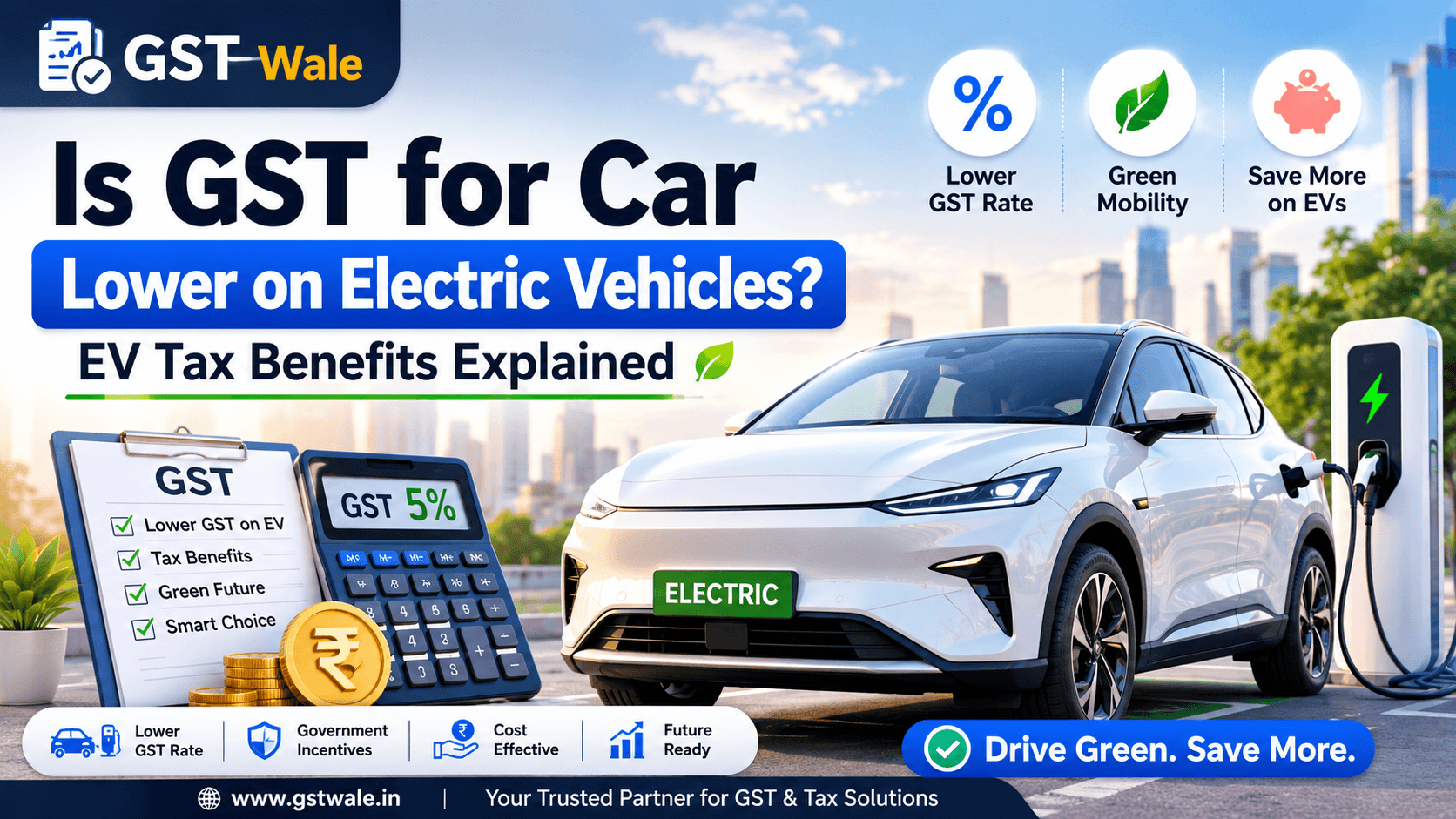
Electric vehicles (EVs) are becoming increasingly popular in India as fuel prices rise and people look for environmentally friendly transportation. One of the biggest reasons behind this shift is the lower **gst for car** when purchasing an electric vehicle compared to conventional petrol or diesel cars. The Government of India has introduced several tax incentives and policy measures to encourage green mobility, making EVs more affordable for individuals as well as businesses.
If you are planning to buy an electric vehicle or are a business investing in a fleet of EVs, understanding the **gst for car** can help you make a smarter financial decision. Businesses that need compliance support before purchasing commercial vehicles should ensure proper GST Registration to claim eligible tax benefits wherever applicable. In this article, GST Wale explains how GST works on electric vehicles, how it compares with conventional cars, and what additional tax benefits are available.
What is GST for Car in India?
The **gst for car** depends on the type of vehicle, engine capacity, fuel type, and applicable compensation cess. Under the GST regime, most passenger vehicles attract GST along with compensation cess, making the overall tax burden significantly higher.
However, electric vehicles receive special treatment under GST to promote cleaner transportation. This reduced tax burden directly lowers the purchase cost for consumers and businesses.
GST for Car: Electric Vehicle vs Conventional Vehicle
The biggest difference between conventional vehicles and EVs lies in the applicable GST rates.
Electric Vehicles
- GST Rate: 5%
- No compensation cess
- Lower overall purchase cost
- Government incentives available
Petrol and Diesel Cars
- GST generally starts at 28%
- Additional compensation cess applies depending on engine size and vehicle type
- Higher on-road price
- No special environmental GST benefit
This comparison clearly shows why the **gst for car** is much lower for electric vehicles than traditional fuel-powered cars.
Why is GST Lower on Electric Vehicles?
The Government of India has reduced the **gst for car** on electric vehicles to encourage sustainable transportation. Lower taxation supports national goals such as reducing pollution, lowering dependence on imported fuel, and promoting domestic EV manufacturing.
The lower ev gst rate also encourages businesses to modernise their fleets while helping individuals switch to cleaner mobility without a significant tax burden.
Current EV GST Rate Explained
The current ev gst rate on electric vehicles is 5%, making it one of the lowest GST slabs applicable to automobiles.
This reduced rate applies to:
- Electric passenger cars
- Electric two-wheelers
- Electric three-wheelers
- Certain electric commercial vehicles
When compared with conventional automobiles, the difference in **gst for car** can translate into substantial savings for buyers.
Can Businesses Claim Input Tax Credit?
Many business owners ask whether they can claim Input Tax Credit (ITC) while purchasing electric vehicles.
The answer depends on how the vehicle is used.
ITC May Be Available When:
- The vehicle is used for transportation of goods.
- The vehicle is used for providing passenger transportation services.
- The business is engaged in renting or leasing vehicles.
- The purchase qualifies under applicable GST provisions.
Businesses should always consult GST professionals before claiming ITC, as eligibility depends on the nature of business activities and GST law.
Subsidy and GST: How They Work Together
Many buyers are confused about the relationship between subsidy and gst.
Government subsidies under various EV promotion schemes are designed to reduce the effective purchase price. However, GST is calculated according to applicable tax provisions and the nature of the subsidy. The treatment may vary depending on whether the subsidy is provided directly to the buyer or through manufacturers.
Understanding the interaction between subsidy and gst helps buyers estimate the actual cost of owning an electric vehicle.
Charging Station Tax for EV Owners
Electric vehicles require charging infrastructure, making charging station tax an important consideration.
Businesses establishing commercial charging stations should understand GST implications on:
- Charging equipment
- Installation services
- Electricity-related services where applicable
- Maintenance contracts
- Commercial charging operations
Proper planning regarding charging station tax can help businesses remain compliant while managing operational costs effectively.
Hybrid Car GST Compared to Electric Vehicles
Another common question relates to hybrid car gst.
Hybrid vehicles generally do not receive the same concessional GST treatment available to fully electric vehicles. Since hybrid cars continue to use conventional fuel along with electric power, the applicable GST is usually higher than the GST on fully electric vehicles.
Therefore, from a taxation perspective, fully electric vehicles remain more attractive than vehicles covered under hybrid car gst rules.
Green Mobility Incentives Beyond GST
The reduced **gst for car** is only one part of India's larger policy framework supporting sustainable transportation.
Other green mobility incentives may include:
- State-level EV purchase subsidies
- Road tax exemptions in certain states
- Registration fee concessions
- Interest benefits under eligible schemes
- Support for EV charging infrastructure
These green mobility incentives further improve the affordability of electric vehicles.
Example: Comparing Tax on an Electric Car and Petrol Car
Suppose two vehicles have the same ex-showroom base value before taxes.
The electric vehicle attracts only the lower **gst for car** applicable to EVs, while the petrol vehicle attracts a significantly higher GST along with compensation cess. As a result, the overall purchase price of the electric vehicle becomes considerably lower.
This difference becomes even more valuable for businesses purchasing multiple vehicles for commercial use.
How to Make the Right Buying Decision
Before purchasing any vehicle, consider the following:
- Compare the applicable **gst for car**.
- Check whether any state subsidy is available.
- Understand Input Tax Credit eligibility.
- Estimate long-term fuel savings.
- Review maintenance costs.
- Evaluate charging infrastructure availability.
- Seek professional GST advice for business purchases.
Frequently Asked Questions
Is GST lower for electric vehicles?
Yes. The **gst for car** is significantly lower for electric vehicles. Fully electric vehicles currently attract a concessional GST rate of 5%, making them more affordable than conventional petrol or diesel vehicles.
Can businesses claim GST on electric vehicles?
Businesses may claim Input Tax Credit if the purchase satisfies the conditions prescribed under GST law. Eligibility depends on the nature of business and how the vehicle is used.
Does an EV subsidy reduce GST?
Not necessarily. The relationship between subsidy and gst depends on the structure of the subsidy and applicable GST provisions. Professional advice is recommended for specific cases.
Is GST on hybrid cars the same as electric cars?
No. The hybrid car gst is generally higher because hybrid vehicles do not receive the same concessional GST treatment available for fully electric vehicles.
Do commercial EV charging stations have GST implications?
Yes. Businesses operating charging stations should understand the applicable charging station tax, GST on equipment, installation services, and related commercial activities.
The reduced **gst for car** on electric vehicles has made EV ownership more attractive than ever. Along with the favourable ev gst rate, various green mobility incentives, government subsidies, and long-term savings make electric vehicles an excellent investment for both individuals and businesses. While taxation on conventional vehicles remains relatively high, EVs continue to enjoy significant policy support aimed at encouraging sustainable transportation.
If you need expert assistance with GST compliance, Input Tax Credit, registrations, or business taxation, GST Wale is here to help. Our experienced professionals provide practical, reliable, and timely GST solutions so you can focus on growing your business with confidence. Contact GST Wale today for expert guidance tailored to your needs.
 Previous