


Corporate Perks: Can a Company Claim ITC on GST in Car for Employees?
Corporate Perks: Can a Company Claim ITC on GST in Car for Employees?
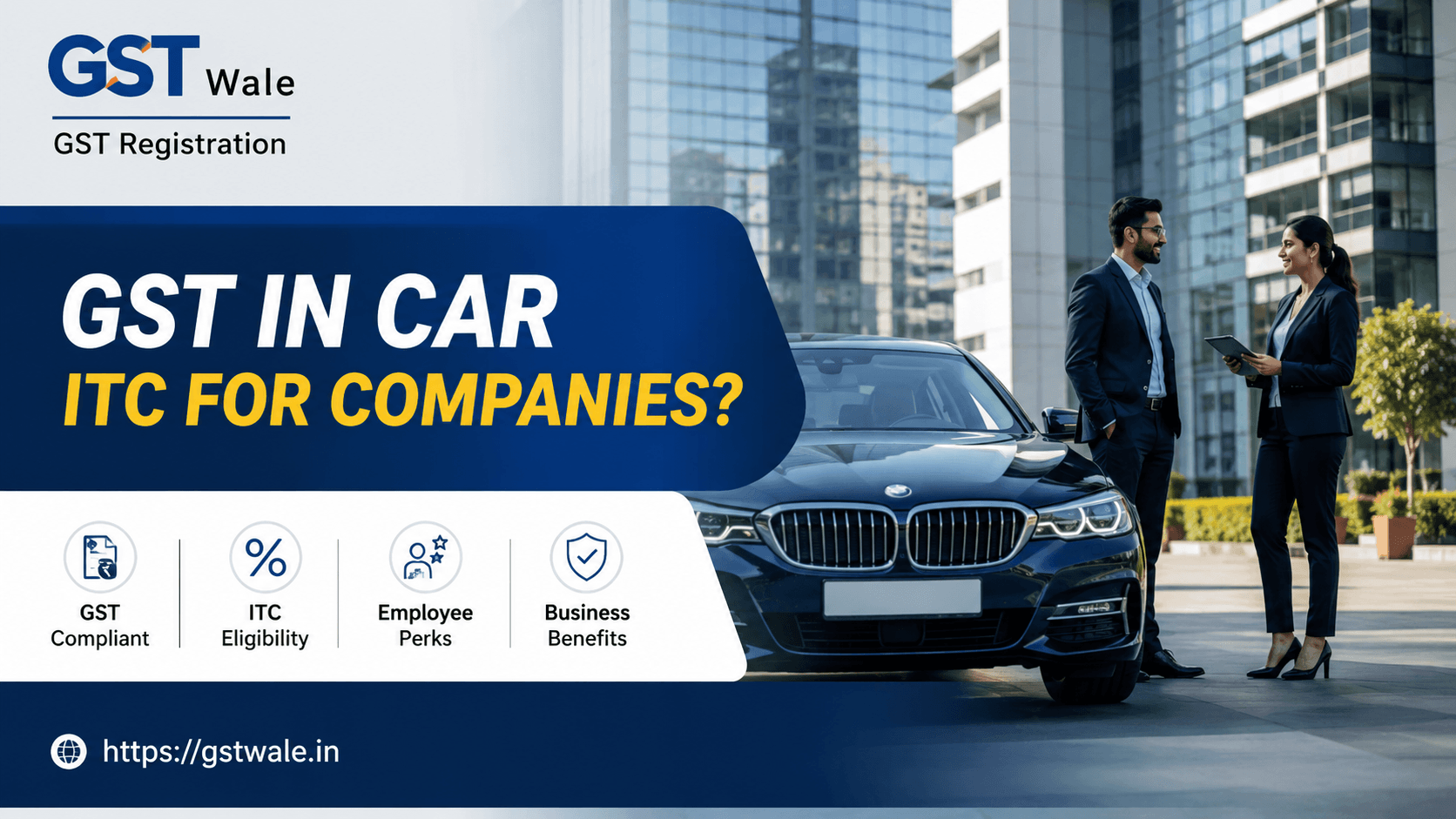
Providing a car to employees has become a common corporate benefit, especially for senior management, sales teams, and executives who travel frequently. However, one of the most common questions businesses ask is whether they can claim Input Tax Credit (ITC) on gst in car purchases or leases. The answer depends on several GST provisions, the purpose of the vehicle, and how it is used within the business.
Before making decisions related to employee benefits or vehicle purchases, businesses should ensure proper compliance with GST Registration, as correct registration is the foundation of claiming eligible tax credits and meeting GST obligations. At GST Wale, we regularly help businesses understand these practical tax issues and avoid costly mistakes.
Understanding the rules surrounding gst in car is essential because claiming ITC incorrectly may lead to interest, penalties, and unnecessary litigation. Let us understand the law in simple terms.
Understanding GST in Car for Businesses
When a company purchases a motor car and pays GST, it naturally wants to recover that tax through Input Tax Credit (ITC). However, the GST law contains specific restrictions regarding gst in car, especially when passenger vehicles are involved.
The biggest challenge comes from blocked credit section 17 5, which restricts ITC on certain goods and services even if they are used in the course of business.
Simply purchasing a vehicle in the company's name does not automatically make the GST eligible for ITC.
What Does Blocked Credit Section 17 5 Say?
Section 17(5) of the CGST Act lists situations where ITC cannot be claimed. Passenger vehicles used for transporting persons generally fall under these blocked credits unless specific exceptions apply.
ITC on gst in car is generally blocked when:
- The vehicle has a seating capacity of up to 13 persons (including the driver).
- The vehicle is used for employee transportation or management use.
- It is purchased for general business convenience.
However, ITC may be available when:
- The business is engaged in passenger transportation.
- The company provides driving training.
- The business deals in buying and selling motor vehicles.
- The vehicle is used for further taxable supply.
Understanding these exceptions is extremely important before claiming GST credits.
Can a Company Claim ITC on GST in Car for Employees?
The answer depends entirely on the purpose of the vehicle.
Scenario 1: Company Car for Directors or Senior Executives
If the company buys a luxury car primarily for directors or senior executives, ITC is generally not available.
Even if the car is used partly for business meetings, the GST law considers this under blocked credit section 17 5 unless one of the statutory exceptions applies.
Scenario 2: Car Used for Sales or Marketing Teams
Many businesses assume that frequent business travel automatically allows ITC.
Unfortunately, under the current GST provisions, gst in car remains blocked even if the sales team uses the vehicle exclusively for client visits, unless the business falls within the permitted exceptions.
This surprises many taxpayers because the vehicle directly supports revenue generation.
Scenario 3: Employee Transportation Tax
Some companies provide transport facilities for employees.
Whether employee transportation tax qualifies for ITC depends on the nature of transportation.
For example:
- Office shuttle buses carrying more than 13 passengers may have different treatment.
- Small passenger cars generally continue to fall under blocked credit provisions.
- Mandatory transportation required under any law may receive different treatment depending on facts.
Each case should be examined carefully before claiming ITC.
Company Lease Car GST – Is Leasing Different?
Many companies prefer leasing instead of purchasing vehicles.
Under company lease car gst, businesses often believe lease rentals automatically qualify for ITC because ownership remains with the leasing company.
However, the restriction generally continues if the leased vehicle falls under blocked credit provisions.
In other words:
- Leasing does not automatically make ITC available.
- The purpose and eligibility conditions still matter.
- Businesses should review lease agreements carefully before claiming GST credits.
Always evaluate the complete transaction instead of assuming lease payments are fully creditable.
Does Commercial Car Registration Make ITC Available?
Another common misconception relates to commercial car registration.
Many business owners believe registering a vehicle as a commercial vehicle automatically allows ITC.
This is incorrect.
GST eligibility depends mainly on:
- Nature of business
- Purpose of vehicle
- Applicable GST provisions
- Section 17(5) restrictions
Merely obtaining a commercial car registration does not override blocked credit provisions.
The actual usage and legal eligibility remain the deciding factors.
Practical Example
Suppose ABC Pvt. Ltd. purchases a sedan costing ₹20 lakh for its Managing Director.
GST paid on the vehicle is substantial.
Although:
- The car is purchased in the company's name,
- Payment is made from the business account,
- The vehicle is used partly for business meetings,
the company generally cannot claim ITC on the gst in car because the vehicle falls under blocked credit provisions.
Now consider another example.
XYZ Travels purchases passenger vehicles exclusively for providing taxi services to customers.
Since transporting passengers is the company's taxable business activity, ITC on gst in car may be available, subject to compliance with GST law.
These examples show why the business purpose matters more than ownership.
Corporate Tax Deductions vs GST ITC
Many taxpayers confuse corporate tax deductions under the Income Tax Act with GST Input Tax Credit.
These are entirely different concepts.
Under Income Tax:
- Vehicle depreciation may be allowed.
- Fuel expenses may be deductible.
- Maintenance expenses may qualify.
- Insurance expenses may qualify.
However, GST ITC follows separate rules.
Even if an expense qualifies as one of the corporate tax deductions, ITC on gst in car may still remain blocked under GST law.
Businesses should never mix Income Tax and GST provisions while making compliance decisions.
How to Stay GST Compliant
To avoid future disputes, companies should follow a structured approach.
Maintain Proper Documentation
Keep records of:
- Purchase invoice
- Registration certificate
- Insurance
- Business purpose
- Usage records
Proper documentation always strengthens your compliance position.
Evaluate ITC Before Filing Returns
Do not assume every GST invoice qualifies for ITC.
Review:
- Vehicle type
- Seating capacity
- Business activity
- Applicable GST provisions
Professional review can prevent costly notices later.
Consult Experts Before Large Purchases
Large capital purchases deserve tax planning.
Before purchasing or leasing company vehicles, understand whether gst in car is eligible for credit.
Proper planning can significantly reduce compliance risks.
Common Mistakes Businesses Make
Businesses frequently make these errors:
- Claiming ITC simply because the invoice is in the company name.
- Assuming commercial car registration automatically allows ITC.
- Ignoring blocked credit section 17 5.
- Confusing corporate tax deductions with GST credits.
- Claiming ITC on company lease car gst without checking eligibility.
- Not maintaining usage documentation.
- Treating all employee transportation tax expenses as ITC eligible.
Avoiding these mistakes helps businesses remain compliant during GST audits.
FAQs
Can a company claim GST in car purchased for directors?
Generally, no. Passenger vehicles purchased for directors or executives usually fall under blocked credit provisions unless covered by specific statutory exceptions.
Does company lease car GST always qualify for ITC?
No. Leasing alone does not make ITC available. Eligibility depends on the provisions of the GST law and the actual use of the vehicle.
Is GST available on employee transportation tax?
It depends on the type of transportation, seating capacity, and legal requirements. Every situation should be evaluated separately before claiming ITC.
Does commercial car registration automatically make GST claimable?
No. Commercial car registration alone does not determine ITC eligibility. The GST law and business purpose remain the deciding factors.
Why is blocked credit section 17 5 important?
It specifies situations where ITC cannot be claimed even when purchases are made for business purposes. Understanding this provision is essential for correct GST compliance.
Understanding gst in car requires more than simply checking the purchase invoice. Businesses must carefully evaluate the purpose of the vehicle, the restrictions under blocked credit section 17 5, and whether any statutory exceptions apply. Whether it involves employee transportation tax, company lease car gst, commercial car registration, or other corporate tax deductions, every case should be analysed individually to ensure compliance.
At GST Wale, we help businesses make informed GST decisions, avoid unnecessary tax disputes, and maximise eligible tax benefits while remaining fully compliant with Indian GST laws. If you're planning to purchase, lease, or provide vehicles to employees, our experts can guide you with practical, legally compliant solutions tailored to your business.
 Previous