


How to Report Foreign Income and Claim DTAA Tax Relief in ITR 2.0
How to Report Foreign Income and Claim DTAA Tax Relief in ITR 2.0
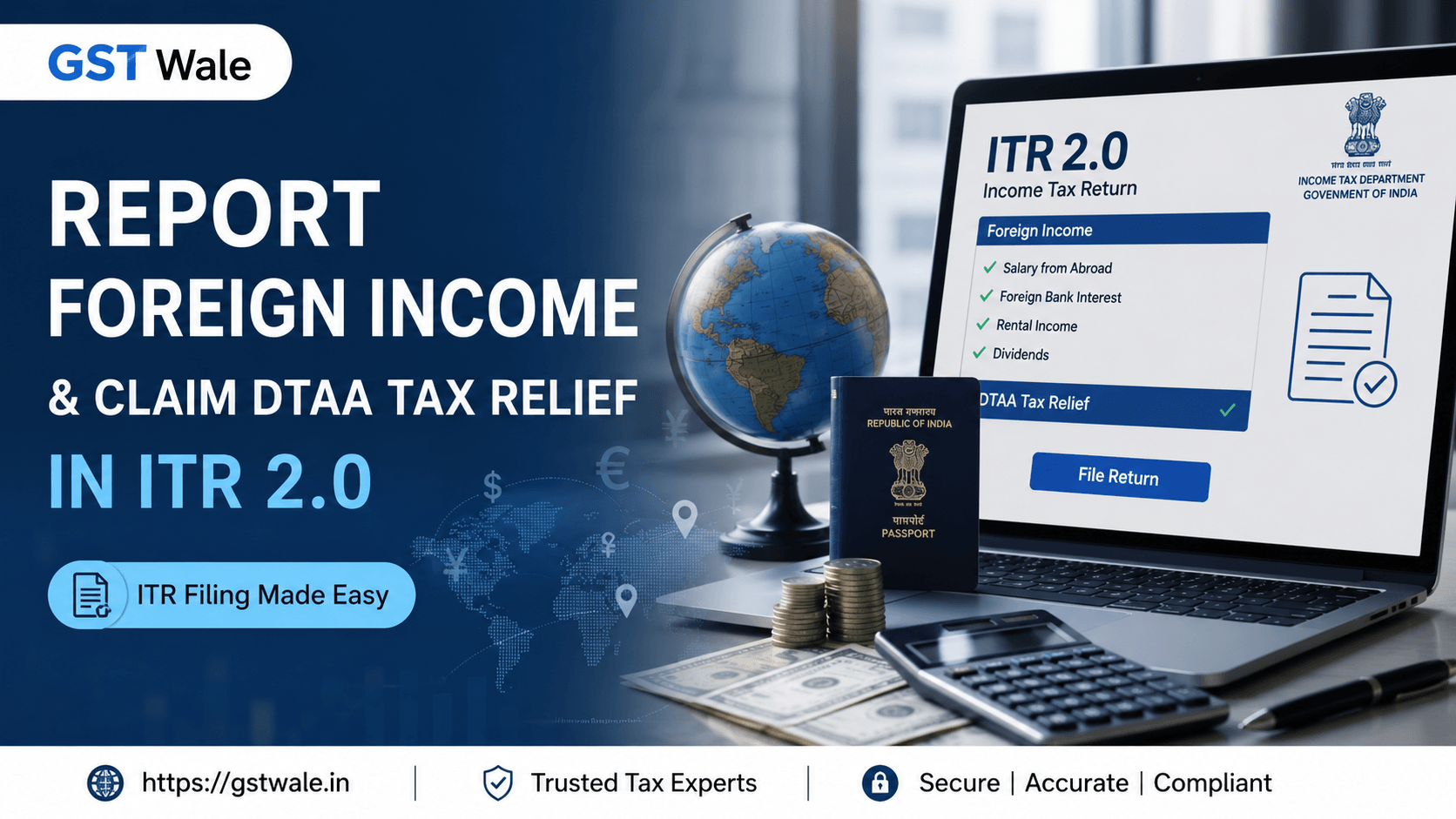
If you have earned income outside India, filing your tax return requires extra attention. Whether you receive a foreign salary, dividends, rental income, pension, or interest from overseas investments, you must disclose it correctly while filing itr 2.0. Many taxpayers either miss reporting foreign income or fail to claim the benefits available under the Double Taxation Avoidance Agreement (DTAA), resulting in unnecessary tax payments or notices from the Income Tax Department.
At GST Wale, we regularly help taxpayers handle foreign income disclosures and tax relief claims accurately. If you need professional assistance with ITR Filing, expert guidance can help you avoid costly mistakes while ensuring complete compliance. Understanding how itr 2.0 works can make your return filing process much smoother.
What is ITR 2.0 and Who Should Use It?
itr 2.0 is designed for individuals and Hindu Undivided Families (HUFs) who do not have income from business or profession but may have income from salary, capital gains, multiple house properties, foreign assets, or foreign income. If you qualify for this return, using the correct itr form is essential to ensure accurate tax reporting.
Many taxpayers confuse itr 2 with other return forms. Choosing the correct income tax return form depends entirely on the nature of your income.
What is Foreign Income?
Foreign income refers to earnings received from sources located outside India. If you qualify as a resident under Indian tax laws, your global income is generally taxable in India unless exempt under applicable provisions.
Common examples include:
- Salary earned from employment abroad
- Interest from foreign bank accounts
- Dividend from overseas companies
- Rental income from foreign property
- Capital gains from selling foreign shares
- Pension received from another country
- Royalty or consulting income from foreign clients
All eligible foreign income should be properly disclosed while filing itr 2.0.
What is DTAA?
DTAA stands for Double Taxation Avoidance Agreement. India has signed tax treaties with many countries to ensure that the same income is not taxed twice.
Without DTAA relief, a taxpayer may end up paying tax:
- In the foreign country where the income was earned.
- Again in India while filing the return.
DTAA allows taxpayers to either claim tax credit or exemption depending on the treaty provisions.
Types of DTAA Relief Available in ITR 2.0
Foreign Tax Credit
If tax has already been deducted in another country, you may claim credit against your Indian tax liability. This is the most common relief claimed while filing itr 2.0.
Exemption Method
Some treaties provide complete exemption for specific categories of income. The income may be taxable only in one country.
Reduced Tax Rates
Certain DTAA agreements prescribe lower tax rates on dividends, royalties, technical services, or interest income.
Documents Required Before Filing ITR 2.0
Keep the following documents ready:
- Foreign salary statements
- Bank interest certificates
- Dividend statements
- Foreign tax deduction certificates
- Tax residency documents where applicable
- Form 67 for claiming Foreign Tax Credit
- Exchange rate details for currency conversion
- Investment statements
Having complete records makes it filing much easier and reduces the chances of errors.
How to Report Foreign Income in ITR 2.0
Step 1: Determine Your Residential Status
Your taxability depends on whether you are Resident, Resident but Not Ordinarily Resident (RNOR), or Non-Resident (NRI). Residents generally report global income in itr 2.0.
Step 2: Convert Foreign Income into Indian Rupees
Income earned in foreign currency must be converted using the prescribed exchange rates under the Income Tax Rules.
Step 3: Report Income Under the Correct Head
Foreign income should be disclosed under the relevant head such as:
- Salary
- House Property
- Capital Gains
- Other Sources
Reporting income under the wrong category may lead to processing delays.
Step 4: Disclose Foreign Assets
If applicable, disclose foreign bank accounts, investments, immovable properties, trusts, or financial interests in the relevant schedules of itr 2.0.
Step 5: Claim DTAA Relief
Claim eligible Foreign Tax Credit after filing Form 67 wherever applicable. Verify the treaty provisions carefully before claiming the relief.
Example of DTAA Tax Relief
Suppose Mr. Sharma, an Indian resident, earns dividend income from shares listed in the United States. The US deducts tax before paying the dividend. While filing itr 2.0, Mr. Sharma reports the dividend income in India and claims credit for the tax already paid in the US under the India-US DTAA.
As a result, he avoids paying tax twice on the same income.
Common Mistakes Taxpayers Make
- Not reporting foreign income.
- Ignoring foreign bank accounts.
- Missing Form 67 submission.
- Claiming incorrect DTAA relief.
- Using the wrong exchange rate.
- Selecting the wrong income tax return form.
- Confusing itr 2 with other return forms.
These mistakes may trigger notices or delay refund processing.
Tips for Accurate ITR 2.0 Filing
- Collect all foreign income documents before starting.
- Verify TDS and foreign tax certificates.
- Check the applicable DTAA treaty carefully.
- Disclose every foreign asset wherever required.
- Use the correct exchange rate.
- Review every schedule before submission.
- Complete verification after you file income tax return online.
Why Professional Guidance Matters
Foreign income reporting is often more complex than regular return filing. Different countries follow different tax systems, withholding rates, and reporting formats. Even a small mistake in claiming Foreign Tax Credit can lead to unnecessary tax demands.
An experienced tax professional can verify treaty eligibility, calculate tax credit accurately, prepare supporting documentation, and ensure your itr 2.0 is filed correctly.
Frequently Asked Questions
1. Is foreign income taxable in India?
If you are a resident under Indian tax laws, your global income is generally taxable in India, subject to applicable exemptions and DTAA provisions.
2. Can I claim tax already paid in another country?
Yes. If India has a DTAA with that country and you satisfy the conditions, you may claim Foreign Tax Credit while filing itr 2.0.
3. Is Form 67 mandatory?
Form 67 is generally required when claiming Foreign Tax Credit under Indian tax rules. Filing it correctly helps support your DTAA claim.
4. Do I need to disclose foreign bank accounts?
Yes. Resident taxpayers are generally required to disclose specified foreign assets and accounts in the relevant schedules of the return.
5. Can NRIs use itr 2.0?
Depending on their income sources, many Non-Resident Indians may file itr 2. The correct return depends on the nature of income earned during the financial year.
Reporting foreign income correctly is an essential part of filing itr 2.0. Proper disclosure of overseas income, accurate reporting of foreign assets, and claiming eligible DTAA tax relief can help you stay compliant while avoiding double taxation. Understanding treaty provisions, maintaining proper documentation, and selecting the correct itr form are equally important for a smooth return filing experience.
If you have overseas income, foreign investments, or need assistance with complex tax reporting, GST Wale is here to help. Our experienced professionals provide reliable support for accurate tax planning, DTAA relief claims, and timely return filing so you can complete your tax obligations with complete confidence.
 Previous