


The Ultimate Explainer on Advance Tax: Who Needs to Pay It Before ITR Filing?
The Ultimate Explainer on Advance Tax: Who Needs to Pay It Before ITR Filing?
When people think about itr filing, they usually focus on gathering documents at the end of the financial year. However, many taxpayers in India forget one important responsibility that comes much earlier — advance tax payment. Missing advance tax can lead to unnecessary penalties and interest charges, even if your itr filing is completed on time.
At GST Wale, we regularly help freelancers, business owners, consultants, professionals, and salaried individuals understand their tax obligations before itr filing season begins. If you are planning your taxes properly, it is important to know whether advance tax applies to you and how it impacts your final tax liability.
If you need professional support for ITR Filing, it is always better to start tax planning early rather than rushing at the last minute.
What is Advance Tax in itr filing?
Advance tax simply means paying income tax in installments during the financial year instead of paying the entire amount at the time of itr filing.
The Income Tax Department expects taxpayers to pay taxes as they earn income. This system ensures regular tax collection for the government and reduces the burden on taxpayers during final itr filing.
If your total tax liability in a financial year exceeds ₹10,000 after deducting TDS, you are generally required to pay advance tax.
Who Needs to Pay Advance Tax Before itr filing?
Advance tax is applicable to several categories of taxpayers.
Self-Employed Professionals and Freelancers
Doctors, lawyers, architects, consultants, influencers, YouTubers, and freelancers often fall under advance tax rules because they usually do not have enough TDS deductions.
For individuals managing self-employed tax obligations, advance tax becomes extremely important to avoid penalties later during itr filing.
Business Owners
Small business owners, traders, shopkeepers, and startup founders earning taxable profits must estimate yearly income and pay taxes in installments.
Example:
Suppose a business owner estimates an annual tax liability of ₹1.5 lakh after TDS adjustments. In that case, advance tax payment becomes mandatory before itr filing.
Salaried Employees with Additional Income
Many salaried individuals assume TDS deducted by employers is sufficient. However, if you also earn:
- Rental income
- Capital gains
- Freelance income
- Interest income
- Dividend income
then your actual tax liability may increase. If the additional payable tax exceeds ₹10,000, advance tax applies.
Investors and Traders
Stock market traders and investors earning substantial short-term gains may also need to pay advance tax before itr filing.
Who Gets Exemption from Advance Tax?
There are certain exceptions where advance tax payment is not mandatory.
Senior Citizen Exemption
Under the senior citizen exemption rule, resident senior citizens aged 60 years or above who do not have business or professional income are not required to pay advance tax.
This exemption provides relief to retired individuals mainly earning pension or interest income.
Tax Liability Below ₹10,000
If your total payable tax after TDS is less than ₹10,000 in a financial year, advance tax provisions do not apply.
Advance Tax Installment Due Dates
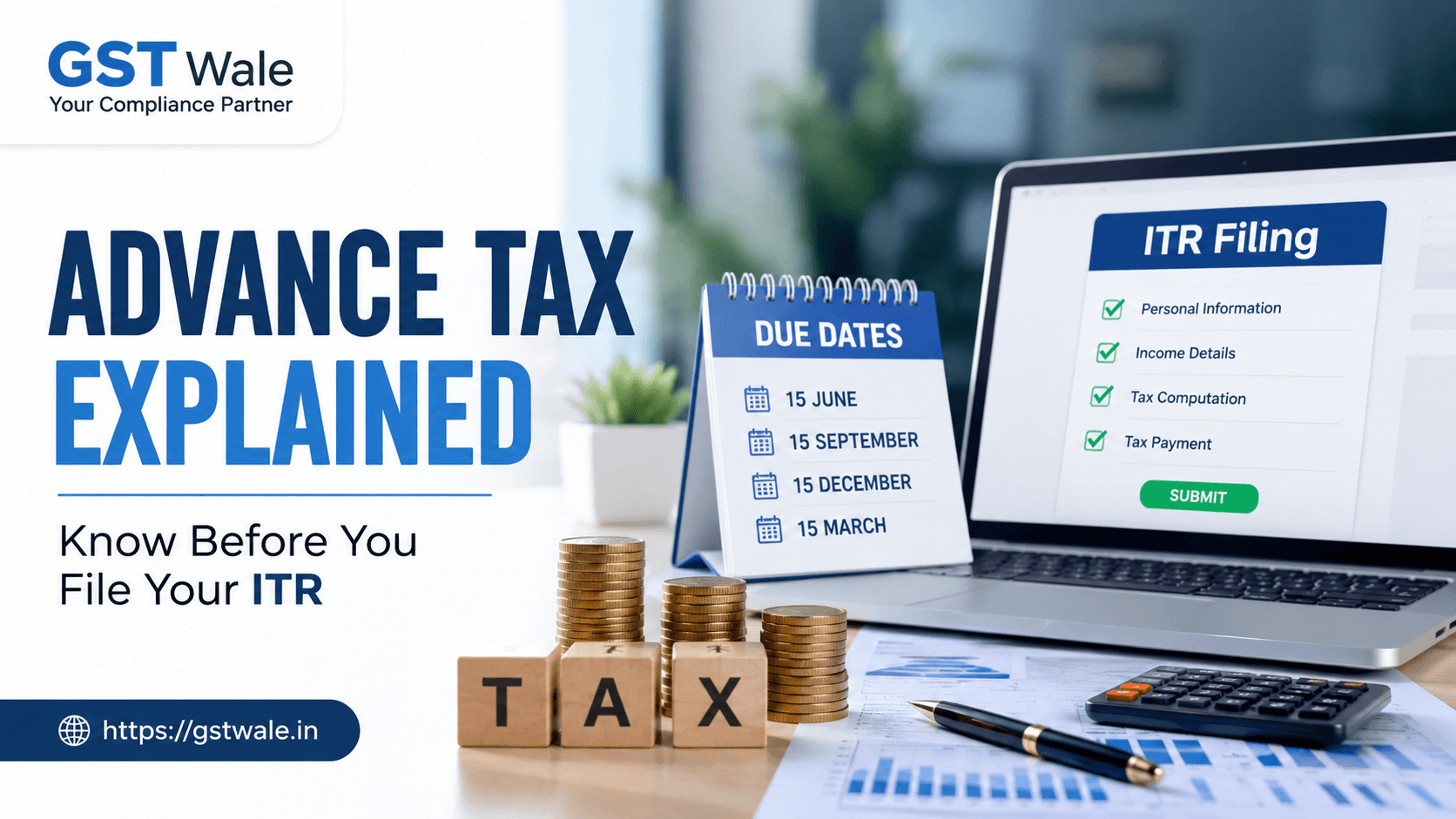
Understanding installment due dates is crucial for smooth itr filing and avoiding penalties.
For Regular Taxpayers
| Due Date | Minimum Advance Tax Payable |
|---|---|
| 15th June | 15% of total tax liability |
| 15th September | 45% cumulative |
| 15th December | 75% cumulative |
| 15th March | 100% cumulative |
For Presumptive Taxation Scheme Taxpayers
Taxpayers opting under Sections 44AD or 44ADA usually need to pay the full advance tax amount by 15th March.
This is commonly applicable for professionals handling self-employed tax matters under presumptive taxation.
How to Calculate Advance Tax Before itr filing
Many taxpayers struggle with advance tax calculations. Here is a practical approach GST Wale recommends.
Step 1: Estimate Total Annual Income
Include all expected income sources:
- Salary
- Business income
- Freelance receipts
- Rental income
- Capital gains
- Interest income
Step 2: Deduct Eligible Expenses and Deductions
Consider deductions under:
- Section 80C
- Section 80D
- Home loan benefits
- Business expenses
Step 3: Calculate Total Tax Liability
Apply income tax slab rates applicable to your category.
Step 4: Deduct TDS Already Paid
Subtract TDS deducted by employers, banks, or clients.
Step 5: Pay Remaining Tax in Installments
The balance tax should be paid according to installment due dates.
What Happens if You Miss Advance Tax Payments?
Ignoring advance tax can become expensive during itr filing because the Income Tax Department imposes interest penalties.
Interest Section 234B
Interest section 234B applies when:
- You fail to pay advance tax, or
- You pay less than 90% of total tax liability
The government charges 1% interest per month on the unpaid amount.
Example:
If your outstanding tax is ₹50,000 and you delay payment for 5 months, additional interest under interest section 234B will increase your total liability significantly.
Interest Section 234C
Interest section 234C applies when taxpayers fail to pay advance tax installments on time.
Even if you eventually pay the full amount before itr filing, delayed installment payments can still attract penalties.
This is why monitoring installment due dates throughout the year is extremely important.
Common Mistakes Taxpayers Make During itr filing
At GST Wale, we often notice recurring mistakes that create tax notices and penalties.
Ignoring Freelance Income
Many salaried individuals forget to report side income from freelancing or consulting.
Underestimating Annual Income
Business owners sometimes estimate lower profits initially and face large interest charges later.
Missing Capital Gains
Stock market gains and mutual fund profits are often ignored until itr filing time.
Delaying Tax Planning
Waiting until the final month for itr filing usually results in poor tax management and higher liabilities.
Practical Tips to Manage Advance Tax Efficiently
Maintain Proper Financial Records
Track monthly income and expenses regularly instead of waiting for year-end calculations.
Review Income Quarterly
Since income changes throughout the year, quarterly reviews help estimate taxes accurately.
Keep Funds Reserved for Taxes
Many freelancers spend all incoming payments without setting aside tax amounts.
A practical approach is reserving 10–30% of income for taxes depending on your income slab.
Consult a Tax Expert
Professional guidance helps avoid costly errors in itr filing and advance tax compliance.
How to Pay Advance Tax Online
Advance tax can be paid easily through the Income Tax e-Pay Tax portal.
Basic steps include:
- Visit the Income Tax portal
- Select e-Pay Tax option
- Choose Advance Tax (Challan 280)
- Enter PAN details
- Select assessment year
- Make payment through net banking or UPI
- Save the challan receipt for itr filing records
FAQs on Advance Tax and itr filing
Is advance tax compulsory for salaried employees?
Not always. However, if additional income creates tax liability above ₹10,000 after TDS, advance tax becomes mandatory before itr filing.
Can I pay advance tax after the due date?
Yes, but delayed payments may attract interest section 234B and interest section 234C penalties.
Does advance tax apply to freelancers?
Yes. Freelancers and consultants commonly fall under advance tax rules because TDS deductions are usually insufficient.
Is there any senior citizen exemption available?
Yes. Resident senior citizens without business or professional income are exempt from advance tax provisions.
What if my income changes during the year?
You can revise advance tax estimates and adjust future installment payments accordingly before itr filing.
Advance tax is not just a legal requirement — it is a smart financial practice that makes itr filing smoother and stress-free. Whether you are a salaried employee with side income, a freelancer managing self-employed tax responsibilities, or a business owner with growing profits, understanding advance tax can save you from unnecessary penalties and notices.
Ignoring installment due dates or delaying tax planning often results in additional liabilities through interest section 234B and interest section 234C. Proper planning throughout the year ensures better cash flow management and hassle-free itr filing.
At GST Wale, we help individuals, professionals, and businesses stay fully compliant with tax laws while reducing unnecessary stress. If you want expert assistance with tax planning, advance tax calculation, and itr filing, our experienced team is here to guide you at every step.
 Previous