


The Consequences of Non-Filing: Why Skipping Your Return of Income Can Cost You Big
The Consequences of Non-Filing: Why Skipping Your Return of Income Can Cost You Big
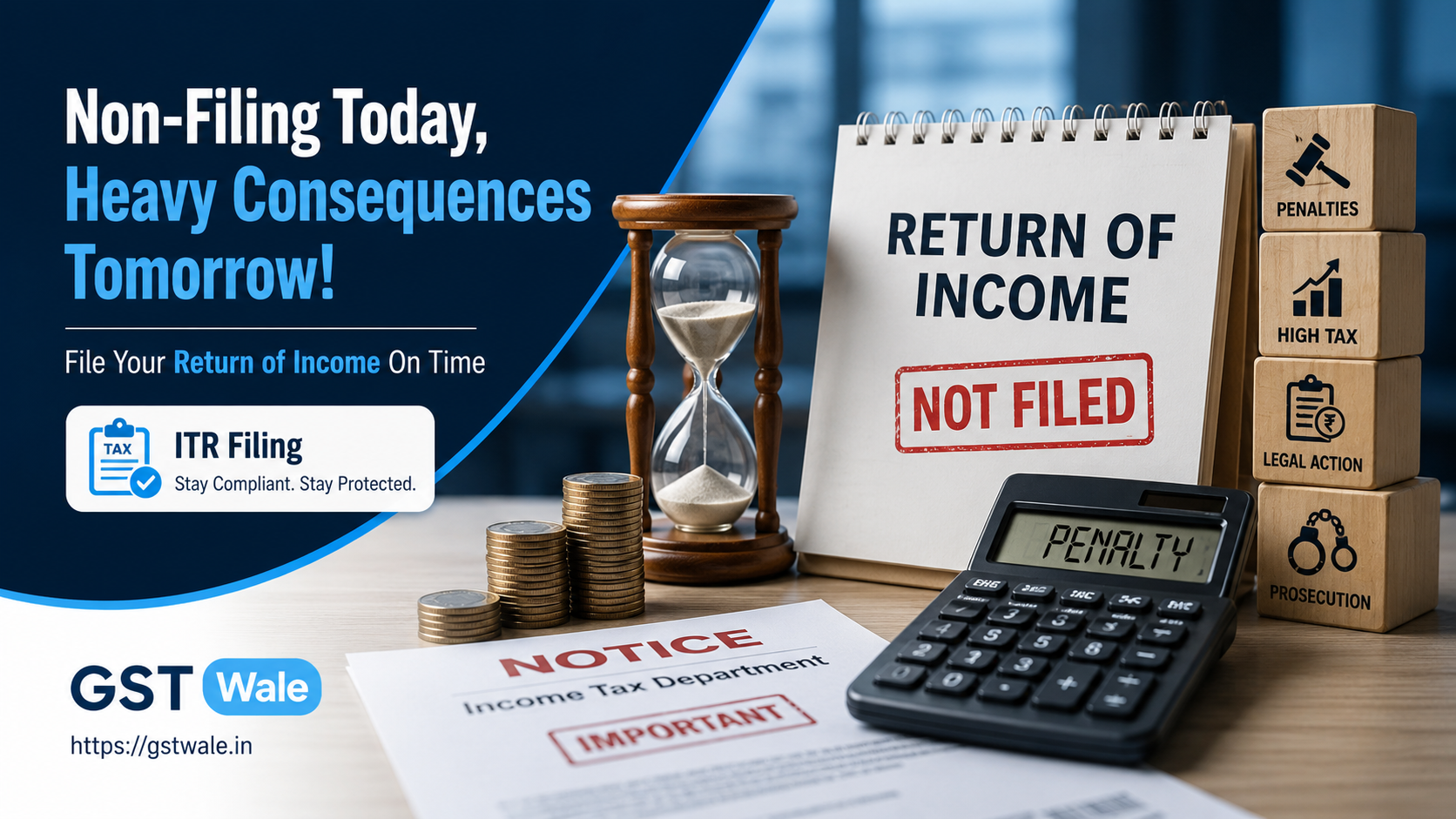
Filing your return of income is one of the most important financial responsibilities for every taxpayer in India. Whether you are a salaried employee, freelancer, business owner, or professional, timely compliance helps you avoid unnecessary legal and financial troubles. At GST Wale, we often meet taxpayers who assume that if they have no tax liability, they do not need to file their return of income. Unfortunately, this misconception can prove costly.
Many taxpayers ignore filing deadlines until they receive notices from the Income Tax Department. By then, the consequences may include penalties, interest, or even legal proceedings. If you need professional assistance with ITR Filing, expert guidance can help you complete the process accurately and on time while avoiding future complications.
Why Filing Your Return of Income Matters
Your return of income is much more than a tax form. It serves as an official declaration of your earnings, deductions, exemptions, and taxes paid during a financial year. Filing it regularly establishes your financial credibility and demonstrates compliance with Indian tax laws.
A properly filed return of income is often required for:
- Applying for home, vehicle, or business loans.
- Visa applications for many countries.
- Claiming tax refunds.
- Carrying forward eligible business or capital losses.
- Maintaining a clean tax compliance history.
Ignoring your return of income can create financial complications that extend far beyond taxation.
What Happens If You Skip Your Return of Income?
Many taxpayers believe missing one year's filing will have no serious impact. However, the Income Tax Department has significantly strengthened its monitoring systems over the last few years.
1. Notices from the Income Tax Department
If your financial transactions indicate taxable income but your return of income is missing, you may receive notices requesting an explanation. These notices often arise when your PAN is linked with:
- High-value banking transactions
- Property purchases
- Large investments
- Stock market transactions
- Significant foreign remittances
Ignoring such notices can lead to further scrutiny.
2. Detection Through the Non-Filer Monitoring System
The Income Tax Department uses the non-filer monitoring system to identify individuals who have substantial financial transactions but have not submitted their return of income.
The system collects information from multiple sources, including banks, financial institutions, registrars, employers, and other reporting entities. If discrepancies are identified, taxpayers may receive a compliance notice asking them to explain why the return of income has not been filed.
3. Compliance Check Becomes Necessary
Many taxpayers receive an online communication asking them to complete a compliance check. This process allows the department to verify whether income has been correctly reported or whether filing obligations have been ignored.
Providing inaccurate responses or failing to respond within the prescribed time can increase the chances of detailed scrutiny.
Financial Consequences of Not Filing a Return of Income
Late Filing Fees
Missing the due date for your return of income may attract late filing fees under the Income Tax Act, depending upon your total income and applicable provisions.
Interest on Outstanding Tax
If tax remains unpaid, interest continues to accumulate until payment is made. Even a relatively small unpaid amount can grow substantially over time.
High Tax Deduction
One lesser-known consequence is high tax deduction. Certain taxpayers who consistently fail to file their return of income may become subject to higher Tax Deducted at Source (TDS) under applicable provisions.
This means more tax gets deducted from payments received, reducing your immediate cash flow until the excess amount is claimed through future filings.
Loss of Refund
If excess tax has already been deducted from your salary or other income, failing to file your return of income may delay or even result in the loss of your legitimate refund claim within prescribed timelines.
Best Judgment Assessment: When the Department Estimates Your Income
If a taxpayer fails to file the required return of income despite being liable, the Assessing Officer may initiate a best judgment assessment.
Under this process, the department estimates taxable income based on available information rather than relying on the taxpayer's records.
This estimation may not always favour the taxpayer because:
- Eligible deductions may not be considered.
- Business expenses may not be allowed.
- Income may be estimated conservatively by the department.
- Additional tax demand may arise.
Once such an assessment is completed, challenging it often requires significant documentation and professional representation.
Can Non-Filing Lead to Prosecution?
Yes, in serious cases, continued failure to file a return of income may result in prosecution under the Income Tax Act.
Although prosecution is generally reserved for more severe and intentional cases of non-compliance, taxpayers should never assume that repeated defaults will be ignored.
The consequences may include:
- Criminal proceedings in specified situations.
- Financial penalties.
- Reputational damage.
- Lengthy legal processes.
Regular compliance remains the safest and most cost-effective approach.
Real-Life Example
Consider a freelance graphic designer earning income from multiple clients. Since tax was deducted on several invoices, she believed filing her return of income was unnecessary.
Later, she received a notice because the department's systems identified income reflected through TDS statements and banking records. Besides responding to departmental communications, she also had to pay interest and late fees before regularising her compliance.
Had she filed her return of income on time, she would have avoided unnecessary expenses and received her eligible refund much earlier.
How to Stay Compliant
Following a few simple practices can help you avoid unnecessary tax issues.
Maintain Proper Financial Records
- Salary documents
- Business invoices
- Bank statements
- Investment proofs
- TDS certificates
Review Your Tax Liability Early
Do not wait until the filing deadline. Reviewing your financial records well in advance helps identify missing documents and tax-saving opportunities.
Respond Promptly to Notices
If you receive any communication from the Income Tax Department, never ignore it. Timely responses often prevent matters from escalating.
Seek Professional Guidance
Tax laws change regularly. Professional advice ensures your return of income is filed accurately while claiming every eligible deduction available under the law.
Frequently Asked Questions
Is filing a return of income mandatory if no tax is payable?
Not always. However, many taxpayers are required to file their return of income based on income levels, specific financial transactions, or other legal conditions. It is advisable to evaluate your filing obligation every financial year.
Can I receive a refund without filing my return of income?
No. If excess tax has been deducted, filing your return of income is generally necessary to claim the eligible refund from the Income Tax Department.
What is the non-filer monitoring system?
The non-filer monitoring system is an analytical mechanism used by the Income Tax Department to identify taxpayers who have reportable financial transactions but have not filed their return of income.
What is a best judgment assessment?
A best judgment assessment allows the tax authorities to estimate your taxable income when you fail to furnish the required return of income or do not cooperate during assessment proceedings.
Can repeated non-filing result in prosecution?
Yes. In certain serious cases involving deliberate and continued non-compliance, prosecution provisions under the Income Tax Act may apply, depending on the facts and legal requirements.
Skipping your return of income may appear harmless today, but the long-term consequences can be severe. From notices, interest, and penalties to compliance checks, higher tax deductions, best judgment assessment, and even prosecution, the cost of non-compliance is often much higher than timely filing.
At GST Wale, we help individuals, professionals, and businesses file their return of income accurately and within the prescribed timelines. Our experienced tax professionals ensure complete compliance while helping you maximise eligible tax benefits. Don't wait for a notice to arrive—partner with GST Wale today and keep your tax journey smooth, compliant, and stress-free.
 Previous