


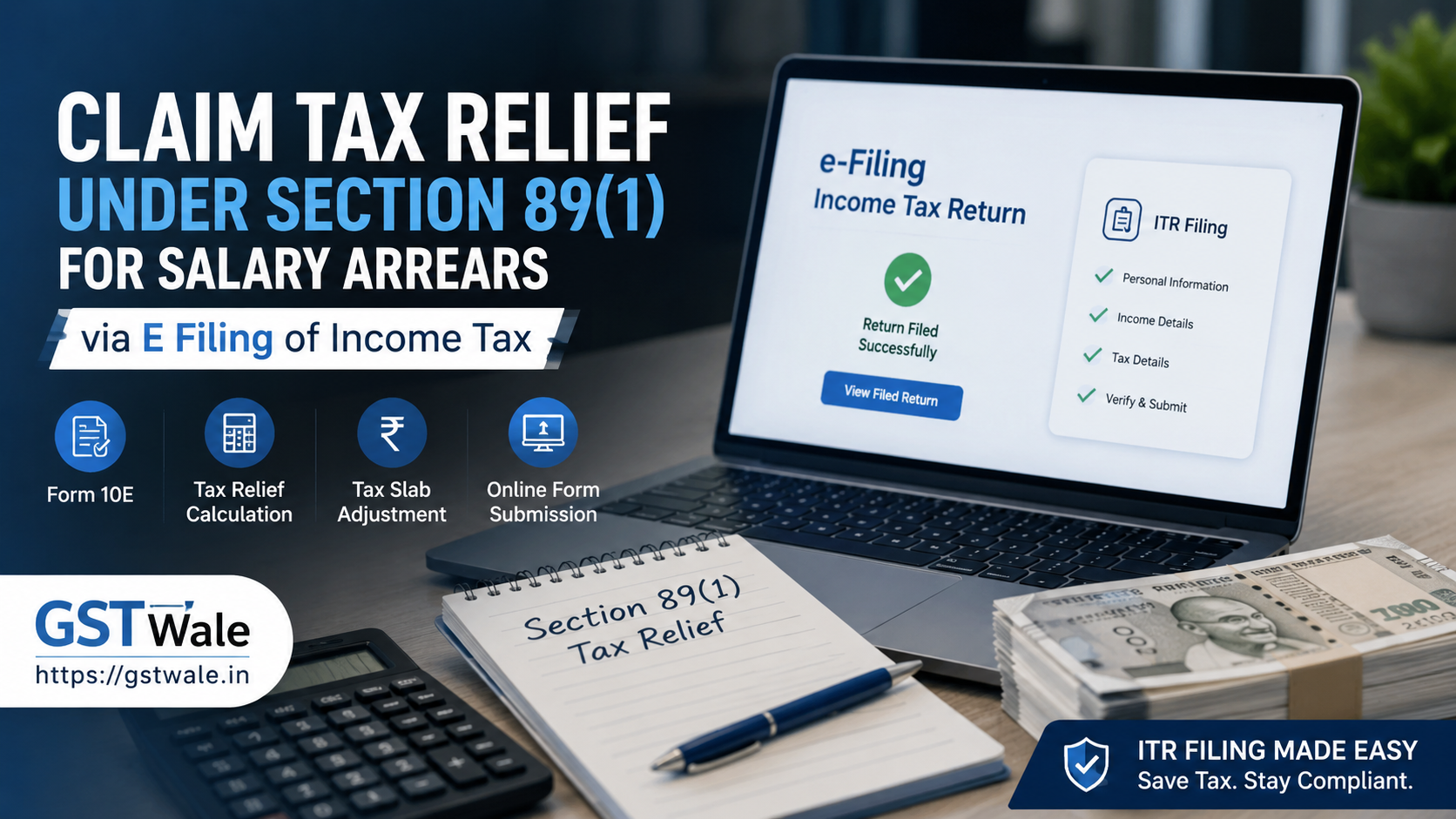
How to Claim Tax Relief Under Section 89(1) for Arrears of Salary via E Filing of Income Tax
How to Claim Tax Relief Under Section 89(1) for Arrears of Salary via E Filing of Income Tax
Many salaried taxpayers receive pending salary, bonus, or revised pay in a later financial year due to delayed payments or pay revisions. While receiving a lump sum amount is good news, it can also increase your taxable income and push you into a higher tax slab. Fortunately, the Income Tax Act provides relief under Section 89(1), allowing eligible taxpayers to reduce the additional tax burden arising from salary arrears.
If you are planning the e filing of income tax, it is important to understand how Section 89(1) works and why filing Form 10E is mandatory before claiming this benefit. At GST Wale, we regularly help taxpayers complete their ITR Filing accurately while ensuring they claim every eligible deduction and relief.
What Is Section 89(1) in the Income Tax Act?
Section 89(1) provides tax relief when an employee receives salary arrears or advance salary in a financial year that relates to earlier years. Since the income is taxed in the year of receipt, it may increase your taxable income and result in a higher tax liability.
The law allows taxpayers to calculate the difference in tax payable if the income had been received in the correct year. The additional tax paid because of delayed payment can then be reduced through Section 89(1).
While completing the e filing of income tax, claiming this relief correctly can significantly reduce your overall tax liability.
Who Can Claim Relief Under Section 89(1)?
You may be eligible if you receive any of the following:
- Salary arrears
- Advance salary
- Revised pay due to pay commission recommendations
- Family pension received in arrears
- Compensation received after delay in salary settlement
The most common situation involves government employees, PSU staff, teachers, bank employees, and private-sector professionals receiving salary revisions after several years.
Why Form 10E Is Mandatory Before E Filing of Income Tax
One of the biggest mistakes taxpayers make is claiming Section 89(1) relief without submitting Form 10E.
Form 10E contains the detailed tax relief calculation required by the Income Tax Department. Without this form, your relief claim may be rejected even if you are otherwise eligible.
Before completing the e filing of income tax, ensure Form 10E has already been submitted through the Income Tax portal.
Information Required in Form 10E
- Financial year of receiving arrears
- Year to which the salary pertains
- Amount of salary arrears received
- Income details for previous years
- Revised tax calculations
Step-by-Step Process to Claim Section 89(1) Relief During E Filing of Income Tax
Step 1: Collect Salary Arrears Details
Obtain your salary arrears statement from your employer. The document should clearly mention the amount received and the financial years to which it belongs.
Step 2: Calculate Tax Relief
Calculate the tax payable with and without the arrears for the current year. Then calculate what your tax would have been if the arrears had been taxed in the respective previous years.
This comparison determines the eligible relief under Section 89(1).
Step 3: Complete Form 10E
Submit Form 10E through the Income Tax e-filing portal before filing your return.
The online form submission process is straightforward if all salary details are available.
Step 4: File Your Income Tax Return
After Form 10E has been successfully submitted, proceed with the e filing of income tax. Enter the Section 89(1) relief amount while preparing your return.
Step 5: Verify Your Return
Complete the verification process using Aadhaar OTP, net banking, or any other approved verification method.
Example of Tax Relief Calculation
Suppose Mr. Raj received ₹3,00,000 as salary arrears during FY 2025-26 relating to FY 2023-24.
Without Section 89(1), the additional income pushes him into a higher tax slab, increasing his tax liability significantly.
After performing the required tax relief calculation, it is found that had the arrears been received in FY 2023-24, the tax payable would have been much lower. The difference becomes eligible for relief under Section 89(1).
This benefit prevents taxpayers from paying excessive tax merely because of delayed salary payments.
How Tax Slab Adjustment Works
One of the key concepts behind Section 89(1) is tax slab adjustment.
Salary arrears may artificially increase your annual income in the year of receipt. This can move you into a higher tax bracket even though the income actually belonged to earlier years.
Section 89(1) adjusts this imbalance by comparing tax liabilities across relevant financial years and allowing appropriate relief.
While performing the e filing of income tax, this adjustment helps ensure fair taxation.
Common Mistakes to Avoid
- Not submitting Form 10E before filing the return.
- Using incorrect salary figures.
- Ignoring previous year's income details.
- Entering wrong assessment years.
- Claiming relief without proper employer documentation.
- Skipping verification after return filing.
Avoiding these mistakes can prevent notices and unnecessary delays in processing your return.
Documents Required
- Form 16
- Salary arrears statement
- Salary slips
- Previous years' Income Tax Returns
- Income computation details
- PAN and Aadhaar
Benefits of Claiming Section 89(1)
- Reduces excess tax liability.
- Helps achieve legitimate tax saving.
- Prevents higher taxation because of delayed salary payments.
- Ensures compliance with Income Tax provisions.
- Makes the e filing of income tax more accurate.
Frequently Asked Questions
1. Is Form 10E compulsory for claiming Section 89(1) relief?
Yes. Form 10E must be submitted before claiming relief under Section 89(1). Without it, the Income Tax Department may reject your claim during processing.
2. Can private employees also claim Section 89(1)?
Yes. Any salaried employee receiving eligible salary arrears or advance salary can claim the relief, provided all conditions are satisfied.
3. Can I file Form 10E after filing my income tax return?
No. Ideally, Form 10E should be submitted before completing the return. Filing it later may lead to the relief being denied.
4. Does Section 89(1) apply to pension arrears?
Yes. Family pension received in arrears and certain pension-related payments may also qualify, subject to the prescribed conditions.
5. Does claiming Section 89(1) guarantee a refund?
Not necessarily. The relief reduces excess tax caused by delayed income. Depending on your overall tax liability, it may reduce tax payable or increase your refund amount.
Receiving salary arrears should not result in an unfair tax burden. Section 89(1) ensures that taxpayers are taxed fairly by allowing relief where delayed salary payments increase their tax liability. The key is to complete Form 10E correctly, perform the required calculations, and accurately complete the e filing of income tax.
If you want a hassle-free filing experience and wish to ensure every eligible tax benefit is claimed correctly, GST Wale is here to help. Our experienced tax professionals assist individuals and businesses with accurate return preparation, Form 10E compliance, tax planning, and complete income tax filing support. Contact GST Wale today and file your return with confidence while maximizing your legitimate tax savings.
 Previous