


Understanding the Implications of the New Portal Layout on GST R 3b Return Preparation
Understanding the Implications of the New Portal Layout on GST R 3b Return Preparation
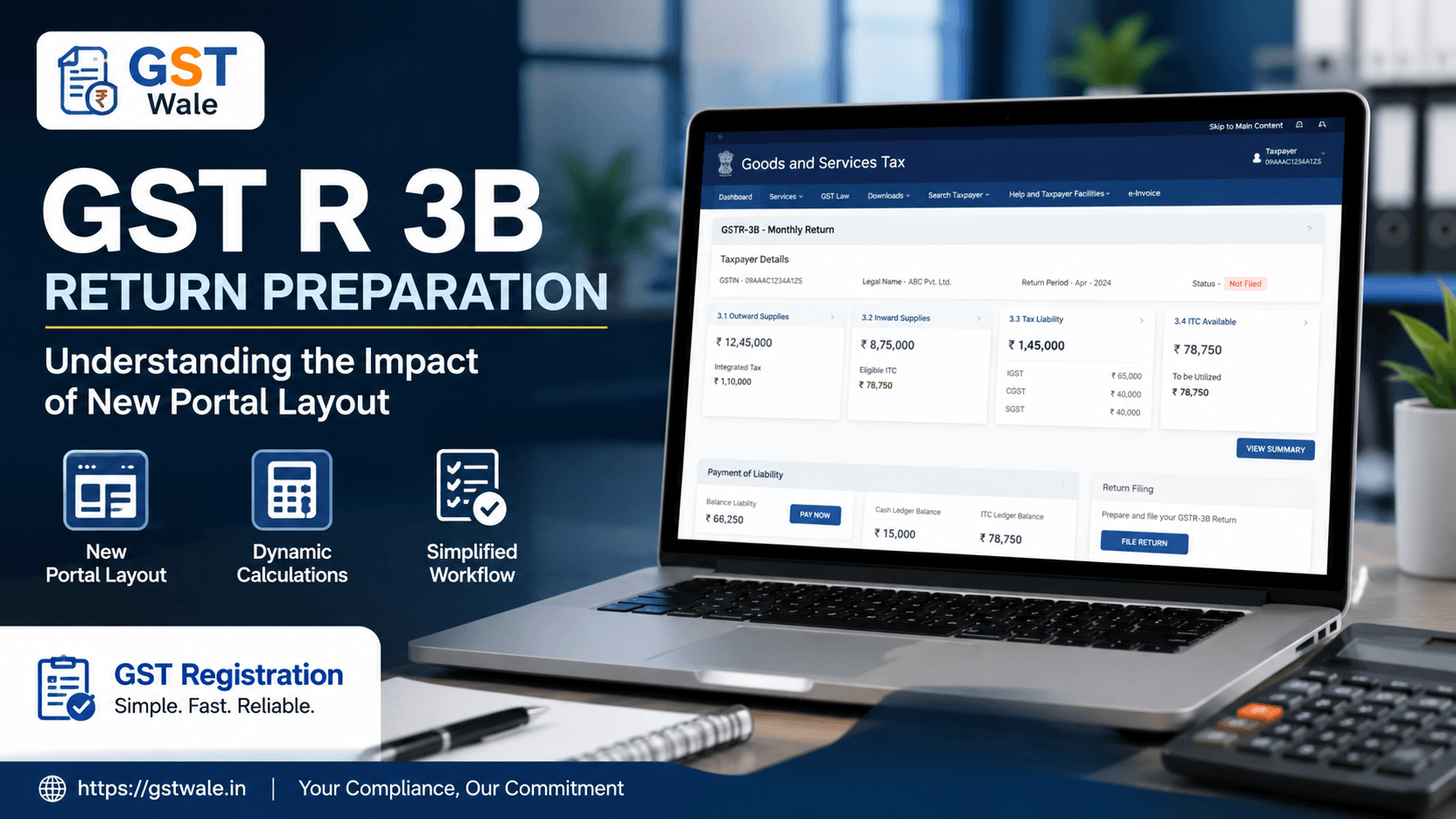
GST return filing has become increasingly technology-driven, and changes in the GST portal can directly affect how businesses prepare and submit their returns. The latest portal layout brings a more structured interface, revised navigation and several interactive features that can change the way taxpayers approach gst r 3b preparation. While the objective is to make filing easier, taxpayers may initially need time to understand where information appears and how calculations are presented.
For businesses that are also managing compliance activities such as GST Registration, understanding these portal changes can help avoid last-minute mistakes. At GST Wale, we believe that a new interface should not change your compliance discipline. Instead, it should encourage you to review your data carefully before submitting your gst r 3b return.
What Has Changed in the GST Portal Layout?
The GST portal has gradually moved towards a more guided and taxpayer-friendly interface. Instead of presenting every option on a complicated screen, newer layouts generally organise information into clearer sections and workflows.
For a taxpayer preparing gst r 3b, this means that some familiar steps may appear differently. The location of fields, buttons, summaries and validation messages may change even when the underlying compliance requirement remains the same.
The important point is that a change in appearance does not automatically mean a change in tax law. Taxpayers should distinguish between a portal interface update and an amendment to GST provisions.
A More Structured User Experience
The revised design can make it easier to move through the return systematically. Taxpayers may notice:
- Better-organised return sections
- Clearer navigation between different tables
- More visible tax liability summaries
- Improved validation messages
- Additional system-generated information
- More interactive calculation areas
These changes are particularly useful for businesses that previously depended heavily on spreadsheets or manual calculations.
How the New Layout Affects GST R 3B Preparation
The biggest practical impact is on the preparation workflow. A taxpayer should not simply open the portal and start entering figures. The gst r 3b return should ideally be prepared after reconciling sales, purchases, input tax credit and tax liability.
The new interface may make some information easier to identify, but the responsibility for reporting correct figures remains with the taxpayer.
Dynamic Calculation Fields
One important feature taxpayers should watch for is dynamic calculation fields. Depending on the return section and information entered, certain amounts may be calculated or updated automatically.
For example, if taxable values and applicable tax amounts are entered in relevant fields, the portal may reflect corresponding totals or balances.
This can reduce arithmetic errors, but it does not eliminate the need for verification. A calculated figure can only be as accurate as the information entered into the system.
Before submitting gst r 3b, check:
- Taxable turnover
- IGST, CGST and SGST amounts
- Reverse-charge liabilities
- Eligible input tax credit
- ITC reversals, wherever applicable
- Net tax payable
Automated Comparison and Data Verification
Another important development is the increasing role of system-based comparisons. Taxpayers are becoming more dependent on information already available through GST systems and related returns.
An automated comparison engine can make discrepancies easier to identify. However, taxpayers should not assume that every difference automatically represents an error.
For instance, a purchase invoice may appear in supplier-reported data during a different period. Similarly, amendments made by suppliers can change the information available to the recipient.
Therefore, before finalising gst r 3b, compare the portal information with your accounting records and supporting documents.
Why Reconciliation Still Matters
Technology can highlight differences, but professional judgement is still required.
Consider a business that has recorded ₹10 lakh of eligible purchases in its books, while the information currently visible through the GST system reflects only ₹9 lakh. The difference could arise because of timing, supplier reporting, amendments or an accounting issue.
Simply accepting or rejecting the entire amount without investigation can create compliance problems.
A proper reconciliation should identify the reason for the difference before the return is filed.
Sequential Workflow Steps for GST R 3B
The redesigned interface encourages taxpayers to follow sequential workflow steps, which can be useful for businesses with regular monthly compliance.
A practical approach is:
Step 1: Finalise Books of Accounts
Make sure sales, purchases, expenses, credit notes and debit notes are properly recorded before starting return preparation.
Step 2: Reconcile Outward Supplies
Compare sales records with the relevant GST reporting data. Pay special attention to amendments, cancellations and credit notes.
Step 3: Review Input Tax Credit
Review purchase records and available ITC information. Identify eligible credit as well as blocked or reversible credits.
Step 4: Calculate Tax Liability
Determine the correct liability under IGST, CGST and SGST, including applicable reverse-charge obligations.
Step 5: Enter Information on the Portal
Use the updated portal interface to enter or verify the required figures. Do not rush through unfamiliar screens.
Step 6: Review the System-Generated Summary
Check the totals and calculated figures carefully. If the portal displays a warning or discrepancy, investigate it before proceeding.
Step 7: Make Payment and File
Once the liability and ITC have been verified, complete payment requirements and submit the return using the appropriate authentication process.
This structured approach can make gst r 3b preparation more reliable, particularly for businesses with multiple transactions.
Benefits of Simplified Taxpayer Portals
The movement towards simplified taxpayer portals can be particularly beneficial for small businesses and first-time taxpayers.
A cleaner interface can reduce confusion about where information needs to be entered. Better visibility of calculations can also make it easier for business owners to understand their tax position.
However, convenience should never replace review.
A portal can make filing easier, but it cannot determine whether a transaction has been correctly recorded in your books or whether an ITC claim is legally eligible in every situation.
Common Mistakes to Avoid After the Portal Update
Whenever the GST portal changes, taxpayers may make mistakes simply because they are unfamiliar with the new layout.
Some common mistakes include:
- Assuming a changed screen means changed tax rules
- Entering figures without reconciling accounts
- Accepting system-generated figures without checking them
- Ignoring portal warnings
- Missing amendments or credit notes
- Claiming ITC without proper verification
- Filing immediately after entering data without a final review
For businesses with substantial transactions, it is advisable to maintain a documented return-preparation process rather than relying solely on the portal interface.
Practical Advice from GST Wale
At GST Wale, our advice is simple: treat the portal as a filing platform, not as a substitute for accounting and tax review.
Before submitting gst r 3b, keep your books updated, reconcile GST-related data and review every major figure. If the portal displays a new calculation or comparison, understand why the number has appeared instead of accepting it automatically.
Businesses should also keep screenshots, reconciliations and relevant working papers wherever appropriate, especially when dealing with unusual transactions or significant differences.
The more organised your internal records are, the easier it becomes to adapt whenever the GST portal changes.
FAQs About GST R 3B and the New Portal Layout
Does the new portal layout change GST R 3B rules?
Not necessarily. A change in portal design or navigation does not by itself change the underlying GST law. Taxpayers should check official notifications and applicable provisions whenever there is uncertainty about a compliance requirement.
Are dynamic calculation fields always correct?
They can reduce manual calculation errors, but taxpayers should still verify the figures. Incorrect inputs can produce incorrect calculated results, so the final responsibility for the return remains with the taxpayer.
Should I rely completely on portal-generated information?
No. Portal information should be reconciled with your books, invoices and other relevant records. System-generated information is useful for verification but should not replace professional review.
What should I do if figures do not match?
First identify the reason for the difference. Check transaction dates, supplier reporting, amendments, credit notes and accounting records. Do not make an adjustment simply to force the figures to match.
Can a CA help with GST R 3B preparation?
Yes. A CA or qualified GST professional can help with reconciliation, ITC review, tax liability assessment and return preparation, particularly when transactions are complex or discrepancies are significant.
Prepare GST R 3B with Confidence
The new GST portal layout is intended to make compliance more organised and user-friendly, but taxpayers still need to exercise care while preparing gst r 3b. Features such as dynamic calculation fields, automated comparisons and sequential workflow steps can improve the filing experience, provided the underlying data is accurate.
The best approach is to combine technology with proper accounting review and GST reconciliation. If you are unsure about your return, ITC position or tax liability, professional guidance can help you file correctly and avoid unnecessary compliance risks.
GST Wale helps businesses navigate GST compliance with practical guidance and professional support. If you want a smoother, more reliable GST compliance process, connect with GST Wale and get the right assistance for your business.
 Previous