


How to File a Nil GST Return Online Without Hiring an Accountant
How to File a Nil GST Return Online Without Hiring an Accountant
If your business is registered under GST but you had no sales or purchases during a particular tax period, you may still need to file a gst return. Many small business owners assume that having no transactions means there is nothing to do, but that is not always the case. In such situations, filing a nil gst return is generally required to keep your GST compliance up to date.
The good news is that you do not necessarily need to hire an accountant every month for this simple task. If you understand the basic process, you can complete your gst filing yourself through the official GST portal. And if you are starting a new business, getting your GST Registration done correctly is the first step toward maintaining proper compliance.
At GST Wale, we often guide small traders, freelancers, consultants and service providers who want to handle routine GST work themselves. This guide explains the process in simple language, including how to file a nil gst return, what to check before filing and what mistakes to avoid.
What Is a Nil GST Return?
A nil gst return is a GST return filed for a tax period when there are no reportable business transactions or tax liabilities, subject to the applicable return requirements.
For example, suppose Rahul has a small consulting business. His GST registration is active, but during June he did not raise any invoice, make a taxable purchase, or conduct any other transaction that needs to be reported. He may have to submit a nil return for that period.
The important point is that an inactive month does not automatically cancel your GST filing responsibility.
Depending on your registration and filing requirements, you may need to file GSTR-3B and other applicable returns even when there is no business activity.
Who Can File a Nil GST Return?
A registered taxpayer may generally need to file a nil return when there are no relevant transactions or tax liabilities for the applicable period.
Common examples include:
- A newly registered business that has not started operations.
- A freelancer who had no clients during the month.
- A shop owner whose business temporarily remained closed.
- A service provider with no invoices during the tax period.
- A business that had no outward taxable supplies and no relevant inward transactions.
However, do not assume that "no sales" always means "nil return." Other transactions, purchases, reverse-charge liabilities, amendments or credit-related matters may affect your filing position.
When in doubt, check the return requirements applicable to your GST registration before submitting the return.
Things to Check Before Filing a Nil GST Return
Before you start your gst filing, spend a few minutes checking whether your return can actually be filed as nil.
Check Your GST Login
Keep your GST username, password and registered mobile number available. Log in to the GST portal and check whether the return for the relevant tax period is available for filing.
Also verify that you have selected the correct financial year and return period. Choosing the wrong month is a simple mistake that can create unnecessary compliance problems.
Confirm There Were No Transactions
Review your sales invoices, purchase records and bank transactions for the period.
Check whether you:
- Issued any sales invoice.
- Received an advance related to taxable supplies.
- Made purchases attracting applicable GST treatment.
- Had any reverse-charge liability.
- Claimed or intended to claim input tax credit.
- Made any other transaction that needs reporting.
If everything is genuinely nil, you can proceed with the applicable nil filing.
How to File a Nil GST Return Online
The online process is straightforward when there are no transactions to report.
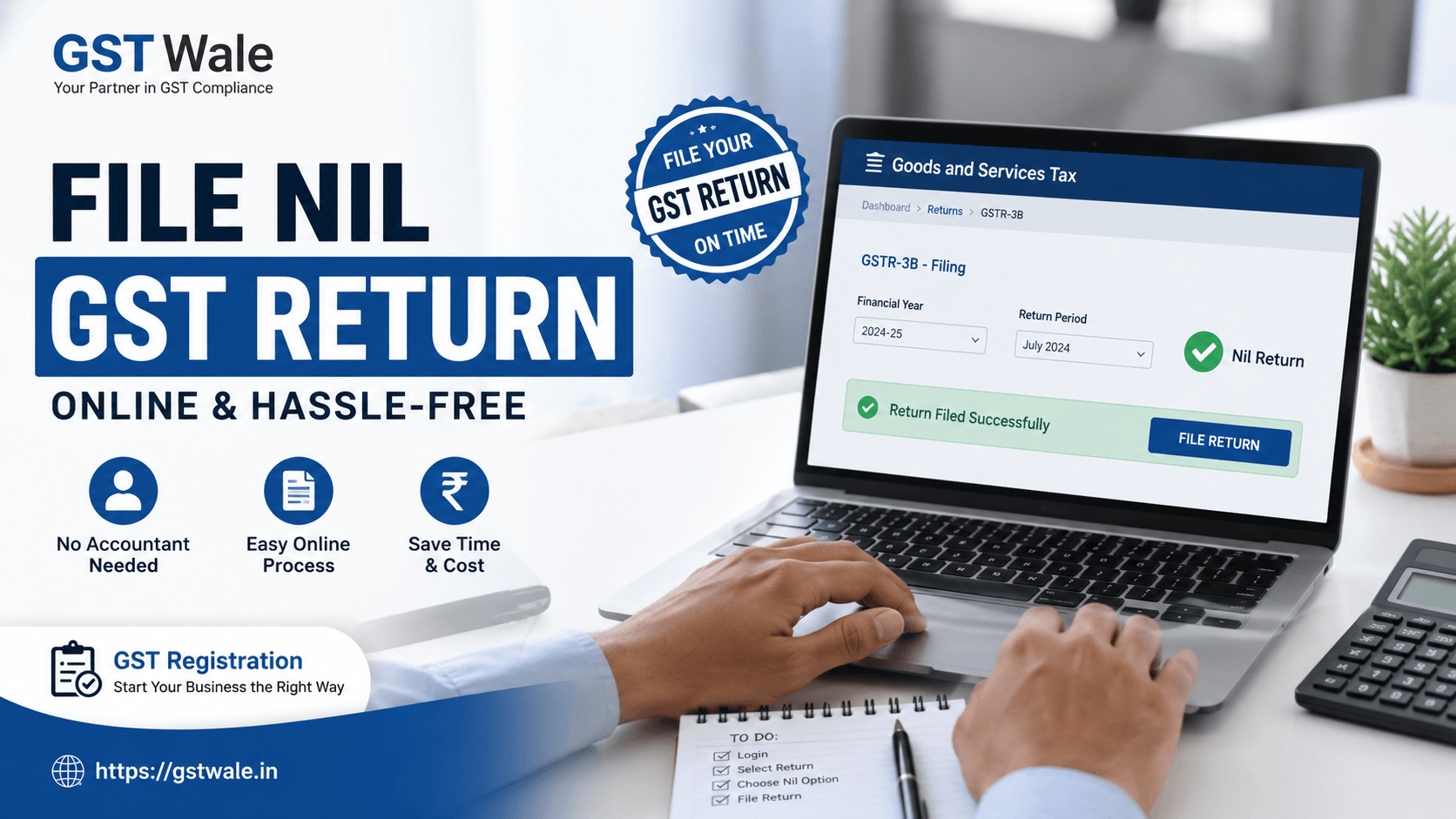
Step 1: Visit the GST Portal
Open the official GST portal and log in using your GST credentials.
After logging in, go to the return filing section and select the appropriate financial year and return period.
Step 2: Select GSTR-3B
For regular taxpayers, GSTR-3B is one of the important periodic GST returns.
Select the relevant GSTR 3 B return for the month or quarter applicable to your filing frequency.
Carefully check the return period before proceeding.
Step 3: Select the Nil Return Option
If the system provides the option to file the return as nil and you meet the conditions, select the appropriate nil filing option.
The portal may ask you to confirm that there are no outward supplies, inward supplies attracting applicable tax, or other relevant liabilities for the period.
Read the declaration carefully before confirming.
Step 4: Verify the Return Details
Even when filing a nil gst return, do not blindly click through every screen.
Check the displayed information, return period and taxpayer details. Make sure the return corresponds to the correct GSTIN and tax period.
A few seconds of verification can prevent a filing error.
Step 5: File the Return
After completing the required confirmation, proceed with filing.
Depending on the portal's available options and your taxpayer profile, the return may be authenticated through the applicable electronic verification method.
Once successfully filed, save the acknowledgement or filing reference for your records.
Does a Nil GST Return Have a Late Fee?
This is one of the most common questions we receive at GST Wale.
A return can attract a late fee if it is not filed within the applicable due date. The exact amount and treatment can depend on the type of return, taxpayer category and applicable government notifications.
Do not assume that because your tax liability is zero, late filing has no consequences.
For taxpayers who miss a deadline, a late fee waiver may sometimes be announced by the government for specific situations or periods. Such relief is not automatic and should not be assumed for every delayed return.
The safest approach is to file your return on time rather than wait for a possible waiver.
Common Mistakes to Avoid During Nil GST Filing
Filing a nil return is simple, but mistakes can still happen.
Assuming No Sales Means No Return
Your business may have had no sales, but you should still check whether another transaction creates a reporting requirement.
Selecting the Wrong Tax Period
Always double-check the month or quarter before filing. This is particularly important when filing several pending returns.
Ignoring GST Notifications
GST rules, filing procedures, deadlines and relief measures can change through government notifications. Keep yourself updated instead of relying on information from an old YouTube video or social media post.
Waiting Until the Last Day
The GST portal can sometimes experience technical issues or heavy traffic near deadlines. Filing early gives you time to resolve login, authentication or technical problems.
Not Keeping Proof of Filing
After completing your gst return, download or retain the filing acknowledgement and relevant records. Good documentation makes future compliance and reconciliation much easier.
Nil GST Return Example
Consider Priya, who runs a small graphic design business.
Her GST registration is active, but she did not receive any taxable work during July. She checks her records and confirms:
- No sales invoices were issued.
- No taxable business purchase needs to be reported.
- No applicable reverse-charge liability exists.
- No other reportable transaction occurred.
After logging into the GST portal, she selects the appropriate return period and GSTR-3B. Since the applicable conditions for nil filing are satisfied, she completes the nil filing process and saves the acknowledgement.
The entire process can be completed without hiring an accountant for that particular routine filing.
However, if Priya had a complicated transaction, input tax credit issue, reverse-charge liability or other unusual matter, professional advice would be sensible.
When Should You Hire a GST Professional?
You can handle a straightforward nil gst return yourself, but not every GST return is simple.
Consider professional assistance if your business has:
- Multiple types of taxable supplies.
- Interstate transactions.
- Reverse-charge transactions.
- Significant input tax credit.
- Credit notes or amendments.
- E-commerce sales.
- GST notices or disputes.
- Previous returns that were filed incorrectly.
- Multiple GST registrations.
The cost of professional assistance can be worthwhile when the return involves complicated transactions or potential tax exposure.
FAQs About Nil GST Return
Can I file a nil gst return myself?
Yes, if your return genuinely qualifies for nil filing and you are comfortable using the GST portal. The process is designed to be completed online, although complicated transactions may require professional assistance.
Is GSTR 3 B mandatory if there are no sales?
Whether you need to file depends on your taxpayer category and applicable GST filing requirements. A registered taxpayer should not simply skip a return because there were no sales. Check the applicable filing obligation for the relevant period.
What happens if I do not file a nil GST return?
A missed return can lead to late fees and other compliance consequences. It may also create problems when you later need to bring your GST records up to date.
Can I file an old nil GST return?
Pending returns may generally need to be filed for the relevant tax periods, subject to the applicable portal rules, fees and government notifications. If several returns are pending, check the complete compliance position before filing.
Is GST filing difficult for a small business?
A straightforward nil gst return is usually much easier than a return involving multiple transactions. Once you understand the portal and filing sequence, routine compliance becomes more manageable.
File Your GST Return on Time
A nil month does not necessarily mean you can forget about your GST compliance. If your business had no reportable activity and qualifies for nil filing, completing the gst return online can be a relatively simple process.
The key is to verify your transactions, select the correct return period, complete GSTR-3B where applicable and file before the due date. Do not depend on a possible late fee waiver or wait until the deadline.
At GST Wale, our goal is to make GST compliance easier for Indian business owners. Whether you need help understanding gst filing, GST registration or more complicated compliance matters, our experts can help you make the right decision and stay on track.
 Previous