


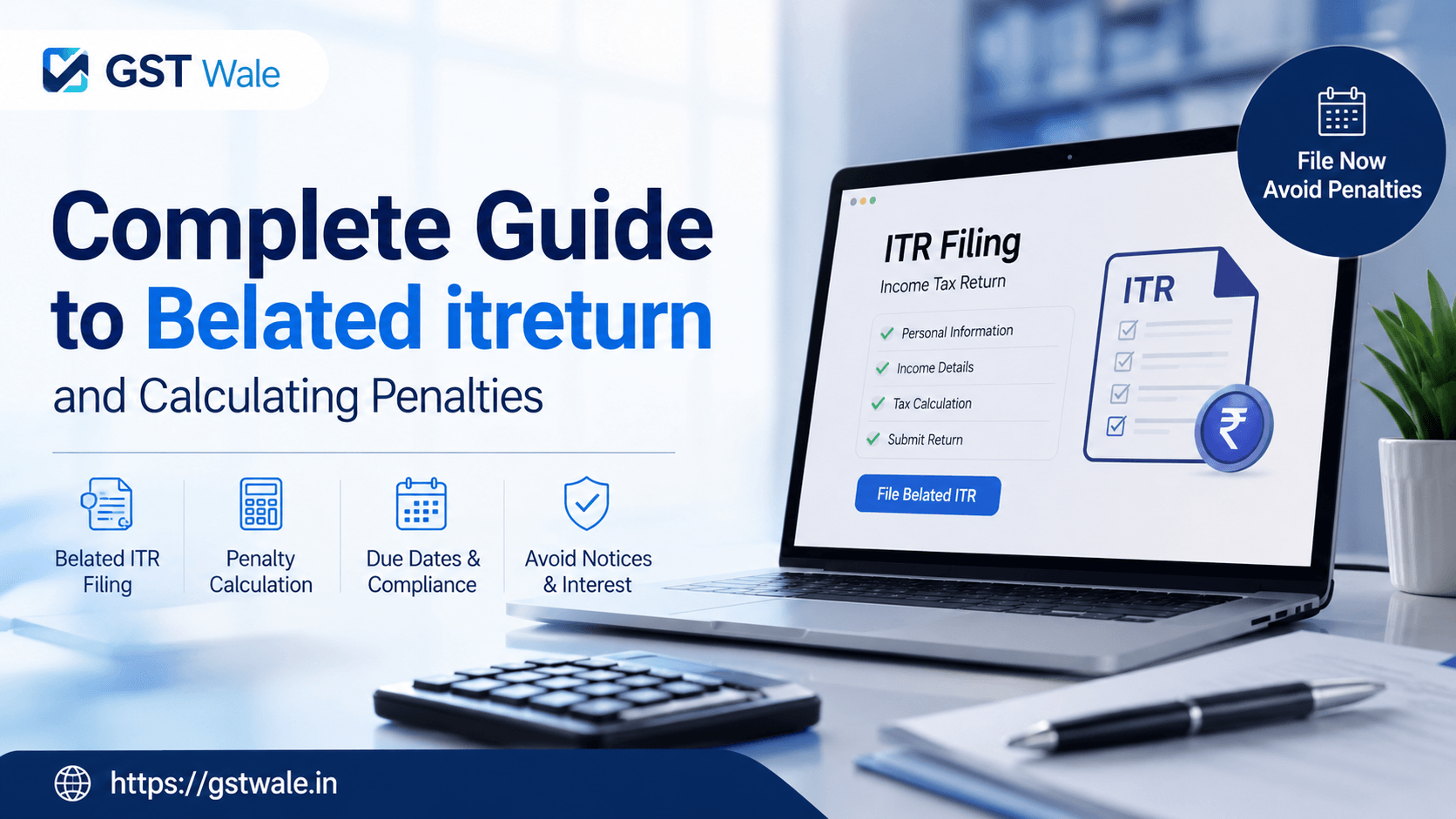
The Complete Guide to Filing a Belated ITR return and Calculating Penalties
The Complete Guide to Filing a Belated ITR return and Calculating Penalties
Missing the income tax return deadline can feel stressful, especially when you start hearing about penalties, notices, and interest charges. Every year, many taxpayers and small business owners realise they have missed the due date for filing their ITR return. The good news is that the Income Tax Department still allows you to submit a belated return within a specified time.
At GST Wale, we regularly help taxpayers who have missed the tax deadline and are worried about penalties or legal consequences. Whether you are a salaried employee, freelancer, trader, or business owner, understanding the rules around delayed filing can save you from unnecessary trouble and extra costs. If you need professional support for ITR Filing, it is always better to act early rather than wait for notices from the department.
In this complete guide, we will explain everything about filing a belated ITR return, calculating penalties, interest for late filing, and ways to avoid future mistakes.
What Is a Belated ITR return?
A belated ITR return is an income tax return filed after the original due date prescribed by the Income Tax Department.
Under Section 139(4) of the Income Tax Act, taxpayers who fail to file their return on time can still submit it before the end of the assessment year or before completion of assessment, whichever is earlier.
For example:
- If your original filing deadline was 31st July
- And you missed it
- You can still file a belated ITR return within the permitted timeline
However, delayed filing comes with certain financial consequences like penalties and interest charges.
Why Do Taxpayers Miss the ITR return Deadline?
There are several common reasons people fail to file their ITR return on time:
- Missing important financial documents
- Incorrect Form 16 details
- Confusion regarding tax deductions
- Business owners delaying bookkeeping
- Technical portal issues
- Lack of awareness about deadlines
- Waiting for refund calculations
At GST Wale, we often notice that many taxpayers ignore filing because they think there is no tax liability. But even in zero-tax situations, delayed tax return consequences can still affect future financial activities.
Delayed Tax Return Consequences You Should Know
Filing your ITR return late is not just about paying a small fine. There can be multiple consequences.
Late Fee Under Section 234F
The most common penalty is the late fee section 234F.
The penalty structure is generally:
- ₹5,000 if the ITR return is filed after the due date but before 31st December
- ₹10,000 if filed after 31st December
- ₹1,000 maximum penalty for taxpayers with income below ₹5 lakh
This late fee is mandatory in most cases and must be paid before submitting the belated ITR return.
Interest for Late Filing
Apart from penalties, taxpayers may also have to pay interest for late filing under Section 234A.
Interest is calculated:
- At 1% per month or part of the month
- On the unpaid tax amount
- From the original due date till the actual filing date
This means the longer you delay your ITR return, the higher your interest liability becomes.
Loss of Certain Tax Benefits
When you fail to file your ITR return on time, you may lose:
- Carry forward of business losses
- Carry forward of capital losses
- Certain deductions and exemptions
For business owners and investors, this can create major tax disadvantages in future years.
Delay in Refund Processing
If you are eligible for a refund, filing a belated ITR return may delay the refund process significantly.
Many taxpayers unknowingly block their own refunds simply because they postponed filing.
How To File a Belated ITR return
The process of filing a belated ITR return is quite similar to regular filing.
Step 1: Collect Required Documents
Keep these documents ready:
- PAN card
- Aadhaar card
- Form 16
- Bank statements
- Investment proofs
- TDS certificates
- Business income records
Step 2: Calculate Tax Liability
Before filing your ITR return:
- Calculate total income
- Deduct eligible exemptions
- Compute pending taxes
- Add late fee section 234F
- Add interest for late filing
This helps avoid rejection or future notices.
Step 3: Pay Outstanding Taxes
If tax is payable:
- Generate challan online
- Pay self-assessment tax
- Include penalty and interest
Only after clearing dues should you proceed with filing the belated ITR return.
Step 4: Submit Return on Income Tax Portal
Login to the official portal and:
- Choose the correct ITR form
- Select “Belated Return” under filing type
- Enter financial details carefully
- Verify and submit
Step 5: Complete Verification
Your ITR return filing is incomplete without verification.
You can verify using:
- Aadhaar OTP
- Net banking
- Demat account
- Bank account EVC
Example of Penalty Calculation for Belated ITR return
Let us understand with a practical example.
Example Scenario
Mr. Sharma had:
- Tax payable: ₹50,000
- Original due date: 31st July
- Actual filing date: 20th December
Penalty Calculation
Late Fee Under Section 234F
Since the return was filed after the due date but before 31st December:
- Late fee = ₹5,000
Interest for Late Filing
Interest under Section 234A:
- 1% per month
- Delay of 5 months
- Interest = ₹2,500
Total Additional Amount
- Tax = ₹50,000
- Penalty = ₹5,000
- Interest = ₹2,500
Total payable = ₹57,500
This example shows how quickly costs can increase after missing the tax deadline.
Can You Update Tax Return After Filing?
Yes, taxpayers can now update tax return details using the Updated Return facility under Section 139(8A).
This option is useful when:
- Income was missed earlier
- Wrong information was submitted
- Additional taxes need reporting
However, updated returns also attract additional taxes and penalties depending on timing.
At GST Wale, we recommend reviewing all financial records carefully before filing any ITR return to avoid future corrections.
Important Tips To Avoid Late Filing Problems
Maintain Proper Financial Records
Keep salary slips, invoices, and investment documents organised throughout the year.
Avoid Last-Minute Filing
Many portal-related issues happen near deadlines. Filing early reduces stress and errors.
Check AIS and Form 26AS
Mismatch in reporting can trigger notices later. Always reconcile details before submitting your ITR return.
Seek Professional Guidance
Tax laws change regularly. Professional review can help reduce errors and unnecessary penalties.
Financial Penalty Limits Every Taxpayer Should Understand
Many taxpayers believe penalties stop after paying late fee section 234F. That is not always true.
Additional liabilities may arise due to:
- Underreporting income
- Non-payment of self-assessment tax
- Interest accumulation
- Notices for non-compliance
In serious cases, delayed tax return consequences may also impact:
- Loan approvals
- Visa applications
- Financial credibility
That is why it is always advisable to file tax with penalty rather than ignoring compliance completely.
FAQs on Belated ITR return
Can I file my ITR return after the deadline?
Yes, you can file a belated ITR return within the permitted timeline under Section 139(4).
What is the penalty for late ITR return filing?
The late fee section 234F can go up to ₹10,000 depending on the delay and income level.
Is interest charged on delayed filing?
Yes, interest for late filing is charged under Section 234A at 1% per month on unpaid taxes.
Can I get a refund through a belated ITR return?
Yes, refunds can still be claimed through a belated ITR return, although processing may take longer.
Can I update tax return details later?
Yes, taxpayers can update tax return information through the Updated Return provision under Section 139(8A).
Filing your ITR return on time is always the best approach, but if you have already missed the deadline, do not panic. The Income Tax Department still provides an opportunity to submit a belated return and remain compliant.
However, taxpayers must understand the impact of late fee section 234F, interest for late filing, and other delayed tax return consequences before proceeding. Even a few months of delay can increase your overall tax burden significantly.
At GST Wale, we help individuals, professionals, and businesses file accurate ITR return forms while minimising penalties and compliance risks. Whether you need help to file tax with penalty, calculate dues, or update tax return details, our expert team is ready to assist you with reliable and practical guidance.
Do not wait for notices or legal complications. Connect with GST Wale today and get your ITR return filed correctly and professionally.
 Previous