


The Ultimate Post-Filing Guide: What to Do After income tax return itr Submission
The Ultimate Post-Filing Guide: What to Do After income tax return itr Submission
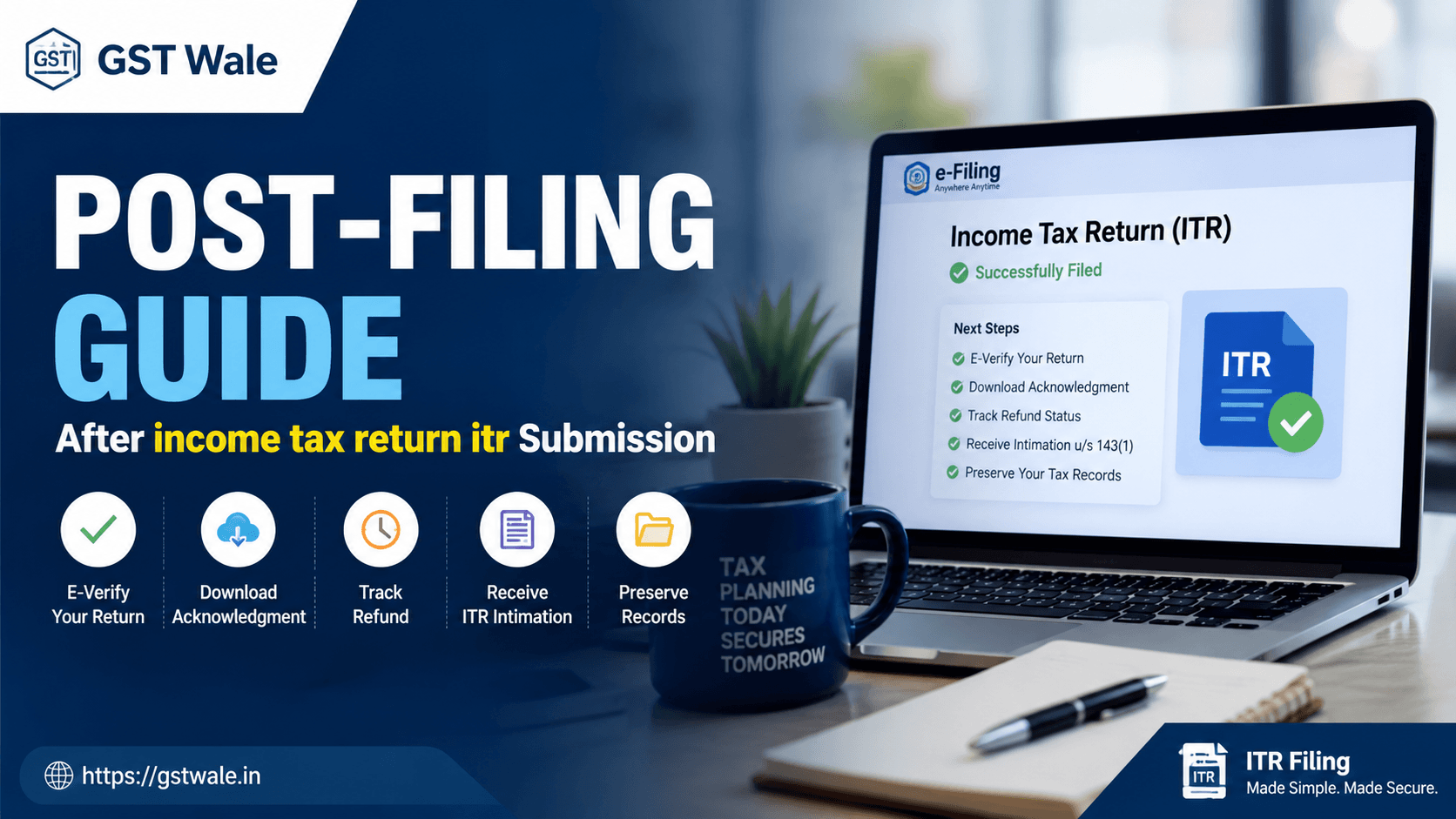
After successfully submitting your income tax return itr, many taxpayers believe the process is over. However, filing your return is only one part of the compliance journey. There are several important actions you should take after submission to avoid notices, delays in refunds, or future tax complications.
At GST Wale, we often see taxpayers facing issues simply because they missed a post-filing step like e-verification or failed to download important documents. Whether you are a salaried employee, freelancer, business owner, or professional, understanding what happens after filing an income tax return itr can save you from unnecessary stress later.
If you are planning your next year’s ITR Filing, staying aware of the complete post-filing process is equally important for smooth tax compliance.
Why Post-Filing Steps Matter After Income Tax Return ITR Submission
Filing your income tax return itr does not automatically mean the Income Tax Department has accepted it. Your return goes through verification, processing, and assessment stages before it is fully completed.
Ignoring post-filing responsibilities may lead to:
- Invalid return status
- Delayed refunds
- Tax notices
- Penalties or interest
- Mismatched tax records
That is why every taxpayer should follow a proper checklist after submitting an income tax return itr.
E-Verify Within Time Limit
One of the most important steps after filing an income tax return itr is verification. Many taxpayers forget this stage and later discover that their return was treated as invalid.
What Is E-Verification?
E-verification confirms that the return was genuinely filed by the taxpayer. Without verification, the Income Tax Department will not process your return.
Time Limit for E-Verification
You must e-verify within time limit prescribed by the department, generally within 30 days from the date of filing.
Common Methods of E-Verification
You can verify your income tax return itr through:
- Aadhaar OTP
- Net banking
- Demat account
- Bank account validation
- Digital Signature Certificate (DSC)
Practical Advice from GST Wale
Always complete verification immediately after filing instead of waiting for the deadline. Delays may create unnecessary compliance issues and force you to revise the process again.
Download ITR Acknowledgment Immediately
Once your income tax return itr is verified, download and save the acknowledgment copy safely.
Why Is ITR Acknowledgment Important?
The acknowledgment contains:
- Acknowledgment number
- Filing date
- Verification status
- Taxpayer details
- Income summary
Many banks, financial institutions, visa authorities, and loan providers ask for this document.
Where to Download It?
You can download ITR acknowledgment from the Income Tax portal under the “Filed Returns” section.
Expert Tip
Keep both PDF and printed copies. Business owners should also maintain yearly folders for organized record management.
Check the Status of Your Income Tax Return ITR
After submission and verification, your income tax return itr enters the processing stage.
Different Return Statuses You May See
Some common statuses include:
- Successfully e-verified
- Under processing
- Processed
- Defective return
- Return submitted and verified
Monitoring status regularly helps you identify problems early.
How Often Should You Check?
Ideally, check every 7–10 days until processing is completed.
Track Refund Timeline Carefully
Most taxpayers eagerly wait for their refunds after filing an income tax return itr.
How Long Does Refund Processing Take?
Generally, refunds may take anywhere between 7 days to several weeks depending on:
- Verification completion
- Accuracy of bank details
- Department processing workload
- Return complexity
How to Track Refund Timeline
You can track refund timeline through:
- Income Tax portal
- NSDL refund tracking system
- Bank account notifications
Common Reasons for Refund Delays
Refunds may get delayed because of:
- Incorrect bank account details
- PAN-Aadhaar mismatch
- Pending verification
- Tax demand from previous years
Real-Life Example
At GST Wale, we recently assisted a salaried taxpayer whose refund was delayed for four months due to an inactive bank account linked in the return. After correcting the details, the refund was processed smoothly.
Receive Intimation Under Section 143
After processing your income tax return itr, the department sends an intimation notice.
What Is Intimation Under Section 143(1)?
This is an official communication showing:
- Return processed details
- Tax calculations
- Refund confirmation
- Additional tax payable, if any
- Differences identified by the department
Why You Should Read It Carefully
Many taxpayers ignore this email assuming it is only informational. However, it may contain discrepancies requiring action.
Possible Outcomes
The intimation may show:
- No discrepancy
- Refund due
- Additional tax demand
- Adjustment in income or deductions
Always compare the department’s calculations with your filed income tax return itr.
Understand the Rectifications Process
Sometimes mistakes are identified after filing or during processing.
What Is Rectification?
The rectifications process allows taxpayers to correct errors in processed returns.
Situations Where Rectification Is Needed
You may need rectification if:
- TDS was not properly considered
- Income details were mismatched
- Tax credit was missing
- Wrong deductions were calculated
Difference Between Revised Return and Rectification
| Revised Return | Rectification |
|---|---|
| Filed before assessment completion | Filed after processing |
| Corrects taxpayer mistakes | Corrects processing errors |
| Applicable before deadline | Applicable after intimation |
GST Wale’s Recommendation
Never ignore minor mismatches. Even small errors in an income tax return itr may lead to future notices or refund issues.
Preserve Tax Records Properly
Maintaining records is an essential but often ignored part of post-filing compliance.
Important Documents to Preserve
You should preserve tax records including:
- ITR acknowledgment
- Form 16
- AIS/TIS reports
- Bank statements
- Investment proofs
- Capital gains statements
- Rent receipts
- Loan certificates
How Long Should Records Be Maintained?
Ideally, keep records for at least 6–8 years.
Why Record Preservation Matters
You may need documents during:
- Income tax scrutiny
- Loan applications
- Visa processing
- Business audits
- Future tax assessments
Smart Practice for Businesses
Maintain both cloud backups and physical copies for safer long-term storage.
Respond Promptly to Income Tax Notices
Even after successful filing of an income tax return itr, some taxpayers may receive notices.
Common Reasons for Notices
- High-value transactions
- Mismatch in AIS and ITR
- Unreported income
- Incorrect deductions
- TDS mismatch
Do Not Panic
Receiving a notice does not always mean wrongdoing. Many notices are routine clarifications.
What You Should Do
- Read the notice carefully
- Check response deadlines
- Gather supporting documents
- Consult professionals if needed
GST Wale regularly helps taxpayers handle post-filing notices efficiently and professionally.
Common Mistakes Taxpayers Make After Filing
Here are some common post-filing errors:
- Forgetting e-verification
- Ignoring intimation emails
- Not checking refund status
- Losing acknowledgment copy
- Ignoring defective return notices
- Failing to preserve tax records
Avoiding these mistakes ensures smoother compliance and peace of mind.
FAQs on Income Tax Return ITR
Is income tax return itr filing complete without e-verification?
No. Your return remains incomplete until it is verified within the prescribed time limit.
How can I download ITR acknowledgment?
You can download ITR acknowledgment from the Income Tax portal after successful verification.
What should I do if I receive intimation under section 143?
Carefully compare the details with your filed return and respond if discrepancies exist.
Can I correct mistakes after filing income tax return itr?
Yes. Depending on the situation, you can file a revised return or use the rectifications process.
How long should I preserve tax records?
It is advisable to preserve tax records for at least 6–8 years.
Submitting an income tax return itr is only the beginning of the compliance process. Proper post-filing actions like verification, refund tracking, reviewing intimation notices, and preserving records are equally important.
Many taxpayers focus only on filing and overlook these critical follow-up steps. This often leads to delayed refunds, notices, or compliance complications later.
At GST Wale, we believe proactive tax management helps individuals and businesses stay financially secure and legally compliant. Whether you need help with return filing, rectifications process, refund issues, or notice handling, our experts are ready to guide you at every stage.
Connect with GST Wale today for reliable and professional tax support that keeps your compliance stress-free.
 Previous