


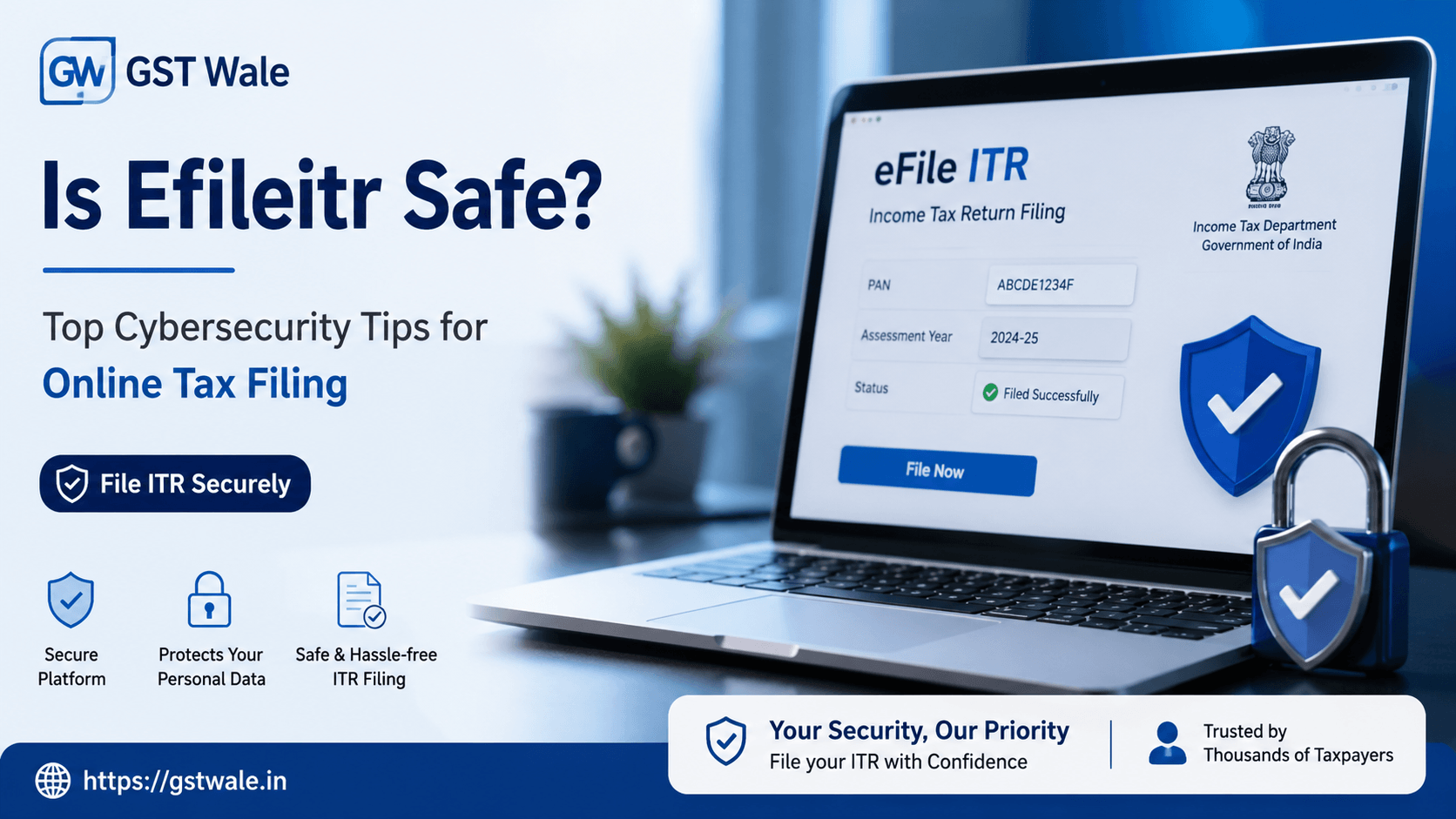
Is Efileitr Safe? Top Cybersecurity Tips for Online Tax Filing
Is Efileitr Safe? Top Cybersecurity Tips for Online Tax Filing
Every year as the tax season approaches, a common question echoes through the minds of salaried individuals, freelancers, and business owners across India: Is efileitr safe? With the government pushing for digital compliance and transitioning into updated frameworks like the Income Tax Act 2025, online tax filing has become the norm. However, sharing your PAN, bank details, and salary breakdowns online can feel like walking a tightrope without a safety net.
At GST Wale, we believe that staying financially compliant should not come at the cost of your digital security. Ensuring a secure tax filing process means understanding how information moves across platforms. If you are handling your taxes, choosing a reliable partner for your ITR Filing is the smartest way to guarantee both compliance and foolproof e-filing safety without the headache of managing technical complexities. Let us break down everything you need to know about protecting your data while executing an online tax return.
What is Efileitr and is it Secure?
The term efileitr refers to the digital process of submitting your Income Tax Return (ITR) electronically via official pathways or trusted intermediary channels. When done correctly through authorized mechanisms, the foundational infrastructure relies on the Government of India’s highly encrypted servers, featuring robust security layers like multi-factor authentication (MFA) and Secure Sockets Layer (SSL) encryption.
However, the safety of an efileitr session depends largely on the user’s end behavior. Think of it like a bank vault—the vault itself is incredibly secure, but if you write your combination lock code on a sticky note or hand your keys to an unverified helper, the security fails. Cybercriminals rarely attack the core government database; instead, they target the vulnerable devices and human errors of individual taxpayers.
Top Cyber Threats to Online Tax Filing
Before diving into the protection strategies, it helps to know what we are up against. In our years of practice at GST Wale, we have noticed that online tax scams peak sharply between June and July every year. Here are the most common traps:
Phishing Emails and SMS: You receive a message that looks exactly like the Income Tax Department, stating: "Your refund of ₹18,500 has been approved. Click this link to verify your bank account details instantly." Clicking it routes you to a fake website designed to steal your credentials.
Spoofed Portals: Fake websites cloning the visual identity of authorized efileitr tools. Users type their passwords directly into the hacker’s log.
Unencrypted Wi-Fi Sniffing: Filing your returns while sipping coffee on public station Wi-Fi allows packet-sniffers to intercept data privacy income tax fields in transit.
Cybersecurity Checklist for a Safe Efileitr Experience
To safeguard your data privacy income tax profile, adopt a zero-trust mindset during your filing routine. Follow this tactical guide to protect financial data seamlessly.
1. Always Verify the URL
Double-check the address bar before entering sensitive details. The official website must start with https:// (the 's' stands for secure) and feature a padlock icon. If you are using third-party aggregators or assisted software platforms for your efileitr processing, ensure they are certified e-return intermediaries officially authorized by the IT department.
2. Strengthen Your Login Credentials
Your PAN acts as a permanent identifier across the entire financial ecosystem. Do not use generic passwords containing your name, initials, or date of birth.
Enable Aadhaar-based OTP verification or mobile-linked authenticators where possible.
Never share your login credentials with unverified freelancers or cut-rate, unregistered tax "experts".
3. Steer Clear of Public Network Risks
Never log into financial portals using public Wi-Fi networks at cafes, airports, or hotels. If you absolutely must handle urgent compliance actions on the move, use your personal mobile hotspot or deploy a reputable Virtual Private Network (VPN) to wrap your traffic in private encryption.
Practical Measures to Protect Financial Data
Beyond passwords, data hygiene practices can stop a data breach before it begins:
Purge Downloaded JSON Utilities: If you prefer offline utilities to prepare your efileitr forms, you will generate a JSON text file packed with pre-filled personal salary and banking streams. Once successfully uploaded, delete that file permanently from your downloads folder.
Audit Your AIS and 26AS Securely: Access your Annual Information Statement (AIS) exclusively inside secure browser environments. Avoid leaving these PDF summaries lying unencrypted on shared family computers.
Monitor Bank Form Notifications: Keep SMS alerts active on your linked bank account. The department validates tax refunds using pre-validated bank accounts directly; if a random portal requests a change in banking structure, drop everything and seek a professional audit.
FAQs on E-Filing Safety and Trust
Is the efileitr process vulnerable to identity theft?
The efileitr framework itself is built on high-grade security, but identity theft can occur if an individual falls prey to phishing or shares their PAN and password with unauthorized vendors.
How can I spot fake tax refund messages?
The Income Tax Department never sends links via SMS or email requesting bank account details for a refund. All official communication is sent from verified IDs like no-reply@incometax.gov.in, and all valid tracking occurs inside your official dashboard after a secure login.
Is it safer to file ITR offline or online?
Both pathways require uploading the final data to the web portal. The online interactive format is highly secure for basic profiles, while the offline utility is safer if your system is thoroughly clear of malware or keyloggers before processing extensive capital gains charts.
Can third-party tax platforms access my bank accounts?
Authorized aggregators use read-only APIs or direct submission links specifically to upload structural data forms. They cannot access your liquid cash balance or operate transactions unless you fall into a malicious, spoofed application trap.
File Safely with GST Wale
To wrap it up, an efileitr run is completely safe provided you strictly adhere to basic cybersecurity protocols. The risk is rarely the software; it is almost always the method of delivery and the security of the gateway chosen by the taxpayer.
Why take risks with your personal financial data or stress over shifting tax rules? At GST Wale, we take data security as seriously as tax planning. Our certified professionals use cutting-edge, enterprise-grade security standards to file your returns, keep your data private, and ensure you claim every legal deduction you are entitled to. Reach out to GST Wale today, and let our trusted team handle your tax compliance with ultimate security and complete peace of mind!
For a practical visual demonstration on managing your taxpayer profile cleanly and avoiding errors during the process, take a look at this helpful guide: Income Tax Portal Filing Tutorial. This video provides an intuitive walkthrough of the official portal setup to help you verify that you are always operating within the authenticated, secure framework.
 Previous