


Buying a Second-Hand Vehicle? Here is the Rules for GST for Car Resale
Buying a Second-Hand Vehicle? Here is the Rules for GST for Car Resale
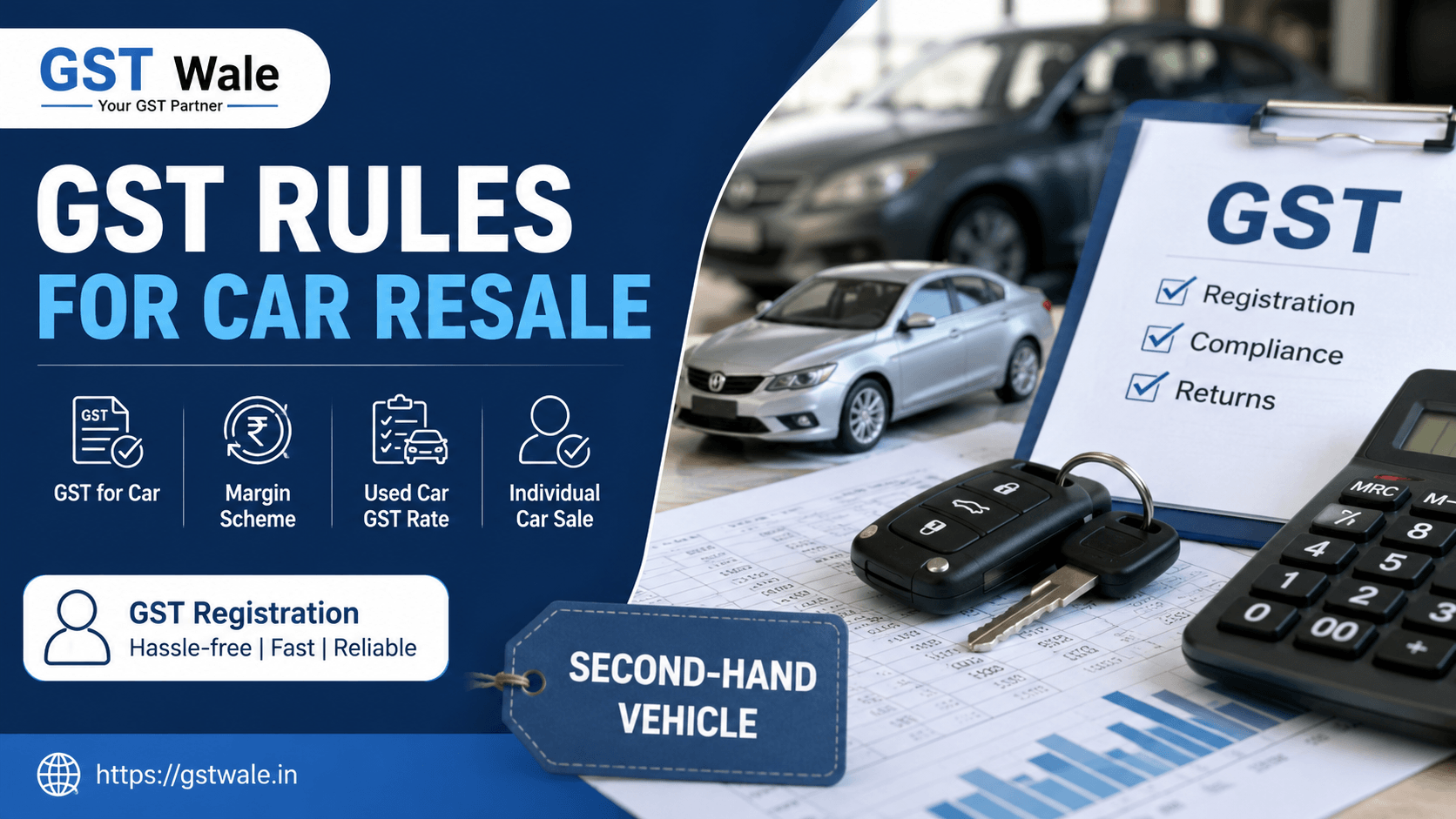
Buying a pre-owned vehicle can be a smart financial decision, but many buyers and sellers are confused about gst for car transactions. Whether you are purchasing a second-hand car from a dealer or planning to sell your own vehicle, understanding the GST implications can help you avoid unnecessary costs and compliance issues.
If you are running a business dealing in vehicles or planning to register under GST, professional guidance can make the process much easier. You can explore our GST Registration service for complete assistance with registration and compliance.
As experienced tax professionals at GST Wale, we regularly help businesses and individuals understand the rules related to gst for car, second-hand vehicle taxation, and resale transactions. In this article, we explain the latest GST rules in simple language with practical examples.
Understanding GST for Car in India
The rules for gst for car depend on who is selling the vehicle and whether the seller is registered under GST.
Generally, GST is applicable when a registered dealer sells a second-hand vehicle as part of their business. However, when an individual sells their personal car to another individual, GST is usually not applicable.
The GST provisions for used vehicles are designed to avoid double taxation. Instead of charging GST on the full selling price in many cases, the government allows taxation under a special method known as the margin scheme.
When Does GST for Car Apply?
The applicability of gst for car depends on the nature of the transaction.
GST generally applies in the following situations:
- Sale of a second-hand vehicle by a registered dealer
- Sale by a company disposing of business vehicles
- Vehicle resale by GST-registered businesses
- Commercial purchase and resale of used vehicles
GST generally does not apply when:
- An individual sells a personal vehicle to another individual
- The seller is not carrying on the business of vehicle trading
- The transaction does not qualify as a taxable supply under GST
Understanding the seller's status is the first step in determining whether gst for car is applicable.
Used Car GST Rate
One of the most common questions is about the used car gst rate.
The GST rate depends on factors such as:
- Engine capacity
- Fuel type
- Vehicle category
- Length of the vehicle
- SUV classification
After the revisions introduced by the Government, many used vehicles attract GST only on the margin earned by the dealer rather than on the full sale value.
Compensation cess may also apply in certain categories depending on the specifications of the vehicle.
Therefore, before purchasing a used vehicle, always confirm the applicable used car gst rate with the dealer.
Margin Scheme Cars Explained
One of the biggest reliefs available under gst for car transactions is the concept of margin scheme cars.
Under this scheme, GST is charged only on the profit (margin) earned by the dealer instead of the total selling price.
Example
Suppose a dealer purchases a used car for ₹6,00,000.
The dealer later sells it for ₹6,40,000.
Margin = ₹40,000
GST is calculated only on ₹40,000 instead of ₹6,40,000, subject to the applicable conditions.
This significantly reduces the tax burden on second-hand vehicle transactions.
Conditions for Margin Scheme Cars
The margin scheme is available only when specific conditions are fulfilled.
These include:
- The dealer should not have claimed input tax credit on the purchase.
- The vehicle should qualify as a second-hand good.
- Proper purchase and sale records should be maintained.
- GST should be calculated according to the prescribed valuation rules.
Businesses involved in regular resale should carefully maintain documentation to avoid disputes during assessments.
Valuation of Second Hand Vehicles
The valuation of second hand vehicles plays a crucial role in determining GST liability.
The valuation method differs depending on whether:
- The seller is a dealer.
- The seller is a company.
- The vehicle is a capital asset.
- Depreciation has been claimed.
The valuation rules aim to ensure that GST is imposed fairly without taxing the same value multiple times.
Maintaining proper invoices and purchase documents helps establish the correct valuation during tax scrutiny.
Depreciated Value Calculation for Business Vehicles
Businesses often ask how GST works when they sell vehicles used in their operations.
In such cases, depreciated value calculation becomes important.
If depreciation has been claimed under the Income Tax Act, GST is generally calculated on:
Selling Price − Depreciated Value
Example
Original Cost: ₹12,00,000
Written Down Value after depreciation: ₹7,50,000
Selling Price: ₹8,20,000
Taxable Margin = ₹70,000
GST is generally calculated on the margin as per the applicable provisions.
Businesses should ensure that depreciation records are properly maintained before calculating GST liability.
Individual Car Sale Tax Rules
Many people worry about individual car sale tax when selling their personal vehicle.
The good news is that if you are selling your privately owned car and you are not engaged in the business of vehicle trading, GST is generally not applicable.
For example:
Rahul purchased a car for personal use five years ago.
He sells it to his neighbour.
Since Rahul is not a vehicle dealer and the car was used personally, GST is generally not payable.
However, if a registered business sells vehicles as part of its business activities, GST provisions may apply.
Documents Required During Used Car Sale
Whether GST applies or not, it is advisable to maintain proper documentation.
Important documents include:
- Original purchase invoice
- Registration Certificate (RC)
- Insurance papers
- Form 29 and Form 30 where applicable
- Sale agreement
- Payment proof
- GST invoice (if issued by dealer)
Proper documentation protects both the buyer and the seller.
Common Mistakes to Avoid
Many taxpayers make avoidable mistakes while dealing with gst for car transactions.
Some common errors include:
- Assuming every used car attracts GST.
- Ignoring the margin scheme.
- Incorrect valuation of second hand vehicles.
- Claiming ineligible input tax credit.
- Wrong depreciated value calculation.
- Maintaining incomplete records.
- Not consulting a tax expert before business vehicle disposal.
Avoiding these mistakes can save both money and future compliance issues.
Practical Advice from GST Wale
If you are purchasing or selling multiple vehicles as part of your business, proper GST planning becomes essential.
Our recommendations include:
- Verify whether GST actually applies.
- Understand the applicable used car GST rate.
- Check eligibility for margin scheme cars.
- Maintain depreciation records accurately.
- Preserve invoices and ownership documents.
- Obtain professional advice before high-value transactions.
Good documentation and timely compliance reduce the chances of future tax notices.
Frequently Asked Questions
Is GST applicable on every second-hand car sale?
No. GST generally applies when a registered dealer or business sells a used vehicle. A personal sale between individuals usually does not attract GST.
What is the GST for car sold by a dealer?
The gst for car sold by a registered dealer is generally calculated according to the applicable GST rate and may be charged only on the profit margin under the margin scheme if conditions are satisfied.
What is the margin scheme in GST?
The margin scheme allows GST to be charged only on the difference between the purchase price and selling price instead of the full sale value, subject to prescribed conditions.
How is GST calculated on business vehicles?
For business-owned vehicles where depreciation has been claimed, GST may be calculated based on the selling price minus the depreciated value calculation as prescribed under GST rules.
Does an individual need to pay GST while selling a personal car?
In most cases, no. An individual selling a privately owned car for personal use generally does not have GST liability unless the transaction forms part of a taxable business activity.
Understanding gst for car is essential before buying or selling a second-hand vehicle. The tax treatment depends on factors such as the seller's status, applicable used car gst rate, eligibility for margin scheme cars, proper valuation of second hand vehicles, depreciated value calculation, and individual car sale tax provisions. A clear understanding of these rules helps avoid unnecessary tax payments and ensures smooth compliance.
At GST Wale, our experienced professionals provide practical guidance on GST registration, compliance, return filing, and business taxation. If you need expert assistance regarding gst for car or any other GST matter, contact GST Wale today and let our experts help you stay fully compliant with confidence.
 Previous