


SUV vs Sedan: Why the GST in Car Category Varies Dynamically
SUV vs Sedan: Why the GST in Car Category Varies Dynamically
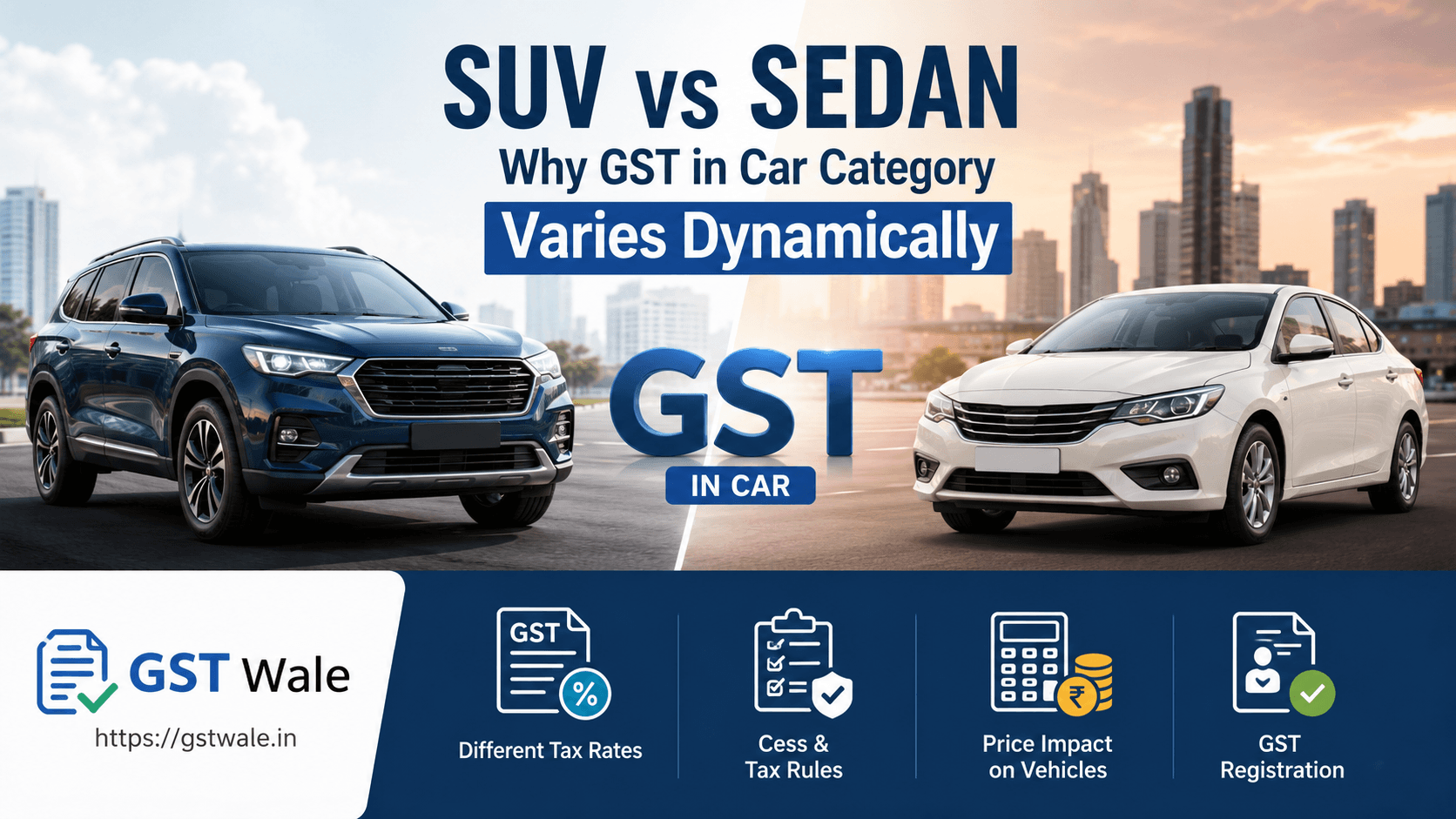
When buyers compare cars in India, they usually focus on mileage, features, safety, and price. However, one important factor that significantly affects the final on-road price is gst in car. Many people wonder why two vehicles with similar prices can attract different GST rates. The answer lies in government taxation rules that classify vehicles based on technical specifications rather than simply calling them an SUV or a sedan.
If you are planning to buy a new vehicle or are a business owner dealing with automobile purchases, understanding gst in car can help you make informed financial decisions. Businesses that are setting up operations or expanding should also ensure proper GST Registration to remain compliant with tax regulations while claiming eligible benefits wherever applicable.
As Chartered Accountants at GST Wale, we often receive questions about why SUVs generally cost more in taxes than sedans. In this article, we'll explain the taxation structure in simple language and help you understand the rules that determine GST and compensation cess on passenger vehicles.
Understanding GST in Car Purchases
The gst in car structure is not based solely on the brand or price of a vehicle. Instead, the Government of India considers multiple technical factors before deciding the applicable tax rate.
The final tax generally consists of:
- GST applicable on passenger vehicles
- Compensation cess wherever applicable
- Vehicle classification under GST rules
This system ensures that vehicles with larger dimensions and higher environmental impact contribute more through taxation.
Why GST in Car Differs Between SUVs and Sedans
The biggest reason for variation in gst in car is that every vehicle is evaluated using predefined specifications. Simply calling a vehicle an SUV in advertisements does not automatically place it in the higher tax category.
The government examines:
- Vehicle length
- Ground clearance
- Engine capacity
- Body type classification
Only when all required conditions are satisfied does a vehicle qualify for higher compensation cess applicable to certain SUVs.
Ground Clearance Cess Rules Explained
One of the most discussed aspects of gst in car is the ground clearance cess rules.
Ground clearance refers to the minimum distance between the road surface and the lowest point of the vehicle.
Many SUVs have higher ground clearance, making them suitable for rough roads and off-road driving. However, higher ground clearance alone does not determine the GST category.
It is only one of the several conditions used while calculating compensation cess.
Why Ground Clearance Matters
- Helps classify SUVs
- Works together with engine size and vehicle length
- Influences compensation cess applicability
This is why two SUVs may sometimes attract different tax rates despite looking similar.
Engine Capacity Tax Brackets and Their Impact
Another major factor affecting gst in car is the engine capacity tax brackets.
Vehicles equipped with larger engines generally fall into higher taxation categories because they are considered premium vehicles with greater fuel consumption.
Common Classification Factors
- Petrol engine capacity
- Diesel engine capacity
- Hybrid configurations where applicable
- Vehicle specifications notified by GST authorities
Manufacturers design vehicles keeping these taxation thresholds in mind because crossing certain limits can increase the overall tax burden.
Length Criteria for Car GST
The length criteria for car gst is another important rule that many buyers overlook.
The government specifies vehicle length while determining tax classification. A longer vehicle combined with higher ground clearance and a larger engine may attract a different compensation cess than a compact vehicle.
This explains why compact SUVs often have lower tax implications compared to full-size SUVs.
How Vehicle Length Influences Tax
- Compact vehicles may fall under different cess categories.
- Larger vehicles are evaluated separately.
- Vehicle dimensions work together with engine specifications.
Therefore, understanding the length criteria for car gst helps buyers estimate the final purchase cost more accurately.
Luxury SUV Compensation Cess
The term luxury suv compensation cess is frequently used when discussing premium vehicles.
Luxury SUVs generally satisfy multiple classification conditions including:
- Higher engine capacity
- Larger dimensions
- Higher ground clearance
- Premium positioning
Because of these characteristics, such vehicles usually attract additional compensation cess over and above the applicable GST.
This is one of the primary reasons why the final invoice value of luxury SUVs is considerably higher than similarly priced sedans.
Segment Tax Differences You Should Know
Many consumers assume that all passenger vehicles are taxed equally, but several segment tax differences exist.
These differences arise because GST law classifies vehicles based on technical parameters rather than marketing categories.
Examples of Segment Tax Differences
- Compact hatchbacks
- Sedans
- Compact SUVs
- Mid-size SUVs
- Luxury SUVs
- Electric passenger vehicles
Each category may have different GST and cess implications depending on government notifications.
Real-World Example of GST in Car Calculation
Suppose two buyers purchase vehicles costing nearly the same before tax.
The first buyer selects a sedan with moderate engine capacity, while the second chooses an SUV having larger engine specifications, greater ground clearance, and qualifying dimensions.
Although the base prices are similar, the second vehicle may attract additional compensation cess due to its classification. This results in a noticeably higher final invoice amount.
This practical example clearly demonstrates how gst in car changes depending on vehicle specifications rather than merely the showroom price.
Important Points Buyers Should Consider
- Always compare the ex-showroom price and applicable GST.
- Understand compensation cess before making a purchase.
- Review technical specifications instead of relying only on vehicle advertisements.
- Ask dealers for a detailed tax breakup.
- Consult a tax professional for business vehicle purchases.
Frequently Asked Questions
Why does gst in car differ between SUVs and sedans?
The variation depends on factors such as vehicle length, engine capacity, ground clearance, and compensation cess rules notified by the government. Vehicle classification determines the applicable tax.
Does every SUV attract higher GST?
No. Not every SUV qualifies for higher compensation cess. The vehicle must satisfy specific technical conditions prescribed under GST rules.
Can two vehicles with similar prices have different GST?
Yes. Even if two vehicles have nearly identical prices, their engine specifications, dimensions, and classification can result in different tax liabilities.
Does engine size affect gst in car?
Yes. Engine capacity is one of the important parameters used for determining vehicle classification and compensation cess.
Should businesses understand gst in car before purchasing company vehicles?
Absolutely. Businesses should evaluate the tax implications, documentation requirements, and overall acquisition cost before purchasing vehicles for commercial use.
Understanding gst in car is essential before buying any passenger vehicle in India. The difference between SUVs and sedans is not merely about appearance or brand value but is largely influenced by government rules covering engine specifications, vehicle dimensions, ground clearance, and compensation cess. Knowing these factors helps buyers avoid surprises and make financially sound decisions.
If you need professional guidance on GST compliance, registrations, tax planning, or business advisory services, the experts at GST Wale are here to help. Our experienced professionals provide reliable and practical GST solutions so that you can stay compliant while making informed business and financial decisions. Contact GST Wale today for expert assistance tailored to your needs.
 Previous