


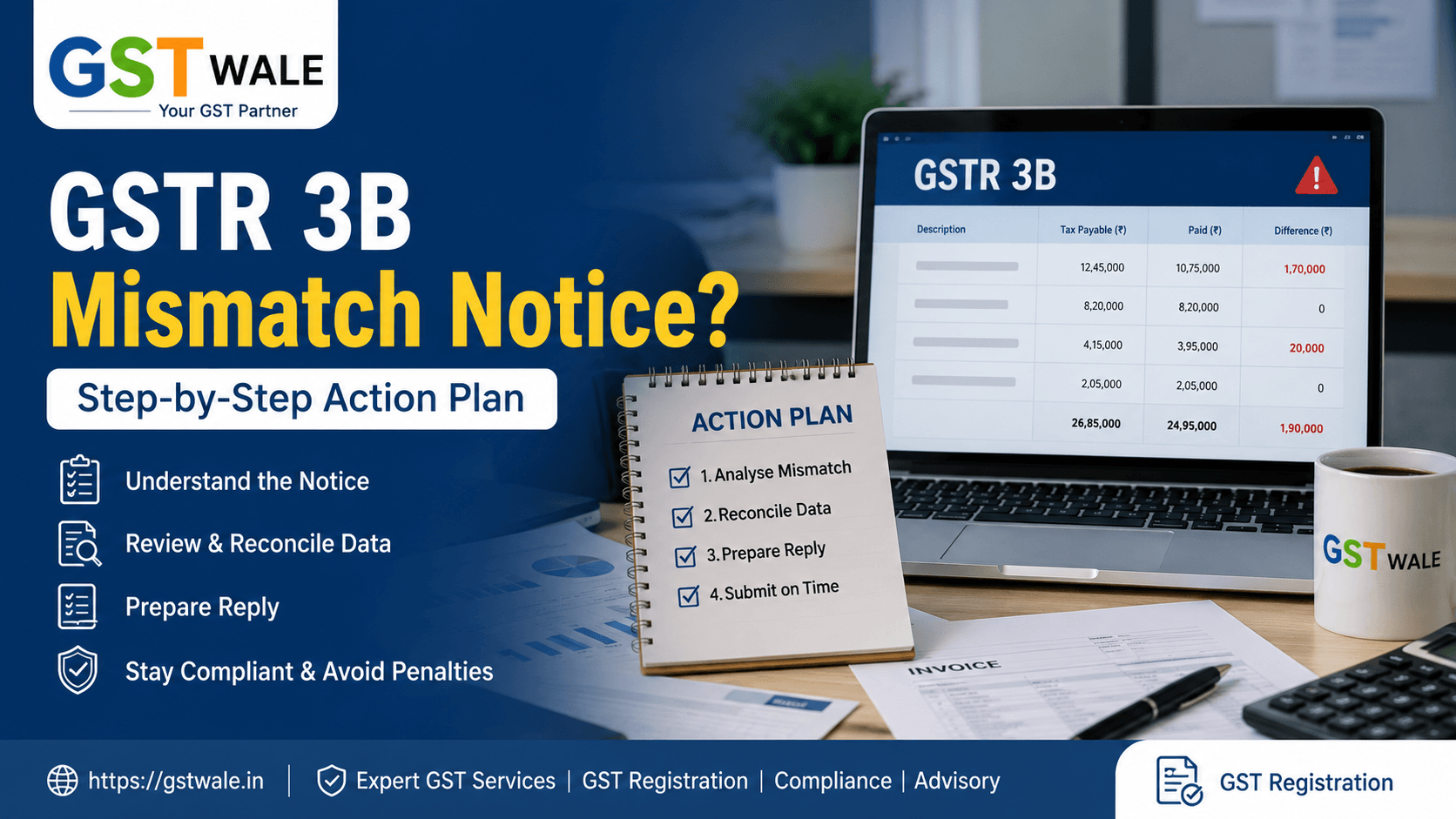
Facing the GSTR 3B Mismatch Notice? Here is Your Step-by-Step Action Plan
Facing the GSTR 3B Mismatch Notice? Here is Your Step-by-Step Action Plan
Receiving a gstr 3b mismatch notice from the GST department can be stressful, especially for businesses that believe they have filed their returns correctly. However, such notices are becoming increasingly common due to automated data matching and enhanced scrutiny by the tax authorities. The good news is that a mismatch notice does not always mean you have done something wrong. In many cases, timely reconciliation and a proper response can resolve the matter without unnecessary litigation.
If you are a new business owner or planning to regularise your compliance, obtaining proper GST Registration and maintaining accurate records from the beginning can significantly reduce the chances of receiving mismatch notices in the future.
As experienced GST professionals at GST Wale, we have helped numerous businesses resolve gstr 3b discrepancies efficiently. This guide explains exactly what you should do when you receive a notice and how to protect your business from further complications.
What Is a GSTR 3B Mismatch Notice?
A gstr 3b mismatch notice is issued when the GST department identifies differences between the information reported in your returns and the data available through other GST records. Modern GST systems automatically compare information from various returns and generate alerts whenever inconsistencies are found.
Common reasons include:
- Difference between outward supplies reported in GSTR-1 and gstr 3b
- Incorrect Input Tax Credit claimed
- Mismatch in tax liability
- Errors while reporting taxable turnover
- Differences identified during gstr 3b vs 2b variance analysis
The objective of these notices is to encourage taxpayers to verify their records and correct genuine mistakes before further action is taken.
Why Does the GST Department Issue These Notices?
The GST system has become far more data-driven than before. Every return filed is electronically compared with supplier data, invoice details, tax payments and previous filings. Whenever inconsistencies exceed acceptable limits, the matter may come under tax department scrutiny.
Some frequent triggers include:
- Incorrect ITC claims
- Late reporting of invoices
- Duplicate entries
- Clerical mistakes during filing
- Mismatch between books of accounts and GST returns
Even genuine businesses may receive notices due to supplier reporting delays or data entry errors.
Step-by-Step Action Plan After Receiving a GSTR 3B Notice
Step 1: Read the Notice Carefully
Do not panic or ignore the notice. Carefully read every page and understand:
- The assessment period involved
- The nature of mismatch
- The amount under dispute
- The deadline for response
- Supporting documents requested
Missing the response deadline can make the issue more complicated.
Step 2: Compare Your GST Returns
The next step is to compare your gstr 3b with:
- GSTR-1
- GSTR-2B
- Purchase Register
- Sales Register
- Books of Accounts
This comparison helps identify where the mismatch actually originated.
Step 3: Review GSTR 3B vs 2B Variance
One of the most common reasons for notices today is the gstr 3b vs 2b variance. Businesses often claim ITC based on purchase invoices that are either not uploaded by suppliers or uploaded in a later tax period.
Review every supplier invoice carefully and identify:
- Invoices missing from GSTR-2B
- Duplicate ITC claims
- Incorrect GSTIN entries
- Wrong invoice values
- Supplier filing delays
Proper reconciliation can significantly reduce the disputed amount.
Step 4: Verify Input Tax Credit
Another important step involves handling itc shortfalls. Verify whether the claimed ITC satisfies all legal conditions under the GST law.
Ensure that:
- The supplier has filed returns
- Tax has actually been paid
- You possess valid tax invoices
- Goods or services have been received
- The claim is within the prescribed time limit
Any ineligible ITC should be voluntarily reversed wherever necessary.
Step 5: Prepare Reconciliation Statements
Well-prepared reconciliation statements play a vital role in explaining differences to the department. They provide a transparent comparison between:
- Books of Accounts
- GSTR-1
- gstr 3b
- GSTR-2B
- Annual financial statements
A professionally prepared reconciliation statement often helps officers understand genuine business transactions quickly.
Step 6: Draft a Proper ASMT 10 Notice Reply
If the notice is issued in Form ASMT-10, preparing a detailed asmt 10 notice reply becomes essential.
Your reply should include:
- Explanation of every mismatch
- Supporting calculations
- Relevant invoices
- Payment challans, if applicable
- Reconciliation statements
- Legal justification wherever necessary
A vague or incomplete reply may invite additional questions from the department.
Step 7: File Corrections Wherever Required
If genuine mistakes are identified, take corrective action promptly. Depending on the nature of the discrepancy, you may need to:
- Pay differential tax
- Reverse excess ITC
- Pay applicable interest
- Correct future GST returns where legally permitted
Voluntary compliance is generally viewed more favourably than delayed action.
Real-Life Example
A manufacturing company claimed ITC of ₹4,20,000 in its gstr 3b. During departmental verification, around ₹45,000 was not reflected in GSTR-2B because one supplier had filed returns late.
After obtaining confirmation from the supplier, preparing proper reconciliation statements and submitting a detailed asmt 10 notice reply, the business successfully explained the difference without major litigation.
This example highlights why documentation is just as important as accurate return filing.
Common Mistakes to Avoid
- Ignoring GST notices
- Missing response deadlines
- Submitting incomplete documents
- Claiming ITC without verification
- Failing to reconcile returns every month
- Depending only on accounting software without manual review
Best Practices to Prevent Future GSTR 3B Notices
Businesses can significantly reduce compliance risks by adopting disciplined GST practices.
- Reconcile GST data every month
- Review supplier compliance regularly
- Verify GSTR-2B before claiming ITC
- Maintain organised purchase and sales records
- Conduct periodic internal GST reviews
- Seek professional assistance for complex transactions
Preventive compliance is always easier and more cost-effective than responding to notices.
Frequently Asked Questions
1. What should I do immediately after receiving a GSTR 3B mismatch notice?
Read the notice carefully, identify the tax period involved, compare your records with GST returns and start preparing supporting documents. Never ignore the notice or delay your response.
2. Is every GSTR 3B mismatch notice a penalty notice?
No. Many notices are issued only to seek clarification. If the discrepancy is genuine and supported with proper documentation, the matter can often be resolved without significant penalties.
3. Can supplier mistakes cause GSTR 3B mismatches?
Yes. Delayed invoice uploads, incorrect GSTIN details or late return filing by suppliers frequently result in mismatches, especially while claiming Input Tax Credit.
4. How important are reconciliation statements?
They are extremely important because they clearly explain differences between books of accounts and GST returns. Proper reconciliation helps the department understand genuine transactions quickly.
5. Should I seek professional help for an ASMT-10 notice?
Yes. A professionally prepared reply supported with correct documents, reconciliations and legal provisions improves the chances of resolving the issue smoothly.
Receiving a gstr 3b mismatch notice does not automatically mean your business has committed tax evasion. In many cases, the issue arises due to reporting differences, supplier delays or simple clerical mistakes. The key is to act promptly, verify records, prepare accurate reconciliation statements, submit a well-supported response and maintain complete transparency throughout the process.
At GST Wale, our experienced GST experts assist businesses in reviewing gstr 3b, preparing reconciliation reports, drafting notice replies and ensuring complete GST compliance. If you have received a mismatch notice or need professional guidance, contact GST Wale today and let our experts help you resolve the matter confidently and efficiently.
 Previous