


Everything You Need to Know About Advance Tax Compliance in Your Annual ITR Form
Everything You Need to Know About Advance Tax Compliance in Your Annual ITR Form
Everything You Need to Know About Advance Tax Compliance in Your Annual ITR Form
Paying taxes is not just about filing your annual return at the end of the financial year. For many taxpayers in India, advance tax is an important responsibility that directly affects the accuracy of the itr form and helps avoid unnecessary interest and penalties. Whether you are a salaried employee with additional income, a freelancer, a business owner, or a professional, understanding advance tax compliance can make your tax filing process much smoother.
At GST Wale, we regularly help taxpayers complete their ITR Filing accurately while ensuring every tax payment is properly reflected in the return. A well-prepared itr form not only ensures compliance but also helps taxpayers claim the correct credit for taxes already paid.
What is Advance Tax in an ITR Form?
Advance tax is the income tax that taxpayers pay during the financial year instead of paying the entire amount after the year ends. It follows the "pay as you earn" principle, ensuring that tax liabilities are cleared in instalments.
When preparing your itr form, the advance tax already paid gets adjusted against your final tax liability. If you have paid sufficient advance tax, you may have little or no balance tax payable while filing your income tax return form.
Advance tax applies when your estimated tax liability for a financial year exceeds ₹10,000 after considering TDS and other tax credits.
Who Needs to Pay Advance Tax Before Filing an ITR Form?
Many people assume that only businesses pay advance tax, but that is not true. Several categories of taxpayers may have this responsibility.
These include:
- Business owners
- Freelancers and consultants
- Professionals like doctors, architects, and lawyers
- Individuals earning capital gains
- Rental income recipients
- Investors receiving substantial interest or dividend income
- Salaried employees with additional taxable income not covered by TDS
Senior citizens who do not have business or professional income are generally exempt from paying advance tax.
Before submitting your itr form, it is important to check whether advance tax was applicable to you.
Advance Tax Due Dates for an ITR Form
The Income Tax Department has prescribed specific instalment dates for advance tax payments.
For Regular Taxpayers
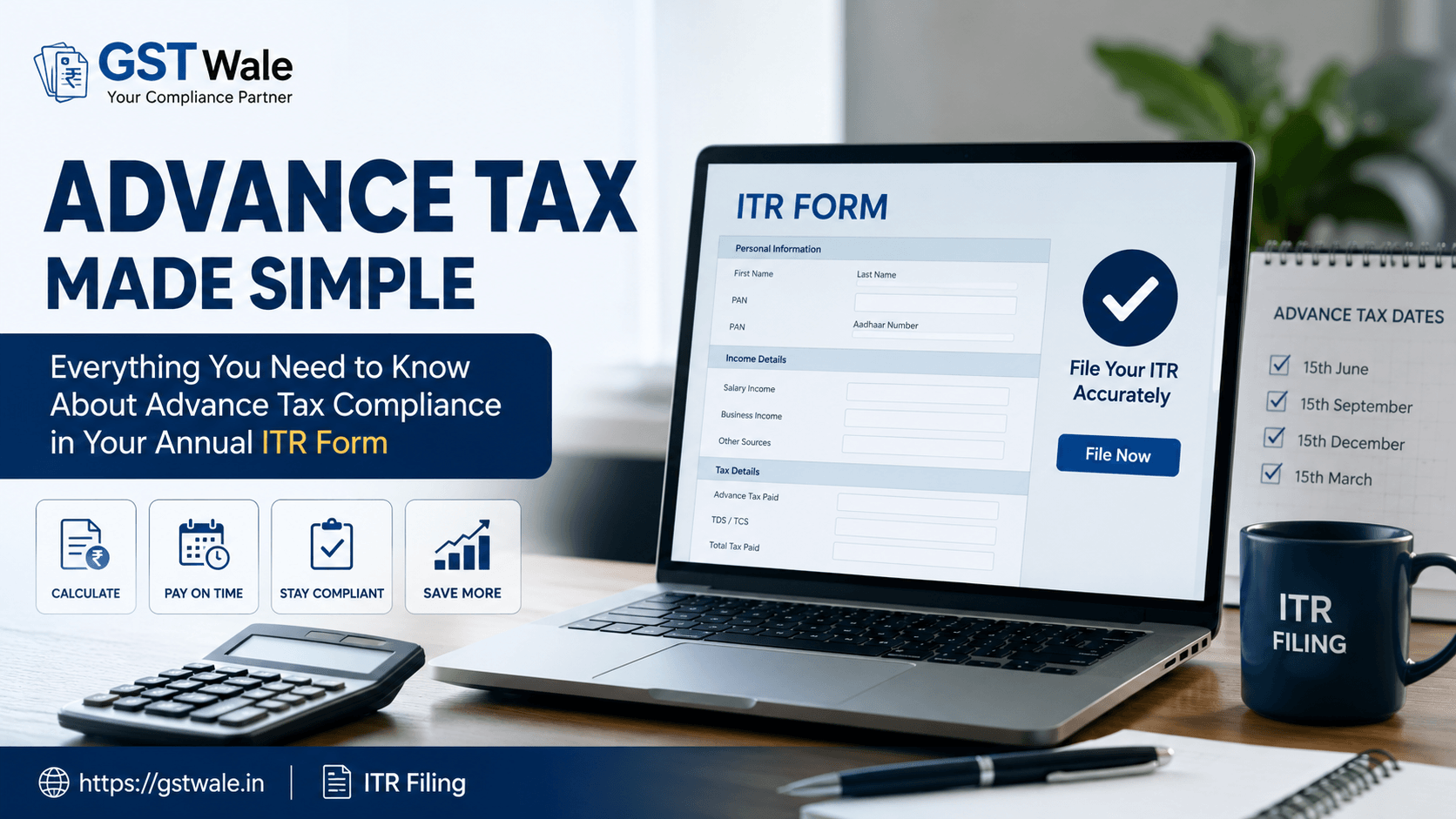
- By 15th June – At least 15% of total advance tax
- By 15th September – At least 45% cumulative
- By 15th December – At least 75% cumulative
- By 15th March – 100% of total advance tax
Paying taxes according to these deadlines ensures that your itr form remains compliant and helps avoid interest under Sections 234B and 234C.
How is Advance Tax Calculated?
Advance tax is based on your estimated income for the entire financial year.
The basic calculation involves:
- Estimate total annual income.
- Deduct eligible deductions under the Income Tax Act.
- Calculate total tax liability.
- Reduce TDS already deducted.
- Adjust available tax credits.
- Pay the remaining amount as advance tax.
For example, if your estimated annual tax liability is ₹1,20,000 and TDS deducted is ₹70,000, you should pay the remaining ₹50,000 as advance tax according to the prescribed schedule. This amount will later be reflected in your itr form.
Why Advance Tax Matters While Filing an ITR Form
Advance tax is much more than an early tax payment. It directly affects your final tax return.
It Reduces Interest Liability
Late payment of advance tax may attract interest under Sections 234B and 234C, increasing your total tax burden.
It Improves Cash Flow Planning
Instead of paying a large amount at the end of the financial year, advance tax distributes the burden throughout the year.
It Speeds Up Return Processing
When advance tax details are correctly reflected in your itr form, verification and processing become easier.
It Prevents Last-Minute Tax Stress
Proper advance tax planning means fewer surprises while preparing your income tax return form.
How to Verify Advance Tax Before Filing Your ITR Form
Before submitting your return, always verify your tax payments.
Check the following:
- Form 26AS
- Annual Information Statement (AIS)
- Tax Information Summary (TIS)
- Challan details
- Self-assessment tax, if applicable
Every advance tax payment should correctly appear before filing your itr form.
Common Mistakes Taxpayers Make
Many taxpayers unknowingly make errors while paying advance tax.
Some common mistakes include:
- Estimating income incorrectly
- Forgetting capital gains income
- Ignoring interest income
- Missing advance tax due dates
- Entering incorrect challan details
- Not reconciling Form 26AS before filing
- Depending only on TDS without reviewing total income
These mistakes may delay processing of the itr form or result in additional notices.
How to Pay Advance Tax Online
Today, paying advance tax has become very convenient.
Follow these simple steps:
- Visit the Income Tax e-filing portal.
- Select e-Pay Tax.
- Choose Advance Tax.
- Enter the assessment year.
- Fill in the tax amount.
- Complete payment using net banking, UPI, debit card, or other available options.
- Save the challan receipt.
Once the payment is successfully recorded, verify that it reflects before proceeding with itr online filing.
Advance Tax and Different Types of Taxpayers
Salaried Individuals
If TDS covers your entire tax liability, advance tax may not be required. However, additional income from investments or rent may create advance tax liability before filing your itr form.
Business Owners
Business owners generally estimate annual profits and pay advance tax in instalments to ensure accurate compliance.
Freelancers
Freelancers usually receive payments without TDS. Therefore, estimating annual income and paying advance tax becomes very important before preparing the income tax return form.
Investors
Capital gains from shares, mutual funds, or property transactions may increase tax liability during the year. These gains should be considered while calculating advance tax.
How Advance Tax Appears in Your ITR Form
When you prepare your itr form, the following tax payments are adjusted:
- Tax Deducted at Source (TDS)
- Tax Collected at Source (TCS)
- Advance Tax
- Self-Assessment Tax
The total tax liability is reduced by these payments. If excess tax has been paid, a refund may be generated. If there is a shortfall, the balance tax must be paid before submitting the income tax return form.
Tips for Accurate IT Filing
Good tax planning makes compliance easier.
Here are some practical tips:
- Maintain proper income records throughout the year.
- Review Form 26AS regularly.
- Estimate annual income every quarter.
- Include all taxable income sources.
- Preserve tax challans safely.
- Verify tax credits before final submission.
- Reconcile AIS and TIS carefully.
- Complete it filing well before the due date.
- If required, file income tax return online after confirming all advance tax payments.
- Double-check calculations before you file it returns online to avoid unnecessary revisions.
Frequently Asked Questions
Is advance tax mandatory for everyone?
No. It is mandatory only when your estimated tax liability exceeds ₹10,000 after adjusting TDS and eligible tax credits.
Can salaried employees pay advance tax?
Yes. If they earn additional taxable income that is not fully covered by TDS, advance tax may become applicable before filing the itr form.
What happens if advance tax is not paid?
Failure to pay advance tax may result in interest under Sections 234B and 234C, increasing your overall tax liability.
Can I pay advance tax after the due date?
Yes, but delayed payment may attract interest. It is always advisable to pay advance tax within the prescribed instalment dates.
How can I check whether my advance tax payment is reflected?
You can verify your payments through Form 26AS, AIS, TIS, and the Income Tax e-filing portal before submitting your itr form.
Final Thoughts
Advance tax compliance is an essential part of preparing an accurate itr form. Paying taxes on time not only reduces penalties and interest but also ensures smoother processing of your income tax return form. Whether you are a salaried employee, freelancer, professional, or business owner, reviewing your tax liability during the year can save both time and money during the return filing season.
At GST Wale, we simplify every stage of tax compliance with expert guidance, accurate documentation, and timely support. If you want hassle-free assistance with your itr form, tax calculations, advance tax compliance, or complete return filing, our experienced professionals are ready to help you file confidently and stay fully compliant with the latest Income Tax regulations.
 Previous