


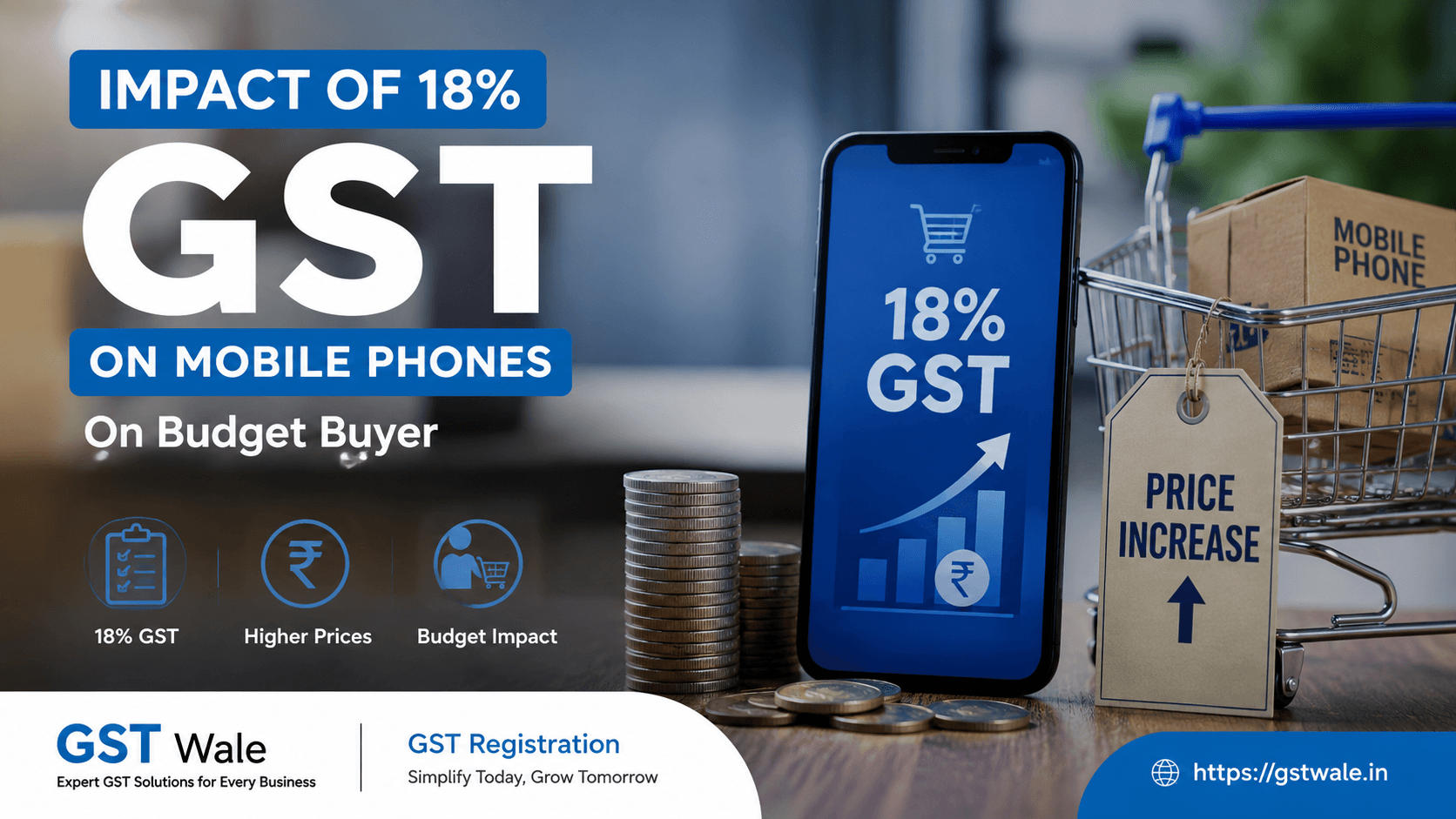
Understanding the Impact of 18% GST on Mobile Phones on the Budget Buyer
Understanding the Impact of 18% GST on Mobile Phones on the Budget Buyer
Buying a new smartphone has become an essential expense rather than a luxury for most Indians. Whether it is for online classes, digital payments, business communication, or entertainment, mobile phones are now a necessity. However, many budget-conscious buyers are surprised when they discover how much tax contributes to the final price. The gst on mobile phones directly affects the affordability of smartphones, especially in the entry-level segment. If you are planning to buy a new handset or are a mobile retailer, understanding how GST works can help you make informed decisions. If you are starting a business dealing in mobile phones, obtaining GST Registration is an important step to ensure legal compliance and seamless tax credit benefits.
The introduction of GST simplified India's indirect tax system, but the increase in the GST rate on mobile phones has significantly influenced consumer spending. In this article, we explain the impact of gst on mobile phones, why mobile prices have increased, and what budget buyers should keep in mind before making a purchase.
Understanding GST on Mobile Phones
The gst on mobile phones is currently levied at 18% in India. Before April 2020, mobile phones attracted a GST rate of 12%. However, the government increased it to 18% to correct the inverted duty structure, where manufacturers were paying higher tax on inputs than on finished products.
This change directly increased the retail prices of smartphones across different price segments. While premium buyers may not feel a significant difference, budget buyers often experience a noticeable increase in the final purchase cost.
Why Was GST on Mobile Phones Increased?
Many consumers wonder about the mobile price hike reasons after the GST revision. The primary objective behind increasing the GST rate was to remove the inverted tax structure.
Earlier Situation
- Finished mobile phones attracted 12% GST.
- Several components were taxed at 18%.
- Manufacturers accumulated unused input tax credit.
Current Situation
With the gst on mobile phones increased to 18%, manufacturers can better utilise their input tax credits, making taxation more balanced from a production perspective.
Although this benefits manufacturers, consumers, especially first-time smartphone buyers, bear the higher tax burden through increased retail prices.
How GST Affects Budget Buyers
Budget buyers are highly sensitive to even small price increases. An 18% gst on mobile phones can significantly affect purchasing decisions.
For example:
- A mobile phone with a base price of ₹10,000 attracts ₹1,800 GST.
- The final invoice value becomes ₹11,800 before considering dealer margins and other costs.
For someone purchasing an entry-level device, this additional amount can influence whether they choose a lower model or postpone the purchase.
The impact becomes even greater for students, first-time smartphone users, and families purchasing multiple devices.
Impact on Entry-Level Smartphones
The entry level smartphone tax has become one of the biggest concerns for budget-conscious consumers.
Earlier, buyers could easily find quality smartphones under ₹8,000 or ₹10,000. Today, due to higher GST and increasing component costs, many of those devices have shifted into higher price brackets.
This means buyers may have to:
- Increase their budget.
- Compromise on features.
- Choose older models.
- Explore refurbished options.
Affordable Mobiles India: Are They Still Worth Buying?
Despite higher taxation, several manufacturers continue offering affordable mobiles india through efficient manufacturing and competitive pricing.
Consumers should compare:
- Processor performance
- RAM and storage
- Camera quality
- Software updates
- Battery life
- Warranty support
Instead of focusing only on the GST amount, evaluating the overall value offered by a smartphone often results in a better buying decision.
Does GST Affect Feature Phones Too?
Yes. The feature phone gst rate is also governed under the GST framework.
Although feature phones are generally much cheaper than smartphones, GST still forms part of their final selling price. Since these devices are purchased mainly by price-sensitive customers, even a small increase in tax affects overall affordability.
Retailers dealing in feature phones should also ensure proper GST compliance to claim eligible input tax credits wherever applicable.
Impact on the Secondary Mobile Market
An interesting outcome of higher gst on mobile phones has been the growth of the secondary mobile market.
Many consumers now prefer:
- Refurbished smartphones
- Certified pre-owned devices
- Exchange offers
- Buyback schemes
These alternatives help buyers access better devices at lower prices while avoiding the high cost of brand-new smartphones.
However, buyers should always verify:
- Device warranty
- Battery health
- IMEI authenticity
- Seller reputation
- Return policy
Benefits of GST Despite Higher Prices
Although many people focus only on the increased gst on mobile phones, GST has also brought several advantages.
Transparent Taxation
Consumers receive a clear invoice showing the tax amount separately.
Better Compliance
GST has reduced cascading taxes by replacing multiple indirect taxes with a single tax system.
Input Tax Credit
Manufacturers and businesses can claim eligible input tax credits, reducing tax inefficiencies across the supply chain.
Uniform Tax Structure
The same GST rules apply across India, simplifying taxation for businesses operating in multiple states.
Smart Tips for Budget Buyers
Buying a mobile phone wisely can reduce the financial impact of the gst on mobile phones.
- Compare prices before purchasing.
- Buy during festive sales for cashback and exchange offers.
- Consider exchanging your old phone.
- Evaluate long-term value instead of only the purchase price.
- Always purchase from authorised sellers and ask for a GST invoice.
How Mobile Retailers Should Handle GST
Businesses selling mobile phones must remain compliant with GST regulations.
- Issue valid GST invoices.
- File GST returns on time.
- Maintain purchase and sales records.
- Claim eligible input tax credits.
- Reconcile invoices regularly.
Frequently Asked Questions
Is GST on mobile phones 18%?
Yes. The current gst on mobile phones in India is 18%, applicable to most smartphones sold in the country.
Why did mobile phone prices increase?
One of the major mobile price hike reasons is the increase in GST from 12% to 18%, along with rising manufacturing and component costs.
Does GST apply to feature phones?
Yes. The feature phone gst rate also falls under the GST framework, making tax a part of the final retail price.
Can businesses claim GST on mobile phone purchases?
Registered businesses may claim Input Tax Credit if the mobile phone is purchased for business purposes and all GST conditions are satisfied.
Should I buy a refurbished mobile instead of a new one?
Many buyers now prefer the secondary mobile market because it offers quality devices at lower prices. However, always buy from trusted sellers offering warranty and proper documentation.
The gst on mobile phones has undoubtedly increased the cost of purchasing new smartphones, especially for budget-conscious consumers. While the higher tax has helped streamline the manufacturing tax structure, it has also made entry-level devices less affordable for many buyers. Understanding how GST influences pricing allows consumers to make smarter purchasing decisions, compare available options, and maximise value for money.
For businesses involved in mobile phone trading or anyone seeking expert assistance with GST compliance, registration, return filing, or tax advisory, GST Wale is your trusted partner. Our experienced professionals provide practical, reliable, and hassle-free GST solutions so you can focus on growing your business with complete confidence.
```
 Previous