


How to Read a Mobile Invoice: Deciphering the GST on Mobile Phone Charges
How to Read a Mobile Invoice: Deciphering the GST on Mobile Phone Charges
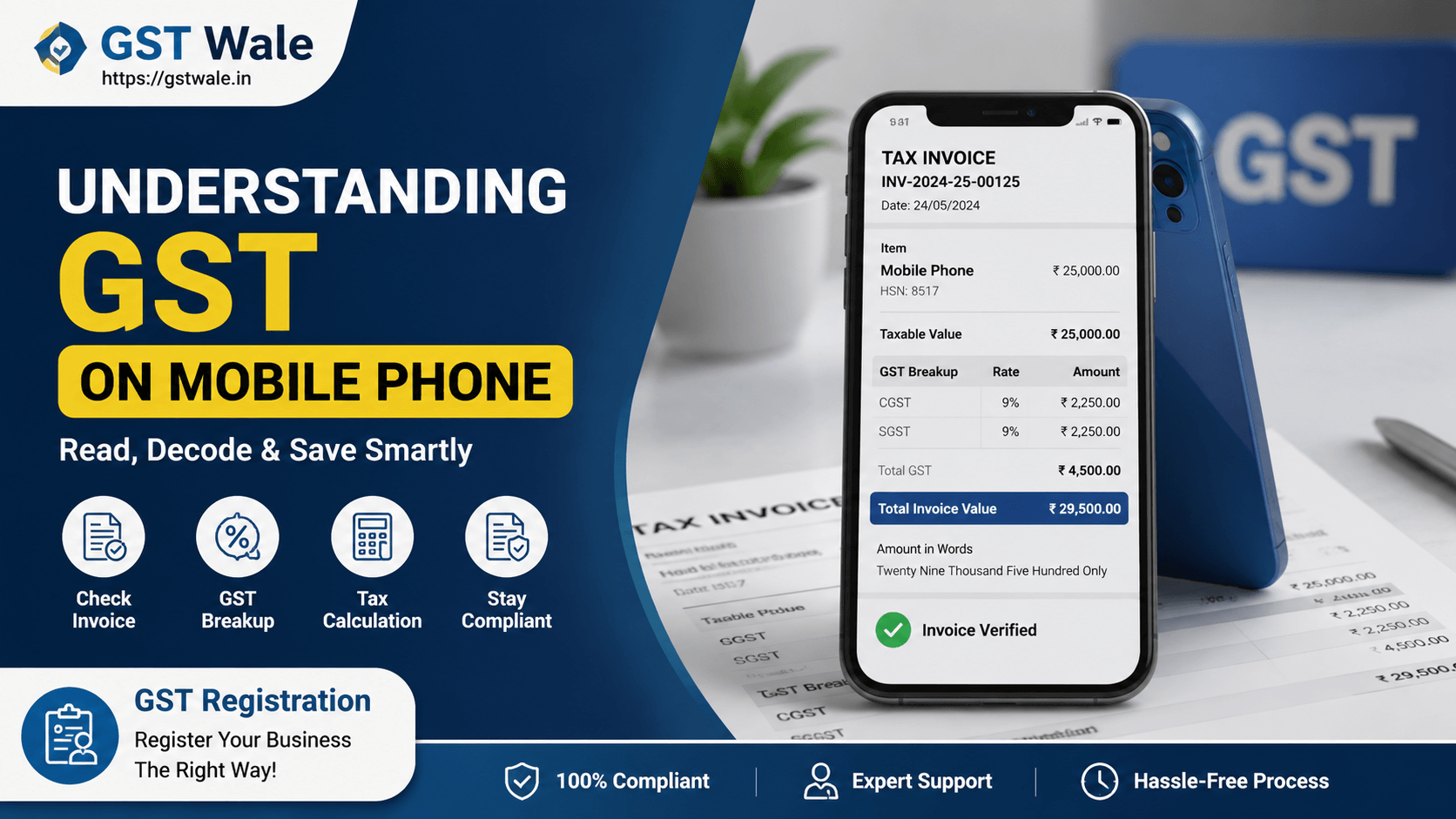
Buying a new mobile phone is a common purchase, but many people never take the time to understand what is written on the invoice. Whether you are purchasing a smartphone for personal use or for your business, knowing how to read your bill can help you verify the tax charged, identify billing mistakes, and claim Input Tax Credit (ITC) if eligible. Understanding gst on mobile phone invoices is especially important for businesses that want to stay GST compliant.
If you are starting a business or purchasing mobiles for commercial use, having a valid GST Registration allows you to claim eligible tax credits on business purchases. At GST Wale, we help businesses complete their GST compliance smoothly while ensuring they understand every aspect of GST documentation.
Why Understanding GST on Mobile Phone Invoices Matters
Every tax invoice contains important financial and legal information. Most buyers simply check the total amount and ignore the tax details. However, carefully reviewing your invoice helps you:
- Confirm that the correct GST rate has been applied.
- Verify whether the seller is GST registered.
- Ensure all invoice mandatory fields are available.
- Avoid incorrect tax payments.
- Claim Input Tax Credit where applicable.
- Maintain proper records for accounting and audits.
For businesses, understanding gst on mobile phone invoices is not just beneficial—it is essential for accurate bookkeeping and GST compliance.
What is GST on Mobile Phone?
The gst on mobile phone refers to the Goods and Services Tax charged when purchasing a mobile handset in India. Mobile phones currently attract an 18% GST rate under the GST regime.
The applicable GST is generally divided into:
- 9% CGST + 9% SGST for purchases within the same state.
- 18% IGST for interstate purchases.
The GST amount should always be clearly displayed on your invoice.
Important Sections of a Mobile Invoice
1. Seller Information
The invoice should contain complete details of the seller, including:
- Business name
- Address
- GSTIN
- Contact information
If the GSTIN is missing, verify whether the seller is registered under GST before making assumptions about tax applicability.
2. Buyer Information
Business buyers should ensure that their company name and GSTIN are correctly mentioned. Incorrect buyer details may create problems while claiming ITC.
3. Invoice Number and Date
Every GST invoice must carry a unique invoice number and invoice date. These are part of the invoice mandatory fields prescribed under GST law.
4. Product Description
The invoice should clearly specify:
- Brand
- Model
- Variant
- IMEI Number (where applicable)
- Quantity
This ensures that the purchased product matches what you actually paid for.
Understanding the GST Tax Breakup
CGST Breakdown
The cgst breakdown shows the Central GST collected by the Central Government. For an intrastate mobile purchase, CGST is usually 9%.
Example:
- Mobile Price: ₹20,000
- CGST (9%): ₹1,800
SGST Rules
The sgst rules provide that State GST is collected by the respective State Government during intrastate transactions.
Using the same example:
- SGST (9%): ₹1,800
Total GST becomes ₹3,600, making the invoice value ₹23,600.
Interstate Purchases
If you purchase a mobile phone from another state, the invoice generally contains IGST instead of separate CGST and SGST.
Businesses should verify whether the correct tax type has been charged depending on the place of supply.
Invoice Mandatory Fields You Should Always Check
The GST law specifies several invoice mandatory fields that should appear on every valid tax invoice.
- Supplier Name
- Supplier GSTIN
- Invoice Number
- Invoice Date
- Buyer Details
- Buyer GSTIN (if applicable)
- Description of Goods
- HSN Code
- Taxable Value
- GST Rate
- CGST/SGST/IGST Amount
- Total Invoice Value
Missing information may lead to accounting issues or complications while claiming Input Tax Credit.
How to Verify GST on Mobile Phone Charges
Whenever you receive an invoice, follow these simple steps:
- Verify the taxable value.
- Check whether GST has been charged at the correct rate.
- Review the cgst breakdown.
- Confirm compliance with sgst rules.
- Ensure invoice mandatory fields are complete.
- Cross-check the grand total.
- Keep a digital copy for future reference.
These checks take only a few minutes but can prevent costly mistakes later.
Is There Any Cess on Electronics?
Many buyers ask whether there is any cess on electronics while purchasing a mobile phone.
In general, mobile phones are subject to GST, but there is typically no separate cess on electronics specifically applicable to standard mobile phone purchases. However, tax laws may change over time, so buyers should always verify the latest provisions before making large purchases.
Round Off Rules in GST
Another important aspect visible on invoices is the final rounded amount.
The round off rules in gst are followed to simplify billing. After calculating the complete invoice amount, businesses may round the payable amount according to applicable GST provisions and accepted accounting practices.
Always verify that the rounded amount matches the invoice calculation.
Practical Example of GST on Mobile Phone Invoice
Suppose you purchase a smartphone costing ₹30,000 within your state.
- Taxable Value: ₹30,000
- CGST (9%): ₹2,700
- SGST (9%): ₹2,700
- Total GST: ₹5,400
- Total Invoice Amount: ₹35,400
By understanding gst on mobile phone, you can easily verify whether these calculations are accurate.
Common Mistakes Buyers Should Avoid
- Ignoring GST breakup.
- Not checking seller GSTIN.
- Missing invoice mandatory fields.
- Ignoring product description.
- Not verifying the cgst breakdown.
- Not understanding applicable sgst rules.
- Discarding the invoice after purchase.
These small mistakes can create problems during warranty claims, accounting, or GST audits.
Frequently Asked Questions
1. What is the GST on mobile phone purchases in India?
Mobile phones generally attract an 18% GST. For intrastate transactions, this is usually divided equally into CGST and SGST, while interstate purchases generally attract IGST.
2. Can businesses claim Input Tax Credit on mobile phone purchases?
Yes. If the mobile phone is purchased for business purposes and all GST conditions are satisfied, eligible businesses may claim Input Tax Credit subject to applicable GST provisions.
3. Why should I check invoice mandatory fields?
Invoice mandatory fields help ensure the invoice is legally valid, supports GST compliance, and enables eligible businesses to claim Input Tax Credit without unnecessary complications.
4. Is there any separate cess on electronics for mobile phones?
Standard mobile phone purchases generally do not attract a separate cess on electronics. Buyers should always review the invoice and stay updated with any future tax changes.
5. Why are round off rules in GST important?
The round off rules in GST simplify invoice values and ensure easier accounting while keeping tax calculations practical and consistent.
Understanding gst on mobile phone invoices helps buyers verify tax calculations, identify billing errors, maintain accurate financial records, and ensure GST compliance. By reviewing the GST breakup, checking invoice mandatory fields, understanding the cgst breakdown, following sgst rules, verifying any applicable cess on electronics, and understanding round off rules in gst, you can confidently read any mobile invoice.
If you need expert guidance on GST compliance, GST Registration, tax filings, or business GST advisory, GST Wale is here to help. Our experienced professionals provide reliable GST solutions that keep your business compliant while helping you make informed financial decisions with confidence.
 Previous