


Professional Tax Hacks: How to Maintain Books of Accounts for ITR 3
Professional Tax Hacks: How to Maintain Books of Accounts for ITR 3
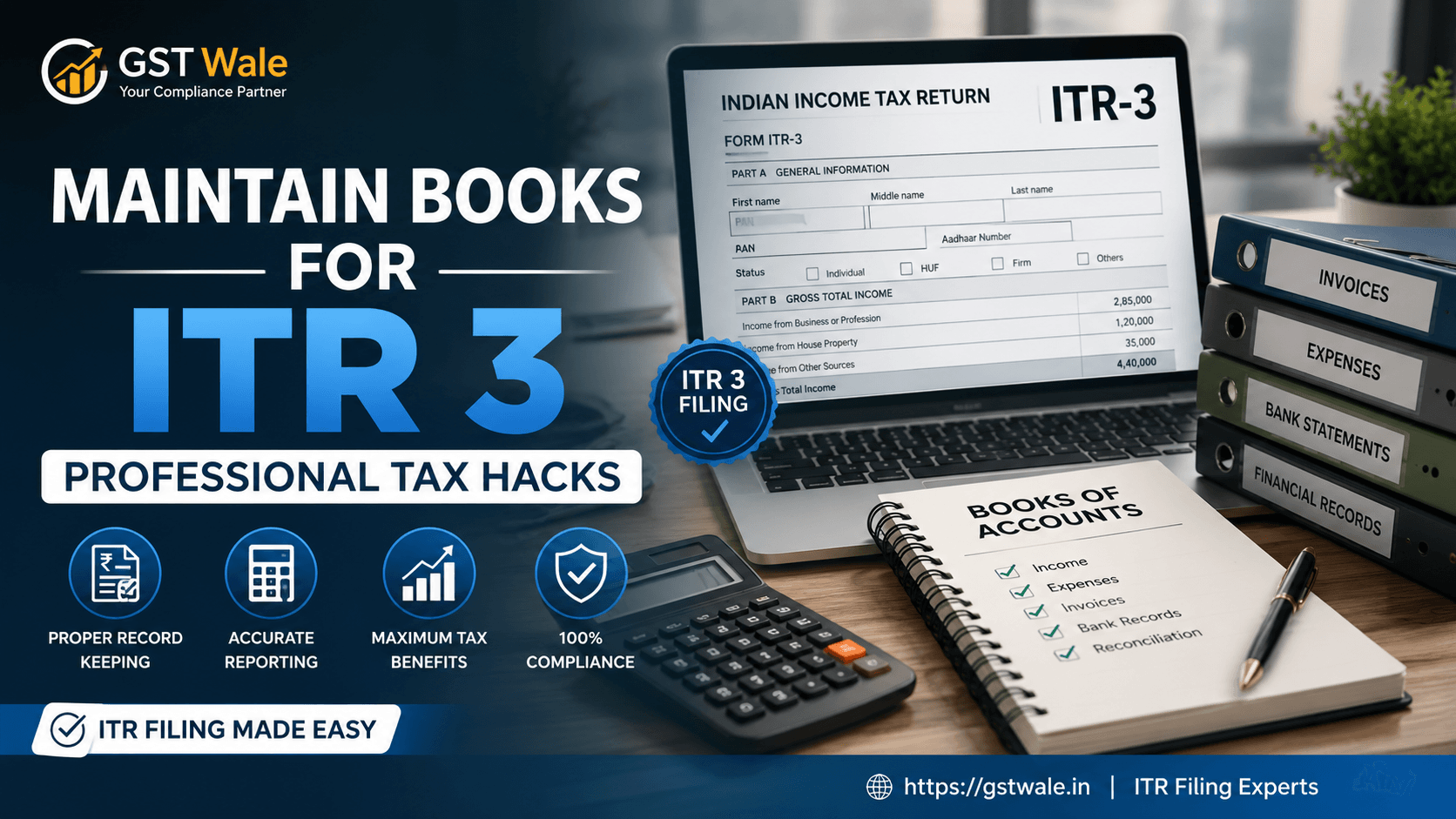
Maintaining proper books of accounts is one of the most important responsibilities for professionals and business owners who file itr 3. Whether you are a doctor, lawyer, consultant, architect, freelancer, or running a proprietorship business, accurate financial records not only make tax compliance easier but also help you understand the true financial health of your business.
Many taxpayers wait until the last moment to organise their records before submitting an income tax return form, which often leads to mistakes, missed deductions, and unnecessary notices from the Income Tax Department. If you are planning your tax compliance this year, professional assistance for ITR Filing can help ensure your books are properly maintained and your return is filed accurately.
In this guide, GST Wale explains practical ways to maintain books of accounts for itr 3, reduce tax-related stress, and stay compliant with Indian income tax laws.
Why Maintaining Books of Accounts Matters for ITR 3
The purpose of maintaining books is much more than simply preparing an itr form. Proper accounting helps you:
- Calculate your actual income correctly.
- Claim eligible business expenses.
- Reduce the chances of tax notices.
- Prepare financial statements with confidence.
- Make informed business decisions.
- Complete it filing smoothly every financial year.
For taxpayers filing itr 3, maintaining books is not just good practice—it is often a legal requirement depending on turnover and profession.
Who Should Maintain Books for ITR 3?
Not everyone files itr 3, but it is generally applicable to:
- Proprietorship businesses
- Professionals earning professional income
- Individuals having business or professional income
- Taxpayers with income from multiple eligible sources alongside business income
If your business falls under these categories, maintaining books becomes an essential part of preparing your itr 3 accurately.
Essential Books of Accounts Required for ITR 3
Depending on your business or profession, you should maintain the following records.
Cash Book
A cash book records every cash receipt and payment. It helps track your daily cash balance and supports accurate itr 3 reporting.
Bank Book
Maintain separate records for all business bank transactions. This makes bank reconciliation easier and ensures that every transaction is properly accounted for.
Purchase Register
Record every business purchase, including:
- Inventory
- Office supplies
- Equipment
- Professional tools
These records help support expense claims during itr 3 preparation.
Sales Register
Maintain complete details of all invoices raised, including:
- Invoice number
- Customer details
- Amount received
- GST details wherever applicable
Expense Register
Track all business-related expenses such as:
- Rent
- Electricity
- Internet
- Travel
- Office maintenance
- Staff salaries
- Professional subscriptions
Accurate expense tracking directly impacts taxable income reported in itr 3.
Fixed Asset Register
Maintain details of:
- Computers
- Furniture
- Vehicles
- Machinery
- Office equipment
This helps calculate depreciation correctly while preparing the income tax return form.
Practical Tax Hacks to Maintain Books Efficiently
Many professionals struggle because bookkeeping becomes an afterthought. These practical habits can make a significant difference.
Record Transactions Daily
Avoid collecting bills for months together.
Spend just 10–15 minutes daily recording:
- Income received
- Expenses incurred
- Cash payments
- Bank receipts
Daily bookkeeping keeps your itr 3 preparation simple and accurate.
Separate Personal and Business Expenses
One of the most common mistakes taxpayers make is mixing personal expenses with business expenses.
Maintain:
- Separate bank accounts
- Separate UPI IDs
- Separate credit cards wherever possible
This creates cleaner records and makes itr 3 filing much easier.
Preserve Every Invoice
Store:
- Purchase invoices
- Sales invoices
- GST invoices
- Rent receipts
- Utility bills
- Professional fee receipts
Digital copies are equally useful when properly organised.
Reconcile Bank Accounts Monthly
Every month compare:
- Bank statement
- Accounting records
- UPI transactions
- Online payment gateways
Monthly reconciliation prevents errors before preparing your itr form.
Use Accounting Software
Manual bookkeeping increases the possibility of mistakes.
Accounting software helps:
- Generate reports
- Track expenses
- Create invoices
- Calculate profit
- Maintain audit-ready records
This saves valuable time during it filing.
Common Mistakes While Maintaining Books
Professionals often make small mistakes that later become major compliance issues.
Avoid these common errors:
- Ignoring small cash expenses
- Recording personal expenses as business expenses
- Missing invoices
- Delaying bookkeeping for several months
- Not reconciling bank accounts
- Forgetting depreciation entries
- Failing to maintain supporting documents
Avoiding these mistakes ensures a smooth itr 3 filing experience.
How Proper Books Help During Tax Assessment
If your return is selected for scrutiny, proper books become your strongest defence.
Well-maintained books help you:
- Justify business expenses
- Explain income sources
- Support deduction claims
- Respond confidently to departmental queries
- Complete assessments with minimal complications
Good bookkeeping strengthens the credibility of your itr 3.
Step-by-Step Process Before Filing ITR 3
Follow these steps before preparing your return.
Step 1: Verify All Income
Include:
- Professional receipts
- Business sales
- Interest income
- Rental income
- Other taxable income
Step 2: Verify Business Expenses
Ensure every claimed expense is supported with proper documentation.
Step 3: Prepare Financial Statements
Generate:
- Profit and Loss Account
- Balance Sheet
- Cash Flow Statement (if maintained)
Step 4: Reconcile with Bank Statements
Match every receipt and payment.
Step 5: Prepare the Income Tax Return Form
Choose the correct income tax return form and verify all disclosures before submission.
Step 6: File the Return
Complete file it returns online through the Income Tax portal and verify the return promptly to complete the process.
Why Digital Record Keeping Is Becoming Essential
With increasing digitisation and online tax compliance, maintaining electronic records has become a smart practice.
Digital bookkeeping offers:
- Easy searchability
- Faster report generation
- Secure backups
- Reduced paperwork
- Better compliance during incometax return online
- Quick sharing with your Chartered Accountant
For taxpayers filing itr 3, digital records simplify year-end compliance considerably.
FAQs
Is maintaining books compulsory for filing ITR 3?
Depending on your business or professional income and applicable provisions of the Income Tax Act, maintaining prescribed books may be mandatory. Even where not compulsory, proper records are strongly recommended.
Can I maintain books in Excel?
Yes. Small businesses and professionals can maintain books in Excel. However, accounting software provides better accuracy, reporting, and long-term record management.
How long should books of accounts be preserved?
Generally, books and supporting documents should be retained for several years as required under tax laws to address future assessments or notices.
Can improper bookkeeping result in tax notices?
Yes. Incorrect or incomplete records can lead to mismatches, incorrect income reporting, disallowed expenses, and scrutiny from the Income Tax Department.
Is digital bookkeeping acceptable for ITR 3?
Yes. Properly maintained digital records, along with supporting invoices and documents, are widely accepted and make compliance more efficient.
Maintaining proper books of accounts is not merely a compliance requirement—it is a valuable business practice that makes preparing itr 3 easier, improves financial discipline, and reduces tax-related risks. Whether you are a professional or a business owner, organised records help you claim legitimate deductions, prepare the correct itr form, and complete incometax return online without unnecessary stress.
At GST Wale, we help individuals, professionals, and businesses manage accounting records, prepare accurate itr 3 returns, and stay fully compliant with Indian tax regulations. If you want expert guidance and hassle-free tax compliance, connect with GST Wale today and let our experienced professionals handle your tax filing with confidence.
 Previous