


How to Check Your Form 26AS Before Starting Your Incometax Efiling
How to Check Your Form 26AS Before Starting Your Incometax Efiling
Every successful incometax efiling process starts with verifying your financial records. One of the most important documents you should review before filing your Income Tax Return (ITR) is Form 26AS. Many taxpayers directly begin filing their returns without checking this statement, only to face notices, refund delays, or tax calculation errors later.
At GST Wale, we always recommend reviewing Form 26AS before filing your return because it reflects the taxes already reported against your PAN. Whether you are a salaried employee, freelancer, business owner, or professional, verifying this statement helps ensure accurate tax reporting. If you need professional assistance, our ITR Filing service can help you complete the entire process smoothly and compliantly.
Why Form 26AS Is Important Before Incometax Efiling
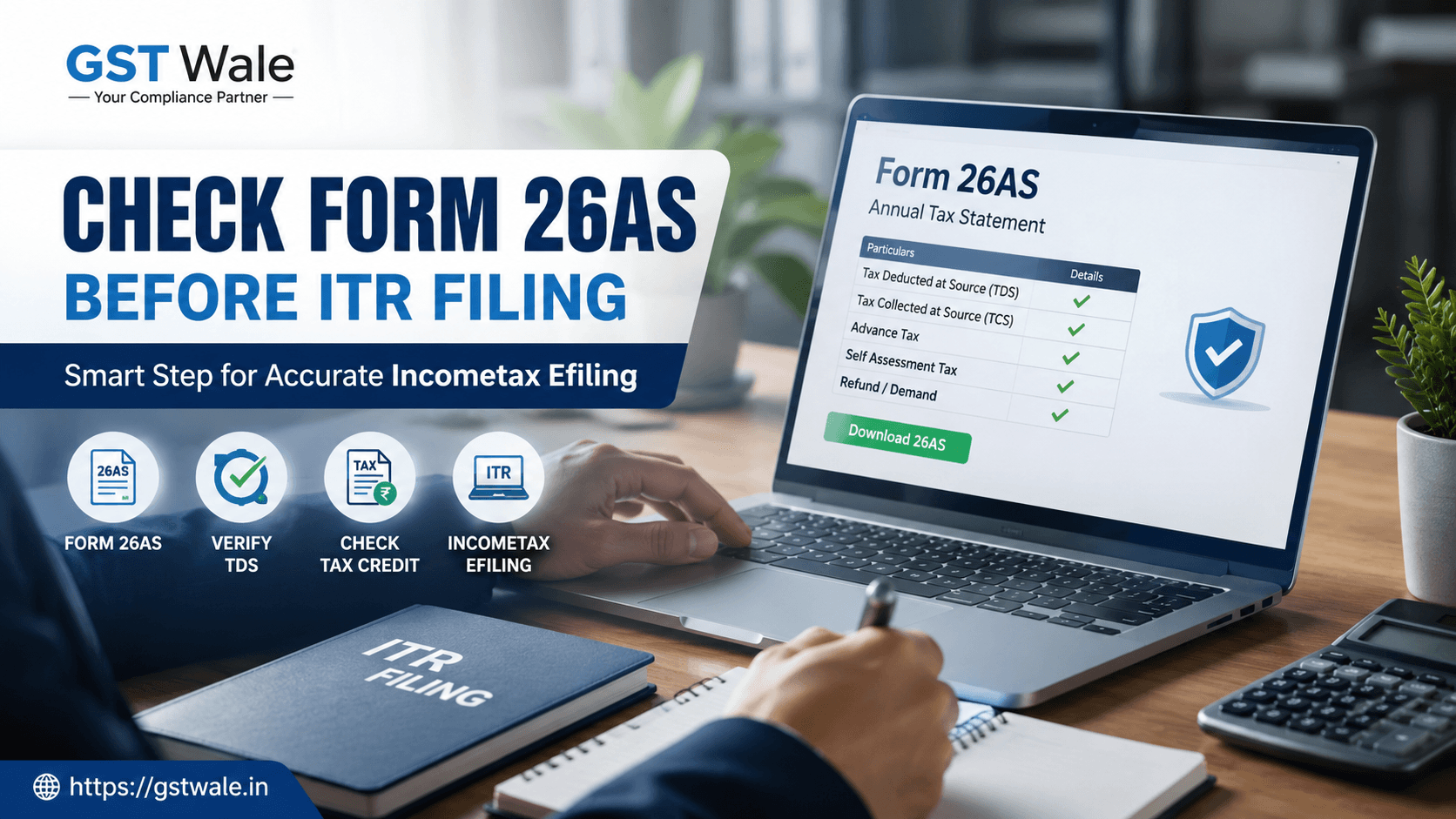
Form 26AS is your consolidated annual tax statement maintained by the Income Tax Department. It records various tax-related transactions linked with your PAN, making it one of the most important documents to verify before starting your incometax efiling.
It acts as a cross-verification tool that confirms whether the taxes deducted or collected on your behalf have actually been deposited with the government.
Before filing your return, Form 26AS helps you:
- Verify your tax credit statement.
- Confirm TDS deducted by employers and clients.
- Review TCS entries made by sellers or financial institutions.
- Check advance tax payments.
- Verify self-assessment tax deposited.
- Identify any tax discrepancy before submitting your return.
What Information Does Form 26AS Contain?
Many taxpayers think Form 26AS only contains TDS details, but it includes much more information that directly impacts incometax efiling.
1. Tax Deducted at Source (TDS)
This section displays TDS deducted by:
- Your employer
- Banks
- Clients
- Government departments
- Other deductors
Ensure every deduction shown in your salary slips or payment certificates appears correctly in Form 26AS.
2. Tax Collected at Source (TCS)
The statement also reflects all TCS entries, such as tax collected on specified purchases or transactions. Missing entries should be clarified before filing your return.
3. Advance Tax Paid
If you have deposited advance tax during the financial year, verify that every payment appears correctly in Form 26AS.
4. Self-Assessment Tax
If you paid any self-assessment tax before filing your return, it should also be reflected. Missing payments can lead to unnecessary additional tax demands.
5. Refund and Other Tax Information
The statement also provides details of refunds processed and certain other tax-related transactions that may affect your return.
How to Check Form 26AS Before Incometax Efiling
Checking Form 26AS is simple and should become a habit before every incometax efiling.
Step 1: Login to the Income Tax Portal
Visit the Income Tax e-Filing portal and log in using your PAN credentials.
Step 2: Access Form 26AS
Navigate to the section where tax statements are available and open Form 26AS through the authorized TRACES facility.
Step 3: Select the Relevant Assessment Year
Choose the correct assessment year corresponding to the financial year for which you are filing your return.
Step 4: Download or View the Statement
Review the complete tax credit statement carefully before entering any values in your Income Tax Return.
Step 5: Compare with Your Financial Documents
Cross-check Form 26AS with:
- Salary Form 16
- Interest certificates
- Bank statements
- Professional receipts
- Business income records
- Tax payment challans
Importance of TDS Reconciliation Before Incometax Efiling
One of the most critical steps is TDS reconciliation. Even small mismatches between your Form 16, Form 26AS, and your return may create complications later.
For example, suppose your employer deducted ₹60,000 as TDS but only ₹50,000 appears in Form 26AS because of an incorrect PAN or delayed filing. If you claim ₹60,000 during incometax efiling, the Income Tax Department may not allow the excess credit until the discrepancy is resolved.
Reconciling these figures beforehand saves time and avoids unnecessary notices.
Common Tax Discrepancies You Should Look For
Before completing incometax efiling, carefully identify any tax discrepancy.
Some common issues include:
- Missing TDS entries.
- Incorrect deductor details.
- Wrong PAN reporting.
- Advance tax not reflected.
- Self-assessment tax missing.
- Duplicate tax entries.
- Incorrect tax amounts.
- Unreported TCS entries.
If you identify any mismatch, contact the deductor immediately and request correction before filing your return.
Why Checking Form 26AS Helps You Avoid Notices
The Income Tax Department compares your Income Tax Return with information available in Form 26AS and other reporting systems.
If your reported income, tax deductions, or credits do not match the official records, your return may be selected for verification or you may receive a tax demand.
Verifying Form 26AS before incometax efiling significantly reduces the chances of such issues.
Expert Tips from GST Wale
As experienced tax professionals, we recommend following these best practices:
- Never file your return without checking Form 26AS.
- Perform proper TDS reconciliation.
- Verify every advance tax payment.
- Ensure self-assessment tax is correctly reflected.
- Review all TCS entries.
- Resolve every tax discrepancy before submission.
- Keep copies of all supporting tax documents.
- File your return well before the due date.
Frequently Asked Questions (FAQs)
1. Is checking Form 26AS mandatory before incometax efiling?
While it is not legally mandatory, it is strongly recommended. Form 26AS helps verify your tax credits and reduces the chances of errors, refund delays, or notices from the Income Tax Department.
2. What should I do if my TDS is missing from Form 26AS?
You should immediately contact the employer, bank, or deductor responsible for deducting the tax and request them to correct or update their TDS return so the credit appears correctly.
3. Can I file my return if there is a tax discrepancy?
Minor issues may still allow filing, but claiming incorrect tax credit can result in notices or reduced refunds. It is always advisable to resolve the discrepancy before filing.
4. Does Form 26AS include advance tax and self-assessment tax?
Yes. Form 26AS contains details of advance tax payments, self-assessment tax, TDS, TCS entries, and several other tax-related transactions linked to your PAN.
5. How often should I check Form 26AS?
You should review Form 26AS before every incometax efiling. Additionally, checking it periodically during the financial year can help identify mismatches early.
Accurate incometax efiling begins with carefully reviewing Form 26AS. A few minutes spent verifying your tax credit statement, completing TDS reconciliation, checking advance tax, confirming self-assessment tax, reviewing TCS entries, and identifying any tax discrepancy can save you from future notices, refund delays, and unnecessary complications.
At GST Wale, we believe tax compliance should be simple, accurate, and stress-free. Whether you are filing your first return or managing complex business taxes, our experienced professionals are ready to help you complete your Income Tax Return with confidence. Get in touch with GST Wale today and experience reliable tax filing support from experts who put your compliance first.
 Previous