


Don't Panic! How to File a Belated Return After the Income Tax Return Extended Date Passes
Don't Panic! How to File a Belated Return After the Income Tax Return Extended Date Passes
Don't Panic! How to File a Belated Return After the Income Tax Return Extended Date Passes
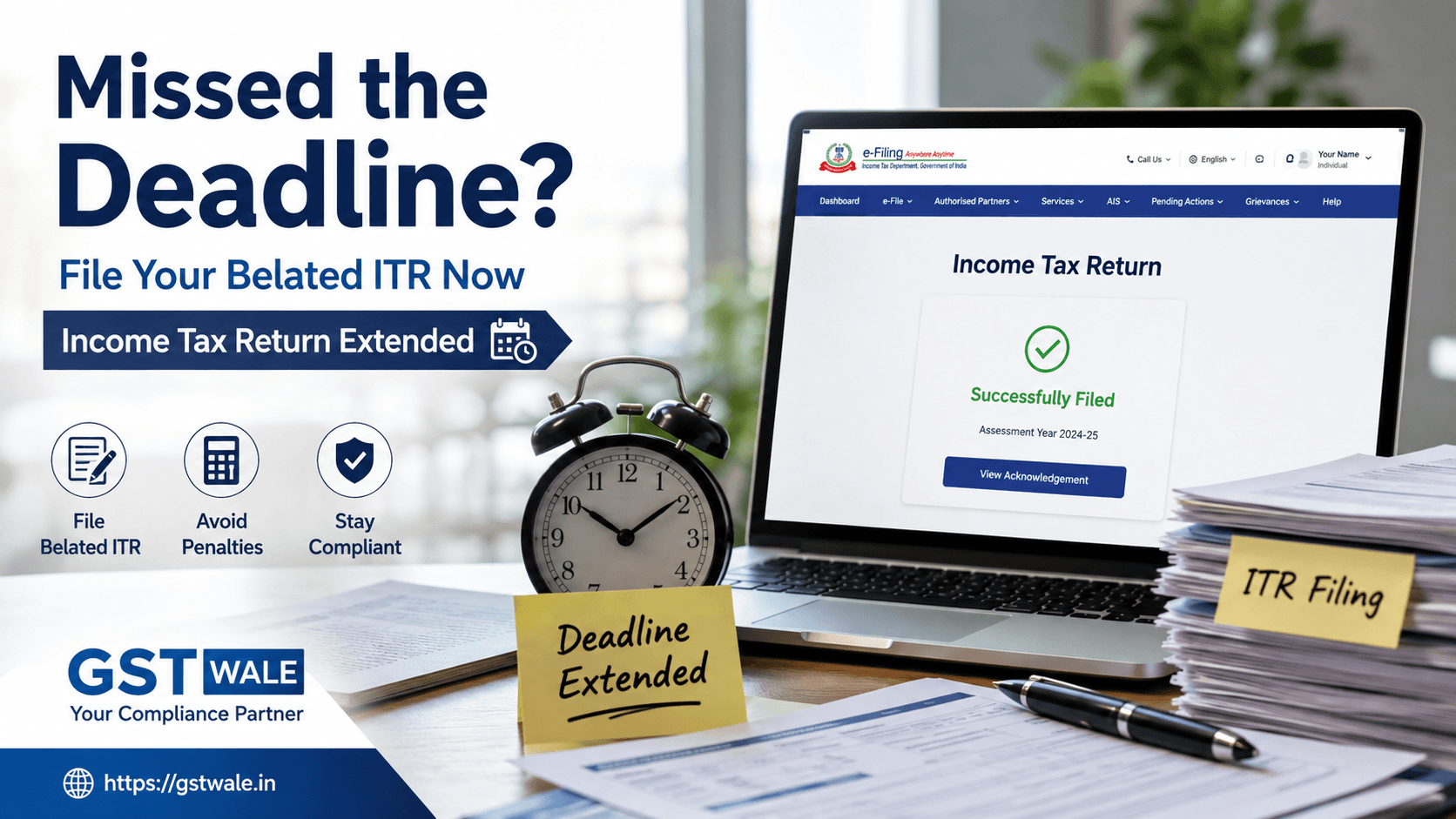
Missing the income tax return extended deadline can feel stressful, but it doesn't always mean you've lost the opportunity to file your Income Tax Return. Every year, many taxpayers miss the due date because of busy schedules, missing documents, technical issues, or simple oversight. The good news is that the Income Tax Act provides options to help genuine taxpayers file their returns even after the due date.
If you've missed the income tax return extended deadline, don't delay any further. Filing your return as early as possible can help reduce additional costs and prevent future complications. If you need professional assistance, GST Wale offers reliable ITR Filing services to ensure your return is prepared accurately and submitted without unnecessary delays.
In this guide, GST Wale explains what happens when the income tax return extended deadline has passed, how to file a belated ITR, applicable penalties, interest provisions, and practical steps you should take.
What Does Income Tax Return Extended Mean?
The term income tax return extended refers to a situation where the Income Tax Department officially extends the original due date for filing Income Tax Returns. Such extensions are generally announced under exceptional circumstances, such as technical issues, natural disasters, or administrative reasons.
However, once the income tax return extended deadline also expires, taxpayers who have still not filed their returns need to explore the option of filing a belated ITR.
It is important to remember that an extension is an opportunity—not a guarantee of unlimited time.
What Is a Belated ITR?
A belated ITR is an Income Tax Return filed after the prescribed due date but within the period permitted under the Income Tax Act.
Even after the income tax return extended deadline has passed, eligible taxpayers can generally submit a belated return, subject to applicable provisions and timelines notified under the law.
Filing a belated return is always better than not filing at all because it helps maintain tax compliance and avoids several long-term issues.
Consequences of Missing the Income Tax Return Extended Deadline
Missing the income tax return extended deadline may result in certain financial and compliance-related consequences.
Financial Penalty
One of the most common consequences is a financial penalty under the applicable provisions of the Income Tax Act.
The exact amount depends on factors such as:
- Total taxable income
- Date of filing
- Applicable legal provisions for the assessment year
- Reliefs announced by the government, if any
Paying a financial penalty is often far less expensive than ignoring your filing responsibility altogether.
Interest Calculation Under Section 234A
When taxes remain unpaid after the due date, interest calculation becomes applicable.
Under Section 234A, interest is generally charged on the outstanding tax liability from the due date until the date of actual filing.
The amount depends on:
- Outstanding tax payable
- Period of delay
- Applicable rate under Section 234A
The longer you wait after the income tax return extended deadline, the higher your interest burden may become.
Delay in Refund Processing
If you're eligible for an income tax refund, filing after the income tax return extended deadline may delay the processing of your refund.
Earlier filing generally results in faster verification and quicker refund processing.
Loss of Certain Benefits
Depending on applicable provisions for the relevant assessment year, taxpayers may lose certain benefits due to delayed filing, including restrictions relating to carrying forward eligible losses.
Therefore, filing your return promptly remains important even after missing the due date.
How to File a Belated Return
If you've missed the income tax return extended deadline, follow these practical steps.
Step 1: Gather Required Documents
Keep the following documents ready:
- PAN Card
- Aadhaar Card
- Form 16
- AIS and TIS details
- Bank statements
- Interest certificates
- Investment proofs
- Home loan statements, if applicable
Having complete documents reduces errors during filing.
Step 2: Calculate Your Tax Liability
Before filing your belated ITR, calculate:
- Total income
- Eligible deductions
- Tax payable
- Advance tax paid
- TDS available
- Self-assessment tax
This also helps estimate any interest calculation under Section 234A.
Step 3: Pay Outstanding Taxes
If additional tax is payable, pay the self-assessment tax before submitting the return.
Ensure you include:
- Tax amount
- Applicable interest
- Financial penalty, wherever applicable
Step 4: File the Belated Return
Log in to the Income Tax e-Filing portal and choose the relevant assessment year.
Carefully verify:
- Personal details
- Income details
- Tax computation
- Bank account
- Deductions claimed
Submit the belated ITR and complete verification using the available verification methods.
Can You Revise a Belated Return?
Yes.
If you later discover an error in your belated ITR, you may file a revised return, subject to the timelines permitted under the Income Tax Act.
A revised return can help correct mistakes such as:
- Incorrect income reporting
- Missing deductions
- Wrong bank details
- Incorrect TDS claims
- Omitted income
Instead of ignoring mistakes, correct them promptly through a revised return wherever permitted.
What Is Condonation of Delay?
Sometimes taxpayers fail to file even a belated return due to exceptional circumstances such as:
- Serious illness
- Natural disasters
- Genuine hardship
- Technical issues
- Other unavoidable situations
In such cases, the Income Tax Department may consider a request for condonation of delay, depending on the facts and conditions prescribed under the law.
A successful condonation of delay application is not automatic. Taxpayers should provide proper supporting documents and explain the genuine reasons for the delay.
Professional guidance often improves the quality of such applications.
Practical Example
Suppose Mr. Sharma was waiting for certain investment proofs and assumed that the income tax return extended deadline would be extended once again.
Unfortunately, no further extension was announced.
Instead of ignoring the situation, he immediately gathered his documents, calculated his tax liability, paid the applicable tax along with interest under Section 234A, and filed a belated ITR.
Although he had to bear some additional cost, he avoided much bigger compliance problems in the future.
This simple example shows why acting quickly is always the better option.
Tips to Avoid Missing Future Deadlines
Good tax planning can prevent unnecessary stress.
Follow these simple practices:
- Maintain income records throughout the year.
- Download Form 26AS, AIS, and TIS well in advance.
- Keep investment proofs organised.
- Reconcile TDS before filing.
- Avoid waiting until the last day.
- Consult a tax expert if your income sources are complex.
- Set calendar reminders for important tax dates.
These small habits can help ensure you never miss an income tax return extended deadline again.
Frequently Asked Questions
Can I file my ITR after the income tax return extended deadline?
Yes. In many cases, eligible taxpayers can file a belated ITR within the time permitted under the Income Tax Act, subject to applicable conditions.
Will I have to pay a financial penalty?
Possibly. A financial penalty may apply depending on your income, filing date, and the provisions applicable to the relevant assessment year.
What is Section 234A?
Section 234A deals with interest calculation on delayed filing where tax remains payable after the prescribed due date.
Can I correct mistakes after filing a belated ITR?
Yes. If permitted under the applicable timelines, you can submit a revised return to rectify genuine errors.
What if I miss even the belated filing deadline?
In exceptional circumstances, you may explore the option of condonation of delay, subject to the Income Tax Department's rules and approval process.
Missing the income tax return extended deadline is certainly not ideal, but it is not the end of the road. Filing a belated ITR as early as possible helps minimise penalties, reduces interest under Section 234A, and keeps your tax compliance on track. Waiting further only increases complications and financial costs.
At GST Wale, we understand that tax filing can be confusing, especially when deadlines are missed. Our experienced professionals help individuals, salaried employees, freelancers, and business owners file accurate returns, calculate applicable taxes, manage revised return requirements, and guide eligible taxpayers on matters relating to condonation of delay. Contact GST Wale today for dependable, hassle-free tax filing support and stay compliant with confidence.
 Previous