


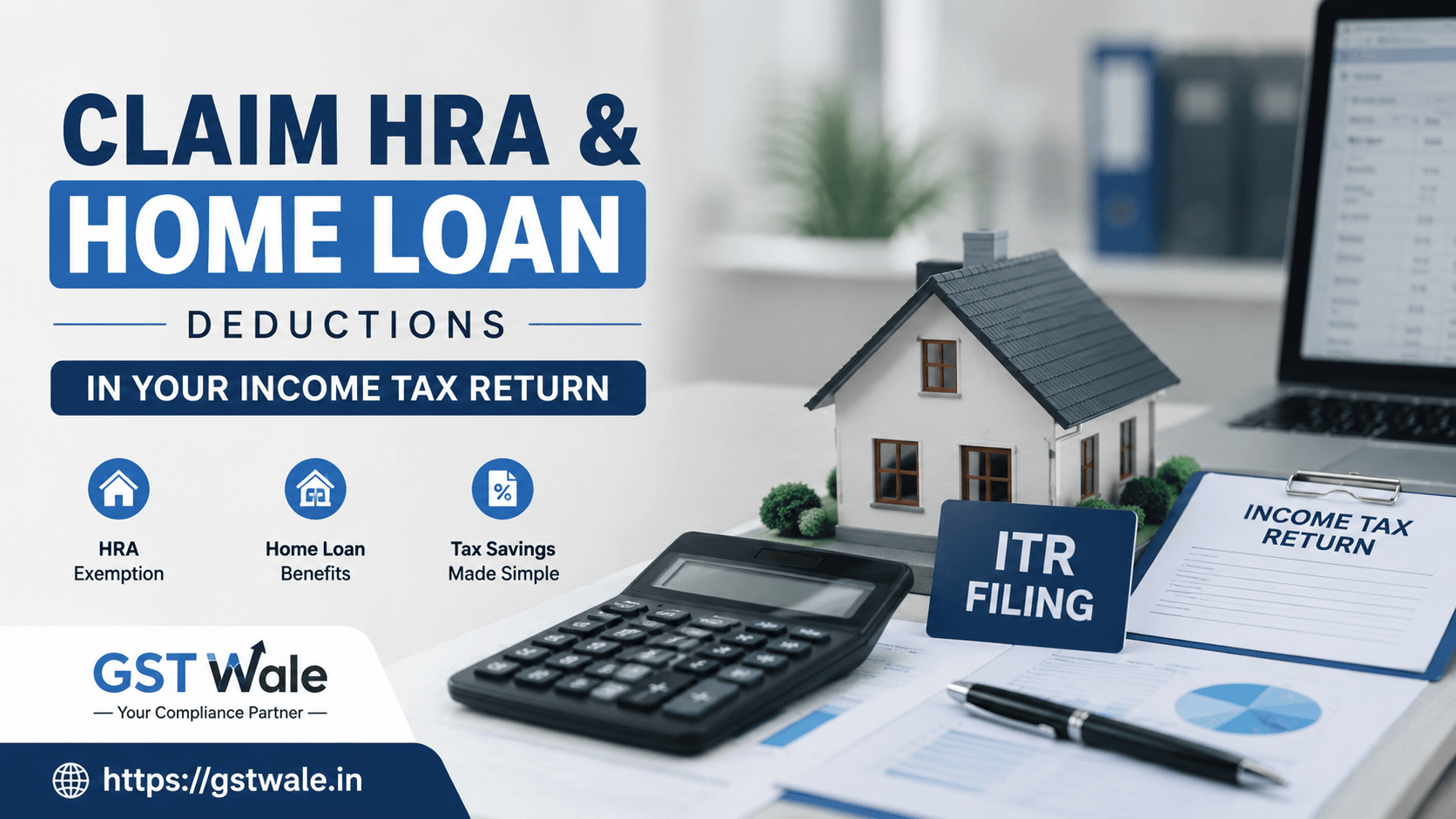
A Complete Guide to Claiming HRA and Home Loan Deductions in Your Income Tax Return
A Complete Guide to Claiming HRA and Home Loan Deductions in Your Income Tax Return
Many taxpayers miss valuable tax-saving opportunities simply because they are unaware of the rules related to House Rent Allowance (HRA) and home loan deductions while filing their income tax return. Whether you are a salaried employee living in a rented house, a homeowner repaying a housing loan, or someone managing both situations simultaneously, understanding these deductions can significantly reduce your tax liability.
At GST Wale, we regularly help individuals and businesses file accurate tax returns while ensuring they claim every eligible deduction. If you are planning your ITR Filing, this guide will help you understand how to maximize tax benefits without making common mistakes.
Why HRA and Home Loan Benefits Matter in Your Income Tax Return
Your income tax return is more than just a compliance requirement. It is an opportunity to legally reduce your tax burden by claiming eligible exemptions and deductions. Among the most commonly claimed tax benefits are House Rent Allowance (HRA) and deductions available on home loans.
When claimed correctly, these benefits can save thousands of rupees every financial year while ensuring your return remains compliant with Income Tax Department guidelines.
Understanding House Rent Allowance (HRA)
House rent allowance is a component of the salary provided by employers to employees for meeting rental expenses. If you live in a rented accommodation and receive HRA, you may be eligible for an exemption while filing your income tax return.
Who Can Claim HRA?
You can claim HRA exemption if:
- You are a salaried employee.
- Your salary includes house rent allowance.
- You actually pay rent for your residential accommodation.
- You possess valid rent receipts or other supporting documents.
Documents Required for HRA Claim
- Rent agreement (where applicable)
- Monthly rent receipts
- Proof of rent payment
- Landlord PAN if annual rent exceeds the prescribed limit under Income Tax rules
Maintaining proper documentation makes your income tax return stronger in case of future verification.
How HRA Exemption Is Calculated
The HRA exemption depends on the least of the following:
- Actual HRA received from your employer
- Rent paid minus 10% of salary
- 50% of salary for metro cities or 40% for non-metro cities
Understanding this calculation helps taxpayers estimate the correct exemption before filing their income tax return.
Practical Example
Suppose Rahul works in Delhi and receives HRA of ₹25,000 per month. He pays ₹20,000 as monthly rent and has all required rent receipts. Since Delhi is a metro city, the exemption will be calculated according to the prescribed formula, and only the eligible amount can be claimed in his income tax return.
Can You Claim HRA and Home Loan Together?
Yes. One of the biggest misconceptions among taxpayers is that HRA and home loan deductions cannot be claimed together.
In reality, both benefits may be available if the conditions are satisfied.
For example:
- Your office is in Bengaluru.
- You own a house in Pune purchased through a home loan.
- You stay in a rented house in Bengaluru because of work.
In this situation, you may be eligible to claim HRA as well as home loan deductions while filing your income tax return.
Home Loan Tax Benefits Explained
Home loans provide multiple tax-saving opportunities under different provisions of the Income Tax Act.
Deduction on Home Loan Interest under Section 24(b)
Section 24b allows deduction on home loan interest paid during the financial year for a self-occupied residential property, subject to applicable conditions and limits.
This deduction can significantly reduce taxable income when filing your income tax return.
Deduction on Principal Repayment under Section 80C
The principal repayment portion of your home loan EMI qualifies for deduction under Section 80C, subject to the overall limit prescribed under the Act.
Other eligible investments covered under Section 80C include:
- Public Provident Fund (PPF)
- Employees' Provident Fund (EPF)
- Life Insurance Premium
- ELSS Mutual Funds
- Tax Saving Fixed Deposits
Combining these deductions strategically can help reduce your taxable income while filing your income tax return.
Essential Documents for Home Loan Deductions
Before submitting your income tax return, keep the following documents ready:
- Home loan interest certificate
- Loan repayment statement
- Possession certificate (where applicable)
- Property purchase documents
- Bank statements showing EMI payments
Keeping organized records makes the filing process faster and reduces the chances of notices due to incorrect claims.
Common Mistakes Taxpayers Should Avoid
Claiming HRA Without Paying Rent
Simply receiving HRA does not automatically qualify you for exemption. Actual rent payment is mandatory.
Not Collecting Rent Receipts
Missing rent receipts may create issues during verification. Always preserve monthly receipts and payment records.
Ignoring Landlord PAN Requirement
If applicable, failing to provide the required landlord PAN details can result in rejection of your HRA claim.
Claiming Incorrect Home Loan Interest
Always rely on the lender's annual interest certificate instead of estimating the amount yourself.
Forgetting Section 80C Limit
Remember that principal repayment is included within the overall deduction limit available under Section 80C.
Step-by-Step Guide to Claim These Benefits
- Collect salary documents and Form 16.
- Gather valid rent receipts.
- Obtain landlord PAN wherever required.
- Download the annual home loan certificate from your bank.
- Separate home loan interest and principal repayment amounts.
- Verify all deduction limits.
- Report the correct figures while preparing your income tax return.
- Review all details before submitting the return.
Frequently Asked Questions
Can I claim HRA if I live with my parents?
Yes. If you genuinely pay rent to your parents, maintain proper documentation, and satisfy the prescribed conditions, you may claim HRA while filing your income tax return.
Can self-employed individuals claim HRA?
No. HRA exemption is generally available only to salaried employees receiving house rent allowance as part of their salary package.
Can I claim both Section 24(b) and Section 80C?
Yes. The deduction for home loan interest under Section 24b and deduction for principal repayment under Section 80C are separate benefits, subject to the applicable conditions.
Are rent receipts mandatory?
Yes. Proper rent receipts and supporting documents strengthen your HRA claim and help during verification.
What happens if I make an incorrect claim?
Incorrect claims may result in additional tax, interest, penalties, or notices from the Income Tax Department. Always provide accurate information in your income tax return.
Proper planning can make a significant difference to your tax savings. Understanding the rules related to house rent allowance, home loan interest, Section 24b, principal repayment, and Section 80C allows you to claim every eligible benefit confidently while filing your income tax return. Maintaining documents such as rent receipts and landlord PAN details further ensures a smooth and compliant filing experience.
Need Expert Help? Contact GST Wale
Filing an accurate income tax return requires more than simply entering numbers. At GST Wale, our experienced tax professionals help individuals, salaried employees, freelancers, and business owners claim the right deductions while ensuring complete compliance with tax laws. Whether you need assistance with HRA, home loan deductions, or complete return filing, GST Wale is here to simplify the process and help you maximize your legitimate tax savings with confidence.
 Previous