


The Hidden Benefits of Filing Your Return of Income Even If Your Income Is Below the Tax Slab
The Hidden Benefits of Filing Your Return of Income Even If Your Income Is Below the Tax Slab
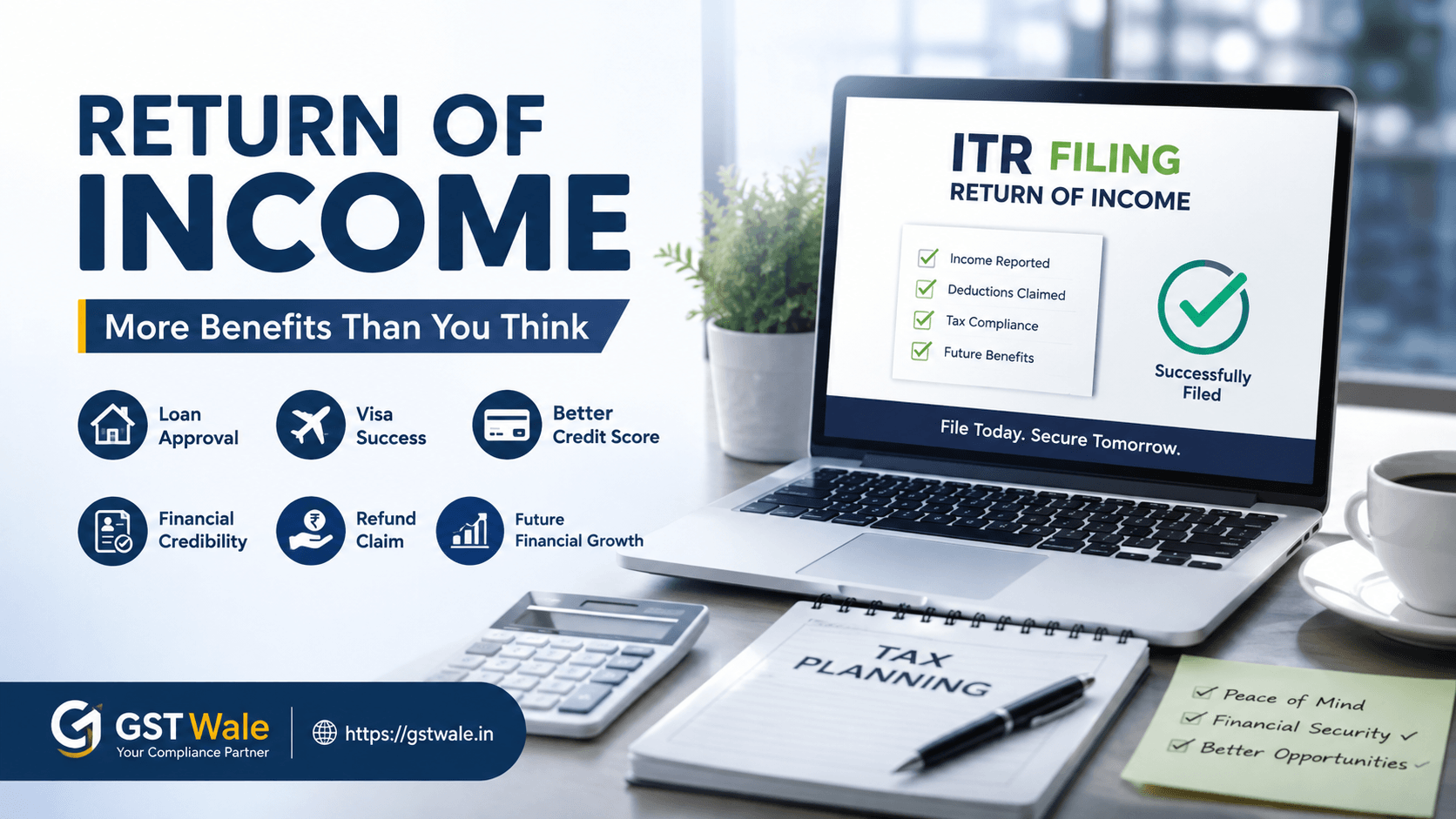
Many people in India believe that if their annual income is below the taxable limit, there is no need to file a return of income. While this may be true from a tax payment perspective, it is not always the smartest financial decision. Filing a return of income offers several long-term advantages that go far beyond paying taxes. It helps establish your financial credibility, supports future financial planning, and simplifies many important processes.
At GST Wale, we often advise individuals, salaried employees, freelancers, students, and small business owners to file their income tax returns even when they are not legally required to pay tax. If you need professional assistance with ITR Filing , timely compliance can save you from future complications while strengthening your financial profile.
Why Filing a Return of Income Matters Even Below the Tax Slab
Many taxpayers assume that filing a return of income is only necessary when tax is payable. However, the Income Tax Return serves as an official financial document that reflects your income, tax status, and financial discipline. Even if your tax liability is zero, filing your return creates a documented financial history that can prove valuable in many situations.
A properly filed return of income demonstrates transparency and responsible financial behaviour. Financial institutions, government departments, embassies, and even some private organizations consider it an important proof of income and financial stability.
Zero ITR: A Smart Financial Habit
A zero ITR refers to filing an income tax return when no tax is payable because your income falls below the exemption limit.
Many people think filing a zero ITR serves no purpose. In reality, it offers several practical benefits:
- Creates an official income record.
- Builds financial credibility.
- Helps during future tax assessments.
- Makes income verification easier.
- Supports future financial applications.
Developing the habit of filing a return of income every year ensures your financial records remain updated regardless of your income level.
Return of Income Helps During Visa Application
One of the most overlooked benefits of filing a return of income is during a visa application.
Many countries ask applicants to submit Income Tax Returns from the previous two or three years. These documents help authorities assess whether the applicant has stable financial standing and genuine ties to their home country.
If you have consistently filed your return of income, your visa documentation becomes much stronger. Whether you are travelling for business, education, tourism, or employment, having properly filed tax returns can simplify the verification process.
Better Chances of Home Loan Approval
Banks and housing finance companies generally ask for Income Tax Returns while evaluating loan applications.
A regularly filed return of income can significantly improve your chances of home loan approval because it helps lenders verify:
- Regular income
- Financial discipline
- Repayment capacity
- Income consistency
- Authentic financial records
Even if your income was below the taxable limit during previous years, filing returns demonstrates responsible financial behaviour.
Practical Example
Suppose Rahul earns ₹5 lakh annually, which results in little or no tax liability after deductions. He consistently files his return of income every year.
After three years, Rahul applies for a home loan. Since he has maintained complete income records through his tax returns, the bank can easily assess his financial profile, making the loan process much smoother.
Improves Credit Card Eligibility
Financial institutions increasingly rely on Income Tax Returns while evaluating applicants for premium credit cards.
A properly filed return of income can improve your credit card eligibility because it serves as verified proof of income.
Banks may consider your tax return while determining:
- Credit limit
- Card category
- Eligibility for premium cards
- Income verification
Maintaining regular tax compliance often gives lenders greater confidence in your financial stability.
Useful as Address Proof in Certain Situations
Although not every authority accepts it, an Income Tax Return can sometimes be used as an additional address proof when applying for financial products or completing KYC formalities.
Since the return of income contains your residential details as maintained in government records, it may support address verification wherever accepted along with other documents.
Having multiple government-backed documents always strengthens your documentation.
Claim Refunds Without Hassle
Sometimes tax gets deducted at source (TDS) even when your total income remains below the taxable limit.
Examples include:
- Bank fixed deposits
- Freelancing income
- Professional payments
- Contract work
Unless you file your return of income, you may not receive your eligible tax refund.
Filing the return ensures that any excess tax deducted is claimed back through the proper legal process.
Carry Forward Business and Capital Losses
One of the biggest financial advantages of filing a timely return of income is loss carrying forward.
If you have:
- Business losses
- Capital losses
- Certain specified losses
you may be able to carry them forward to future years and adjust them against future profits, subject to the provisions of the Income Tax Act.
For example, suppose a startup incurs losses during its first year. Filing the return of income within the prescribed due date enables the business to preserve eligible losses for future tax benefits when profits begin.
Missing the filing deadline could result in losing this valuable tax advantage.
Builds Financial Discipline
Consistent filing encourages better financial management.
Every year, preparing your return of income motivates you to:
- Maintain income records.
- Organize investment documents.
- Track deductions.
- Keep expense records.
- Plan taxes efficiently.
This habit proves extremely useful as your income grows over the years.
Helpful for Self-Employed Professionals
Freelancers, consultants, influencers, and small business owners often experience fluctuating incomes.
Even during years when income remains below the taxable limit, filing a return of income helps establish income continuity.
This becomes useful when applying for:
- Business loans
- Professional registrations
- Government tenders
- Startup funding
- Financial partnerships
A consistent filing history reflects professionalism and financial responsibility.
Prevents Future Documentation Issues
Many financial procedures ask for historical Income Tax Returns.
If you skip filing today, you may face unnecessary documentation problems later when applying for:
- Educational loans
- Vehicle loans
- Business finance
- Government schemes
- Overseas education
Having a continuous record of your return of income saves considerable time and avoids unnecessary complications.
Step-by-Step: Should You File a Return of Income?
Even if your income is below the tax slab, consider filing if:
- You want to build financial credibility.
- You may apply for a visa in the future.
- You plan to purchase a house.
- You expect to apply for loans.
- You want better credit card eligibility.
- You wish to claim TDS refunds.
- You have eligible losses for loss carrying forward.
- You prefer maintaining complete financial records.
Common Myths About Return of Income
Myth 1: No tax means no return.
Not always. Filing a return of income can provide several financial and legal benefits even when no tax is payable.
Myth 2: Filing is only for salaried people.
Incorrect. Freelancers, professionals, students with taxable income, consultants, and business owners can all benefit from filing.
Myth 3: Filing increases tax scrutiny.
Simply filing your return of income does not automatically invite scrutiny. In fact, accurate and timely filing often reflects good compliance.
Frequently Asked Questions
Is filing a return of income mandatory below the tax slab?
In many situations, it may not be mandatory. However, voluntarily filing a return of income provides several long-term financial advantages.
Can a zero ITR help in getting a loan?
Yes. A zero ITR creates an official financial record that lenders may consider while evaluating your loan application.
Can I claim a refund if my income is below the taxable limit?
Yes. If excess TDS has been deducted, filing your return of income allows you to claim the eligible refund.
Does filing help during a visa application?
Yes. Many embassies request previous Income Tax Returns as part of the documentation for a visa application, making regular filing highly beneficial.
Can business losses be carried forward without filing?
Generally, eligible loss carrying forward benefits require timely filing of the Income Tax Return, subject to applicable tax provisions.
Filing your return of income is not just about paying taxes—it is about building a strong financial foundation. Even when your income falls below the taxable limit, timely filing can support future loan applications, improve financial credibility, simplify visa documentation, strengthen your financial profile, and preserve valuable tax benefits such as loss carrying forward.
Instead of viewing tax filing as an annual obligation, consider it an investment in your financial future. At GST Wale, our experienced professionals make the entire process simple, accurate, and hassle-free. Whether you need help with a zero ITR, regular tax compliance, or expert guidance, GST Wale is here to ensure your return of income is filed correctly and on time.
 Previous