


Unpacking GST R 3 B Audits: What Internal Auditors Look For
Unpacking GST R 3 B Audits: What Internal Auditors Look For
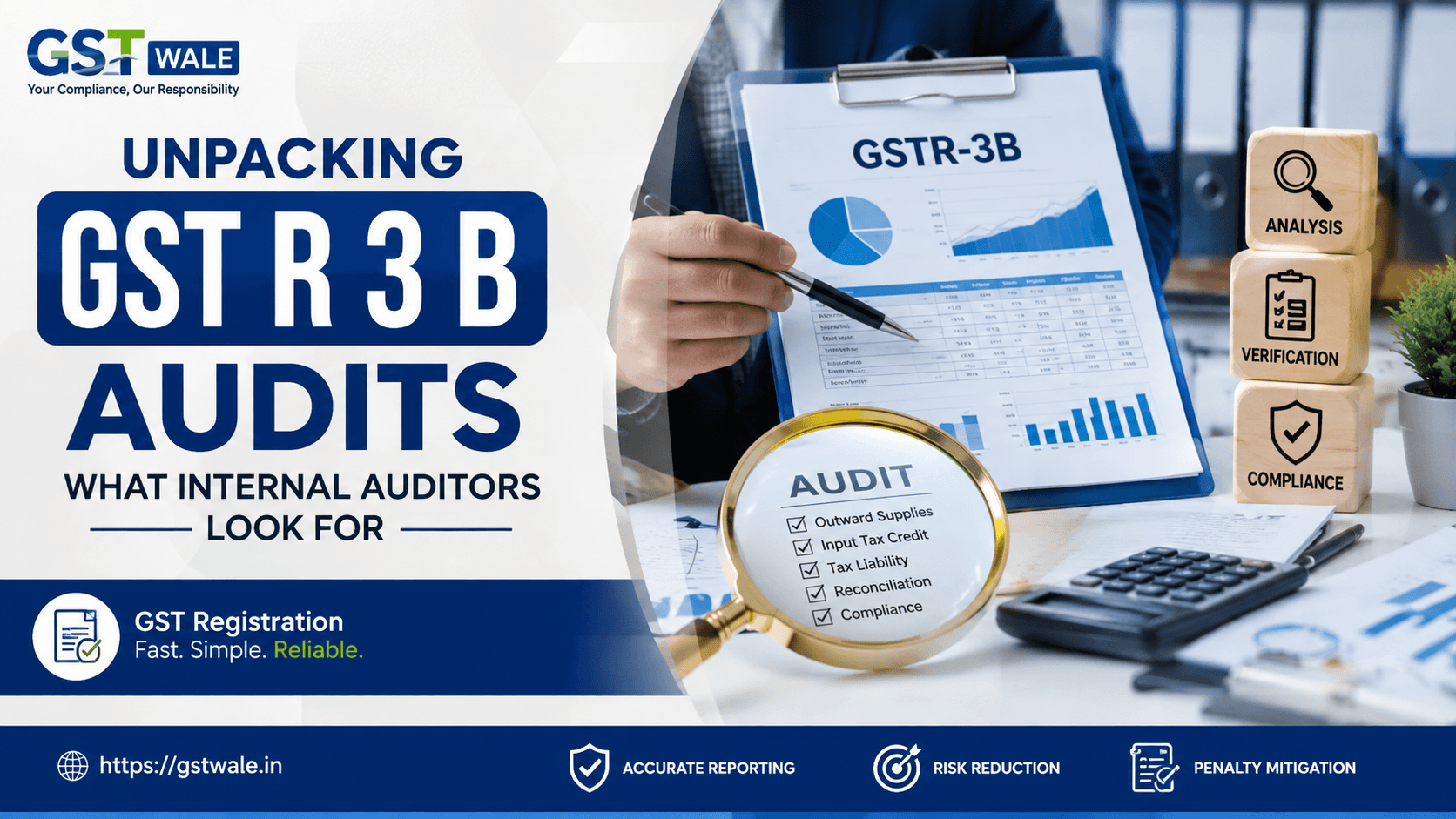
Every GST-registered business should understand that filing gst r 3 b accurately is more than just a monthly compliance requirement. It reflects the financial health of your business and directly impacts your GST compliance record. Internal audits often begin by reviewing gst r 3 b because it provides a summary of tax liability, input tax credit, and tax payments.
Whether you are a startup, MSME, or an established company, proper compliance starts with the right documentation and registration. If you are planning to start a new business or expand your operations, getting your GST Registration completed correctly can help avoid future compliance issues. At GST Wale, we regularly help businesses identify filing errors before they become expensive notices.
An internal audit is not just about identifying mistakes. It is about ensuring that your GST records are accurate, reconciled, and capable of withstanding scrutiny from tax authorities. Understanding what auditors examine can help businesses strengthen their compliance framework and reduce unnecessary risks.
Why gst r 3 b Is a Key Focus During Internal Audits
The gst r 3 b return is a summary return that reports outward supplies, inward supplies, eligible input tax credit, tax liability, and tax payment. Since it directly impacts tax collection and compliance, auditors consider it one of the most important GST documents.
An inaccurate gst r 3 b may result in:
- Excess tax payment
- Short payment of tax
- Incorrect Input Tax Credit claims
- GST notices
- Interest liability
- Financial reporting mismatches
Internal auditors therefore perform detailed reconciliations to ensure every figure reported in gst r 3 b matches supporting records.
gst r 3 b Internal Audit Checklist
A structured internal audit checklist helps identify discrepancies before statutory audits or departmental inspections.
Auditors generally verify:
- Sales invoices and outward supplies
- Purchase invoices and Input Tax Credit
- GST payment challans
- Electronic Credit Ledger
- Electronic Cash Ledger
- Credit and debit notes
- Reverse charge transactions
- Exempt and nil-rated supplies
- Amendments made in previous periods
- Monthly reconciliation reports
Following a systematic internal audit checklist improves compliance and reduces future litigation.
Outbound Data Validation in gst r 3 b
Matching Sales Data
One of the first audit procedures is outbound data validation.
Auditors compare:
- Sales register
- Tax invoices
- E-invoice records (where applicable)
- E-way bills
- GSTR-1
- gst r 3 b
The objective is to ensure that every taxable supply reported in GSTR-1 is also correctly reflected in gst r 3 b.
Common Errors Found
Some frequently observed mistakes include:
- Missing invoices
- Duplicate reporting
- Wrong GST rates
- Incorrect place of supply
- Taxable value mismatch
- Incorrect reporting of exports
Proper outbound data validation significantly reduces compliance risks.
Reviewing Input Tax Credit in gst r 3 b
Input Tax Credit is one of the most sensitive areas during any GST audit.
Auditors verify:
- Vendor GSTIN
- Tax invoice availability
- Goods or services actually received
- Supplier compliance
- ITC eligibility
- Blocked credits under GST law
Businesses should never claim Input Tax Credit merely because tax has been paid. Documentary evidence remains essential.
Proper reconciliation helps ensure that gst r 3 b reflects only eligible credits.
Financial Statement Crosscheck
Another important audit activity is the financial statement crosscheck.
Auditors compare the following:
- Trial Balance
- Profit and Loss Account
- Balance Sheet
- GST returns
- Annual financial statements
The financial statement crosscheck helps identify:
- Unreported income
- Excess turnover
- Missing liabilities
- Incorrect tax payments
For example, if turnover in financial statements exceeds turnover reported in gst r 3 b, auditors immediately investigate the reason.
Ledger Audit Process
The ledger audit process plays a vital role in identifying accounting inconsistencies.
Auditors usually examine:
Sales Ledger
They verify whether every invoice has been properly recorded.
Purchase Ledger
Purchase entries are checked for Input Tax Credit eligibility.
GST Liability Ledger
Tax liability must match gst r 3 b.
Input Tax Credit Ledger
Credits claimed should match supporting purchase invoices.
Expense Ledger
Expenses subject to reverse charge receive special attention.
An effective ledger audit process helps identify accounting errors before tax authorities detect them.
Reconciliation Between GSTR-1 and gst r 3 b
One of the most common reasons for GST notices is mismatch between GSTR-1 and gst r 3 b.
Auditors verify:
- Taxable turnover
- IGST
- CGST
- SGST
- Credit notes
- Debit notes
- Amendments
Minor differences may occur due to timing, but significant mismatches require immediate correction.
Common Audit Observations
Internal auditors regularly report issues such as:
- Wrong Input Tax Credit claims
- Late GST payments
- Incorrect HSN reporting
- Mismatch between books and returns
- Incorrect reverse charge reporting
- Duplicate invoices
- Missing documentation
- Incorrect tax classification
Correcting these issues early protects businesses from future disputes.
Penalty Mitigation Strategies
One major objective of an internal audit is penalty mitigation.
Businesses can reduce compliance risks through:
- Monthly reconciliations
- Timely correction of errors
- Proper invoice management
- Vendor compliance monitoring
- Accurate accounting records
- Internal review before filing
- Regular GST health checks
An effective penalty mitigation strategy not only reduces notices but also strengthens business credibility.
Practical Example
Consider a manufacturing company that reports ₹1.2 crore turnover in gst r 3 b, while its accounting software shows ₹1.28 crore.
During internal audit, auditors discover:
- Two invoices omitted
- One export transaction incorrectly classified
- One debit note excluded
The company voluntarily corrects the error in subsequent returns, pays applicable interest, and avoids more serious consequences during departmental verification.
This example highlights why proactive audits are always better than reactive corrections.
Best Practices for Accurate gst r 3 b Filing
Businesses should adopt the following practices:
- Maintain updated accounting records.
- Reconcile GST data every month.
- Review vendor compliance regularly.
- Verify Input Tax Credit eligibility.
- Preserve invoices and supporting documents.
- Conduct quarterly internal audits.
- Monitor GST notifications and amendments.
- Cross-check financial statements before annual filing.
- Review tax liability before submitting gst r 3 b.
- Consult GST professionals whenever complex transactions arise.
These practices significantly improve overall compliance quality.
Frequently Asked Questions
What is gst r 3 b?
gst r 3 b is a monthly summary GST return that contains details of outward supplies, inward supplies, Input Tax Credit, tax liability, and tax payment made by registered taxpayers.
Why do internal auditors review gst r 3 b first?
Since gst r 3 b summarizes a business's GST liability and tax payments, it provides auditors with an overview of compliance and helps identify potential reporting inconsistencies quickly.
What documents are required for a gst r 3 b audit?
Auditors generally review sales registers, purchase registers, GST invoices, GSTR-1, accounting ledgers, tax payment challans, financial statements, and reconciliation reports.
Can mistakes in gst r 3 b attract penalties?
Yes. Incorrect reporting, delayed tax payment, or excess Input Tax Credit claims may result in interest, penalties, or GST notices. Timely corrections help reduce exposure.
How often should businesses conduct internal GST audits?
Many businesses benefit from quarterly internal audits, while larger organizations often perform monthly reviews to ensure continuous GST compliance and reduce reporting errors.
Maintaining an accurate gst r 3 b is essential for every GST-registered business. Internal auditors focus on reconciliations, documentation, Input Tax Credit verification, outbound data validation, financial statement crosscheck, ledger audit process, and penalty mitigation to ensure complete compliance.
At GST Wale, we believe that proactive compliance is always more cost-effective than responding to tax notices later. Our experienced GST professionals help businesses review their gst r 3 b, identify compliance gaps, and strengthen their GST processes with practical, reliable guidance. Partner with GST Wale to keep your business compliant, confident, and audit-ready throughout the year.
 Previous