


How to Check If Your Vendor Has Filed GSTR 1 (And Why It Protects Your ITC)
How to Check If Your Vendor Has Filed GSTR 1 (And Why It Protects Your ITC)
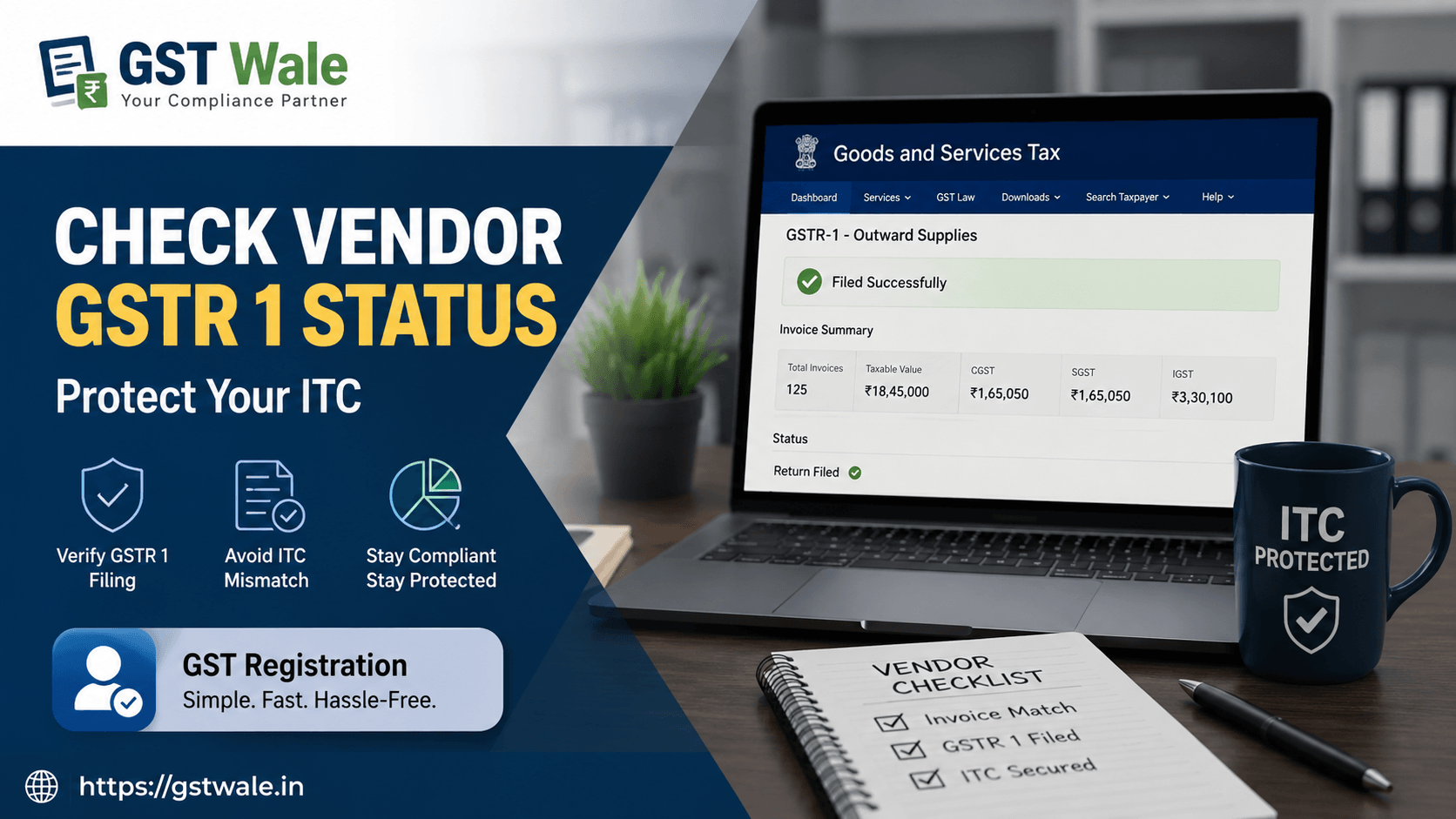
Every business claiming Input Tax Credit (ITC) under GST depends on one important factor—whether the supplier has correctly filed gstr 1. Many taxpayers assume that receiving a valid tax invoice is enough to claim ITC, but that's no longer the case. If your vendor fails to upload invoice details in gstr 1, your eligible credit may be delayed, disputed, or even denied during GST scrutiny.
Whether you are a manufacturer, trader, service provider, or startup, maintaining proper vendor compliance has become a crucial part of tax planning. Businesses that have recently completed their GST Registration should especially understand this process from the beginning to avoid unnecessary tax complications. At GST Wale, we regularly help businesses verify vendor compliance and safeguard their valuable ITC.
Why GSTR 1 Is Important for Your Business
gstr 1 is the return through which a registered supplier reports all outward taxable supplies made during a tax period. The information uploaded in gstr 1 flows into the buyer's GST records and plays a significant role in determining ITC eligibility.
If a supplier delays or skips filing gstr 1, the invoice may not appear correctly in your GST records. As a result, even genuine purchases can become problematic during GST assessments.
How GSTR 1 Protects Your Input Tax Credit
The GST system increasingly relies on digital invoice matching. Before claiming ITC, businesses should verify whether their supplier has filed gstr 1 correctly.
Here's why it matters:
- Your purchase invoice should appear correctly in GST records.
- The supplier must report accurate invoice details.
- The GSTIN, invoice number, taxable value, and tax amount should match.
- Any mismatch can lead to ITC reversal or notices from the department.
Simply put, proper gstr 1 filing by your supplier directly impacts your tax credit.
How to Check If Your Vendor Has Filed GSTR 1
Step 1: Log in to the GST Portal
Access the GST portal using your registered credentials.
Step 2: Open Your ITC Statements
Navigate to your purchase-related GST statements where supplier invoices are reflected.
Step 3: Verify the Invoice Details
Compare your purchase invoice with the information uploaded through gstr 1.
Check:
- GSTIN
- Invoice Number
- Invoice Date
- Taxable Value
- CGST, SGST or IGST Amount
Step 4: Review the GSTR 2A Dynamic View
The gstr 2a dynamic view updates whenever suppliers upload or amend invoices through gstr 1. Reviewing this regularly helps identify missing invoices before filing your GST returns.
Step 5: Compare With Your Purchase Register
Match every purchase entry with the invoices available in your GST records. Any difference should be investigated immediately.
Signs That Your Vendor Has Not Filed GSTR 1 Properly
Watch for these warning signs:
- Your invoice is missing from GST records.
- Invoice values do not match.
- GST amount differs from your purchase invoice.
- Supplier has uploaded incorrect GSTIN.
- Repeated filing delays every month.
Ignoring these issues can affect your ITC significantly.
Real-World Example
Suppose ABC Traders purchases goods worth ₹5,00,000 plus GST from XYZ Enterprises. The invoice is genuine, payment has been made, and goods have been received. However, XYZ Enterprises forgets to file gstr 1 for the month.
When ABC Traders reviews its GST records, the invoice does not appear. During departmental verification, the ITC claim becomes questionable until the supplier files the pending return correctly.
This simple mistake can temporarily block a substantial amount of working capital.
Best Practices for Vendor Compliance Check
A proper vendor compliance check should become part of your monthly accounting process.
Recommended practices include:
- Verify supplier return filing every month.
- Match invoices before claiming ITC.
- Maintain proper reconciliation reports.
- Keep communication records with suppliers.
- Review GST mismatches regularly.
Businesses that follow disciplined compliance procedures usually face fewer GST disputes.
Follow Up With Default Vendors Without Delay
One of the most practical ways to protect ITC is to follow up with default vendors immediately after identifying missing invoices.
Your communication should include:
- Invoice reference number
- Invoice date
- GST amount involved
- Request for immediate filing or amendment
Timely reminders often resolve the issue before GST return deadlines.
Understand the Compliance Rating Index
Many businesses now evaluate suppliers based on their GST discipline. While selecting new vendors, consider their compliance rating index as part of your vendor evaluation process.
A supplier with consistent GST compliance generally offers:
- Lower ITC risks
- Fewer invoice mismatches
- Better business reliability
- Smoother GST reconciliations
Choosing compliant vendors is often more valuable than choosing the lowest-priced supplier.
Use a Tax Holding Strategy for High-Risk Vendors
Some businesses adopt a practical tax holding strategy when dealing with suppliers who repeatedly delay GST compliance.
This may involve:
- Holding back the GST component until compliance is confirmed.
- Releasing payment after invoice reflection.
- Including GST compliance clauses in purchase agreements.
This approach encourages timely filing while reducing ITC exposure.
Common Mistakes Businesses Make
- Assuming every supplier files returns on time.
- Ignoring monthly invoice reconciliation.
- Claiming ITC without verification.
- Not maintaining vendor compliance records.
- Waiting until GST notice arrives.
Preventive action always costs less than corrective action.
How GST Wale Helps Businesses
At GST Wale, we assist businesses in maintaining GST compliance through professional support, including:
- Monthly GST reconciliation
- Vendor compliance verification
- ITC review and reconciliation
- GST return filing assistance
- GST notices and advisory support
Our experienced professionals help businesses reduce compliance risks while improving tax efficiency.
Frequently Asked Questions
1. Why is gstr 1 important for claiming ITC?
gstr 1 contains supplier invoice details that support your ITC claim. Incorrect or delayed filing may affect the availability of your tax credit.
2. How often should I verify vendor compliance?
Ideally, businesses should perform a vendor compliance check every month before filing their GST returns to identify missing or incorrect invoices.
3. What should I do if my invoice is missing?
Immediately contact your supplier, share the invoice details, and request them to file or amend their gstr 1 without delay.
4. Can I rely only on the purchase invoice?
No. Along with a valid invoice, businesses should verify that the supplier has correctly reported the transaction in gstr 1.
5. Can regular reconciliation reduce GST disputes?
Yes. Monthly reconciliation helps identify mismatches early, allowing businesses to resolve issues before they impact ITC or invite departmental scrutiny.
Monitoring gstr 1 filing by your suppliers is no longer optional—it is an essential part of protecting your Input Tax Credit. Regular invoice reconciliation, timely vendor communication, a disciplined vendor compliance check, reviewing the gstr 2a dynamic view, evaluating the compliance rating index, choosing to follow up with default vendors, and implementing a suitable tax holding strategy can significantly reduce GST-related risks.
If you want expert assistance with GST compliance, ITC reconciliation, return filing, or vendor verification, contact GST Wale. Our experienced GST professionals help businesses stay compliant, safeguard their tax credits, and manage GST obligations with confidence.
 Previous