


Understanding Table 4 in GST R 3b: Eligible vs Ineligible ITC
Understanding Table 4 in GST R 3b: Eligible vs Ineligible ITC
Filing gst r 3b correctly is one of the most important responsibilities for every registered taxpayer. Among all the sections in the return, Table 4 often creates the highest level of confusion because it deals with Input Tax Credit (ITC). A small mistake in reporting eligible or ineligible ITC can result in notices, interest, penalties, or unnecessary tax payments.
If you have recently completed your GST Registration, understanding Table 4 should be one of your priorities. At GST Wale, we regularly help businesses review their gst r 3b filings and correct ITC reporting so that they can maximize eligible credit while remaining fully compliant with GST laws.
In this guide, we will explain every part of Table 4 in simple language with practical examples, making it easier for business owners, accountants, and finance professionals to file gst r 3b confidently.
What is Table 4 in gst r 3b?
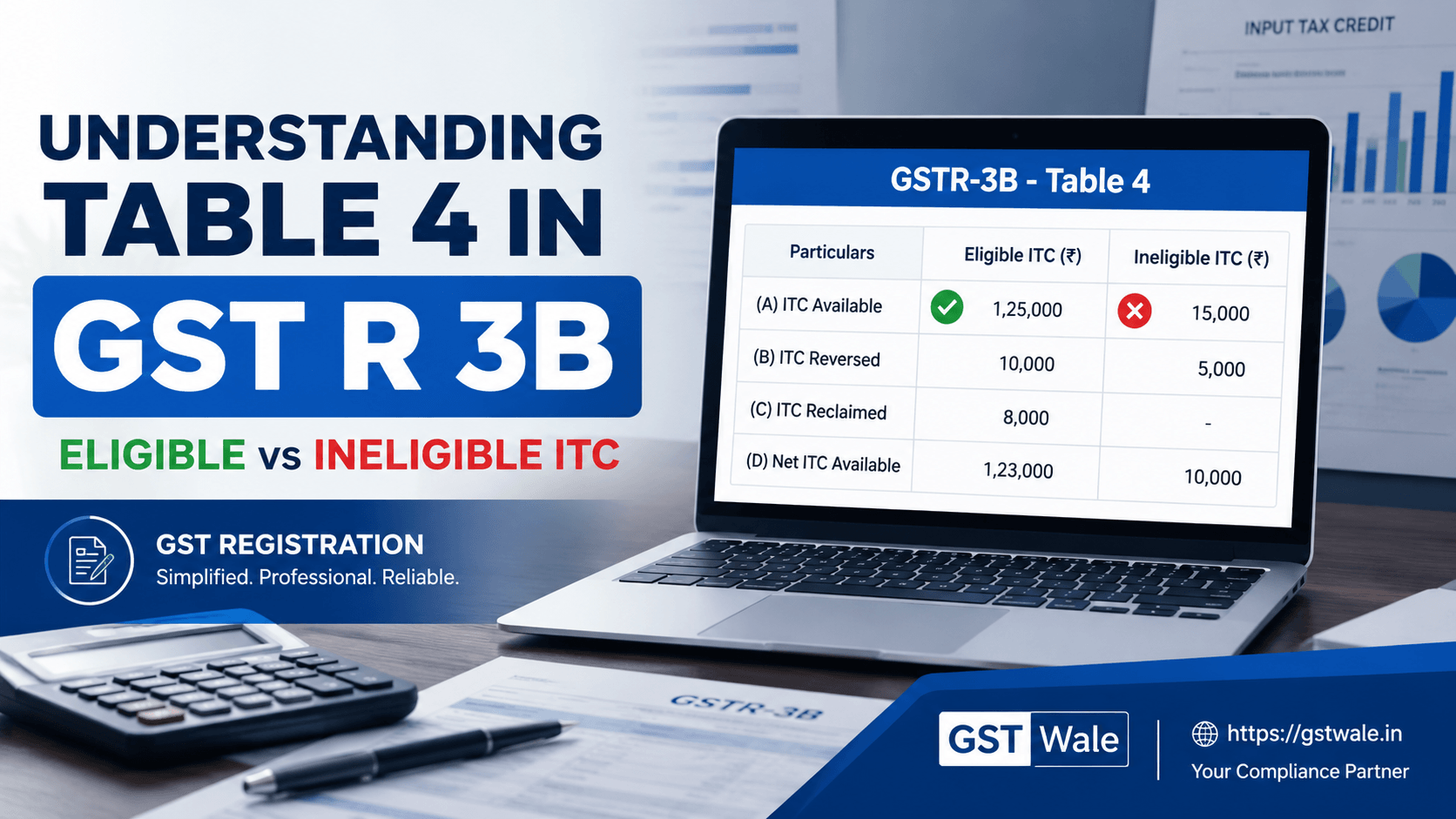
Table 4 of gst r 3b is used for reporting Input Tax Credit available, reversed, reclaimed, and ineligible during a tax period. This table ensures that only the correct amount of ITC is claimed against GST liability.
The government uses this information to compare your purchases, supplier filings, and ITC claims. Therefore, any mismatch may trigger scrutiny.
Understanding the Structure of Table 4 in gst r 3b
Table 4 is divided into multiple parts, each serving a specific purpose.
Table 4A – ITC Available
The table 4a input credit section captures the total Input Tax Credit available during the month.
This includes credit received on:
- Purchases of goods
- Input services
- Capital goods
- Imports
- Reverse charge transactions
- ISD credits received
The figures should be supported by purchase invoices and reconciled with GSTR-2B before filing gst r 3b.
Practical Example
Suppose a manufacturing company purchases raw materials worth ₹10,00,000 with GST of ₹1,80,000. The supplier has filed the invoice correctly in GSTR-1, and it appears in GSTR-2B. The company can report this amount under table 4a input credit as eligible ITC.
Eligible ITC Explained
Eligible ITC means GST paid on purchases that satisfies all conditions prescribed under the GST Act.
Generally, ITC can be claimed when:
- A valid tax invoice is available.
- Goods or services have been received.
- The supplier has paid GST to the government.
- The invoice appears in GSTR-2B wherever applicable.
- The return is filed within the prescribed timelines.
Following these conditions helps businesses avoid disputes while filing gst r 3b.
What is Ineligible ITC?
Not every GST paid becomes eligible for credit. Certain expenses are specifically blocked under GST law.
These blocked credits are called ineligible ITC and should not be claimed.
Common Examples
- Personal expenses
- Club membership fees
- Food and beverages (except specified cases)
- Employee vacation benefits
- Motor vehicles used for restricted purposes
- Certain works contract services
Incorrectly claiming these credits may lead to reversal along with interest.
Understanding the Section 17(5) Blocked Credits
The section 17 5 list specifies expenses where ITC is permanently restricted.
Some important blocked credits include:
- Motor vehicles for personal transportation except permitted categories
- Outdoor catering
- Health insurance in specified situations
- Beauty treatment services
- Life insurance under restricted conditions
- Construction of immovable property for own use
- Goods lost, stolen, destroyed, written off, or distributed as gifts
Businesses should carefully review the section 17 5 list before claiming any credit in gst r 3b.
Reversal of ITC Under GST
Sometimes ITC initially claimed has to be reversed because it becomes ineligible later.
Common reasons include:
- Non-payment to suppliers within 180 days
- Personal use
- Exempt supplies
- Wrong credit claimed
- Blocked credits identified later
Reversal of ITC Rule 42
The reversal of itc rule 42 applies when inputs or input services are used for both taxable and exempt supplies.
Instead of claiming the entire ITC, taxpayers must proportionately reverse the credit attributable to exempt supplies.
For example, if an office is used for both taxable consulting services and exempt educational services, ITC on common expenses like electricity, internet, and office rent may require calculation under the reversal of itc rule 42.
Rule 43 Asset Reversal
The rule 43 asset reversal applies to capital goods used for both taxable and exempt supplies.
Unlike Rule 42, this reversal is calculated over the useful life of capital assets.
For example, if machinery is partly used for exempt production, ITC relating to exempt usage is reversed gradually according to the provisions governing rule 43 asset reversal.
Permanent ITC Blocking
Certain credits are never allowed under GST. This concept is commonly referred to as permanent itc blocking.
Unlike temporary reversals, these credits cannot be reclaimed later.
Examples include:
- GST on personal consumption
- GST on gifts beyond permissible limits
- Certain employee welfare expenses
- Blocked credits under Section 17(5)
Understanding permanent itc blocking helps businesses avoid claiming credits that will inevitably be rejected.
Common Mistakes While Reporting Table 4 in gst r 3b
- Claiming ITC without invoice verification
- Ignoring GSTR-2B reconciliation
- Not reversing common credits
- Claiming blocked credits
- Reporting incorrect capital goods ITC
- Missing Rule 42 or Rule 43 adjustments
- Failing to maintain supporting documentation
Best Practices for Accurate gst r 3b Filing
Step 1: Reconcile Purchase Register
Always compare purchase records with GSTR-2B before filing.
Step 2: Verify Supplier Compliance
Ensure suppliers have uploaded invoices correctly.
Step 3: Identify Blocked Credits
Review expenses covered under the section 17 5 list.
Step 4: Calculate Required Reversals
Apply the reversal of itc rule 42 and rule 43 asset reversal wherever applicable.
Step 5: Maintain Proper Documentation
Keep invoices, reconciliations, working papers, and reversal calculations ready for future departmental verification.
Why Accurate Table 4 Reporting Matters
Correct reporting in gst r 3b helps businesses:
- Avoid GST notices
- Reduce litigation risk
- Improve compliance ratings
- Prevent unnecessary interest and penalties
- Claim only genuine Input Tax Credit
- Maintain healthy financial records
Frequently Asked Questions
1. What is Table 4A in gst r 3b?
Table 4A reports eligible Input Tax Credit received during the tax period from purchases, imports, reverse charge transactions, ISD credits, and capital goods.
2. Can blocked ITC be claimed later?
No. Credits covered under Section 17(5) are generally permanently blocked unless specifically permitted under GST law.
3. What is the difference between Rule 42 and Rule 43?
Rule 42 applies to common inputs and input services, whereas Rule 43 applies to common capital goods used for both taxable and exempt supplies.
4. Why should GSTR-2B be reconciled before filing?
Reconciling with GSTR-2B helps ensure that eligible ITC is correctly reported and reduces the chances of departmental disputes or notices.
5. Can wrong ITC claimed in gst r 3b be corrected?
Yes. Depending on the nature of the error and applicable GST provisions, taxpayers may reverse or reclaim eligible credit in subsequent returns after proper reconciliation.
Understanding Table 4 in gst r 3b is essential for every GST-registered business. Correct identification of eligible and ineligible ITC, proper application of Rule 42 and Rule 43, and awareness of permanently blocked credits can significantly reduce compliance risks. Regular reconciliation and proper documentation make GST compliance much easier and help businesses avoid costly mistakes.
Need Expert Help? Contact GST Wale
At GST Wale, our experienced GST professionals assist businesses with GST registration, return filing, ITC reconciliation, GST audits, compliance reviews, and advisory services. If you want your gst r 3b to be accurate, compliant, and hassle-free, our experts are ready to help you at every step. Get in touch with GST Wale today and file your GST returns with complete confidence.
 Previous