


Facing a Ledger Balance Deficit While Filing GST R 3b? Here is the Fix
Facing a Ledger Balance Deficit While Filing GST R 3b? Here is the Fix
Filing gst r 3b is a monthly responsibility that every registered taxpayer must complete accurately and on time. However, many businesses face a common issue at the final stage of filing—a ledger balance deficit. This situation can delay return filing, attract late fees, and even lead to unnecessary stress if not handled correctly. If you have recently completed your GST Registration, understanding how to deal with this issue can help you avoid compliance problems from the beginning.
At GST Wale, we regularly assist businesses that get stuck while filing gst r 3b because the available balance in the electronic cash ledger or credit ledger is not enough to offset the tax liability. The good news is that this problem has a straightforward solution. In this guide, we'll explain why it happens, how to fix it, and what you can do to prevent it in the future.
What Does a Ledger Balance Deficit Mean in GST R 3B?
While filing gst r 3b, the GST portal checks whether you have enough balance in your electronic cash ledger and electronic credit ledger to pay your total tax liability. A ledger balance deficit simply means that the available balance is insufficient.
This deficit may occur due to:
- Insufficient cash deposited into the electronic cash ledger.
- Input Tax Credit (ITC) not yet reflected or available.
- Incorrect utilization of available credit.
- Calculation errors while preparing the return.
- Pending tax liabilities from previous tax periods.
Until this shortfall is resolved, your gst r 3b return cannot be successfully filed.
Common Reasons Behind GST R 3B Ledger Shortage
1. Insufficient Electronic Cash Ledger Balance
The most common reason is simply not depositing enough tax into the electronic cash ledger. Businesses often calculate their liability manually and overlook interest, late fees, or tax adjustments.
2. Incorrect Input Tax Credit Claim
If you are claiming ITC that is not yet available or has been restricted under GST rules, your credit ledger balance may be lower than expected.
3. Ignoring Utilization Rules for Credit
Many taxpayers forget that GST follows specific utilization rules for credit. IGST credit must generally be utilized first before CGST and SGST credits. Incorrect assumptions can create an apparent ledger deficit while filing gst r 3b.
4. Previous Outstanding Liabilities
Earlier unpaid taxes, interest, or penalties may automatically reduce your available balance, leaving less credit for the current month's liability.
How to Fix Ledger Balance Deficit While Filing GST R 3B
If you encounter this issue, follow these practical steps.
Step 1: Verify Your Tax Liability
Carefully review:
- Output GST liability.
- Available ITC.
- Interest, if applicable.
- Late fees.
- Any previous adjustments.
Many filing errors are simply caused by incorrect calculations.
Step 2: Check Electronic Ledgers
Review both:
- Electronic Cash Ledger
- Electronic Credit Ledger
Ensure the balances shown on the GST portal match your accounting records before proceeding with gst r 3b.
Step 3: Perform a Cash Ledger Top Up
If the cash ledger balance is insufficient, perform a cash ledger top up by depositing the required amount into your Electronic Cash Ledger.
This is usually the fastest way to remove the deficit and continue filing your return.
Step 4: Generate a GST Challan
The GST portal allows easy challan generation online for tax payments. While creating the challan:
- Select the correct tax head.
- Enter the required amount carefully.
- Verify GSTIN details.
- Generate the challan.
After successful payment, the amount gets credited to your Electronic Cash Ledger.
Step 5: Complete the Tax Payment
The GST portal supports multiple payment options including:
- net banking gst payment
- Debit card
- Credit card (where available)
- neft rtgs via portal
- OTC payment for eligible taxpayers
Most businesses prefer net banking gst payment because the balance gets updated quickly, allowing immediate continuation of gst r 3b filing.
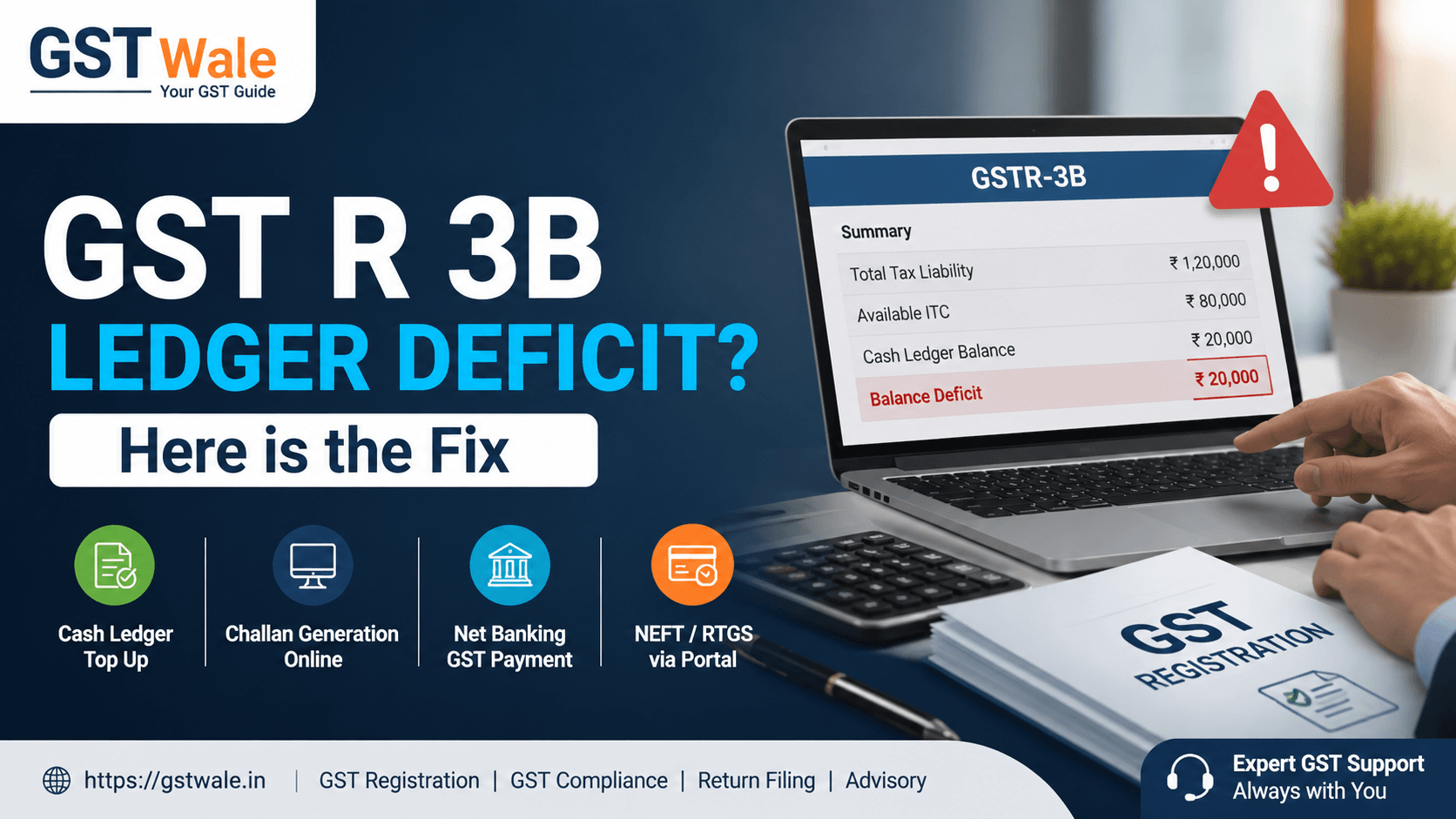
Example of a Ledger Balance Deficit
Suppose your total GST liability for the month is ₹1,20,000.
- Available ITC: ₹80,000
- Cash Ledger Balance: ₹20,000
- Total Available: ₹1,00,000
- Deficit: ₹20,000
In this case, you need a cash ledger top up of ₹20,000 through challan generation online. Once the payment is completed using net banking gst payment or neft rtgs via portal, you can offset the liability and successfully submit gst r 3b.
Best Practices to Avoid Ledger Deficit in Future GST R 3B Filings
Maintain Updated Books
Regular bookkeeping helps you estimate tax liability accurately before filing gst r 3b.
Reconcile ITC Every Month
Compare purchase records with the available ITC before claiming credit.
Monitor Electronic Ledgers Regularly
Do not wait until the filing date. Reviewing your ledgers throughout the month helps identify shortages early.
Understand Credit Utilization Rules
A clear understanding of the utilization rules for credit prevents unnecessary confusion during tax payment.
File Returns Before the Due Date
Early filing provides enough time to resolve ledger issues without paying additional late fees or interest.
Frequently Asked Questions
Why is my GST R 3B showing insufficient balance?
This usually happens because the available balance in your electronic cash ledger and electronic credit ledger is less than your total GST liability. It may also result from pending dues or incorrect ITC calculations.
How can I add money to my Electronic Cash Ledger?
You can generate a challan through the GST portal using challan generation online and make payment through net banking gst payment, neft rtgs via portal, or other approved payment methods.
Can I file GST R 3B if there is a ledger deficit?
No. The GST portal will not allow successful filing until the entire tax liability is fully offset using available credit and cash balances.
Does Input Tax Credit automatically remove the deficit?
Only eligible and available ITC can be used. If the available credit is lower than your liability, you must deposit the remaining amount into the electronic cash ledger.
Can GST Wale help with GST R 3B filing?
Yes. GST Wale assists businesses with GST return filing, tax calculations, ITC reconciliation, ledger management, and complete GST compliance support.
A ledger balance deficit while filing gst r 3b is a common issue, but it is usually easy to resolve once you identify the reason behind the shortfall. Whether the issue is insufficient cash balance, incorrect ITC, or misunderstanding the utilization rules for credit, timely verification and the right payment process can help you complete your return without unnecessary delays.
At GST Wale, we understand that GST compliance can be challenging, especially for growing businesses. Our experienced professionals provide reliable support for gst r 3b, GST compliance, registrations, return filing, tax planning, and ongoing advisory services. If you want accurate GST filing without last-minute complications, get in touch with GST Wale today and let our experts handle your compliance with confidence.
 Previous