


The Complete Guide to Amending HSN Data in GSTR 1 Returns
The Complete Guide to Amending HSN Data in GSTR 1 Returns
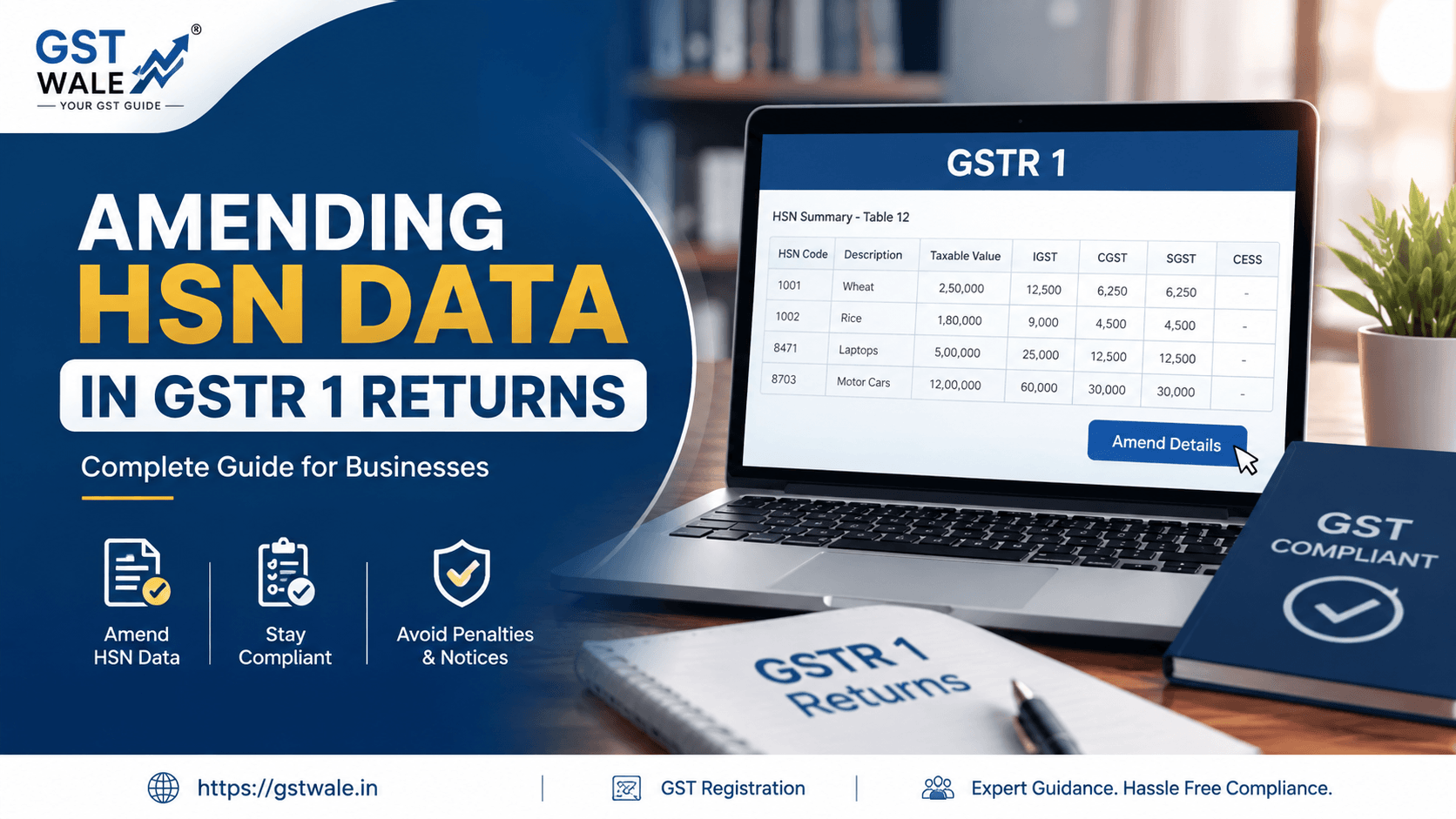
If you have already filed gstr 1 and later discovered an error in your HSN details, don't panic. Mistakes in HSN or SAC codes are common, especially when businesses deal with multiple products or services. The good news is that the GST portal allows taxpayers to correct such errors through amendments in subsequent returns. If you are a new business or planning your GST Registration, understanding these compliance requirements from the beginning can help you avoid future filing issues.
As experienced GST professionals at GST Wale, we regularly help businesses resolve filing mistakes without unnecessary penalties. In this guide, we explain how to amend HSN details in gstr 1, understand Table 12 amendments, comply with HSN reporting rules, and avoid common mistakes that can lead to notices from the GST department.
Understanding HSN Reporting in GSTR 1
gstr 1 is the return where registered taxpayers report their outward supplies. Apart from invoice details, taxpayers must also furnish HSN-wise summary details in Table 12. These details help the government classify goods and services correctly and improve tax reporting accuracy.
Every business should ensure that the HSN codes mentioned in gstr 1 match the products or services actually supplied. Even a small mistake may create reconciliation issues during assessments or while matching return data.
What is Table 12 Amendment in GSTR 1?
The table 12 amendment facility allows taxpayers to correct HSN summary details reported in earlier tax periods. Since HSN information plays an important role in GST compliance, any incorrect reporting should be rectified as soon as possible.
You can use the amendment facility to correct:
- Wrong HSN codes
- Incorrect SAC codes for services
- Incorrect taxable value
- Wrong quantity reported
- Incorrect unit of measurement
Making timely corrections ensures that your gstr 1 remains accurate and reduces future compliance risks.
When Should You Amend HSN Details?
You should amend HSN details in gstr 1 whenever you identify reporting mistakes after filing the original return. Common situations include:
- Wrong HSN code selected during invoice preparation.
- Incorrect SAC code used for services.
- Taxable value entered incorrectly.
- Product classification changed after expert review.
- Errors noticed during annual reconciliation.
Remember that correcting mistakes early is always better than waiting for departmental scrutiny.
Step-by-Step Process to Amend HSN Data in GSTR 1
Step 1: Login to the GST Portal
Access your GST account using your GSTIN credentials.
Step 2: Open the Relevant Return Period
Select the tax period in which you want to file the amendment.
Step 3: Navigate to Table 12 Amendment
Locate the amendment section for HSN summary reporting within gstr 1.
Step 4: Enter Correct Information
Update the correct HSN code, taxable value, quantity, unit, or other required details.
Step 5: Validate the Data
Review every entry carefully before saving. Double-check product classification and applicable GST rates.
Step 6: File GSTR 1
Submit the amended gstr 1 using DSC or EVC after verifying all information.
HSN Digit Requirements You Must Know
The government has prescribed different hsn digit requirements based on turnover. Businesses must ensure compliance according to the applicable rules.
The applicable requirements generally depend upon annual aggregate turnover and the type of supplies made. Reporting fewer or incorrect digits may result in compliance issues.
Before filing gstr 1, always verify:
- Correct number of HSN digits
- Correct product classification
- Updated GST notifications
- Latest HSN master
Turnover Based HSN Rules Explained
The GST law prescribes turnover based hsn rules so that reporting requirements remain practical for businesses of different sizes.
Generally, businesses with higher turnover are expected to report more detailed HSN information. Smaller taxpayers may have comparatively simpler reporting requirements, but they must still ensure that the reported HSN details are accurate.
Business owners should review the latest GST notifications periodically because reporting requirements may change from time to time.
Correction of Wrong SAC Codes
Service providers often face issues due to correction of wrong sac codes. Selecting an incorrect SAC code can affect tax classification and reconciliation.
Suppose a consulting firm accidentally reports an IT consulting service under a management consultancy SAC code. Although the tax rate may remain the same in some cases, incorrect classification can invite unnecessary queries during departmental verification.
Therefore, businesses should carefully verify SAC codes before filing gstr 1 and amend them immediately if an error is identified.
Common Mistakes While Filing GSTR 1
At GST Wale, we frequently observe the following mistakes:
- Using outdated HSN codes.
- Reporting incorrect quantities.
- Mismatch between invoices and HSN summary.
- Selecting incorrect units.
- Entering wrong taxable values.
- Failure to amend previous mistakes.
- Incorrect product classification.
Most of these issues can be avoided by maintaining a proper product master and reviewing data before filing gstr 1.
Penalty for Wrong HSN Reporting
Many taxpayers ask whether there is a penalty for wrong hsn. While every mistake does not automatically result in a penalty, repeated incorrect reporting, intentional misclassification, or inaccurate disclosures can attract notices and penal consequences under GST law.
In addition to financial implications, wrong HSN reporting may also lead to:
- Departmental scrutiny.
- Demand notices.
- Delay in assessments.
- Additional compliance burden.
- Difficulty during GST audits.
Accurate reporting in gstr 1 significantly reduces these risks.
Best Practices for Accurate GSTR 1 Filing
Follow these practical recommendations:
- Maintain an updated HSN database.
- Train accounting staff regularly.
- Review invoice classifications every month.
- Perform reconciliation before filing.
- Use updated accounting software.
- Cross-check Table 12 details carefully.
- Consult GST experts whenever classification is uncertain.
These simple practices improve the overall accuracy of gstr 1 and reduce future compliance issues.
Frequently Asked Questions
Can I amend HSN details after filing GSTR 1?
Yes. The GST portal allows taxpayers to amend HSN details through the amendment facility in a subsequent gstr 1, subject to applicable GST provisions.
Is Table 12 amendment mandatory if I entered the wrong HSN code?
Yes. If incorrect HSN details have been reported, it is advisable to use the table 12 amendment facility to maintain accurate GST records and avoid future reconciliation issues.
Can incorrect SAC codes affect GST compliance?
Yes. Wrong SAC codes may lead to incorrect classification, notices during verification, and unnecessary compliance complications. Businesses should correct such mistakes promptly.
What documents should I keep before making amendments?
Maintain invoices, product master records, accounting reports, GST working papers, and any supporting documents used to determine the correct HSN or SAC classification.
How can businesses avoid HSN reporting mistakes?
Regular reconciliation, updated product classifications, proper staff training, and professional GST review before filing returns are the most effective ways to minimise reporting errors.
Correct HSN reporting is an essential part of filing gstr 1. Even though mistakes can happen, timely amendments through Table 12 help businesses maintain accurate GST records and stay compliant with GST regulations. Understanding HSN rules, verifying classifications, and reviewing returns before filing can save businesses from unnecessary notices and compliance issues.
If you need expert assistance with gstr 1, HSN amendments, GST compliance, return filing, or any other GST-related matter, the professionals at GST Wale are here to help. Our experienced team provides practical guidance, timely support, and reliable GST solutions so you can focus on growing your business with confidence.
 Previous