


A Practical Walkthrough: Filing GST R 1 with Nil Outward Supplies
A Practical Walkthrough: Filing GST R 1 with Nil Outward Supplies
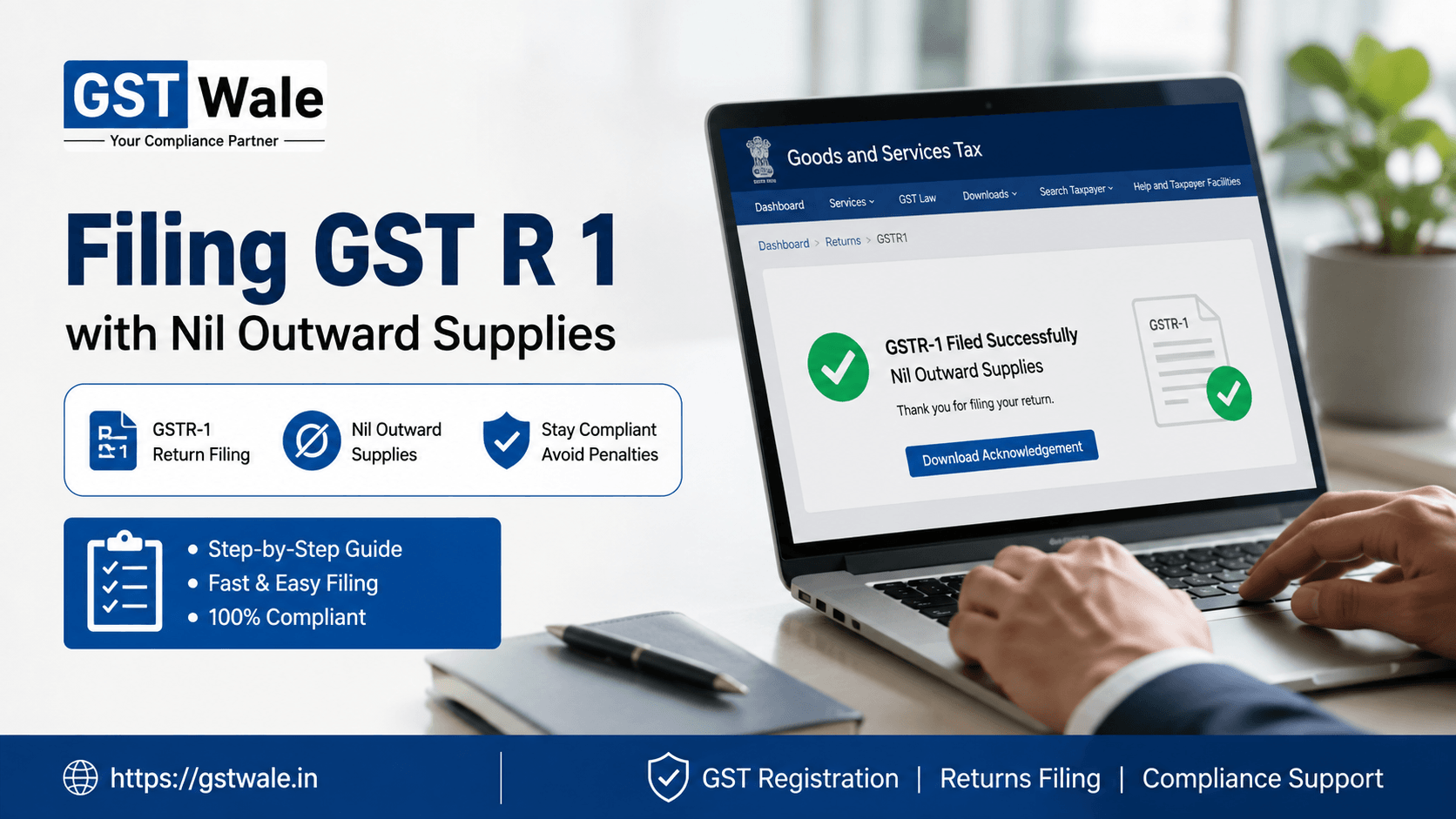
If your business has not made any taxable sales during a tax period, it does not mean your GST compliance responsibilities come to a halt. Filing gst r 1 remains an important requirement for many registered taxpayers, even when there are no outward supplies to report. Whether your business is seasonal, newly established, or temporarily inactive, submitting a nil return on time helps maintain a clean compliance record.
Many businesses complete their GST Registration and later assume that no sales automatically mean no filing. Unfortunately, that assumption can lead to unnecessary notices and late fees. In this practical guide, GST Wale explains how to file gst r 1 with nil outward supplies, common mistakes to avoid, and why timely compliance is essential for every registered taxpayer.
What Is GST R 1?
gst r 1 is the return used by registered taxpayers to report details of outward supplies made during a tax period. These outward supplies include taxable sales, exempt supplies, exports, and supplies made to registered or unregistered customers, depending on the nature of the transaction.
Even if your business has not generated any sales during a particular month or quarter, you may still need to file a nil return if applicable. This ensures that your GST profile remains updated and compliant with government requirements.
What Does Nil Outward Supplies Mean?
Nil outward supplies simply mean that no sales or outward taxable transactions took place during the return period. There were no invoices issued for taxable goods or services, no exports, and no other reportable outward supplies.
Businesses that commonly file nil returns include:
- Seasonal businesses operating only during specific months.
- Newly registered businesses awaiting operations.
- Businesses temporarily closed for renovation or restructuring.
- Companies with no business activity during the reporting period.
- Professionals who did not raise any invoices during the month.
This is commonly referred to as a zero sales report, where there are no outward supplies but compliance requirements continue.
Is Filing GST R 1 Mandatory When There Are No Sales?
Yes, wherever applicable, filing gst r 1 is still required even if there are no outward supplies. These are known as mandatory nil returns.
Many taxpayers mistakenly believe that filing can be skipped when there are no sales. However, non-filing may attract:
- Late filing fees
- Interest implications in certain situations
- GST notices from the department
- Compliance issues affecting future filings
- Difficulty maintaining a good GST compliance rating
Timely filing is one of the simplest ways of ensuring penalty prevention and maintaining uninterrupted GST compliance.
Step-by-Step Guide to File GST R 1 with Nil Outward Supplies
Step 1: Log in to the GST Portal
Visit the GST portal and log in using your GSTIN, username, and password.
Step 2: Navigate to Returns Dashboard
Select the relevant financial year and return filing period from the Returns Dashboard.
Step 3: Select GST R 1
Choose gst r 1 from the list of available returns.
Step 4: Verify That There Are No Outward Supplies
Before proceeding, confirm that no sales invoices, debit notes, credit notes, exports, or other outward transactions exist for the selected period.
Step 5: Submit Nil Return
If no reportable outward supplies exist, proceed with filing the nil return by completing the required confirmation.
Step 6: File Using DSC or EVC
Complete the filing process using a Digital Signature Certificate (DSC) where applicable or Electronic Verification Code (EVC).
Step 7: Download the Acknowledgement
After successful filing, save the acknowledgement for your business records and future reference.
Practical Example
Imagine a wedding decoration business that primarily operates between October and February. During July, the business receives no bookings and raises no invoices.
Although there are no outward supplies, the business should still file gst r 1 as a nil return wherever applicable. This zero sales report keeps compliance up to date and prevents unnecessary penalties.
This is a perfect example of compliance for seasonal businesses, where filing continues even when revenue pauses temporarily.
Common Mistakes While Filing GST R 1 Nil Returns
- Assuming that no sales mean no filing requirement.
- Selecting the wrong return period.
- Forgetting to verify pending invoices before filing.
- Missing the filing due date.
- Ignoring GST notices regarding non-filing.
- Not saving the acknowledgement after successful submission.
A little attention before submission can save both time and unnecessary compliance issues later.
Benefits of Filing GST R 1 on Time
- Maintains continuous GST compliance.
- Supports penalty prevention.
- Reduces the risk of notices from the GST department.
- Keeps your compliance history clean.
- Ensures smooth future GST return filings.
- Builds credibility with customers and financial institutions.
Fast Track GST Filing Tips
Businesses can make fast track gst filing easier by following a few practical habits:
- Maintain updated accounting records throughout the month.
- Review sales activity before the filing date.
- Set calendar reminders for return deadlines.
- Keep login credentials secure and readily available.
- Consult professionals whenever uncertain about compliance requirements.
These small practices reduce last-minute stress and improve filing accuracy.
Compliance for Seasonal Businesses
Many businesses experience periods with little or no revenue. Travel agencies, event planners, educational coaching centres, and festive product sellers often have off-seasons.
During these inactive months, compliance for seasonal businesses becomes especially important. Filing gst r 1 as a nil return wherever required demonstrates responsible tax compliance even when business activity is temporarily paused.
Business owners should treat GST compliance as a regular monthly or quarterly responsibility instead of linking it only with revenue generation.
Why Professional Guidance Matters
GST compliance appears straightforward until exceptions arise. Differences in filing frequency, business category, amendments, or reporting requirements can create confusion for many taxpayers.
Professional guidance helps businesses avoid filing errors, maintain proper records, and respond correctly to changing GST regulations. Timely advice often saves significantly more than the cost of correcting compliance mistakes later.
Frequently Asked Questions
1. Can I skip filing GST R 1 if there are no sales?
No. If filing is applicable to your business, you should submit the nil return on time. Ignoring gst r 1 may result in late fees and compliance issues.
2. What is a zero sales report?
A zero sales report refers to filing a GST return when there are no outward supplies during the reporting period but compliance requirements still apply.
3. Why are mandatory nil returns important?
Mandatory nil returns help maintain compliance, prevent notices, and keep your GST filing history updated even when no business transactions occur.
4. How does timely filing help with penalty prevention?
Filing returns within the prescribed due dates avoids late fees, reduces the chances of departmental notices, and supports overall penalty prevention.
5. Are seasonal businesses also required to file nil returns?
Yes. Compliance for seasonal businesses is equally important. During months without sales, businesses should file applicable nil returns to maintain uninterrupted GST compliance.
Filing gst r 1 with nil outward supplies is a simple but essential part of GST compliance. Even if your business has no sales during a reporting period, timely filing helps maintain a clean compliance record, supports penalty prevention, and ensures that future filings remain hassle-free. Whether you operate throughout the year or only during specific seasons, consistent compliance protects your business from avoidable complications.
Need Expert Help? Choose GST Wale
At GST Wale, we help businesses of every size manage GST compliance with confidence. From gst r 1 filing and nil returns to registrations, amendments, and ongoing compliance support, our experienced professionals ensure your returns are accurate, timely, and stress-free. Connect with GST Wale today and let our experts handle your GST responsibilities while you focus on growing your business.
 Previous