


How the QRMP Scheme Simplifies GSTR 3B for Small Enterprises
How the QRMP Scheme Simplifies GSTR 3B for Small Enterprises
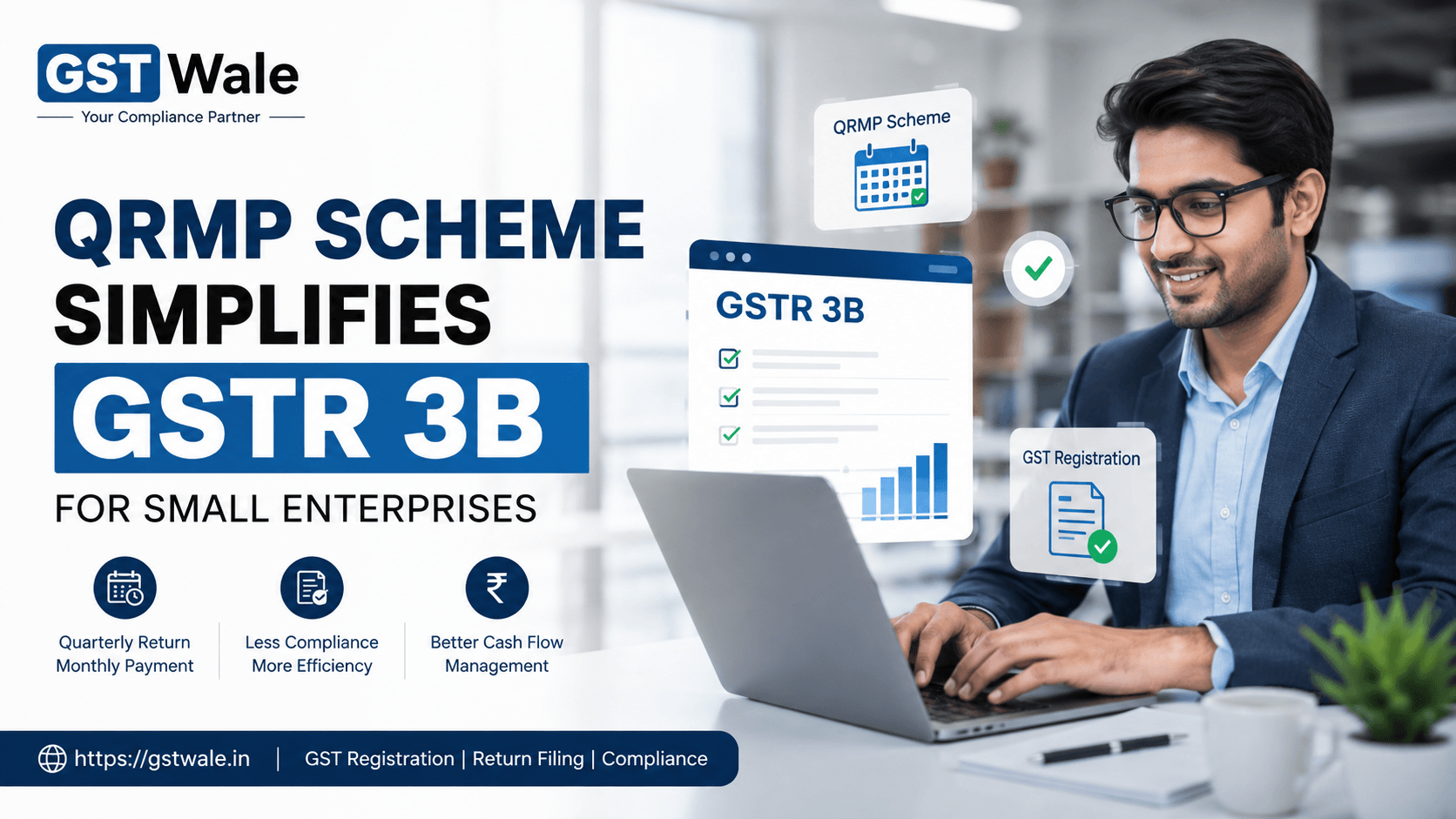
Managing GST compliance can often feel overwhelming for small businesses, especially when regular return filing and tax payments become time-consuming. One of the biggest relief measures introduced by the Government is the QRMP (Quarterly Return Monthly Payment) Scheme, which reduces the compliance burden while ensuring timely tax payments. If you regularly file gstr 3b, understanding this scheme can help you save time, improve cash flow management, and avoid unnecessary penalties.
If you are starting a new business or planning to become GST compliant, obtaining proper GST Registration is the first step towards smooth tax compliance. Once registered, eligible taxpayers can take advantage of the QRMP Scheme to simplify their gstr 3b filing process.
What is the QRMP Scheme?
The Quarterly Return Monthly Payment (QRMP) Scheme is a facility introduced for eligible GST taxpayers to reduce the frequency of return filing while ensuring monthly tax payments. Instead of filing returns every month, eligible businesses can file GST returns quarterly while paying tax every month.
The scheme is particularly beneficial for small enterprises that have limited accounting resources and lower transaction volumes. It allows businesses to focus more on operations without worrying about monthly return filing deadlines.
Who Can Opt for the QRMP Scheme?
A taxpayer can opt for the QRMP Scheme if the aggregate annual turnover does not exceed the prescribed limit under GST during the previous financial year.
The scheme is generally suitable for:
- Small manufacturers
- Retail businesses
- Service providers
- Wholesalers
- Freelancers registered under GST
- Startups with moderate turnover
Businesses should evaluate whether quarterly filing matches their business operations before opting for the scheme.
How QRMP Simplifies GSTR 3B Filing
Reduced Return Filing Frequency
The biggest advantage is that gstr 3b is filed only once every quarter instead of every month. This significantly reduces compliance work and allows business owners to spend more time on business growth.
Better Time Management
Preparing GST data every month can consume valuable resources. Quarterly filing provides additional time to reconcile invoices, verify purchases, and maintain accurate books before filing gstr 3b.
Lower Compliance Cost
Many small businesses hire accountants or tax consultants for GST compliance. Filing quarterly instead of monthly often reduces professional fees and administrative costs.
Improved Accuracy
More time for reconciliation generally leads to fewer mistakes. Businesses can cross-check purchase invoices, Input Tax Credit (ITC), and outward supplies before filing gstr 3b, reducing the possibility of notices or corrections later.
Monthly Tax Payment Under QRMP
Although returns are filed quarterly, tax must still be paid every month. The QRMP Scheme provides two methods for monthly payment.
Fixed Sum Method
The fixed sum method allows taxpayers to deposit a fixed amount of tax every month based on their previous tax liability.
This method is useful because:
- Payment calculation becomes simple.
- No detailed monthly calculations are required.
- Businesses can deposit tax quickly.
- Compliance becomes more predictable.
This method works well for businesses with stable monthly turnover.
Self Assessment Method
The self assessment method is suitable when monthly turnover varies significantly. Under this method, taxpayers calculate their actual monthly GST liability based on sales and Input Tax Credit available.
This option ensures tax payments closely match actual business activity, making it ideal for seasonal businesses.
Cash Ledger Deposit Process
Monthly tax payment is made through a cash ledger deposit on the GST portal. After generating the challan, the taxpayer deposits the required amount into the electronic cash ledger.
Once deposited, the balance can be used for monthly tax payment under the QRMP Scheme. Maintaining adequate balance in the cash ledger helps avoid delays in payment.
Interest Under QRMP
Many taxpayers worry about interest under qrmp. Interest generally depends on whether tax has been deposited correctly and within the prescribed due dates.
Interest may arise if:
- Monthly payment is delayed.
- Tax deposited is lower than the actual liability.
- The quarterly gstr 3b is filed after the due date.
Timely payments and accurate calculations help businesses avoid unnecessary interest and penalties.
Example of QRMP in Practice
Suppose a stationery wholesaler has a stable monthly GST liability of ₹20,000.
Instead of preparing monthly returns, the business chooses the QRMP Scheme and uses the fixed sum method. Every month, the required tax amount is deposited through a cash ledger deposit. At the end of the quarter, the accountant reconciles invoices, verifies Input Tax Credit, and files gstr 3b only once.
This approach saves time, reduces accounting effort, and improves compliance accuracy.
Benefits of the QRMP Scheme for Small Enterprises
- Less frequent filing of gstr 3b
- Reduced paperwork
- Lower compliance expenses
- Better cash flow planning
- More time for business operations
- Improved GST record management
- Reduced chances of filing errors
- Simplified monthly tax payment process
Things to Remember Before Filing GSTR 3B Under QRMP
- Maintain proper purchase and sales records.
- Verify Input Tax Credit before filing.
- Complete monthly tax payments on time.
- Choose between the fixed sum method and self assessment method based on your business pattern.
- Monitor your electronic cash ledger regularly.
- Reconcile invoices before filing gstr 3b.
- Keep track of quarterly filing due dates.
Frequently Asked Questions
1. Can every GST taxpayer opt for the QRMP Scheme?
No. Only eligible taxpayers meeting the prescribed turnover conditions can choose the QRMP Scheme. Businesses should verify their eligibility before opting for quarterly filing.
2. Is GSTR 3B filed monthly under the QRMP Scheme?
No. Under the QRMP Scheme, gstr 3b is filed once every quarter. However, tax payment must still be made every month using the available payment methods.
3. Which is better: Fixed Sum Method or Self Assessment Method?
The fixed sum method is suitable for businesses with consistent tax liability, while the self assessment method works better for businesses with fluctuating monthly turnover.
4. What happens if monthly tax payment is delayed?
Delayed payment may result in interest under qrmp and other applicable consequences. Timely payment helps maintain smooth GST compliance.
5. Why is Cash Ledger Deposit important?
A timely cash ledger deposit ensures sufficient balance for monthly GST payment, helping taxpayers comply with QRMP requirements without delays.
The QRMP Scheme has made GST compliance significantly easier for eligible small businesses by reducing the filing frequency of gstr 3b while ensuring regular tax payments. By choosing the right payment option—whether the fixed sum method or the self assessment method—businesses can improve compliance, reduce administrative work, and manage their cash flow more effectively. Proper planning, timely payments, and accurate record-keeping can help taxpayers fully benefit from the scheme while avoiding unnecessary interest and penalties.
Need Expert GST Assistance?
At GST Wale, our experienced GST professionals help businesses with GST registration, return filing, compliance management, Input Tax Credit reconciliation, and complete GST advisory services. Whether you need assistance with gstr 3b, the QRMP Scheme, or any other GST-related requirement, our experts are here to provide practical guidance and reliable support so you can focus on growing your business with confidence.
 Previous