


The Dangerous Trap of Delaying GSTR 3B: Bank Account Freezing Explained
The Dangerous Trap of Delaying GSTR 3B: Bank Account Freezing Explained
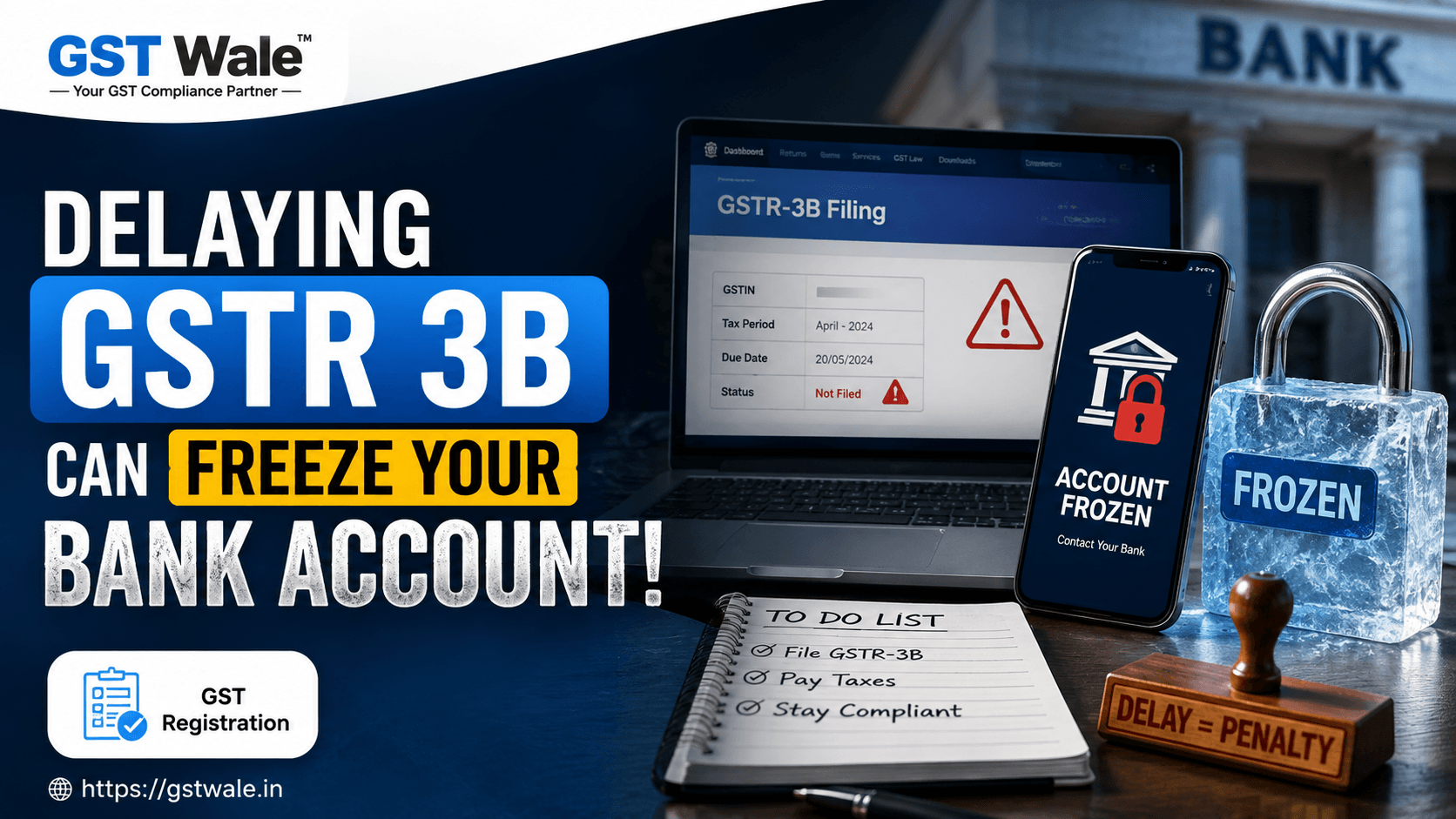
Many business owners believe that delaying gstr 3b filing only results in late fees and interest. Unfortunately, the consequences can be far more serious. Under the GST law, continuous non-compliance can trigger recovery proceedings that may even lead to the freezing of your bank account. Such actions can disrupt daily business operations, damage your credibility, and create unnecessary financial stress.
If you are planning your GST Registration, or you are already a registered taxpayer, understanding the importance of timely gstr 3b filing is essential. At GST Wale, we regularly assist businesses facing GST notices, recovery proceedings, and compliance issues. This guide explains why delaying gstr 3b is a dangerous trap and how you can avoid it.
Why Filing GSTR 3B on Time Matters
gstr 3b is the monthly or quarterly summary return that every eligible GST-registered taxpayer must file. It contains details of outward supplies, input tax credit claimed, tax liability, and taxes paid.
Many taxpayers mistakenly assume that if there are no sales, filing can wait. However, even a nil return must be filed within the prescribed due date. Failure to file gstr 3b can attract penalties and eventually invite recovery proceedings by the GST department.
What Happens When You Delay GSTR 3B?
Initially, the consequences may appear manageable. However, repeated delays can quickly escalate into serious legal and financial issues.
Late Fees and Interest
The first consequence of delayed gstr 3b filing is:
- Late filing fees
- Interest on unpaid GST liability
- Accumulation of pending returns
- Difficulty in claiming eligible input tax credit
Although these costs may seem small initially, they increase significantly over time.
Departmental Reminders
Once returns remain pending for several months, the GST department generally starts issuing departmental reminders. These may be sent through:
- Email notifications
- SMS alerts
- GST portal communications
- Formal notices
Ignoring these communications is a common mistake that often leads to stricter enforcement measures.
How Recovery Proceedings Begin
When repeated reminders fail, the department may initiate recovery proceedings under GST law.
The authorities calculate the outstanding tax liability based on available records and initiate section 79 recovery proceedings to recover government dues.
Understanding Section 79 Recovery
Section 79 recovery empowers GST authorities to recover unpaid taxes using various legal methods without waiting indefinitely for voluntary payment.
Recovery may include:
- Recovery from bank accounts
- Adjustment against refunds
- Recovery from debtors
- Attachment of movable or immovable property
- Other legally permitted recovery methods
This is where delayed gstr 3b filing becomes far more serious than simply paying late fees.
Can Your Bank Account Really Be Frozen?
Yes. In many situations, GST authorities can instruct banks to restrict operations in an account to recover outstanding tax dues.
Business owners often discover the issue only when:
- Cheque payments fail
- Online transfers are blocked
- Vendor payments cannot be processed
- Salary payments get delayed
This can severely affect business continuity and damage relationships with customers, suppliers, and financial institutions.
Role of Provisional Attachment of Assets
Apart from bank accounts, GST authorities may also initiate provisional attachment of assets in appropriate cases to safeguard government revenue.
The objective is to prevent disposal of assets before outstanding tax liabilities are recovered.
Depending on the facts of the case, authorities may consider attachment of:
- Bank accounts
- Business assets
- Certain receivables
- Specified movable or immovable property
Although such powers are generally exercised cautiously, persistent non-compliance significantly increases the risk.
A Practical Example
Consider a small manufacturing business that ignored gstr 3b filing for eight months due to cash flow problems.
Initially, the owner received several departmental reminders but assumed filing could wait until finances improved.
After continued non-compliance, recovery proceedings were initiated. The company's primary bank account faced restrictions, making it impossible to pay employees and suppliers on time. Production suffered, customer confidence declined, and resolving the matter ultimately became far more expensive than timely compliance would have been.
This situation is more common than many business owners realise.
How to Avoid Bank Account Freezing
File GSTR 3B Regularly
Even if your business has no turnover during a period, file the applicable nil gstr 3b return within the due date.
Respond to Notices Promptly
Never ignore communications from the GST department. Timely responses often prevent escalation.
Reconcile GST Records
Regular reconciliation helps identify mismatches before they become major compliance issues.
Maintain Proper Documentation
Keep invoices, purchase records, payment proofs, and GST working papers properly organised.
Seek Professional Guidance
Consulting experienced GST professionals early can prevent unnecessary penalties and litigation.
What If Your Bank Account Has Already Been Frozen?
If recovery action has already been initiated, immediate action is essential.
The process of defreezing bank accounts generally depends upon the facts of each case and may involve:
- Filing all pending gstr 3b returns
- Paying outstanding tax, interest, and penalties wherever applicable
- Responding to departmental notices
- Submitting necessary representations
- Seeking appropriate legal remedies where required
Delaying corrective action generally makes the process of defreezing bank accounts more complicated.
When Tax Litigation Becomes Necessary
In some situations, taxpayers may disagree with the recovery action or attachment proceedings.
Professional assistance in tax litigation becomes important where:
- Recovery has been initiated without proper procedure
- Tax demand is disputed
- Attachment causes excessive hardship
- Legal interpretation is involved
Experienced professionals can examine the facts, prepare replies, represent the taxpayer before authorities, and recommend suitable legal remedies wherever available.
Best Practices to Stay GST Compliant
- Maintain an updated compliance calendar.
- File every gstr 3b before the due date.
- Review GST liability every month.
- Monitor GST portal notices regularly.
- Keep sufficient funds for GST payments.
- Consult experts whenever notices are received.
- Maintain proper accounting records throughout the year.
Frequently Asked Questions
1. Can delayed GSTR 3B filing lead to bank account freezing?
Yes. Persistent non-filing along with unpaid GST dues may result in recovery proceedings under the GST law, including action against bank accounts where legally permissible.
2. Is filing a nil GSTR 3B compulsory?
Yes. Even if there is no business activity during a tax period, eligible taxpayers are generally required to file the applicable nil gstr 3b return within the due date.
3. What is Section 79 recovery?
Section 79 recovery provides powers to GST authorities to recover unpaid tax through legally prescribed recovery methods, including action against bank accounts and certain assets where applicable.
4. How can I get my bank account defrozen?
The process of defreezing bank accounts usually requires resolving pending GST compliance, clearing eligible dues, responding to notices, and following the legal procedure applicable to your case.
5. Should I hire a GST consultant after receiving a recovery notice?
Yes. Professional advice helps you understand your legal position, respond correctly to notices, minimise risks, and avoid unnecessary complications or prolonged tax litigation.
Delaying gstr 3b is never just about late fees. Continued non-compliance can result in departmental reminders, section 79 recovery, provisional attachment of assets, restrictions on bank accounts, and lengthy tax litigation. The financial and operational impact on your business can be severe.
If you have pending gstr 3b returns, do not wait until recovery proceedings begin. Taking timely corrective action can save your business from avoidable penalties, cash flow disruptions, and legal complications.
Need Expert GST Assistance?
At GST Wale, our experienced GST professionals help businesses with return filing, GST notices, recovery matters, compliance management, and representation before tax authorities. Whether you need help filing pending gstr 3b returns or resolving complex GST issues, our team is ready to guide you with practical, reliable, and timely solutions. Contact GST Wale today and keep your business fully GST compliant.
 Previous