


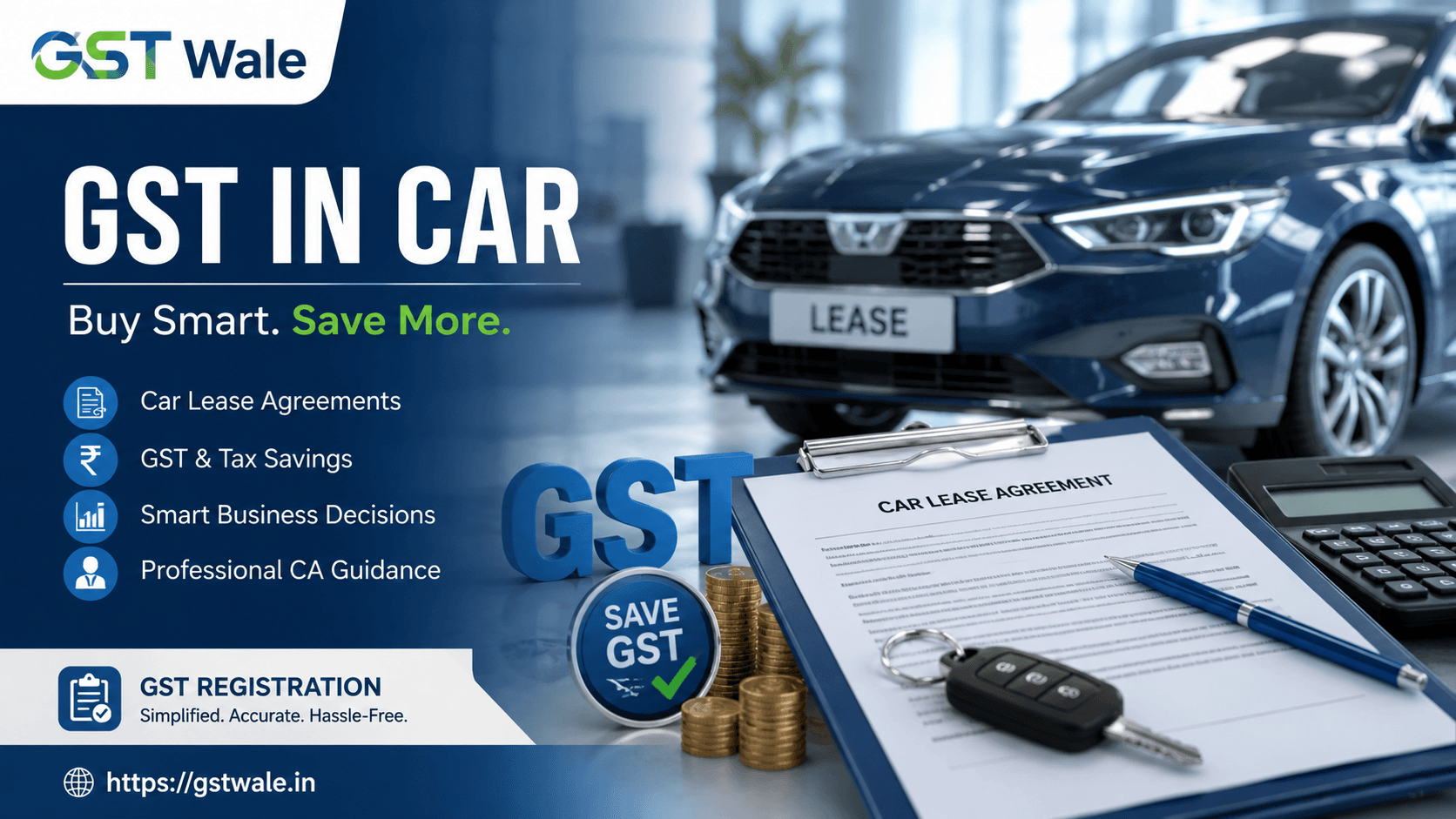
Self-Employed Professionals: How to Buy and Save GST in Car Lease Agreements
Self-Employed Professionals: How to Buy and Save GST in Car Lease Agreements
Self-Employed Professionals: How to Buy and Save GST in Car Lease Agreements
If you are a self-employed professional such as a doctor, architect, consultant, lawyer, freelancer, or business owner, buying a car is often more than a personal expense. It can become an important business asset when used for professional purposes. However, understanding gst in car transactions and lease agreements can help you make smarter financial decisions while staying compliant with tax laws. Many professionals register their businesses but are unaware of the GST implications while purchasing or leasing a vehicle. Before making such an investment, ensure your business complies with all applicable GST requirements. If you are planning to start or expand your business, complete your GST Registration so you can manage your tax obligations correctly from the beginning. As Chartered Accountants at GST Wale, we often advise clients that the right ownership structure and leasing model can significantly impact taxes, cash flow, and long-term financial planning. This chartered accountant guide cars article explains everything you should know about gst in car lease agreements.
Understanding GST in Car Purchases
The rules relating to gst in car differ depending on how the vehicle is used. A car purchased exclusively for business activities is treated differently from one used mainly for personal purposes. Generally, passenger vehicles attract GST at applicable rates along with compensation cess depending on the vehicle category. However, merely paying GST does not automatically make you eligible to claim Input Tax Credit (ITC). The eligibility depends on the provisions of the GST Act and the purpose of the vehicle. Professionals should carefully evaluate whether purchasing or leasing offers better tax efficiency before making a decision.
Why Many Professionals Prefer Car Leasing
Instead of paying the entire cost upfront, many professionals now choose lease agreements. Leasing reduces the initial financial burden while providing flexibility to upgrade vehicles after a few years. Some advantages include: Lower upfront investment Better cash flow management Predictable monthly payments Easier budgeting Reduced maintenance concerns in certain lease plans Understanding gst in car lease transactions helps professionals evaluate the actual cost after considering business usage and tax implications.
Operating Lease vs Financial Lease
One of the most common questions we receive concerns operating lease vs financial lease.
Operating Lease
Under an operating lease: Ownership remains with the leasing company. The lessee pays monthly lease rentals. Vehicles are usually returned after the lease period. Suitable for professionals who upgrade cars regularly. For businesses focusing on flexibility, this model is often preferred.
Financial Lease
Under a financial lease: The lessee bears most ownership risks. Lease tenure is generally longer. There may be an option to purchase the vehicle at the end. Suitable for long-term vehicle usage. Choosing between operating lease vs financial lease depends on business goals, expected usage, financing preferences, and tax planning.
Can Self-Employed Professionals Save GST in Car Lease Agreements?
This is where understanding gst in car becomes extremely important. Under GST law, Input Tax Credit on motor vehicles is generally restricted for passenger vehicles with seating capacity up to thirteen persons, except in specified situations such as: Transportation of passengers Driving schools Further supply of vehicles Other cases specifically permitted under GST law If your profession falls under one of these exceptions, ITC may be available. For most consultants and professionals, the GST paid on passenger cars is usually not eligible for ITC. However, leasing can still offer financial advantages through structured business expenses and improved cash flow. Always consult a qualified tax professional before claiming any GST benefit.
Individual vs Corporate Registration: Does It Matter?
The choice between individual vs corporate registration can influence taxation, accounting, and business planning. An individual professional running a proprietorship may have different accounting considerations compared to a private limited company or LLP. Some factors include: Ownership structure Business liability Financing eligibility Accounting treatment Tax planning opportunities Although individual vs corporate registration does not automatically determine ITC eligibility for passenger vehicles, it affects how lease expenses, compliance, and financial reporting are managed. Choosing the right business structure before acquiring a vehicle often results in better long-term tax planning.
Business Asset Depreciation and Lease Decisions
Professionals often compare leasing with purchasing by considering business asset depreciation. If you purchase a vehicle: The vehicle becomes a business asset. Depreciation can generally be claimed under Income Tax provisions subject to applicable rules. The capital investment remains locked in the vehicle. If you lease the vehicle: Monthly lease rentals are generally treated as business expenses, subject to applicable tax laws. No ownership means depreciation is usually claimed by the owner, not the lessee. Understanding business asset depreciation helps professionals evaluate the overall financial impact instead of focusing only on GST.
Expense Write Offs Every Professional Should Understand
Many professionals confuse GST benefits with Income Tax deductions. While ITC eligibility under gst in car may be restricted, certain business-related vehicle expenses may still qualify as expense write offs under the Income Tax Act, provided they are incurred wholly and exclusively for business purposes. Examples include: Fuel expenses Driver salary Insurance Repairs and maintenance Lease rentals where applicable Parking charges Toll expenses Maintain proper invoices, payment records, and usage documentation to support these expense write offs during assessments.
Practical Example
Suppose a self-employed architect leases a vehicle primarily for client meetings across different cities. Instead of paying the full purchase amount, the architect pays fixed monthly lease rentals. This preserves working capital, makes budgeting easier, and allows the business to upgrade to a newer vehicle after the lease period. Although ITC under gst in car may not always be available for passenger vehicles, the lease structure can still improve cash flow and simplify financial planning while eligible business expenses continue to be claimed under Income Tax rules.
Important Tips Before Signing a Car Lease
Before entering any lease agreement, keep these points in mind: Understand whether the lease is operating or financial. Verify GST treatment with your Chartered Accountant. Compare total lease cost with outright purchase. Check maintenance responsibilities. Read early termination conditions carefully. Maintain proper documentation. Separate personal and business usage wherever possible. Review Income Tax implications alongside GST provisions. A well-planned lease often provides better financial flexibility than an unplanned purchase.
Frequently Asked Questions
Is GST applicable on leased cars?
Yes. Lease rentals generally attract GST according to applicable tax rates. However, eligibility to claim Input Tax Credit depends on the nature of the vehicle and its business use under GST provisions.
Can freelancers claim GST on a leased car?
Not automatically. For most passenger vehicles, Input Tax Credit is restricted unless the business falls under specific exceptions provided in GST law.
Which is better: operating lease vs financial lease?
An operating lease offers flexibility and regular upgrades, while a financial lease is more suitable for long-term usage with possible ownership options. The right choice depends on your business requirements and financial objectives.
Can lease payments become business expenses?
Yes. Depending on the facts of your business and applicable tax laws, lease rentals may qualify as deductible business expenses while computing taxable income.
Should I consult a Chartered Accountant before leasing a car?
Absolutely. Every business has unique tax implications. Professional advice helps you understand gst in car, business asset depreciation, expense write offs, and compliance requirements before signing any agreement.
Understanding gst in car transactions is essential for every self-employed professional planning to lease or purchase a vehicle. The right leasing structure, proper documentation, awareness of GST restrictions, and effective Income Tax planning can help you optimise costs without creating compliance issues. At GST Wale, our experienced Chartered Accountants help professionals choose the most tax-efficient approach based on their business model. Whether you need guidance on GST compliance, registrations, lease taxation, or overall business tax planning, GST Wale is ready to support you with practical advice and reliable professional services.
 Previous