


How to Transition from a Regular Taxpayer to the GST Composition Scheme
How to Transition from a Regular Taxpayer to the GST Composition Scheme
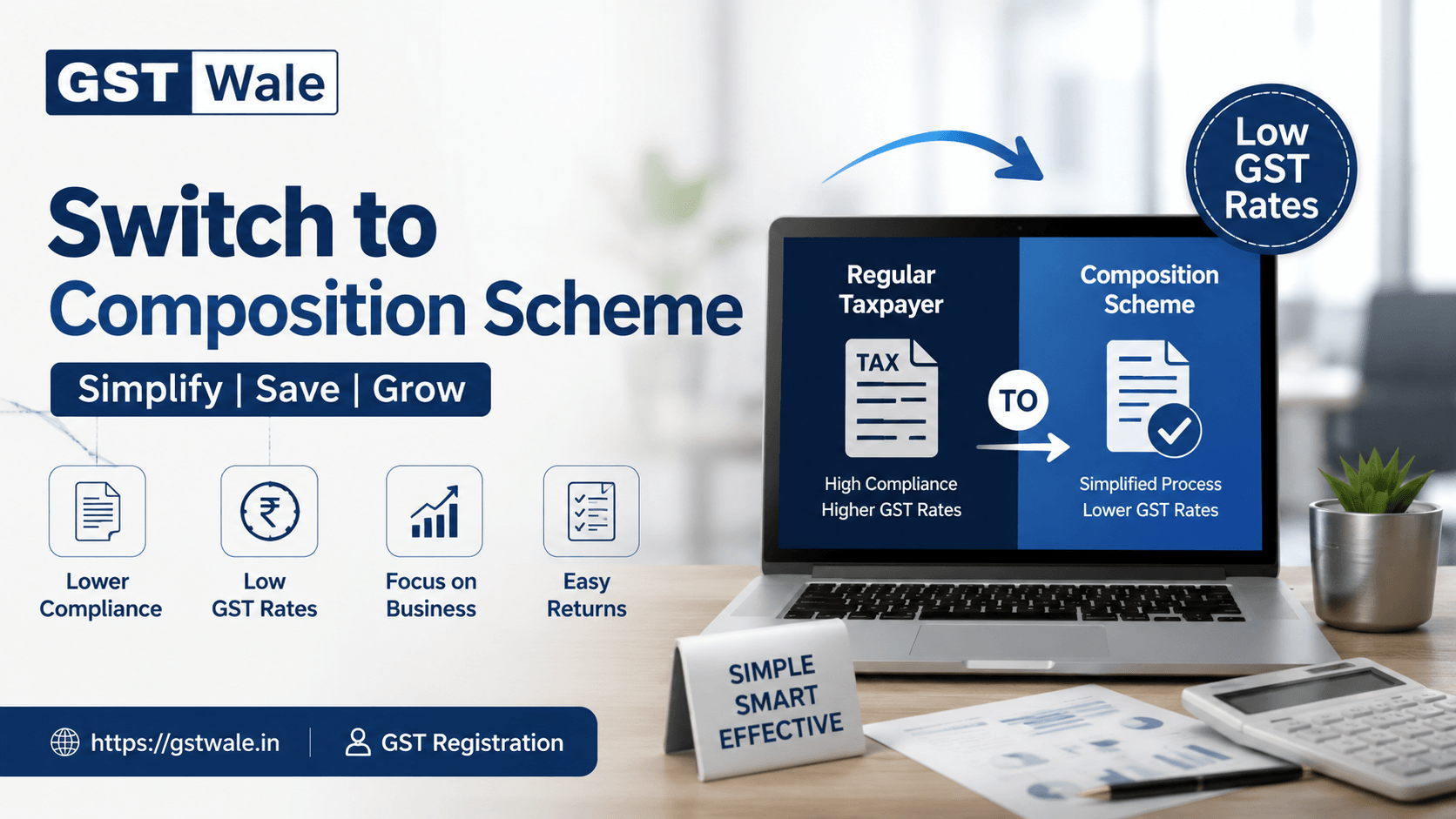
Managing GST compliance can become overwhelming for small businesses, especially when monthly filings, invoice matching, and changing gst rates start consuming valuable business time. Many traders, manufacturers, and small service providers in India eventually look for a simpler taxation structure that reduces compliance pressure while keeping tax obligations manageable.
This is where the GST Composition Scheme becomes highly beneficial. At GST Wale, we often guide small business owners who want to reduce compliance burdens and operate under low tax rates with easier filing procedures. If you are planning to simplify your tax structure, proper GST Registration and understanding of applicable gst rates are the first steps toward a smooth transition.
In this article, we will explain how to move from a regular GST scheme to the Composition Scheme, eligibility conditions, benefits, limitations, and practical compliance tips.
What is the GST Composition Scheme?
The GST Composition Scheme is a simplified taxation option introduced for small taxpayers under GST law. Instead of paying normal gst rates applicable to goods and services, eligible businesses can pay tax at fixed low tax rates based on turnover.
The main objective is to provide small trader relief by reducing paperwork and compliance requirements.
Under this scheme:
- Tax is paid at a fixed percentage of turnover
- Businesses file fewer returns
- Record maintenance becomes easier
- Simplified billing rules apply
However, composition dealers cannot claim Input Tax Credit (ITC), and certain business restrictions apply.
Why Businesses Shift from Regular GST to Composition Scheme
Many small businesses initially opt for regular GST because they expect higher growth or want ITC benefits. But later, they realise that handling compliance under standard gst rates becomes difficult.
Here are some common reasons businesses switch:
Reduced Compliance Burden
Regular taxpayers must file multiple monthly returns. Under the Composition Scheme, compliance becomes much easier with quarterly filings and annual returns.
Easier Accounting
Businesses with limited staff prefer simplified billing and reduced bookkeeping requirements.
Lower Tax Liability
For many traders and small manufacturers, composition gst rates are lower compared to regular GST rates.
Better Focus on Business
Instead of spending time on GST reconciliation and ITC matching, owners can focus on sales and operations.
Composition Scheme Eligibility Criteria
Before switching, businesses must carefully verify composition scheme eligibility conditions.
Aggregate Turnover Limit
A taxpayer can opt for the scheme only if annual turnover remains within the prescribed aggregate turnover limit.
Currently:
- Most businesses: Up to ₹1.5 crore
- Special category states: Lower limits may apply
- Service providers under special composition provisions: Separate conditions apply
Eligible Businesses
The scheme is generally available for:
- Small traders
- Manufacturers
- Restaurants (without alcohol)
- Certain service providers
Businesses Not Eligible
You cannot opt for the scheme if you:
- Make interstate outward supplies
- Sell through e-commerce operators collecting TCS
- Manufacture notified goods
- Supply non-taxable goods
Understanding gst rates and eligibility together is important before making the transition.
Applicable GST Rates Under Composition Scheme
One of the biggest attractions of the scheme is the availability of low tax rates.
Composition GST Rates
The composition gst rates generally are:
| Business Type | GST Rate |
|---|---|
| Manufacturers | 1% |
| Traders | 1% |
| Restaurants | 5% |
| Eligible Service Providers | 6% |
These gst rates are significantly lower than standard GST rates applicable under the regular scheme.
However, businesses must remember:
- No Input Tax Credit can be claimed
- Tax cannot be collected separately from customers
Step-by-Step Process to Transition to Composition Scheme
Switching from regular taxation to the Composition Scheme requires proper procedural compliance.
Step 1: Verify Eligibility
Check:
- Annual turnover
- Nature of business
- State-specific conditions
- Product restrictions
A proper review helps avoid future GST notices.
Step 2: File Intimation in Form GST CMP-02
Eligible taxpayers must submit Form GST CMP-02 on the GST portal.
Generally, this should be filed at the beginning of the financial year for which the scheme is being opted.
Step 3: Reverse Input Tax Credit
Since composition dealers cannot claim ITC, businesses must reverse previously claimed credits on:
- Stock
- Semi-finished goods
- Finished goods
- Capital goods
This is an important compliance step often overlooked by taxpayers.
Step 4: File GST ITC-03
Businesses must submit Form GST ITC-03 within the prescribed timeline after opting for the scheme.
Step 5: Start Issuing Bill of Supply
Composition dealers cannot issue tax invoices.
Instead, they must issue:
- Bill of Supply
- Mention “Composition Taxable Person” on invoices
This is part of simplified billing compliance requirements.
Important Compliance Rules After Transition
Even though compliance becomes easier, businesses still need to follow certain rules carefully.
File Composition Tax Return
Taxpayers under the scheme must file:
- CMP-08 quarterly
- GSTR-4 annually
Timely filing of composition tax return forms is necessary to avoid penalties.
Mention Composition Status Properly
Businesses must display:
- “Composition Taxable Person” at the place of business
- Same wording on bills and documents
Maintain Basic Records
Although record-keeping is simpler compared to regular GST, basic accounts must still be maintained.
Real-Life Example of Composition Scheme Benefits
Let’s understand with a practical example.
Suppose a local electronics trader in Noida has annual sales of ₹75 lakh. Under regular GST, the trader was:
- Filing monthly returns
- Managing invoice matching
- Handling ITC reconciliation
- Paying higher gst rates
After shifting to the Composition Scheme:
- Return filing reduced significantly
- Accounting became easier
- Compliance costs reduced
- Overall tax management improved
This is why many small businesses prefer the scheme for operational simplicity.
Common Mistakes to Avoid While Transitioning
Many taxpayers make avoidable errors during the switch.
Ignoring Interstate Supply Restrictions
Even one interstate taxable supply may make the business ineligible.
Incorrect ITC Reversal
Improper reversal calculations can attract notices and penalties.
Delayed Filing
Late filing of CMP-02 or composition tax return forms can create compliance issues.
Wrong Billing Format
Composition dealers cannot issue regular tax invoices.
Is the Composition Scheme Right for Your Business?
The answer depends on your business model.
The scheme is beneficial if:
- Your customers are mostly end consumers
- You do not rely heavily on Input Tax Credit
- Your turnover falls within the aggregate turnover limit
- You want operational simplicity
- You prefer low tax rates
However, businesses dealing with B2B clients may prefer the regular scheme because customers often demand ITC benefits.
A proper evaluation of gst rates, profitability, and compliance costs should always be done before switching.
FAQs on GST Composition Scheme
Can a regular taxpayer switch to the Composition Scheme anytime?
Generally, businesses can opt at the beginning of a financial year, subject to eligibility conditions.
Can composition dealers collect GST from customers?
No. Composition dealers cannot collect tax separately on invoices.
Are composition gst rates lower than regular gst rates?
Yes. The scheme offers fixed low tax rates for eligible businesses.
Is Input Tax Credit available under the scheme?
No. Composition taxpayers cannot claim ITC.
What happens if turnover exceeds the aggregate turnover limit?
The taxpayer becomes ineligible and must shift to the regular GST scheme.
The GST Composition Scheme is an excellent option for small businesses looking for simplified compliance and lower gst rates. It provides meaningful small trader relief by reducing paperwork, simplifying billing, and lowering administrative stress.
However, before transitioning from a regular taxpayer structure, businesses must carefully evaluate composition scheme eligibility, turnover conditions, customer expectations, and long-term business goals.
At GST Wale, we help businesses understand gst rates, assess eligibility, complete compliance formalities, and ensure smooth GST transitions without unnecessary complications. If you are planning to move to the Composition Scheme, our experts can guide you through every step with practical and reliable support.
 Previous