


Complete Item-Wise Directory: The Absolute GST New Rate List for Manufacturers
Complete Item-Wise Directory: The Absolute GST New Rate List for Manufacturers
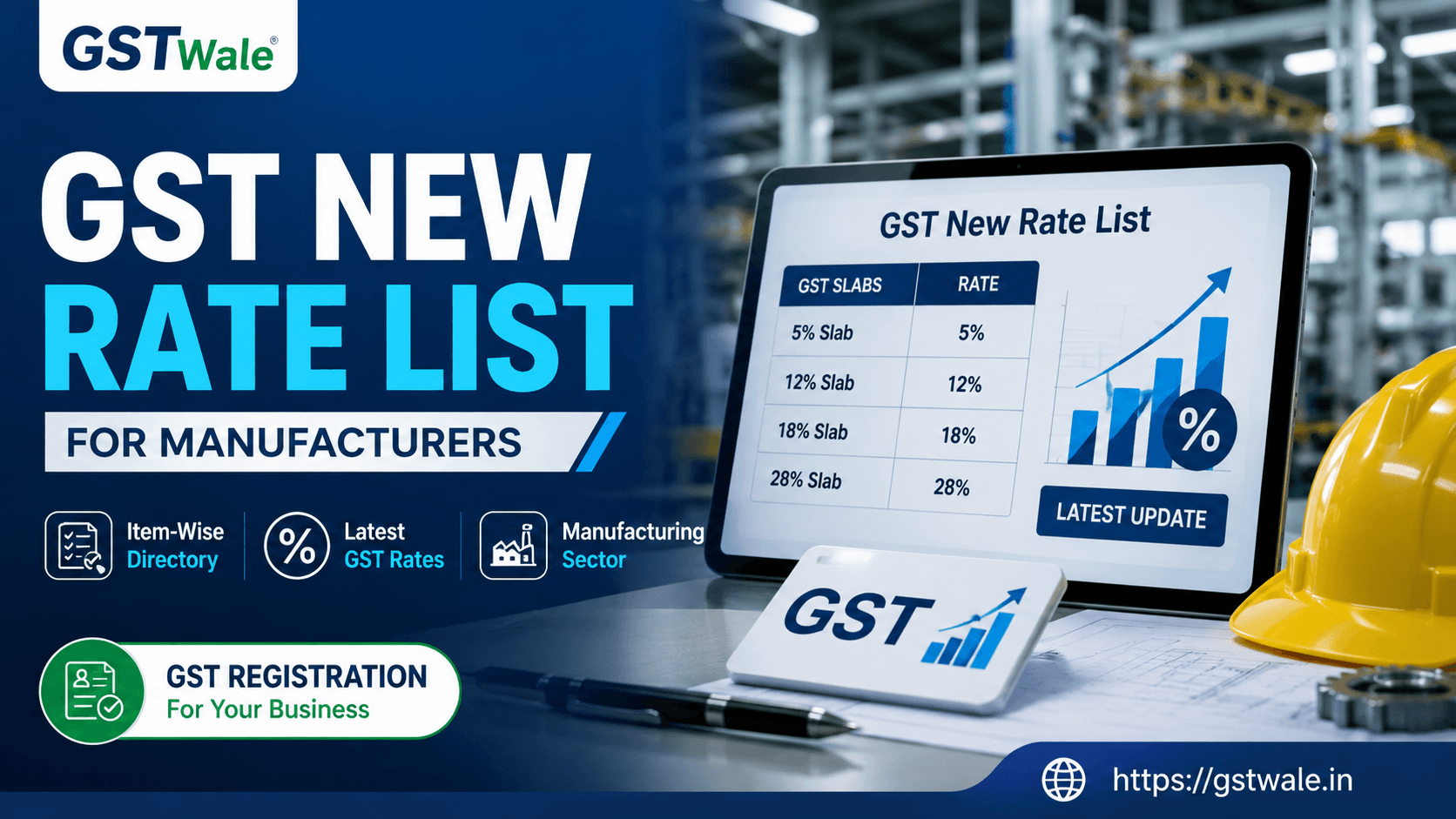
The latest gst new rate list has become one of the most important topics for manufacturers, traders, and industrial businesses in India. Whether you are running a small factory, dealing in raw materials, or manufacturing finished goods, understanding updated GST rates is essential for pricing, invoicing, and maintaining compliance.
At GST Wale, we regularly help businesses understand how changes in GST slabs affect profitability and tax planning. Many manufacturers still struggle with confusion around raw material tax, input tax credit, and industrial goods taxation. A small mistake in applying GST rates can lead to notices, penalties, or loss of eligible credits.
If you are starting a manufacturing business, obtaining proper GST Registration is the first step toward legal compliance and smooth business operations.
In this guide, we will explain the complete gst new rate list item-wise for manufacturers in a simple and practical manner.
Understanding the GST New Rate List for Manufacturers
The gst new rate list refers to the updated GST slabs applicable to different goods, raw materials, industrial products, and manufactured items in India.
GST in India is divided mainly into the following slabs:
- 0%
- 5%
- 12%
- 18%
- 28%
For manufacturers, GST classification is extremely important because the tax rate depends on the product category and HSN code.
Why Manufacturers Must Check the GST New Rate List Regularly
GST rates are revised from time to time by the GST Council. Ignoring updates can create problems such as:
- Incorrect billing
- Loss of input tax credit
- Higher tax liability
- Customer disputes
- GST notices and penalties
That is why every business owner should stay updated with the latest gst new rate list.
GST New Slab Structure Applicable to Manufacturing Sector
The manufacturing sector GST structure is designed according to the nature of goods.
5% GST Slab
This slab generally includes essential and mass-consumption products.
Examples:
- Packaged food items
- Agricultural tools
- Certain textile products
- Coal
This lower gst new slab helps reduce the burden on essential industries.
12% GST Slab
The 12% slab applies to semi-processed and industrial-use products.
Examples:
- Processed foods
- Fertilizers
- Mobile phones
- Leather products
Many medium-scale manufacturers fall under this category.
18% GST Slab
The 18% category is the most common in the manufacturing sector GST framework.
Examples:
- Industrial machinery
- Electrical equipment
- Chemicals
- Plastic products
- Steel furniture
Most industrial goods taxation comes under this bracket.
28% GST Slab
Luxury and sin goods usually attract the highest GST rate.
Examples:
- Air conditioners
- Luxury vehicles
- Cement
- Paints
- Certain automobile parts
Businesses dealing with such products must carefully monitor the gst new rate list to maintain accurate tax compliance.
Item-Wise GST New Rate List for Manufacturers
Below is a simplified item-wise overview of common manufacturing products and applicable GST rates.
Raw Materials and Industrial Inputs
| Item | GST Rate |
|---|---|
| Iron & Steel | 18% |
| Aluminium Products | 18% |
| Industrial Chemicals | 18% |
| Coal | 5% |
| Cement | 28% |
| Plastic Granules | 18% |
| Rubber Materials | 18% |
Raw materials tax directly impacts product costing. Manufacturers should always calculate margins after considering GST input credits.
Textile Manufacturing Products
| Item | GST Rate |
|---|---|
| Cotton Yarn | 5% |
| Synthetic Yarn | 12% |
| Apparel below prescribed value | 5% |
| Premium Garments | 12% |
The textile industry has witnessed several revisions in the gst new rate list over the years.
Food Manufacturing Sector
| Item | GST Rate |
|---|---|
| Packaged Food | 5% |
| Biscuits | 18% |
| Edible Oils | 5% |
| Soft Drinks | 28% |
| Dairy Products | 5% to 12% |
Food manufacturers must verify HSN classifications carefully because GST rates differ significantly.
Machinery and Engineering Goods
| Item | GST Rate |
|---|---|
| Industrial Machines | 18% |
| Electrical Equipment | 18% |
| Generators | 28% |
| Pumps and Compressors | 18% |
Engineering businesses form a major part of the manufacturing sector GST ecosystem.
Importance of Input Tax Credit for Manufacturers
One major benefit under GST is the availability of Input Tax Credit (ITC).
What is Input Tax Credit?
Input tax credit allows manufacturers to claim GST paid on:
- Raw materials
- Machinery
- Packaging material
- Transportation
- Business services
These inputs credit rates help reduce the final tax burden.
Example of GST Credit Calculation
Suppose:
- Raw material GST paid = ₹50,000
- Final product GST collected = ₹80,000
Then:
- Final payable GST = ₹30,000 only
This is why understanding the gst new rate list is essential for accurate ITC claims.
Common Mistakes Manufacturers Make in GST Compliance
Many businesses unknowingly create GST issues due to incorrect interpretation of GST slabs.
Wrong HSN Classification
Using an incorrect HSN code can apply the wrong GST rate.
Missing Input Credits
Businesses often fail to claim eligible credits on:
- Packing material
- Freight
- Office expenses
Incorrect Tax Invoices
Improper invoicing may lead to:
- GST notices
- ITC rejection
- Customer disputes
Ignoring GST Updates
The GST Council periodically revises rates. Businesses that fail to monitor the updated gst new rate list may face compliance risks.
How GST Rates Affect Manufacturing Businesses
GST rates directly influence:
- Product pricing
- Working capital
- Cash flow
- Profit margins
- Market competitiveness
For example, if raw materials tax increases from 12% to 18%, the manufacturer may need to:
- Increase product prices
- Reduce margins
- Optimize operational costs
Therefore, manufacturers should regularly review the latest gst new rate list and adjust pricing strategies accordingly.
Expert Tips from GST Wale
At GST Wale, we recommend the following best practices for manufacturers:
Maintain Proper Documentation
Keep records of:
- Purchase invoices
- E-way bills
- GST returns
- Vendor GST details
Verify Vendor Compliance
Input tax credit can be blocked if vendors fail to file returns properly.
Conduct GST Health Checks
Periodic GST reviews help identify:
- Incorrect GST rates
- ITC mismatches
- Filing errors
Use Updated Accounting Software
Modern accounting systems automatically apply updated GST rates and reduce manual errors.
FAQs on GST New Rate List
What is the latest gst new rate list for manufacturers?
The latest gst new rate list includes GST slabs ranging from 5% to 28% depending on the product category and HSN classification.
How can manufacturers check correct GST rates?
Manufacturers should verify GST rates through HSN codes, GST notifications, or professional GST consultants.
Is GST applicable on raw materials?
Yes, raw materials tax is applicable under GST, and businesses can usually claim input tax credit on eligible purchases.
Which GST slab applies to industrial machinery?
Most industrial machinery falls under the 18% GST slab.
Why is GST classification important?
Incorrect classification may lead to penalties, incorrect taxation, and denial of input tax credit.
Understanding the complete gst new rate list is crucial for every manufacturer in India. From raw materials tax to finished product GST rates, every stage of production affects compliance and profitability.
With frequent updates in GST slabs and industrial goods taxation, manufacturers must stay informed and maintain accurate documentation. Proper understanding of GST rates also helps businesses maximize input tax credit benefits and avoid unnecessary penalties.
At GST Wale, we help manufacturers simplify GST compliance, registration, return filing, and tax planning with practical guidance and professional support. If you want expert assistance in handling GST matters for your manufacturing business, connect with GST Wale today and stay fully compliant with the latest gst new rate list updates.
 Previous