


How the GST New Slab Consolidation Benefits Small and Medium Businesses (MSMEs)
How the GST New Slab Consolidation Benefits Small and Medium Businesses (MSMEs)
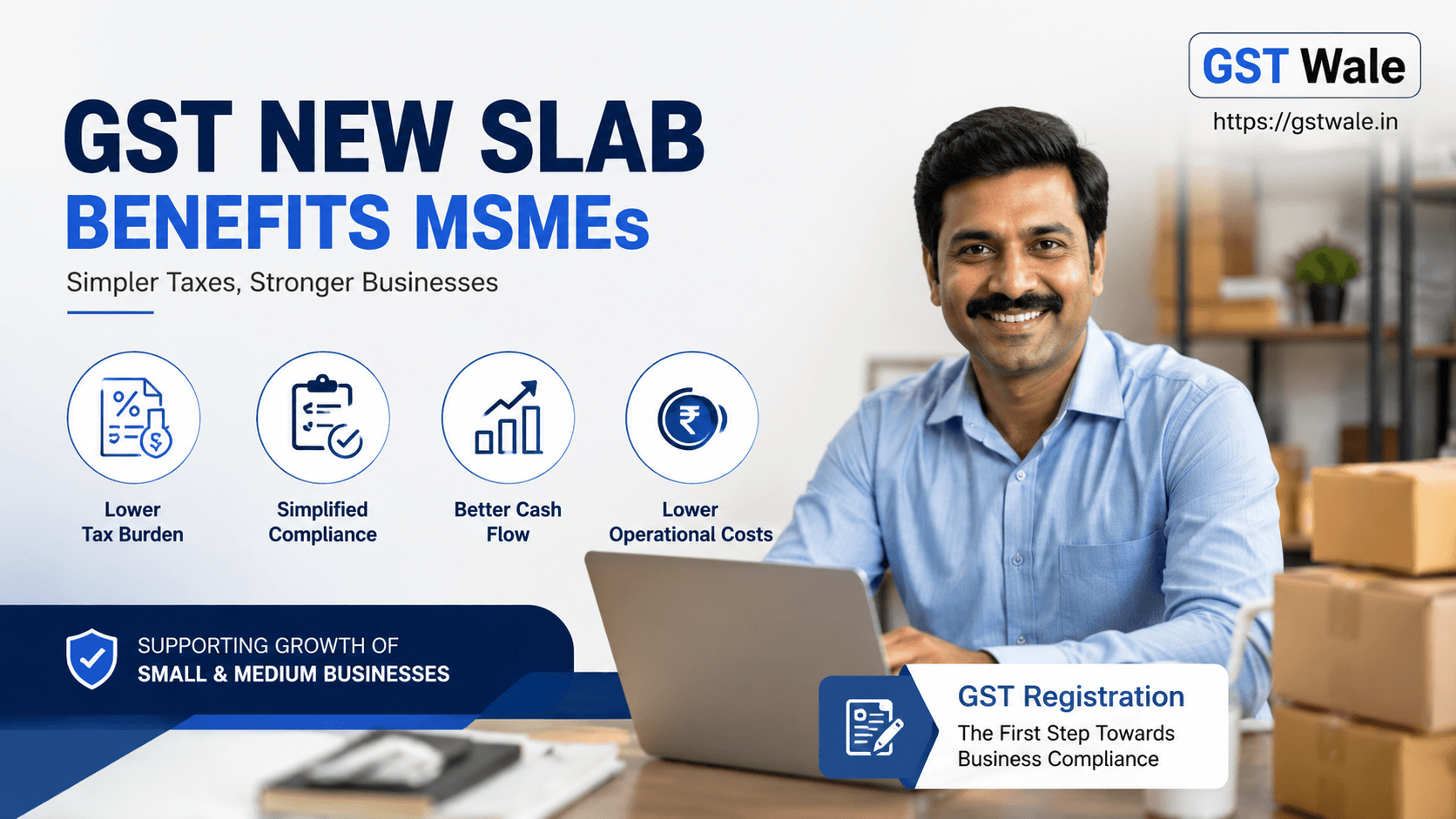
The introduction of the gst new slab structure has become one of the most discussed tax reforms among Indian businesses, especially Micro, Small, and Medium Enterprises (MSMEs). For years, MSMEs struggled with multiple GST rates, complex filing systems, and rising compliance costs. The latest slab consolidation aims to simplify taxation and improve ease of doing business across sectors.
At GST Wale, we regularly interact with small business owners who face confusion over changing GST rules and classifications. The revised structure is expected to reduce unnecessary complications and help businesses focus more on growth rather than paperwork. If you are starting a business or planning to regularize your tax structure, proper GST Registration is the first step toward smooth compliance.
In this article, we will explain how the gst new slab impacts MSMEs, what changes businesses should expect, and how these reforms can lead to long-term operational benefits.
Understanding the GST New Slab Structure
The government has been evaluating GST reforms to reduce the burden of multiple tax rates. Under the proposed gst new slab framework, the focus is on consolidating existing slabs into a simpler and more manageable structure.
Currently, GST rates are spread across several categories such as:
- 5%
- 12%
- 18%
- 28%
This creates confusion for businesses, especially MSMEs dealing in multiple products or services. The new structure aims to merge certain slabs and simplify classification.
Why Was the GST Slab Revision Needed?
Many MSMEs faced issues such as:
- Incorrect tax classification
- Frequent notices due to filing mistakes
- Higher accounting expenses
- Complex invoicing systems
- Cash flow pressure
The revised gst new slab system is expected to solve many of these practical challenges.
How GST New Slab Benefits MSMEs
Reduced Tax Complexity
One of the biggest advantages of the gst new slab is reduced complexity in tax calculation.
Earlier, small businesses had to determine different GST percentages for different products. Even minor classification mistakes could lead to penalties or notices.
With slab consolidation:
- Businesses can classify products more easily
- Account reconciliation becomes smoother
- Fewer disputes arise with tax authorities
This directly helps MSMEs save time and reduce dependency on expensive tax consultants for routine tasks.
Lower Operational Costs for Small Businesses
MSMEs usually operate on limited budgets. Complicated tax systems increase administrative expenses.
The gst new slab helps reduce:
- Accounting costs
- Software customization expenses
- Filing-related errors
- Compliance manpower requirements
Real Example
Suppose a small electronics dealer sells products taxed at different GST rates. Maintaining separate invoicing and accounting systems for each category increases costs.
With a simplified gst new slab, businesses can:
- Use standard billing systems
- Reduce accounting confusion
- Improve inventory management
This leads to significantly lower operational costs over time.
Simplified Filing Rules Improve Compliance
Another major benefit of the gst new slab is simplified filing rules.
Many MSMEs struggle with:
- Monthly return filing
- Input tax credit reconciliation
- E-invoice requirements
- Multiple GST forms
The government’s intention behind slab rationalization is not only to adjust taxes but also to simplify compliance procedures.
Benefits of Simplified Filing Rules
- Easier GST return preparation
- Reduced filing errors
- Faster reconciliation
- Better compliance scores
- Less fear of notices and penalties
This is especially useful for small traders and service providers who do not have dedicated finance teams.
Better Cash Flow Management
Cash flow is critical for every MSME. Delays in refunds or incorrect GST calculations often create working capital problems.
The revised gst new slab structure can help businesses manage liquidity more efficiently by:
- Improving tax predictability
- Reducing excess tax payments
- Simplifying input tax credit claims
How It Helps in Real Business Situations
For example, a small manufacturing unit purchasing raw materials under different tax brackets may face complications in claiming credits.
A consolidated gst new slab reduces confusion and speeds up credit adjustments, helping businesses maintain healthy cash flow.
MSME Tax Benefits Under GST Reforms
The government has consistently emphasized MSME tax benefits as part of economic development initiatives.
The new reforms are expected to support MSMEs through:
Easier Tax Planning
Businesses can estimate tax liabilities more accurately under the revised gst new slab.
Reduced Litigation
Simpler tax classifications mean fewer disputes regarding product categorization.
Improved Business Expansion
When compliance becomes easier, MSMEs can expand into new states without worrying about complicated GST calculations.
Encouragement for Formalization
Many small businesses avoid registration due to fear of compliance complexity. A simplified tax structure encourages businesses to become part of the formal economy.
Impact of GST New Rate and GST New Rate List
The proposed gst new rate changes may affect industries differently. Some sectors may experience slight rate increases, while others could benefit from reduced tax burdens.
The revised gst new rate list is expected to focus on:
- Essential goods at lower rates
- Luxury items at higher rates
- Rationalized mid-level tax slabs
Sectors Likely to Benefit
The following sectors may see positive effects from the gst new slab reforms:
- Retail businesses
- Small manufacturers
- Local service providers
- Restaurants and food businesses
- E-commerce sellers
These industries often face operational challenges due to multiple GST classifications.
GST Rates and Their Long-Term Impact on MSMEs
Simplified GST rates create long-term stability for businesses.
Key Long-Term Advantages
Better Pricing Strategy
Businesses can set prices more confidently when GST rates are easier to understand.
Improved Customer Trust
Transparent billing systems improve customer confidence and reduce confusion.
Easier Accounting Automation
Standardized tax structures make it easier to integrate billing software and ERP systems.
Reduced Compliance Stress
Small business owners can focus more on sales and expansion instead of tax-related complications.
The revised gst new slab can become a major growth driver for MSMEs if implemented effectively.
Challenges MSMEs Should Still Prepare For
Although the gst new slab offers several advantages, businesses should still stay prepared for transition-related challenges.
Possible Initial Issues
- Updating accounting software
- Staff training
- Understanding revised classifications
- Revising invoices and pricing
At GST Wale, we advise MSMEs to stay updated with official notifications and seek professional guidance during the transition phase.
Tips for MSMEs to Adapt Smoothly
Review Your Product Classification
Check whether your goods or services fall under revised GST rates.
Upgrade Billing Systems
Ensure your accounting software supports updated GST structures.
Maintain Proper Documentation
Keep invoices, purchase records, and return filings properly organized.
Seek Professional Assistance
Consult GST experts to avoid compliance errors during the transition.
Frequently Asked Questions (FAQs)
What is the gst new slab?
The gst new slab refers to the proposed consolidation and simplification of GST tax rates to reduce compliance complexity and improve ease of business.
How will the gst new slab help MSMEs?
It can reduce tax confusion, lower compliance costs, simplify filing rules, and improve cash flow management for small businesses.
Will GST rates increase under the new system?
Some products may experience changes under the revised gst new rate structure, but the overall goal is simplification rather than excessive tax increases.
What is the purpose of the gst new rate list?
The gst new rate list helps businesses identify revised tax rates applicable to different goods and services under the updated GST framework.
Can simplified GST rates reduce notices from the department?
Yes, simplified GST rates and classifications can reduce filing errors and minimize tax disputes or notices.
The introduction of the gst new slab can become a major turning point for Indian MSMEs. By reducing complexity, lowering operational costs, and improving compliance systems, the government aims to create a more business-friendly tax environment.
For small businesses, simplified GST rates mean less confusion, better cash flow, and more time to focus on growth. However, adapting to the revised system correctly is equally important to avoid compliance mistakes during the transition.
At GST Wale, we help MSMEs stay compliant, updated, and financially secure under changing GST regulations. Whether you need registration support, return filing assistance, or expert GST consultation, our team is here to guide your business every step of the way.
 Previous