


Decoding GST 2.0: Everything to Know About the GST New Rate Structure
Decoding GST 2.0: Everything to Know About the GST New Rate Structure
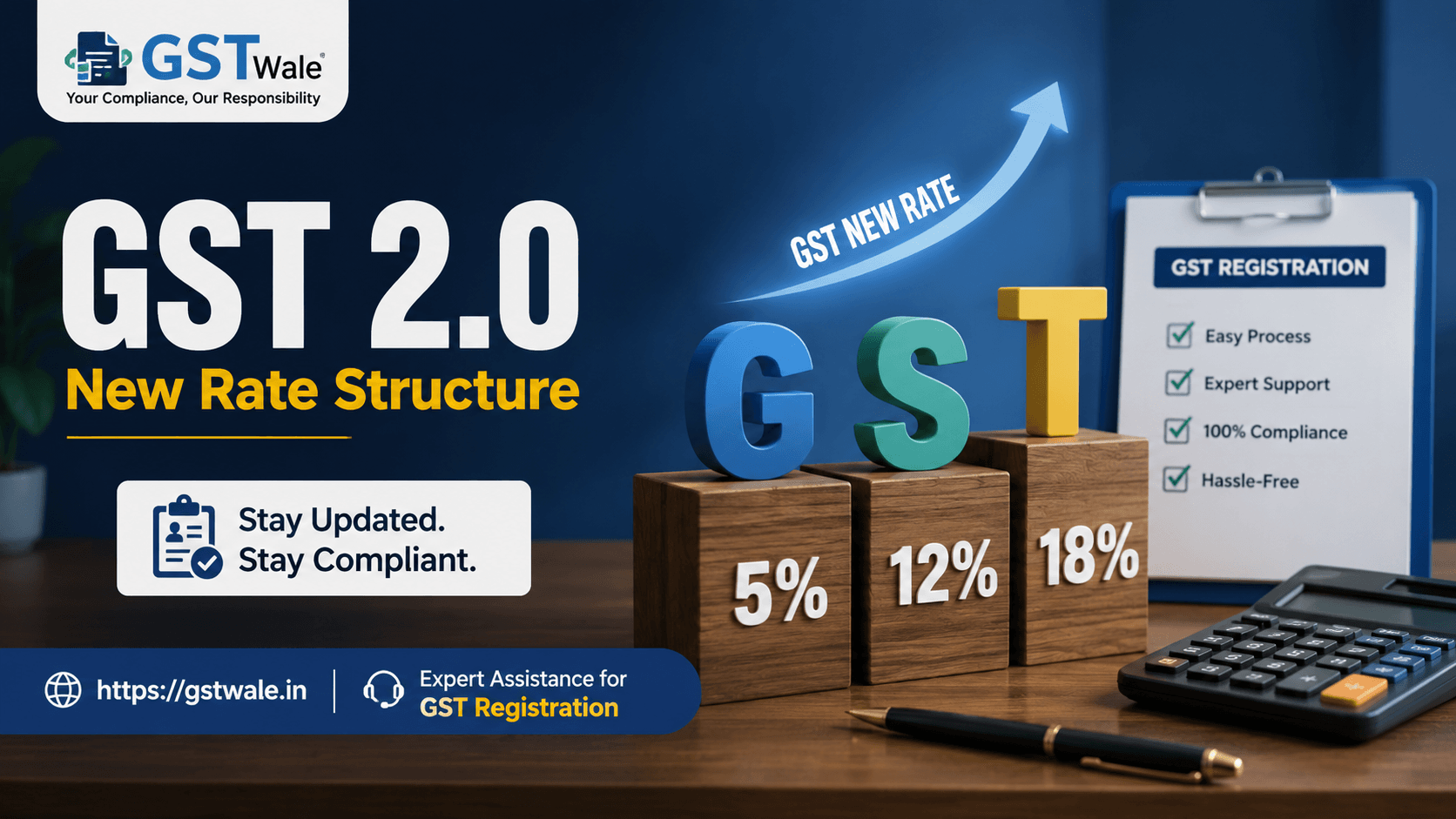
The Indian indirect tax landscape is undergoing its most massive transformation since 2017. Dubbed \"GST 2.0,\" this structural overhaul completely alters how businesses calculate taxes, file returns, and price their products. If you are a business owner, retailer, or manufacturer, understanding the gst new rate framework is no longer optional—it is a critical compliance requirement to keep your business running smoothly without legal hitches.
At GST Wale, we interact daily with entrepreneurs who are confused about these changes. Many are unsure whether their products have become cheaper or more expensive. To clear the air, the government, following historical recommendations from the gst council meeting, has transitioned from the old five-tier system into a cleaner, consolidated model. Before you can accurately map your inventory to the updated slabs, your business must have a valid and active registration. If you are a new entrepreneur stepping into the market or need to regularize your operations under this overhauled regime, obtaining a GST Registration is your very first step toward total compliance. Let’s dive deep into what this new tax regime means for your pocket and your business operations.
The Genesis of GST 2.0: Moving Away from the Old Slabs
For years, Indian businesses had to navigate an intricate maze of tax slabs in india consisting of 0%, 5%, 12%, 18%, and 28%, plus varying rates of compensation cess. This multi-layered structure led to severe classification disputes, litigation, and confusion. For instance, whether a specific type of packaged food fell under 12% or 18% kept corporate legal teams busy for months.
To permanently fix this friction, the government introduced the gst new slab structure under GST 2.0. The most ground-breaking aspect of this reform is the complete abolition of the 12% tax slab. All items previously taxed under the 12% bracket have been redistributed into either the 5% or 18% categories.
Furthermore, the old 28% luxury bracket, which frequently required complex calculation of an additional compensation cess, has been phased out for a more transparent, consolidated rate system. This sweeping overhaul drastically reduces calculation errors and cuts down the volume of paperwork for accounting departments across the country.
Decoding the GST New Rate Structure
The modernized tax framework relies on a simplified multi-tier system designed to balance consumer affordability with national revenue needs. Here is how the modified gst rates look today:
0% Slab (Nil Rated / Exempted): This is reserved for basic, unprocessed essentials. Unpackaged farm produce, fresh fruits, vegetables, milk, fresh bread, and public education are completely tax-free. Notably, individual health and life insurance policies have also been exempted to make healthcare protection highly affordable.
5% Slab (The Merit Rate): This covers mass consumption goods and basic household items. Daily essentials like hair oil, shampoo, toothpaste, and toilet soaps have seen their rates cut drastically to fit here.
18% Slab (The Standard Rate): This serves as the primary operational bracket for the majority of commercial transactions. Most goods and services—including consumer electronics, standard automobiles, cement, steel, and IT services—fall squarely into this category.
40% Slab (Luxury & Sin Goods): This is the premium tier dedicated exclusively to high-end luxury vehicles, motorcycles with engines exceeding 350cc, aerated or carbonated beverages, online gaming, and betting.
The Ultimate GST New Rate List for 2026
To help you quickly update your billing software and internal ERP systems, here is a functional breakdown of the current gst rates across common consumer and industrial categories:
Major Rate Cuts (Items Made Cheaper)
| Product / Service Category | Old GST Rate | Revised GST Rate |
|---|---|---|
| Daily Personal Care: Soap, Shampoo, Toothpaste, Shaving Cream | 18% | 5% |
| Dairy Staples: Butter, Ghee, Cheese, Dairy Spreads | 12% | 5% |
| Packaged Snacks: Pre-packaged Namkeen, Bhujia, Potato Chips | 12% or 18% | 5% |
| Household Utilities: Bicycles, Kitchen Utensils, Tableware | 12% or 18% | 5% |
| Healthcare Hardware: Thermometers, Glucometers, Oxygen Concentrators | 12% or 18% | 5% |
| Electronic Goods: Air Conditioners, Televisions, Washing Machines | 28% | 18% |
| Compact Vehicles: Small petrol/diesel cars (under 1200cc/1500cc) | 28% | 18% |
Major Rate Hikes (Items Made Costlier)
| Product / Service Category | Old GST Rate | Revised GST Rate |
|---|---|---|
| Sin / Luxury Goods: Caffeinated Drinks, Carbonated Fruit Juices | 28% | 40% |
| Premium Vehicles: Luxury Cars, Heavy Motorcycles (>350cc) | 28% + Cess | 40% |
| Entertainment & Gaming: Casinos, Online Money Gaming, Betting | 28% | 40% |
| Industrial / Raw Materials: Coal, Lignite, Peat | 5% | 18% |
| Textiles: Premium Apparel and Quilts (priced above ₹2,500 per piece) | 12% | 18% |
| Paper Industry: Chemical Wood Pulp, Commercial Paperboards | 12% | 18% |
Strategic Action Plan for Business Owners
The transition to a gst new rate setup means your business cannot afford a \"wait-and-see\" approach. Failing to adapt immediately can cause severe Input Tax Credit (ITC) blocks, pricing mismatches, or compliance penalties.
1. Update Invoicing and Accounting Software
Ensure your internal billing systems, whether you use TallyPrime, Zoho Books, or custom ERP software, are completely updated with the revised gst rates. Check that the correct HSN (Harmonized System of Nomenclature) codes reflect the altered percentages so that outward tax liability is computed flawlessly.
2. Renegotiate Long-Term Supply B2B Contracts
If your business deals with items that moved from the abolished 12% slab to the higher 18% bracket (such as premium apparel or paperboards), your procurement cost has increased by 6%. You must review ongoing commercial contracts immediately. Determine whether your business will absorb this additional cost or if you need to renegotiate terms with your buyers.
3. Review Your Product Pricing Strategy
With significant tax reductions on consumer electronics (from 28% down to 18%) and daily groceries (from 12%/18% down to 5%), businesses must pass on the benefits of lower taxes to consumers. Review your maximum retail price (MRP) structure to stay competitive and remain compliant with anti-profiteering principles.
Frequently Asked Questions
1. What is the current focus of the gst new rate structure?
The focus of the new structure is simplification. By reducing the core operational brackets primarily to 5% and 18%, and isolating luxury items at 40%, the tax regime reduces classification disputes and makes it much easier for business owners to manage daily accounting.
2. What happened to the 12% and 28% tax brackets?
The 12% tax bracket has been completely abolished. Goods and services under it have been reallocated to either 5% or 18%. The old 28% bracket has been rationalized; common consumer electronics and small cars dropped to 18%, while premium luxury and sin goods moved to a unified 40% tier.
3. How does GST 2.0 affect health and life insurance premiums?
In a major relief to individual taxpayers, individual life and health insurance policies have been shifted to a 0% (Nil) rate. Previously, policyholders had to pay an 18% tax on their premiums, making insurance noticeably more expensive.
4. Are gold and precious metals affected by the new rate list?
No. Special niche rates continue to exist for specific industries. Gold, silver, platinum, and precious jewellery remain stable at their specialized 3% tax slab.
Trust GST Wale for a Hassle-Free Tax Transition
Staying ahead of constant changes in tax law requires deep expertise and constant monitoring. At GST Wale, we act as your dedicated financial growth partners. From ensuring your documentation perfectly aligns with the latest gst new rate updates to handling monthly filings and optimizing your Input Tax Credit, our experienced legal and accounting professionals manage the compliance burden so you can focus entirely on scaling your enterprise.
Need expert advice on how the updated tax slabs impact your industry? Contact the team at GST Wale today, and let our experienced professionals streamline your tax compliance seamlessly!
 Previous