


What to Do if You Miss the ITR Filing Deadline in 2026
What to Do if You Miss the ITR Filing Deadline in 2026
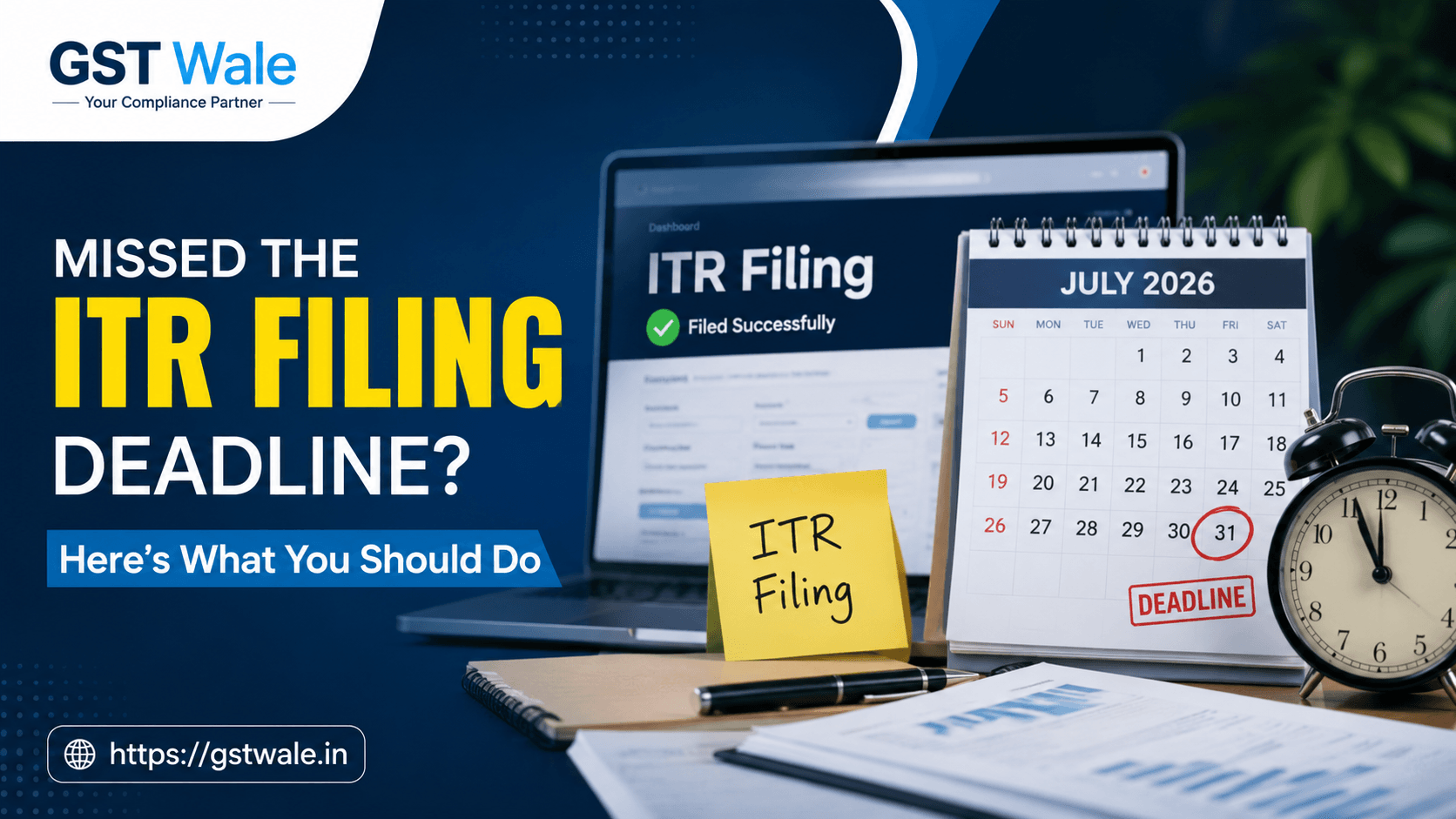
Missing the ITR Filing deadline can feel stressful, especially when you start hearing about penalty fees, notices from the Income Tax Department, and possible loss of tax benefits. Every year, many salaried individuals, freelancers, traders, and business owners miss the due date due to workload, lack of documents, technical issues, or simple oversight.
At GST Wale, we regularly help taxpayers who realize after the deadline that their ITR Filing is still pending. The good news is that missing the due date does not always mean severe consequences. In many cases, you can still file your return, reduce penalties, and even claim certain benefits if you act quickly.
If you are looking for professional support for your ITR Filing, it is always better to resolve the issue early rather than wait for tax notices or additional complications.
In this guide, we will explain exactly what happens when you miss the ITR Filing deadline in 2026 and the practical steps you should take next.
What Happens If You Miss the ITR Filing Deadline?
When you fail to complete your ITR Filing before the due date prescribed by the Income Tax Department, several consequences may arise depending on your income, tax liability, and filing history.
Here are the most common effects:
- Late filing penalty
- Interest on unpaid taxes
- Delay in tax refunds
- Loss of certain deductions and benefits
- Difficulty in loan approvals or visa applications
- Inability to carry forward specific losses
However, the impact can vary from person to person. For example, a salaried employee expecting a refund may face fewer complications compared to a business owner with outstanding tax dues.
Can You Still Do ITR Filing After the Deadline?
Yes, absolutely. Even if you miss the original due date, the Income Tax Act allows taxpayers to file a belated return within a specified time.
Belated Return Under Section 139(4)
A belated return allows delayed ITR Filing after the original deadline. However, this comes with certain conditions:
- You may have to pay penalty fees
- Interest may apply on outstanding taxes
- Some tax benefits may no longer be available
Still, filing late is always better than not filing at all.
For example, suppose a freelancer in Delhi missed the July deadline because clients delayed issuing Form 16A or TDS certificates. Instead of ignoring the issue, filing a belated return can help avoid larger legal complications later.
Penalty Fees for Late ITR Filing in 2026
One of the biggest concerns taxpayers have is about penalty fees.
Late Filing Fees Under Section 234F
If your ITR Filing is delayed, the following late fees may apply:
- Up to ₹5,000 for delayed filing
- Reduced fees for taxpayers with lower income
- Additional interest under Section 234A on pending tax liability
The actual amount depends on:
- Your total taxable income
- Delay duration
- Whether tax dues remain unpaid
Example of Late Filing Impact
Imagine a small business owner who owes ₹50,000 in taxes and misses the filing deadline by several months. Apart from the late filing fees, interest keeps accumulating until payment is made.
This is why timely corrective action is very important.
Loss of Carry Forward of Losses
Many taxpayers are unaware that delayed ITR Filing can affect the carry forward of losses.
What Does This Mean?
If you have:
- Business losses
- Capital losses from shares or property
- Speculative losses
you may lose the right to carry them forward to future years if the return is not filed within the original due date.
Why It Matters
Suppose an investor incurred a ₹3 lakh capital loss in FY 2025-26. If the return is filed late, that loss may not be available for future tax adjustment.
This can result in higher taxes in upcoming years.
Can You Get Tax Relief After Missing the Deadline?
In certain situations, yes.
The Income Tax Department provides relief mechanisms for genuine hardships or exceptional cases.
Condonation of Delay
One important remedy is the condonation of delay process.
Under specific conditions, taxpayers can request permission from the department to accept delayed returns, refund claims, or exemptions.
Situations Where Condonation of Delay May Apply
The department may consider your application if the delay happened due to:
- Medical emergencies
- Natural disasters
- Technical glitches
- Genuine financial hardship
- Incorrect professional advice
- Death in the family
However, approval is not automatic. Supporting documents and proper representation are essential.
Understanding Section 119
The power for condonation of delay mainly comes under Section 119 of the Income Tax Act.
What Is Section 119?
Section 119 allows the Central Board of Direct Taxes (CBDT) to authorize relief in deserving cases where taxpayers could not complete compliance within time.
This provision is especially useful for:
- Delayed refund claims
- Missed deductions
- Genuine hardship cases
- Certain delayed ITR Filing situations
At GST Wale, we often advise clients on whether their case qualifies under Section 119 and how to prepare proper applications.
Steps to Take Immediately After Missing the ITR Filing Deadline
If you missed the deadline, do not panic. Follow these practical steps instead.
Step 1: Collect All Tax Documents
Gather all necessary documents such as:
- PAN card
- Aadhaar card
- Form 16
- Bank statements
- TDS certificates
- Investment proofs
- Capital gains statements
Having complete documentation makes delayed ITR Filing smoother.
Step 2: Calculate Outstanding Tax Liability
Before filing, calculate:
- Pending taxes
- Interest payable
- Applicable penalty fees
This helps avoid further notices later.
Step 3: File a Belated Return Quickly
Do not keep postponing.
The longer you delay your ITR Filing, the higher the chances of complications, notices, and accumulated interest.
Step 4: Respond Promptly to Any Tax Notices
If the Income Tax Department sends a notice, respond immediately.
Ignoring notices can escalate the matter and may lead to:
- Penalty proceedings
- Assessment scrutiny
- Recovery actions
Professional guidance can help manage such situations effectively.
Common Mistakes Taxpayers Make After Missing the Deadline
At GST Wale, we frequently see taxpayers making avoidable mistakes after missing the due date.
Ignoring the Situation Completely
Some people assume that if no tax is payable, filing is unnecessary. This is risky because notices can still be issued.
Filing Incorrect Information in a Hurry
Rushed ITR Filing often leads to:
- Wrong income reporting
- Missing deductions
- Incorrect bank details
- Mismatch in TDS
This may trigger scrutiny notices later.
Not Checking AIS and Form 26AS
Always verify your Annual Information Statement (AIS) and Form 26AS before filing.
Many taxpayers miss additional income entries appearing in these records.
FAQs on ITR Filing After Deadline
Can I still get my tax refund after late ITR Filing?
Yes, in many cases you can still receive refunds through belated ITR Filing, although processing may take longer.
Is late ITR Filing mandatory if my income is below taxable limit?
Not always, but filing is still advisable for documentation, loan approvals, and financial records.
Can I avoid penalty fees completely?
In some genuine hardship cases, relief may be available through condonation of delay applications under Section 119.
Will delayed ITR Filing affect my credit score?
Directly, no. But delayed filing can create problems while applying for loans, visas, or financial verification.
Can salaried employees also face notices for non-filing?
Yes. Even salaried individuals can receive notices if TDS records exist but returns are not filed.
Missing the ITR Filing deadline in 2026 is not the end of the road, but delaying corrective action can increase financial and legal complications. Whether it is penalty fees, loss of carry forward of losses, or the need for condonation of delay under Section 119, every case requires timely attention.
The best approach is to act quickly, file the pending return properly, and seek professional guidance wherever needed. A properly handled delayed ITR Filing can still help you reduce risks, claim eligible tax relief, and maintain smooth financial compliance.
At GST Wale, we help individuals, professionals, startups, and businesses handle every aspect of ITR Filing efficiently — from belated returns to tax notices and delay condonation support. If you have missed the deadline, now is the right time to fix it before the issue becomes more complicated.
 Previous