


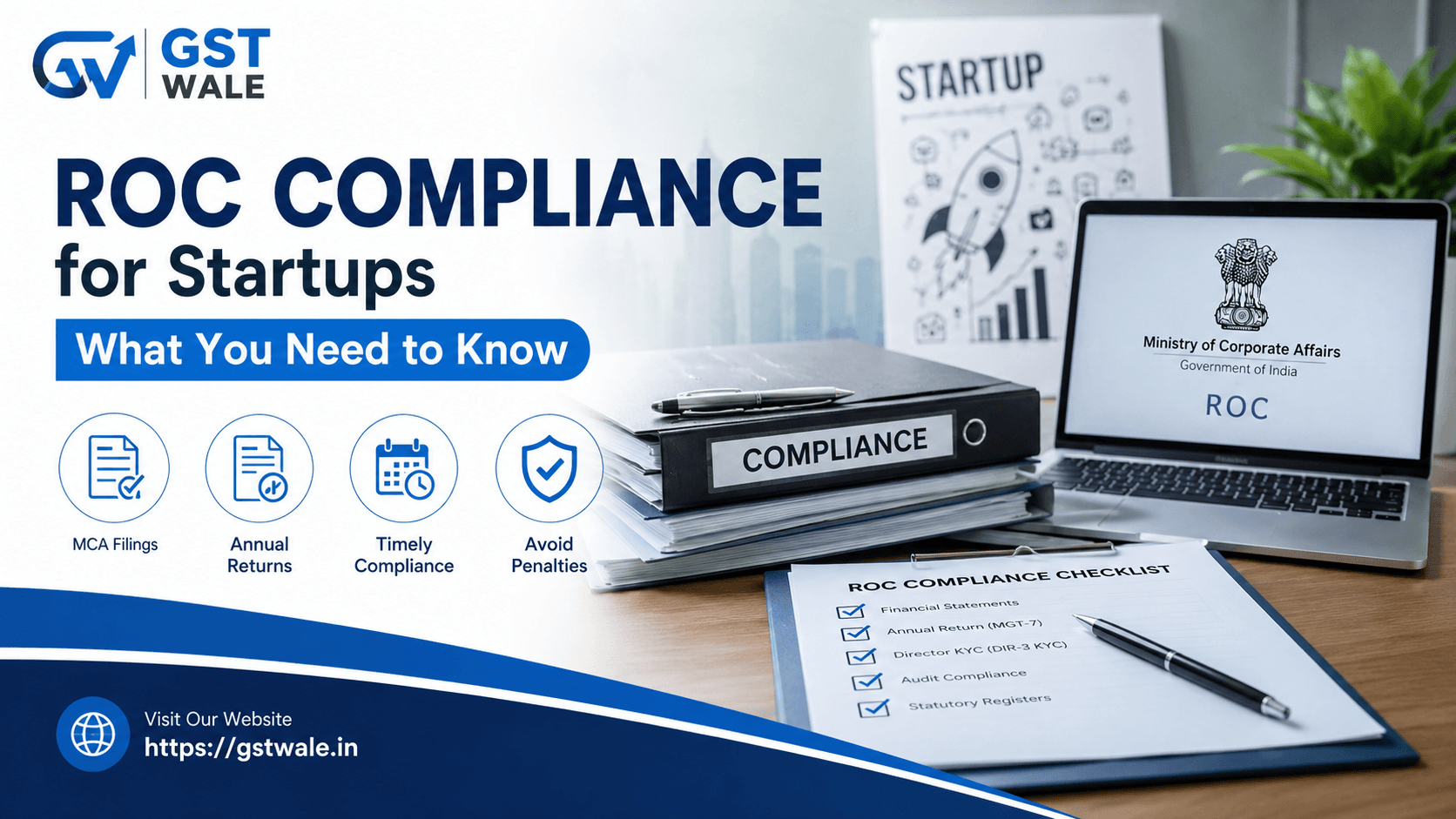
ROC Compliance for Startups: What You Need to Know
ROC Compliance for Startups: What You Need to Know
Starting a business in India is exciting, but many founders focus only on funding, sales, and growth while ignoring one critical responsibility — ROC Compliance. Whether you have registered a Private Limited Company, LLP, or One Person Company (OPC), complying with the Registrar of Companies (ROC) rules is mandatory under the Companies Act, 2013.
At GST Wale, we often meet startup founders who believe compliance can wait until the business becomes profitable. Unfortunately, that assumption can lead to heavy penalties, director disqualification, and legal notices from the Ministry of Corporate Affairs (MCA).
If you are a startup founder, understanding ROC Compliance from day one can save your business from unnecessary legal and financial trouble later.
In this guide, we will explain everything startups need to know about ROC Compliance in simple language, including annual filings, due dates, penalties, and practical compliance tips.
What is ROC Compliance?
ROC Compliance refers to the legal filing and reporting requirements that companies registered in India must fulfill with the Registrar of Companies (ROC). The ROC operates under the Ministry of Corporate Affairs (MCA) and monitors whether companies are following the Companies Act properly.
Every registered company must regularly submit documents related to:
- Financial statements
- Annual returns
- Director details
- Shareholding changes
- Board resolutions
- Statutory registers
Even if your startup has no business activity or zero revenue, ROC Compliance is still mandatory.
Why ROC Compliance is Important for Startups
Many startups underestimate the importance of startup roc compliance india requirements. However, proper compliance offers several long-term benefits.
Avoid Heavy Penalties
Late ROC filings attract additional government fees and penalties. In some cases, penalties can go into lakhs of rupees.
Build Investor Confidence
Investors and banks always verify compliance records before investing or approving loans. Proper ROC Compliance improves credibility.
Prevent Director Disqualification
Continuous non-compliance can result in directors being disqualified from holding directorship positions.
Maintain Legal Status
Failure to complete ROC Compliance may lead to company strike-off proceedings by the MCA.
Easier Fundraising and Due Diligence
When startups maintain proper records and filings, fundraising and acquisitions become smoother.
ROC Compliance Applicable to Startups
The compliance requirements depend on the type of entity registered.
Private Limited Company Compliance
Private Limited Companies must complete:
- Annual ROC filings
- Board meetings
- Annual General Meeting (AGM)
- Income tax filing
- Auditor appointment
- Maintenance of statutory registers
LLP Compliance
LLPs have comparatively lower compliance requirements but still need:
- Annual Return filing
- Statement of Accounts and Solvency
- Income tax return
One Person Company (OPC)
OPCs also need annual ROC Compliance filings, although some relaxations are available under the Companies Act.
Important ROC Forms for Startups
Understanding MCA startup filings is essential for every founder. Below are the most common ROC forms startups must file.
Form AOC-4
This form is used to file financial statements with the ROC.
It includes:
- Balance Sheet
- Profit & Loss Statement
- Auditor’s Report
- Financial disclosures
Form MGT-7
MGT-7 is the annual return filed by companies containing details about:
- Shareholders
- Directors
- Registered office
- Share capital
- Company structure
DIR-3 KYC
Every director with a DIN must complete annual KYC filing.
ADT-1
This form is filed for auditor appointment.
DPT-3
Companies must disclose outstanding loans and borrowings through DPT-3.
ROC Compliance Due Dates Startups Should Remember
Missing due dates is one of the biggest mistakes startups make. Here are some important timelines.
| Compliance | Due Date |
|---|---|
| DIR-3 KYC | 30 September |
| AOC-4 Filing | Within 30 days of AGM |
| MGT-7 Filing | Within 60 days of AGM |
| DPT-3 Filing | 30 June |
| Income Tax Return | Generally 31 October |
Timely ROC Compliance helps startups avoid unnecessary penalties and notices.
Common ROC Compliance Mistakes Made by Startups
At GST Wale, we regularly see founders making avoidable mistakes. Here are some common issues.
Ignoring Compliance in the Initial Years
Many startups believe compliance is only necessary once the company becomes profitable. This is incorrect.
Missing Filing Deadlines
Delays increase government fees daily and may trigger MCA notices.
Not Maintaining Proper Records
Companies must maintain:
- Statutory registers
- Share certificates
- Board meeting minutes
- Accounting records
Using Incorrect Financial Data
Errors in financial statements can lead to scrutiny from authorities.
Not Conducting Board Meetings
Even small startups are legally required to hold board meetings.
Startup Compliance Checklist for New Companies
A proper startup compliance checklist helps founders stay organized.
Immediately After Incorporation
- Open company bank account
- Appoint auditor
- Issue share certificates
- Maintain statutory registers
Monthly Compliance
- Bookkeeping
- GST filing (if applicable)
- TDS filing
Annual Compliance
- ROC annual filing
- Income tax return
- Financial statement preparation
- Conduct AGM
This startup compliance checklist ensures startups remain legally compliant throughout the year.
Penalties for Non-Compliance
Ignoring ROC Compliance can become expensive very quickly.
Additional Filing Fees
Late filing attracts additional fees on a per-day basis.
Director Disqualification
Directors of defaulting companies may face disqualification for five years.
Company Strike-Off
The MCA can remove inactive or non-compliant companies from official records.
Legal Proceedings
Serious non-compliance may lead to prosecution under the Companies Act.
For startups trying to build credibility, such issues can severely affect future growth opportunities.
How Startups Can Simplify ROC Compliance
Managing business compliance india requirements does not have to be stressful. Here are some practical tips.
Maintain Proper Accounting Records
Good bookkeeping makes annual filing much easier.
Use Compliance Calendars
Track all due dates using reminders or compliance software.
Conduct Regular Reviews
Review compliance status every quarter.
Hire Professionals
Working with experts ensures filings are accurate and timely.
At GST Wale, we help startups manage ROC Compliance efficiently so founders can focus on growing their businesses.
Role of MCA in Startup Compliance
The Ministry of Corporate Affairs (MCA) regulates corporate governance and monitors compliance through the ROC system.
The MCA portal allows companies to:
- File forms online
- Verify company details
- Download compliance records
- Track filing status
Because MCA startup filings are fully digital now, startups must ensure accurate online submissions.
Real-World Example of ROC Compliance Issues
Consider a startup that raised seed funding but ignored annual ROC Compliance for two years. During due diligence for the next funding round, investors discovered pending filings and MCA notices.
As a result:
- Funding got delayed
- Penalties increased
- Investors questioned management credibility
Eventually, the startup had to spend significant time and money correcting old compliance issues.
This situation is very common among early-stage businesses in India.
FAQs on ROC Compliance
Is ROC Compliance mandatory for inactive startups?
Yes. Even if your startup has no turnover or business activity, ROC Compliance is mandatory.
Can startups file ROC forms themselves?
Technically yes, but professional guidance is recommended to avoid errors and penalties.
What happens if ROC filing is delayed?
Late filing attracts additional government fees and may lead to penalties or legal notices.
Is ROC Compliance required for LLPs?
Yes. LLPs also have annual filing obligations under the LLP Act.
How often should startups review compliance status?
Ideally, startups should review compliance monthly or quarterly.
For every startup in India, ROC Compliance is not just a legal formality — it is a critical part of building a trustworthy and sustainable business. From annual filings and board meetings to maintaining proper records, compliance plays a major role in protecting your company from penalties and legal complications.
Many founders focus heavily on growth but ignore business compliance india requirements until problems arise. Taking a proactive approach from the beginning helps startups stay investment-ready and legally secure.
At GST Wale, we specialize in helping startups manage ROC Compliance smoothly and efficiently. Whether you are a newly incorporated company or an established startup struggling with pending filings, our experts can guide you at every step.
Get in touch with GST Wale today and keep your startup fully compliant while you focus on scaling your business confidently.
 Previous