


Common Mistakes to Avoid During GST Registration
Common Mistakes to Avoid During GST Registration
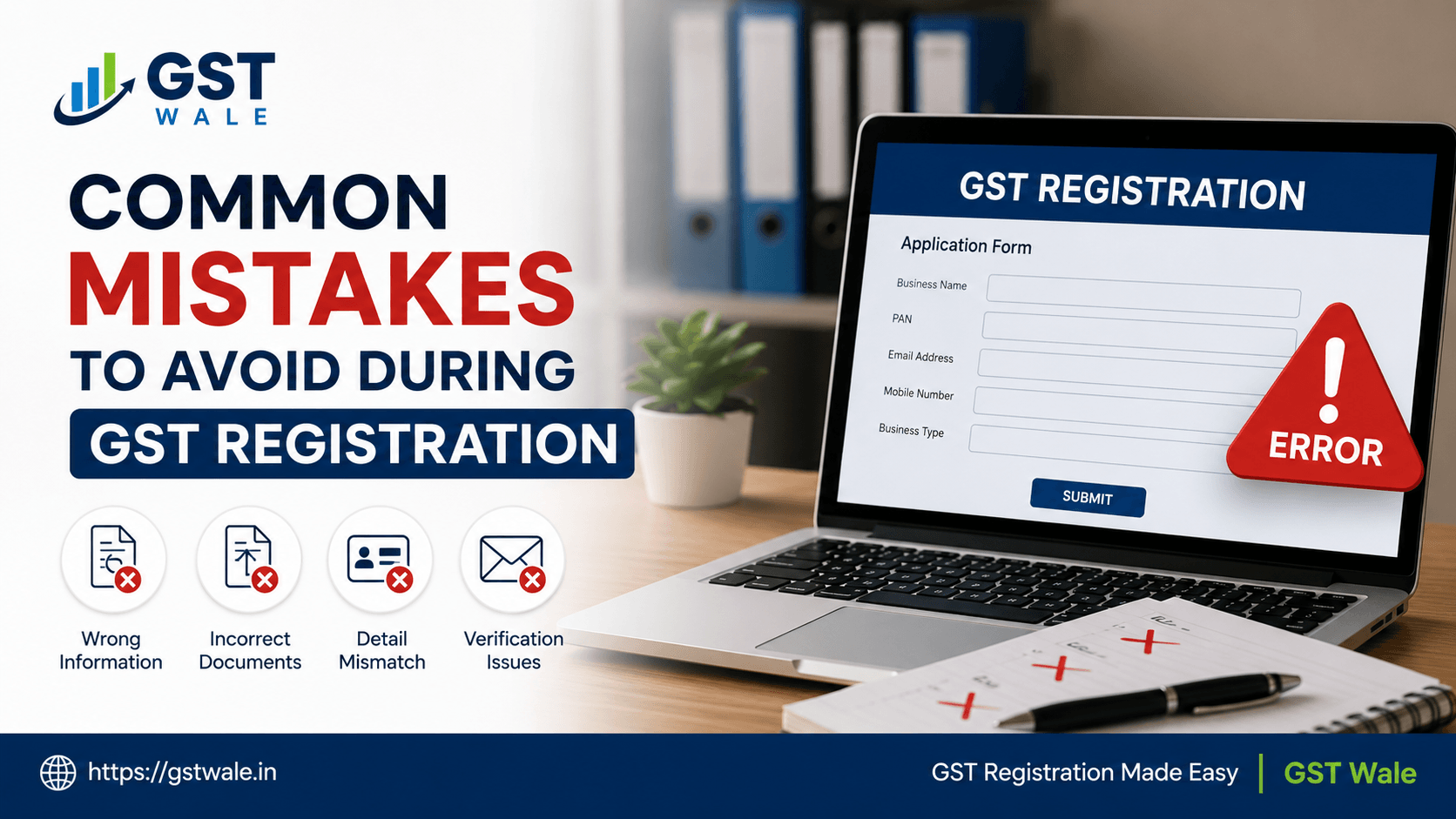
Applying for GST Registration may look like a simple online process, but in reality, many businesses face delays, notices, or even rejection because of avoidable mistakes. At GST Wale, we regularly help business owners, freelancers, startups, and traders who struggle due to incorrect information submitted during the registration process.
If you are planning to apply for GST Registration, it is important to understand the common errors that can create future compliance problems. Even a small mismatch in documents or business details can lead to GST application errors, registration rejection, or unnecessary follow-ups from the GST department.
In this article, we will discuss the most common mistakes to avoid during GST Registration, along with practical tips that can help you complete the process smoothly and stay compliant from day one.
Why Accurate GST Registration Matters
GST Registration is more than just obtaining a GSTIN. It is the foundation of your business compliance. Incorrect registration details can create long-term issues such as:
- GST filing issues
- Input tax credit mismatch
- Notices from the department
- Delays in invoicing
- Vendor payment problems
- Penalties for non-compliance
Many businesses rush through the registration process without proper verification. This is where most gst registration mistakes happen.
Common Mistakes to Avoid During GST Registration
Providing Incorrect Business Details
One of the biggest GST Registration mistakes is entering incorrect business information.
Many applicants make errors in:
- Business name spelling
- PAN details
- Constitution of business
- Date of commencement
- Address details
Even minor spelling mismatches between PAN and GST records can result in gst rejection reasons.
Practical Tip
Always cross-check:
- PAN card
- Aadhaar details
- Incorporation certificate
- Partnership deed
- Bank documents
before submitting the GST Registration application.
Using the Wrong Business Address
The business address entered during GST Registration should match the supporting documents exactly.
Common issues include:
- Incomplete address
- Incorrect PIN code
- Utility bill mismatch
- Unregistered rental agreement
- Residential address used without proper proof
For example, many home-based businesses upload electricity bills in a family member’s name without providing additional authorization documents. This often leads to application clarification notices.
Documents Required for Address Verification
Depending on your business type, keep these documents ready:
- Electricity bill
- Property tax receipt
- Rent agreement
- NOC from owner
- Municipal records
Proper documentation helps avoid gst application errors and approval delays.
Uploading Poor-Quality Documents
Another common reason for GST Registration rejection is unclear document uploads.
The GST portal may reject:
- Blurry scans
- Cropped images
- Password-protected PDFs
- Incorrect file formats
- Expired documents
At GST Wale, we have seen many cases where applicants upload mobile photos instead of proper scanned copies, resulting in repeated notices.
Best Practices for Document Upload
- Use clear PDF scans
- Ensure file size matches portal requirements
- Check document validity
- Avoid editing or overwriting documents
- Upload readable copies only
These simple gst compliance tips india can save significant time.
Selecting the Wrong Business Category
Choosing the incorrect business activity is another major GST Registration mistake.
For example:
- A service provider selecting “trader”
- An online seller choosing the wrong HSN/SAC category
- Freelancers incorrectly registering under goods
This may later affect:
- GST return filing
- Tax rates
- E-invoicing applicability
- Input tax credit claims
How to Avoid This Issue
Before applying for GST Registration:
- Understand your business model
- Identify whether you supply goods or services
- Select the correct business activity code
- Consult a GST expert if confused
Proper classification prevents future gst filing issues.
Not Verifying Mobile Number and Email Properly
During GST Registration, OTP verification is mandatory.
Many applicants:
- Use inactive email IDs
- Enter incorrect mobile numbers
- Use consultant contact details permanently
This creates problems later because all GST notices, alerts, and OTPs are sent to registered contact details.
Expert Advice
Always use:
- Your active business email
- Your permanent mobile number
- Accessible contact information
This ensures smooth communication with the GST department.
Ignoring Aadhaar Authentication
Aadhaar authentication has become an important part of GST Registration.
If applicants skip Aadhaar verification, they may face:
- Physical verification
- Delayed approval
- Additional notices
Many gst rejection reasons today are linked to incomplete authentication procedures.
Why Aadhaar Verification Helps
Successful Aadhaar authentication generally:
- Speeds up approval
- Reduces verification checks
- Minimizes departmental scrutiny
Businesses should complete this step carefully.
Applying Under the Wrong GST Type
Businesses often select the wrong registration type:
- Regular scheme instead of composition scheme
- Composition scheme despite interstate supply
- Wrong taxpayer category
This mistake can create serious tax and compliance issues later.
Example
A small trader opting for composition cannot legally collect GST from customers. However, many businesses unknowingly continue issuing tax invoices, resulting in penalties.
Before GST Registration, always evaluate:
- Turnover
- Nature of supply
- Interstate transactions
- E-commerce sales
Ignoring State-Specific Requirements
GST is centrally managed, but some registration requirements vary based on state practices and officer verification.
For example:
- Additional address proof may be required
- Business activity verification may differ
- Physical verification rules may vary
Businesses should stay updated with practical gst compliance tips india relevant to their state.
Not Understanding GST Liability Before Registration
Some businesses apply for GST Registration without understanding whether registration is mandatory.
This creates unnecessary compliance burdens like:
- Monthly return filing
- Record maintenance
- Late fees for non-filing
Businesses That Commonly Need GST Registration
- Interstate suppliers
- E-commerce sellers
- Businesses crossing turnover threshold
- Service providers
- Import-export businesses
Understanding liability helps avoid future gst filing issues.
Delaying Response to GST Notices
After applying for GST Registration, the department may issue clarification notices.
Many applicants:
- Ignore notices
- Miss response deadlines
- Submit incomplete replies
As a result, applications get rejected.
Important Tip
Check your GST portal and registered email regularly after application submission.
Quick responses improve approval chances significantly.
Failing to Seek Professional Guidance
Many businesses attempt GST Registration without understanding legal and practical requirements.
While the portal appears simple, hidden compliance risks can create future complications.
Professional assistance helps:
- Avoid gst application errors
- Reduce rejection risk
- Ensure proper documentation
- Select correct business classification
- Maintain future compliance
At GST Wale, we guide businesses through every step to ensure smooth and accurate registration.
GST Compliance Tips India Businesses Should Follow
To avoid GST Registration problems, keep these important tips in mind:
- Verify all documents before submission
- Match PAN and Aadhaar details carefully
- Use active email and mobile number
- Choose the correct business category
- Complete Aadhaar authentication
- Upload clear scanned copies
- Monitor GST notices regularly
- Take professional advice when required
These practical steps can prevent most gst registration mistakes.
FAQs on GST Registration Mistakes
What are the common reasons for GST Registration rejection?
Common gst rejection reasons include incorrect documents, address mismatch, unclear uploads, wrong business details, and failure to respond to notices.
Can I edit mistakes after GST Registration submission?
Some errors can be corrected through clarification responses or amendment applications, but major mistakes may require fresh registration.
Is Aadhaar authentication compulsory for GST Registration?
While not mandatory in every case, Aadhaar authentication helps speed up approval and reduces the chances of physical verification.
What happens if I select the wrong business category?
Incorrect business classification can create gst filing issues, tax mismatches, and compliance complications later.
How long does GST Registration approval usually take?
If documents are correct and Aadhaar authentication is completed, approval may take around 3–7 working days.
GST Registration is an important step for every growing business, but even small mistakes can lead to delays, notices, and future compliance problems. From incorrect business details to document mismatches and Aadhaar verification issues, most gst registration mistakes are avoidable with proper planning and expert guidance.
Businesses should treat GST Registration as a legal and financial foundation rather than just a formality. Accurate information, proper documentation, and timely responses can make the entire process smooth and hassle-free.
At GST Wale, we help startups, traders, professionals, and companies complete their GST Registration correctly and efficiently. If you want expert assistance without unnecessary delays or compliance stress, our team is ready to guide you at every step.
 Previous