


Step-by-Step Process of Company Registration in India Explained
Step-by-Step Process of Company Registration in India Explained
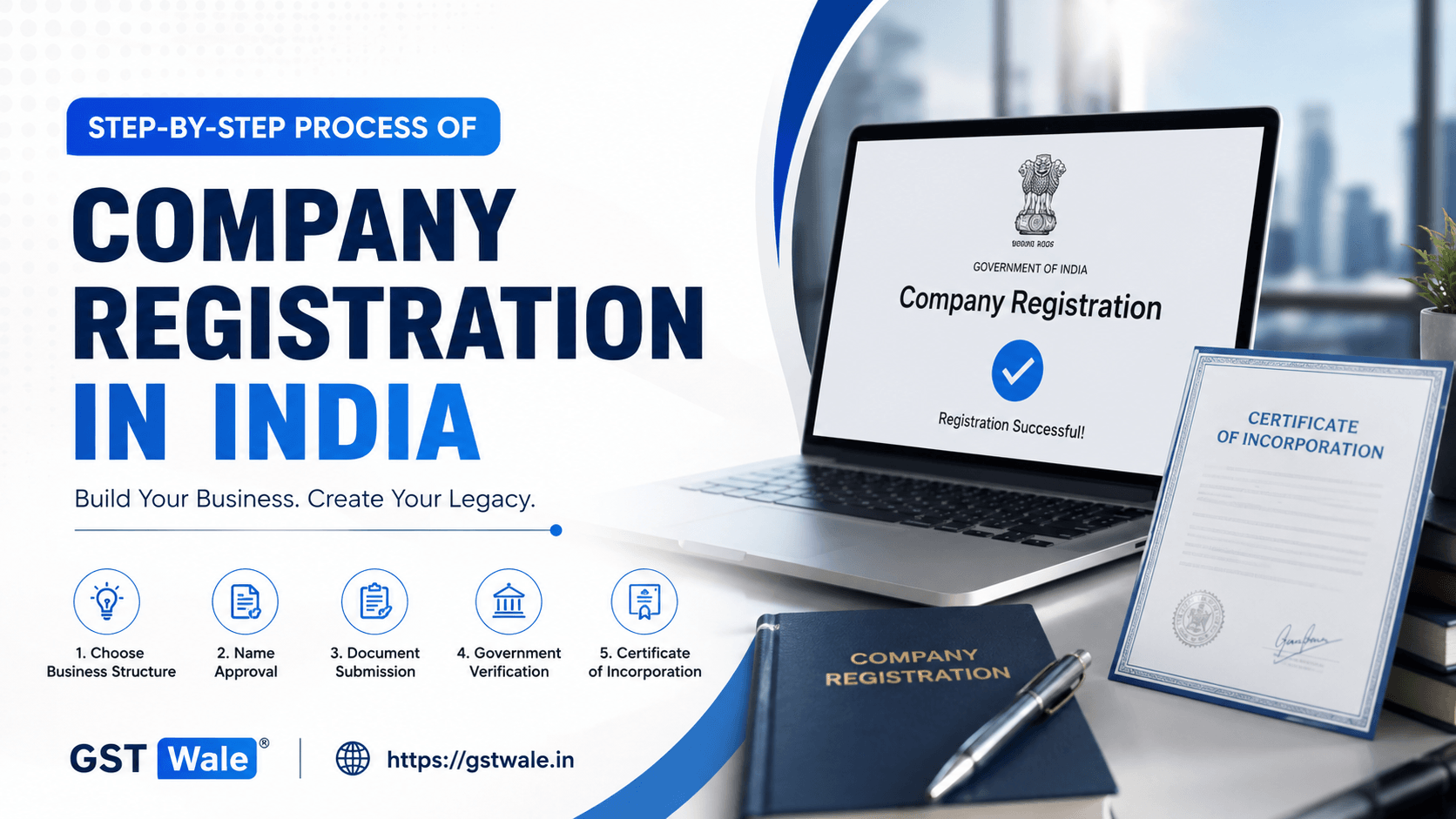
Starting a business is an exciting journey, but before you begin operations, choosing the right legal structure and completing the proper registration process is extremely important. Many entrepreneurs and startups often delay legal formalities, which later creates compliance issues, tax complications, and funding challenges.
If you are planning a startup, small business, or expanding your professional services, understanding the complete process of Company Registration in India can save you time, money, and legal trouble.
At GST Wale, we regularly help entrepreneurs with smooth and hassle-free Company Registration services. Whether you are a first-time founder or an experienced business owner, knowing the correct company registration steps india can help you avoid unnecessary delays.
In this article, we will explain the entire process in simple language along with practical insights, documentation requirements, government approvals, and compliance tips.
Why Company Registration in India is Important
Many people start businesses informally without registration. While this may work temporarily, it creates major limitations in the long run.
A properly registered company offers:
- Legal recognition
- Limited liability protection
- Better business credibility
- Easy access to funding and loans
- Tax and compliance benefits
- Improved brand image
- Easier business expansion opportunities
For startups and growing businesses, Company Registration in India is often the first major legal milestone.
Types of Business Structures in India
Before starting the company incorporation india process, you must select the right business structure.
Private Limited Company
This is the most preferred structure for startups and growing businesses.
Best for:
- Startups
- Technology companies
- Fundraising businesses
- Scalable ventures
Key benefits:
- Limited liability
- Separate legal entity
- Investor-friendly structure
Limited Liability Partnership (LLP)
Suitable for professionals and small service businesses.
Best for:
- CA firms
- Consulting businesses
- Small partnerships
One Person Company (OPC)
Ideal for solo entrepreneurs who want corporate status.
Partnership Firm
Simple and economical for traditional businesses, but lacks limited liability protection.
Sole Proprietorship
Best for very small businesses with minimal compliance requirements.
Among all these structures, Private Limited Company registration remains the most popular choice under Company Registration in India.
Step-by-Step Process of Company Registration in India
Let us now understand the actual company registration steps india in detail.
Step 1: Obtain Digital Signature Certificate (DSC)
The first step in Company Registration in India is obtaining a Digital Signature Certificate for all proposed directors.
Since company registration is completely online, digital signatures are mandatory for signing incorporation forms electronically.
Documents generally required:
- PAN Card
- Aadhaar Card
- Passport-size photograph
- Email ID and mobile number
Usually, DSC approval takes 1–2 working days.
Step 2: Apply for Director Identification Number (DIN)
Every company director must have a DIN issued by the Ministry of Corporate Affairs (MCA).
DIN is a unique identification number for directors and remains valid for a lifetime.
In most cases today, DIN is allotted directly during the incorporation filing process.
Step 3: Name Approval Through MCA
Choosing the right company name is a crucial step in Company Registration in India.
The proposed name should:
- Be unique
- Not match existing company names
- Avoid trademark conflicts
- Follow MCA naming guidelines
For example:
- ABC Tech Solutions Private Limited
- GreenLeaf Foods Private Limited
Practical Tip from GST Wale:
Always keep 2–3 backup names ready because MCA may reject names due to similarity issues.
The name approval application is filed through the RUN (Reserve Unique Name) service on the MCA portal.
Step 4: Prepare Incorporation Documents
After name approval, the next step in company incorporation india is preparing all legal incorporation documents.
Common Documents Required
For Directors and Shareholders
- PAN Card
- Aadhaar Card
- Address proof
- Passport-size photos
For Registered Office
- Electricity bill or utility bill
- Rent agreement (if rented)
- NOC from property owner
Step 5: Draft MOA and AOA
Two important legal documents are prepared during Company Registration in India:
Memorandum of Association (MOA)
This defines:
- Company objectives
- Scope of business activities
Articles of Association (AOA)
This contains:
- Internal company rules
- Shareholding structure
- Director powers and responsibilities
These documents form the legal foundation of the company.
Step 6: Filing SPICe+ Form with MCA
The SPICe+ form is the integrated online application used for company incorporation india.
This form covers:
- Company incorporation
- PAN application
- TAN application
- GST registration (optional)
- EPFO registration
- ESIC registration
- Bank account opening
The government has simplified the startup legal process india significantly through this integrated system.
Step 7: Certificate of Incorporation
Once the Registrar of Companies (ROC) verifies the documents, the Certificate of Incorporation (COI) is issued.
This certificate confirms:
- Company existence
- CIN number
- Date of incorporation
After receiving the COI, your Company Registration in India process is officially complete.
Step 8: Apply for PAN, TAN, and Bank Account
Although PAN and TAN are generally issued with incorporation, businesses should immediately:
- Open a current account
- Activate GST registration if applicable
- Maintain accounting records
This is a very important stage in proper business setup india planning.
Time Required for Company Registration in India
The average timeline for Company Registration in India is:
| Process | Estimated Time |
|---|---|
| DSC Approval | 1–2 Days |
| Name Approval | 2–3 Days |
| Incorporation Filing | 3–5 Days |
| Total Time | 7–10 Working Days |
Timelines may vary depending on documentation accuracy and MCA approvals.
Government Fees for Company Registration
The cost of Company Registration in India depends on:
- Authorized capital
- Professional fees
- State stamp duty
- DSC charges
For most startups, the overall cost is reasonably affordable.
Many founders try to handle registration themselves to save money, but errors in documentation often cause delays and compliance issues later.
Common Mistakes During Company Registration
At GST Wale, we often see businesses making avoidable mistakes during the startup legal process india.
Choosing the Wrong Structure
Many founders select LLP or proprietorship without considering future funding needs.
Incorrect Business Activity
Improper object clauses in MOA can create future legal complications.
Name Rejection Issues
Using trademarked or similar names leads to repeated MCA rejections.
Incomplete Documentation
Minor mismatches in address proof or PAN details can delay approvals.
Professional guidance helps avoid these issues completely.
Compliance After Company Registration
Many entrepreneurs think the process ends after incorporation. However, post-registration compliance is equally important.
After Company Registration in India, companies must:
- Maintain proper accounting
- File annual returns
- Conduct board meetings
- File income tax returns
- Maintain statutory registers
Ignoring compliance can lead to penalties and director disqualification.
How GST Wale Helps Businesses
At GST Wale, we simplify the entire business setup india journey for startups, professionals, and entrepreneurs.
Our services include:
- Business structure consultation
- Name approval assistance
- Documentation support
- MCA filing
- GST registration
- ROC compliance support
We ensure the entire Company Registration in India process remains smooth, transparent, and legally compliant.
FAQs on Company Registration in India
Is GST mandatory after company registration?
No. GST registration depends on turnover limits and business nature.
Can one person register a private limited company?
No. A minimum of two directors/shareholders is required for a Private Limited Company.
How to register private limited company online?
The entire process is completed online through the MCA portal using DSC and SPICe+ forms.
Can NRIs register a company in India?
Yes. NRIs and foreign nationals can participate as shareholders or directors subject to FEMA guidelines.
What is the minimum capital requirement?
Currently, there is no mandatory minimum capital requirement for Company Registration in India.
Completing Company Registration in India is the first major step toward building a legally strong and scalable business. Whether you are launching a startup, opening a consultancy, or planning a long-term business venture, proper registration creates a solid foundation for future growth.
Understanding the complete company registration steps india process helps entrepreneurs make informed decisions and avoid legal mistakes. From DSC issuance to incorporation certificates and compliance filing, every step matters.
If you want expert assistance with hassle-free Company Registration in India, GST Wale is here to guide you at every stage. Our experienced professionals ensure fast processing, accurate documentation, and complete compliance support so you can focus on growing your business confidently.
 Previous