


Understanding the New Tax Regime vs. Old Tax Regime in 2026
Understanding the New Tax Regime vs. Old Tax Regime in 2026
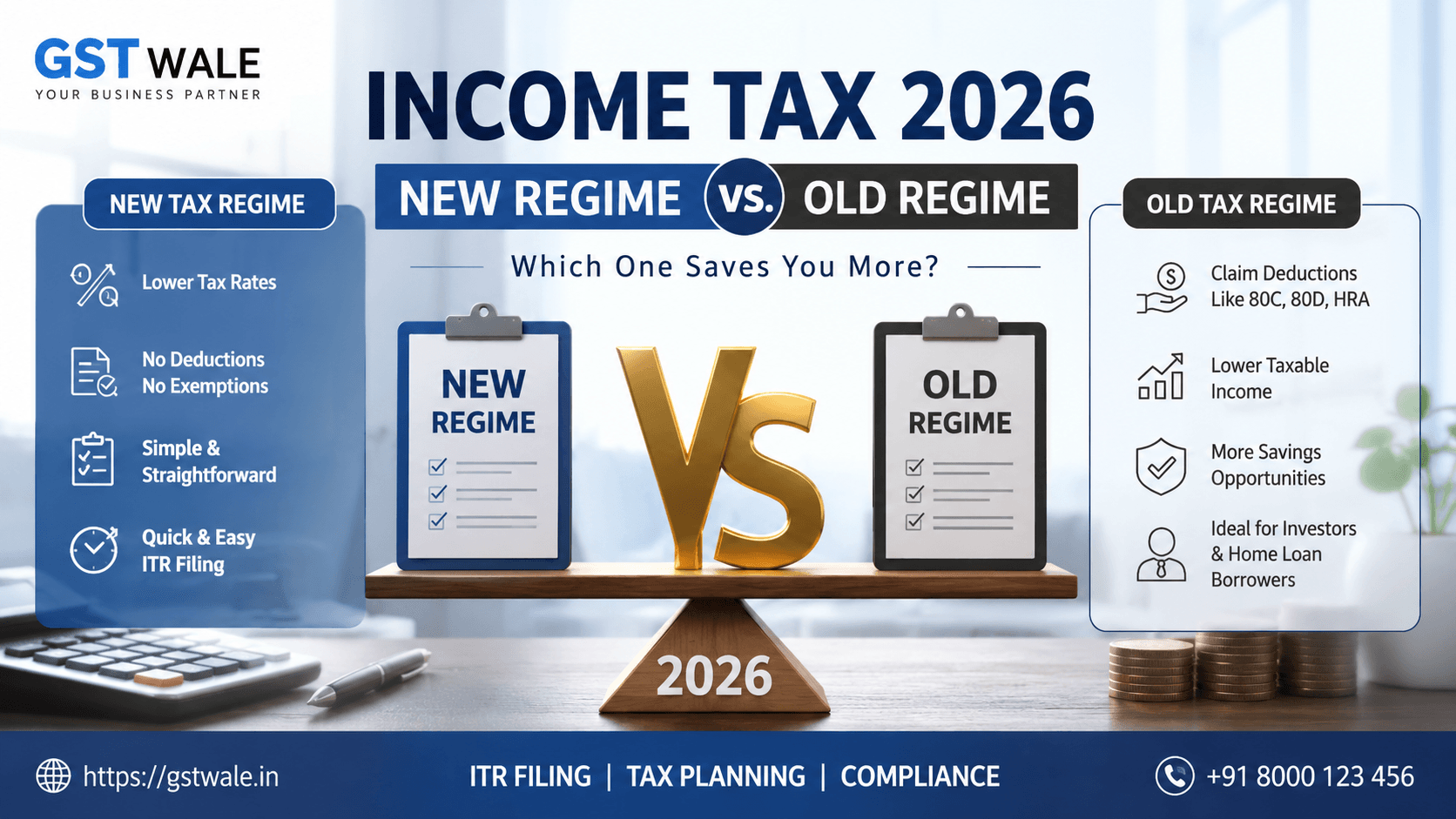
With every Union Budget, taxpayers in India eagerly wait to see how the government plans to simplify taxation and reduce the burden on salaried individuals and business owners. One of the biggest discussions around Income Tax 2026 continues to be the comparison between the new tax regime and the old tax regime.
If you are confused about which regime is better for you, you are not alone. Many taxpayers still struggle to understand whether lower tax rates under the new regime are more beneficial than claiming deductions under the old regime.
At GST Wale, we regularly help clients make smarter tax decisions through proper planning and timely compliance. Whether you are a salaried employee, freelancer, or small business owner, choosing the right tax regime can directly impact your savings. Also, if you are planning your ITR Filing, understanding both tax systems is extremely important before submitting your return.
In this detailed guide, we will simplify everything you need to know about Income Tax 2026, including tax slab comparison, deductions, tax saving tips, and practical examples.
Understanding the Dual Tax System in India
India currently follows a dual tax system, which means taxpayers can choose between:
- The Old Tax Regime
- The New Tax Regime
Both systems have different tax slab rates and deduction benefits.
The old regime allows taxpayers to claim exemptions and deductions like:
- Section 80C
- HRA
- LTA
- Home loan interest
- Medical insurance deductions
On the other hand, the new regime offers lower tax rates but removes most exemptions and deductions.
The government introduced the new regime to simplify Income Tax 2026 compliance and reduce dependency on complicated deduction structures.
Income Tax 2026: New Tax Regime Tax Slabs
Under the latest structure of Income Tax 2026, the new regime remains the default tax system for most taxpayers unless they specifically opt for the old regime.
New Tax Regime Slabs
| Annual Income | Tax Rate |
|---|---|
| Up to ₹3 lakh | Nil |
| ₹3 lakh – ₹6 lakh | 5% |
| ₹6 lakh – ₹9 lakh | 10% |
| ₹9 lakh – ₹12 lakh | 15% |
| ₹12 lakh – ₹15 lakh | 20% |
| Above ₹15 lakh | 30% |
Key Features of the New Regime
- Lower tax rates
- Simplified filing process
- Fewer exemptions
- Standard deduction available
- Suitable for taxpayers with fewer investments
For many young professionals and individuals without major deductions, the new regime under Income Tax 2026 can be more beneficial.
Income Tax 2026: Old Tax Regime Tax Slabs
The old regime continues to provide various exemptions and deduction benefits.
Old Tax Regime Slabs
| Annual Income | Tax Rate |
|---|---|
| Up to ₹2.5 lakh | Nil |
| ₹2.5 lakh – ₹5 lakh | 5% |
| ₹5 lakh – ₹10 lakh | 20% |
| Above ₹10 lakh | 30% |
Major Benefits Available in Old Regime
Taxpayers can claim deductions under:
- Section 80C
- Section 80D
- HRA exemption
- Home loan interest
- Education loan interest
- NPS contributions
For taxpayers with higher investments and expenses, the old regime may still reduce overall tax liability under Income Tax 2026.
Tax Slab Comparison: Which Regime Saves More?
One of the most common questions taxpayers ask is:
“Which tax regime is better for Income Tax 2026?”
The answer depends entirely on your income structure and deductions.
Example 1: Salaried Employee Without Investments
Suppose Rahul earns ₹10 lakh annually and has minimal deductions.
In this case:
- The new regime may result in lower taxes.
- Simpler compliance benefits him.
- No need to invest solely for tax saving.
Example 2: Salaried Employee With High Deductions
Suppose Priya earns ₹12 lakh annually and claims:
- ₹1.5 lakh under Section 80C
- ₹50,000 NPS deduction
- ₹25,000 health insurance
- Home loan benefits
Here:
- The old regime may significantly reduce taxable income.
- Her effective tax liability may become lower than the new regime.
This is why a proper tax slab comparison is essential before choosing a regime under Income Tax 2026.
Importance of Section 80C in the Old Regime
One of the biggest advantages of the old tax system is Section 80C.
Under Section 80C, taxpayers can claim deductions up to ₹1.5 lakh through eligible investments.
Popular 80C Investment Options
- ELSS mutual funds
- PPF
- EPF
- LIC premium
- Tax-saving FD
- Sukanya Samriddhi Yojana
- Tuition fees
For disciplined investors, Section 80C remains a powerful tool for reducing taxes in Income Tax 2026.
Tax Saving Tips for Income Tax 2026
Choosing the right regime is only one part of smart tax planning. Here are some practical tax saving tips from GST Wale.
Analyse Your Salary Structure
Check:
- HRA benefits
- Special allowances
- Employer NPS contributions
- Standard deduction eligibility
A proper salary breakup can improve tax efficiency.
Use an Income Tax Calculator
Before selecting a regime, use an income tax calculator to compare:
- Total taxable income
- Eligible deductions
- Final tax liability
This avoids last-minute confusion during filing season.
Plan Investments Early
Do not wait until March for tax-saving investments.
Early planning helps:
- Better cash flow management
- Smarter investments
- Reduced financial pressure
Consider Long-Term Financial Goals
Never invest only to save taxes.
Your investments should align with:
- Retirement planning
- Child education
- Emergency funds
- Wealth creation
Who Should Choose the New Tax Regime?
The new regime under Income Tax 2026 may be suitable for:
- Young salaried employees
- Freelancers
- Professionals without home loans
- Taxpayers with minimal deductions
- Individuals preferring simplified filing
If you do not actively claim deductions, the new regime can save both time and effort.
Who Should Choose the Old Tax Regime?
The old regime may work better for:
- Home loan borrowers
- Individuals claiming HRA
- Taxpayers investing under Section 80C
- Families paying insurance premiums
- High-income earners with deductions
For such taxpayers, deductions can substantially reduce tax outgo under Income Tax 2026.
Common Mistakes Taxpayers Should Avoid
Choosing Without Calculation
Never select a regime blindly based on social media advice.
Always calculate actual liability first.
Ignoring Deduction Opportunities
Many taxpayers forget deductions like:
- NPS
- Health insurance
- Education loan interest
These can significantly lower taxes.
Delaying Tax Planning
Last-minute tax planning often leads to poor investment decisions.
Filing Incorrect Returns
Incorrect filing may lead to:
- Notices
- Delayed refunds
- Penalties
Professional guidance becomes important, especially for business owners and freelancers.
FAQs on Income Tax 2026
Is the new tax regime mandatory in Income Tax 2026?
No. Taxpayers can still choose between the old and new regimes depending on eligibility and benefits.
Can I switch between tax regimes every year?
Salaried individuals can generally switch every year while filing returns. However, business owners may face restrictions after opting out.
Is Section 80C available in the new regime?
No. Most deductions including Section 80C are not available under the new tax regime.
Which regime is better for salaried employees?
It depends on your deductions, investments, and salary structure. A proper tax slab comparison is necessary.
Should I use an income tax calculator before filing?
Yes. An income tax calculator helps compare liabilities accurately under both regimes.
Understanding the difference between the old and new tax systems is essential for better financial planning. The right choice under Income Tax 2026 depends on your income level, deductions, investments, and long-term goals.
The new regime offers simplicity and lower rates, while the old regime continues to reward disciplined investors through exemptions and deductions like Section 80C.
At GST Wale, we believe tax planning should not be confusing or stressful. Our experts help individuals, professionals, and businesses choose the right approach, maximise savings, and ensure hassle-free compliance.
If you want expert assistance with tax planning, return filing, or compliance for Income Tax 2026, connect with GST Wale today and let our experienced professionals simplify your taxation journey.
 Previous