


A Step-by-Step Tutorial for First-Time ITR Filing
A Step-by-Step Tutorial for First-Time ITR Filing
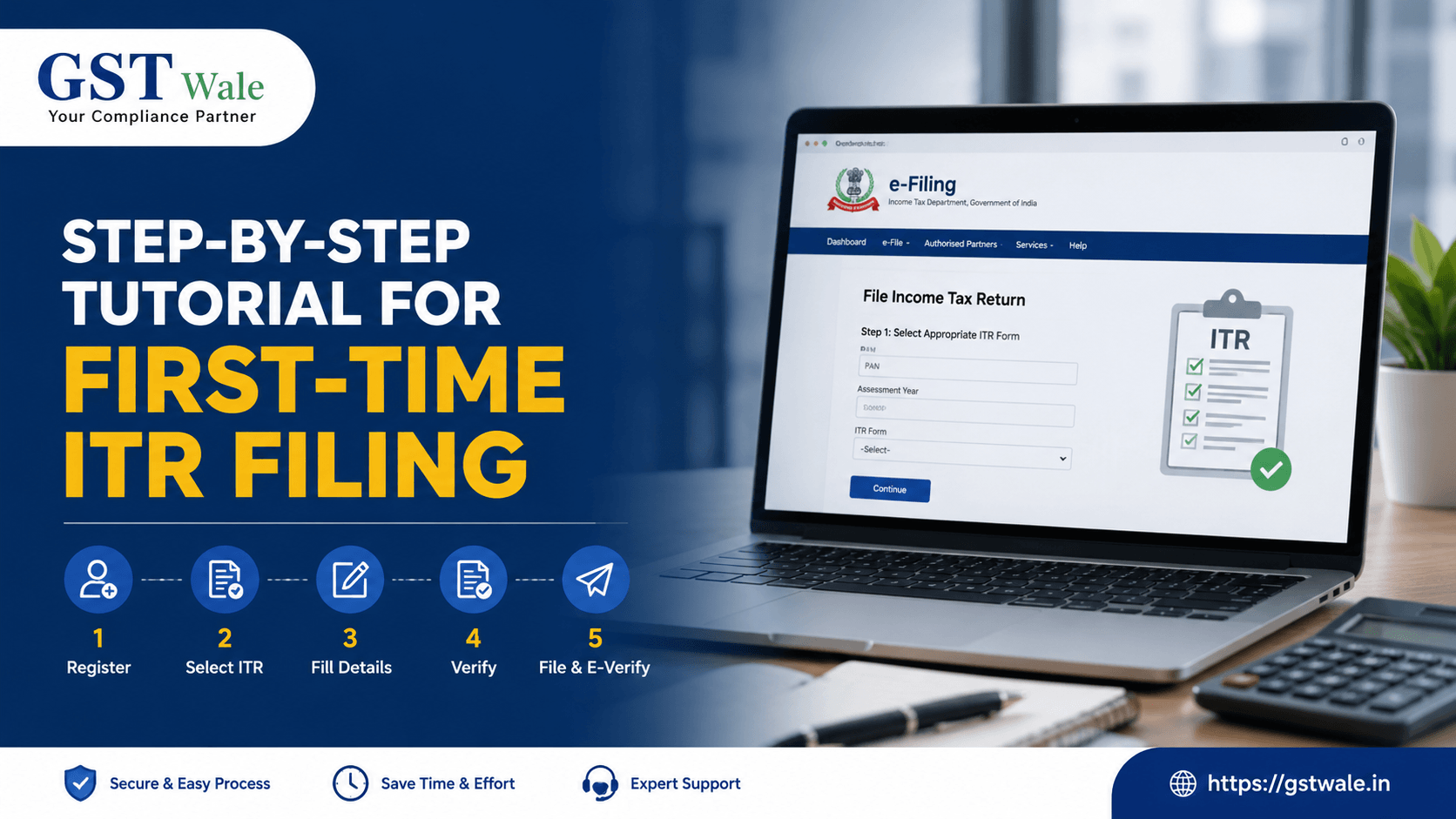
Filing your income tax return for the first time may feel confusing, especially with different forms, tax rules, and portal processes involved. Many salaried employees, freelancers, and small business owners delay the process simply because they are unsure where to begin. However, timely ITR Filing is not only a legal responsibility but also an important financial habit that helps you maintain a clean tax record.
At GST Wale, we regularly assist first-time taxpayers who want a simple and stress-free process. Whether you have salary income, freelance earnings, or small business income, understanding the basics of ITR Filing can save you from penalties, notices, and last-minute panic.
In this step-by-step tutorial, we will explain the complete process in simple language so that you can confidently file your first income tax return.
Why ITR Filing Is Important
Many people believe income tax returns are only for high earners. That is not true. Even if your income falls below the taxable limit, ITR Filing can still be beneficial.
Here’s why:
- Helps in faster loan approvals
- Required for visa applications
- Useful for claiming tax refunds
- Maintains financial credibility
- Prevents penalties for non-compliance
- Helps carry forward business or capital losses
For example, a salaried employee whose employer deducted excess TDS can claim a refund only after completing ITR Filing.
Who Should File an Income Tax Return?
You should file your return if:
- Your annual income exceeds the basic exemption limit
- TDS has been deducted from your income
- You want to claim a tax refund
- You own foreign assets
- You are a freelancer or business owner
- You deposited large amounts in bank accounts
- You want to apply for loans or visas
Even students and part-time freelancers should consider ITR Filing if they earn income through internships, online work, or consulting assignments.
Documents Required for First-Time ITR Filing
Before starting the process, keep the following documents ready.
Form 16
If you are a salaried employee, your employer provides Form 16. It contains details of:
- Salary income
- TDS deducted
- Allowances and deductions
- Taxable income
This is one of the most important documents for first-time taxpayers.
PAN Card and Aadhaar Card
Your PAN must be linked with Aadhaar for smooth ITR Filing.
Form 26AS
Form 26AS shows:
- TDS deducted
- Advance tax paid
- Tax refunds received
Always cross-check your Form 16 with Form 26AS before filing your return.
Bank Account Details
You need:
- Account number
- IFSC code
- Pre-validated bank account for refunds
Investment Proofs
Keep records of deductions under sections like:
- 80C
- 80D
- Home loan interest
- Education loan interest
Step-by-Step Process for ITR Filing
Step 1: Complete Tax Portal Registration
Visit the income tax portal and create your account using:
- PAN number
- Aadhaar-linked mobile number
- Email ID
After registration, you can log in and access all tax-related services.
Many first-time taxpayers make mistakes during tax portal registration by entering incorrect personal details. Ensure your PAN, Aadhaar, and bank information are accurate.
Step 2: Select the Correct ITR Form
Choosing the right return form is very important.
Common ITR Forms
ITR-1 (Sahaj)
Suitable for individuals with:
- Salary income
- One house property
- Interest income
ITR-4
Suitable for:
- Freelancers
- Small businesses under presumptive taxation
Using the wrong form can lead to defective return notices.
Step 3: Verify Your Income Details
Carefully verify all income details before proceeding.
Include:
- Salary income
- Interest from savings accounts
- Freelance income
- Rental income
- Capital gains if any
Cross-check information with Form 26AS and AIS (Annual Information Statement).
A common issue we see at GST Wale is taxpayers forgetting small interest income from savings accounts or fixed deposits. Even minor omissions can create mismatches later.
Step 4: Claim Deductions and Exemptions
This is where you can legally reduce your tax liability.
Popular Deductions
- Section 80C: LIC, PPF, ELSS, tuition fees
- Section 80D: Health insurance
- Home loan interest deduction
- NPS contribution deduction
Always maintain supporting documents for future reference.
Step 5: Calculate Tax Liability
The portal usually auto-calculates taxes after entering your details.
You may either:
- Have zero tax liability
- Need to pay additional tax
- Become eligible for a refund
Review calculations carefully before submission.
Step 6: Submit the Return Online
Once all details are verified:
- Preview your return
- Check personal information
- Submit the form online
After successful submission, the next important step is e-verification.
Step 7: Complete E-Verification
Your ITR Filing process is incomplete without e-verification.
You can complete e-verification through:
- Aadhaar OTP
- Net banking
- Bank account validation
- Demat account
E-verification confirms that the return was genuinely filed by you.
If you fail to complete e-verification within the prescribed timeline, your return may become invalid.
How to Check Tax Refund Status
If excess tax was deducted, you may receive a refund from the Income Tax Department.
You can check your tax refund status online using:
- PAN number
- Assessment year
- Refund reference details
Refunds are usually credited directly to your pre-validated bank account.
Common Mistakes to Avoid During ITR Filing
Ignoring Form 26AS
Always reconcile TDS details with Form 26AS before filing.
Selecting the Wrong ITR Form
Incorrect forms can result in notices and delays.
Not Reporting All Income
Many taxpayers forget:
- FD interest
- Freelance payments
- Side income
Declare all earnings honestly.
Missing the Due Date
Late ITR Filing may attract:
- Penalties
- Interest
- Delayed refunds
Forgetting E-Verification
Submitting the form alone is not enough.
Practical Example for First-Time Taxpayers
Suppose Rahul is a software employee earning ₹7 lakh annually. His employer deducted TDS and issued Form 16. Rahul also earned ₹12,000 interest from fixed deposits.
During ITR Filing, he:
- Registered on the tax portal
- Verified Form 26AS
- Included salary income and FD interest
- Claimed deductions under 80C
- Completed e-verification
As a result, he successfully filed his return and received a tax refund within a few weeks.
This simple process becomes much easier with proper guidance.
FAQs on ITR Filing
Is ITR Filing mandatory for salaried employees?
Yes, if your income exceeds the exemption limit or if you want to claim refunds.
Can ITR Filing be done without Form 16?
Yes. You can use salary slips, Form 26AS, and AIS to file returns.
What happens if I miss the due date?
Late filing fees and interest may apply. Delayed filing can also impact refunds.
How long does a tax refund take?
Usually, refunds are processed within a few weeks after successful e-verification.
Can freelancers file returns themselves?
Yes, but professional assistance helps avoid mistakes and ensures proper deduction claims.
Your first ITR Filing does not have to be stressful. With proper documentation, correct income reporting, and timely e-verification, the process becomes straightforward and manageable.
Whether you are a salaried employee, freelancer, or small business owner, filing returns on time helps build financial discipline and keeps you compliant with tax laws.
At GST Wale, we simplify ITR Filing for individuals and businesses across India. Our experienced tax professionals ensure accurate filing, proper deduction claims, and complete support from start to finish.
If you are filing your return for the first time and want expert assistance without confusion, connect with GST Wale today and make your tax filing process smooth and worry-free.
 Previous