


Understanding Section 143(1) Intimation Letter After Your ITR return Is Processed
Understanding Section 143(1) Intimation Letter After Your ITR return Is Processed
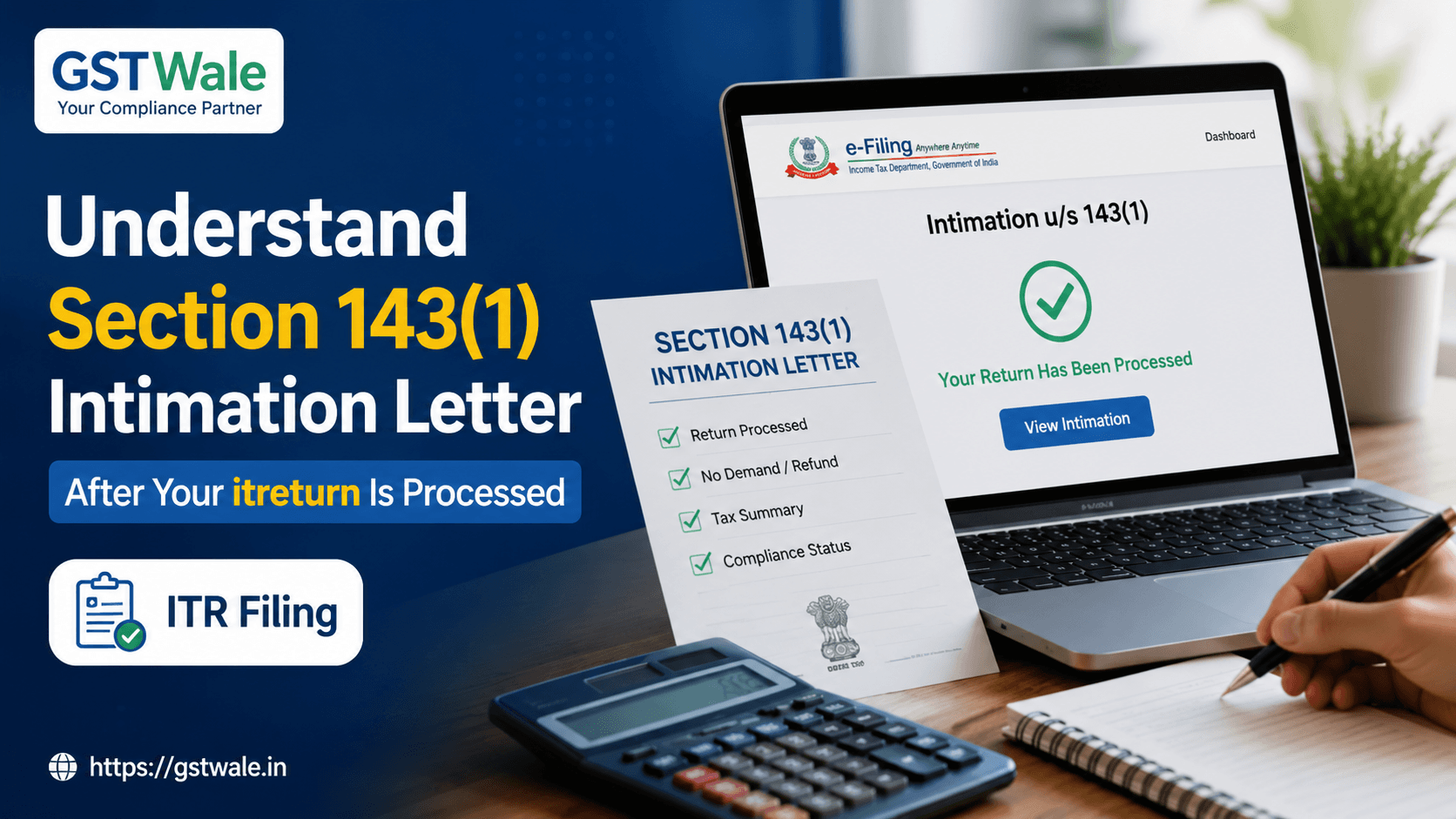
Filing an ITR return is an important responsibility for every taxpayer in India. However, many taxpayers become nervous when they receive an email from the Income Tax Department after their return is processed. One of the most common communications is the Section 143(1) Intimation Letter. While the word “notice” may sound alarming, this intimation is often just a confirmation of the processing of your ITR return.
At GST Wale, we regularly help salaried individuals, freelancers, business owners, and professionals understand tax notices and avoid unnecessary stress. If you have recently completed your ITR Filing and received a Section 143(1) intimation, this guide will help you understand what it means and what actions you may need to take.
What Is Section 143(1) Intimation in an ITR return?
Section 143(1) of the Income Tax Act relates to the preliminary assessment of your ITR return by the Income Tax Department. Once your return is processed electronically, the department compares the details filed by you with the data available in its records.
After verification, an intimation letter is sent to your registered email ID and is also available in the tax portal notices inbox.
This intimation may indicate:
- No discrepancies found
- Refund determined
- Additional tax payable
- Minor corrections made by the department
In simple words, the Section 143(1) intimation is a summary of how your ITR return has been processed.
Why Do You Receive a Section 143(1) Intimation?
The Income Tax Department sends this intimation to inform taxpayers about the outcome of their ITR return processing.
The department checks:
- Income details
- TDS credits
- Tax calculations
- Deductions claimed
- Advance tax payments
- AIS and Form 26AS data
If there is any mismatch or income tax calculation error, the department may make adjustments before finalizing the return.
Types of Outcomes in a Section 143(1) Intimation
No Demand No Refund Intimation
This is the most common and simplest outcome.
If the tax department agrees completely with your ITR return and finds no additional tax liability or refund, the intimation will mention “No Demand No Refund.”
This means:
- Your return is successfully processed
- No further action is required
- Your tax calculations are accepted
A no demand no refund intimation is generally a positive sign for taxpayers.
Refund Determined
If excess tax has been paid through TDS, advance tax, or self-assessment tax, the department may issue a refund.
For example:
- Your employer deducted higher TDS
- You claimed eligible deductions later
- Advance tax paid exceeded actual liability
In such cases, your ITR return processing will show a refund amount along with expected credit details.
Tax Demand Notice
Sometimes, the department may find a mismatch in tax calculations or income reporting. This may result in a tax demand notice.
Common reasons include:
- Incorrect deduction claims
- Missing income entries
- TDS mismatch
- Income tax calculation error
- Incorrect bank interest reporting
If tax is payable, the intimation letter will specify the amount.
Understanding Prima Facie Adjustments in ITR return Processing
One important part of Section 143(1) is prima facie adjustments.
These are basic corrections made by the Income Tax Department during automated processing of the ITR return. The department can make adjustments for obvious errors visible from records.
Examples of prima facie adjustments include:
- Mathematical mistakes
- Incorrect deduction claims
- Mismatch in TDS figures
- Late filing disallowances
- Inconsistency with Form 26AS or AIS
For example, if you claim deductions exceeding the prescribed limit under Section 80C, the department may automatically correct the amount.
These adjustments are usually system-generated and not a detailed scrutiny assessment.
How to Check Section 143(1) Intimation Online
You can easily download your intimation letter from the Income Tax Portal.
Step-by-Step Process
Step 1: Login to the Income Tax Portal
Visit the official income tax portal and login using:
- PAN
- Password
- OTP verification
Step 2: Go to e-File Section
Navigate to:
- e-File
- Income Tax Returns
- View Filed Returns
Step 3: Select Relevant Assessment Year
Choose the assessment year related to your ITR return.
Step 4: Download Intimation Order
You can download the PDF copy of the Section 143(1) intimation.
The same communication is also available in your tax portal notices inbox.
How to Read the Section 143(1) Intimation
Many taxpayers panic because the format looks technical. However, the key is to compare three columns carefully:
- As provided by taxpayer
- As computed under Section 143(1)
- Difference
If there is no difference, your ITR return is accepted as filed.
If differences exist, review the following carefully:
- Total income
- Deductions
- TDS credit
- Tax payable
- Interest charged
What Should You Do After Receiving the Intimation?
If No Action Is Required
If the intimation says:
- No Demand No Refund
- Refund determined correctly
Then generally no action is needed.
Still, keep the intimation safely for future reference.
If Refund Is Delayed
Sometimes taxpayers receive refund approval but the money is delayed.
Check:
- Bank account pre-validation
- PAN-bank linking
- Refund reissue status
If You Receive a Tax Demand Notice
Do not ignore the notice.
First, verify whether the demand is correct.
Compare:
- Form 26AS
- AIS/TIS
- Salary slips
- Tax challans
- Bank interest details
If the demand is valid, pay it within the prescribed timeline.
If the demand is incorrect, you can submit an online response.
Responding to Intimation Under Section 143(1)
Responding to intimation becomes important when you disagree with the department’s adjustments.
Situations Where Response May Be Needed
- Incorrect tax demand
- TDS credit mismatch
- Duplicate income considered
- Wrong prima facie adjustments
- Incorrect disallowance of deductions
How to Respond
You can submit your response online through the income tax portal.
Documents commonly required include:
- Form 16
- Form 26AS
- AIS statement
- Investment proofs
- Tax payment challans
Professional guidance is advisable if the matter involves complex adjustments or higher tax demands.
Common Mistakes Taxpayers Make in ITR return Filing
At GST Wale, we frequently notice avoidable mistakes that later result in notices.
Ignoring AIS and Form 26AS
Many taxpayers file returns without checking income reflected in AIS.
This leads to mismatches later.
Wrong Deduction Claims
Claiming deductions without proper eligibility can trigger prima facie adjustments.
Incorrect TDS Entries
Even a small mismatch in TDS details can create a tax demand notice.
Missing Interest Income
Savings account interest and FD interest are often forgotten while filing an ITR return.
Expert Tips from GST Wale
To avoid issues after filing your ITR return:
- Always reconcile AIS and Form 26AS before filing
- Verify all TDS entries carefully
- Keep supporting documents safely
- File your return before the due date
- Respond to notices promptly
- Track updates regularly in the tax portal notices inbox
Professional review before filing can significantly reduce the chances of notices and adjustments.
FAQs on Section 143(1) Intimation and ITR return
Is Section 143(1) intimation a scrutiny notice?
No. It is not a scrutiny assessment. It is simply an automated processing summary of your ITR return.
What does “No Demand No Refund” mean?
It means your return has been accepted without any additional tax payable or refund due.
Can I ignore a tax demand notice?
No. Ignoring a valid tax demand notice may result in penalties and interest.
How long does it take to receive intimation after filing an ITR return?
Generally, taxpayers receive it within a few weeks to a few months after processing.
What if there is an income tax calculation error in the intimation?
You should verify the details and submit an online response if the calculation appears incorrect.
Receiving a Section 143(1) intimation after your ITR return is processed is completely normal. In many cases, it simply confirms that your return has been accepted successfully. However, taxpayers should carefully review every intimation, especially if it includes prima facie adjustments or a tax demand notice.
Understanding the notice properly can help you avoid unnecessary penalties, disputes, and stress. Whether it is a no demand no refund intimation or a mismatch issue, timely action is always important.
At GST Wale, we help taxpayers handle ITR return filing, notices, tax corrections, and responding to intimation professionally and efficiently. If you need expert support with your income tax matters, our experienced team is ready to guide you at every step.
 Previous