


The Ultimate Checklist: Everything You Need to Know About ITR Filing for Beginners
The Ultimate Checklist: Everything You Need to Know About ITR Filing for Beginners
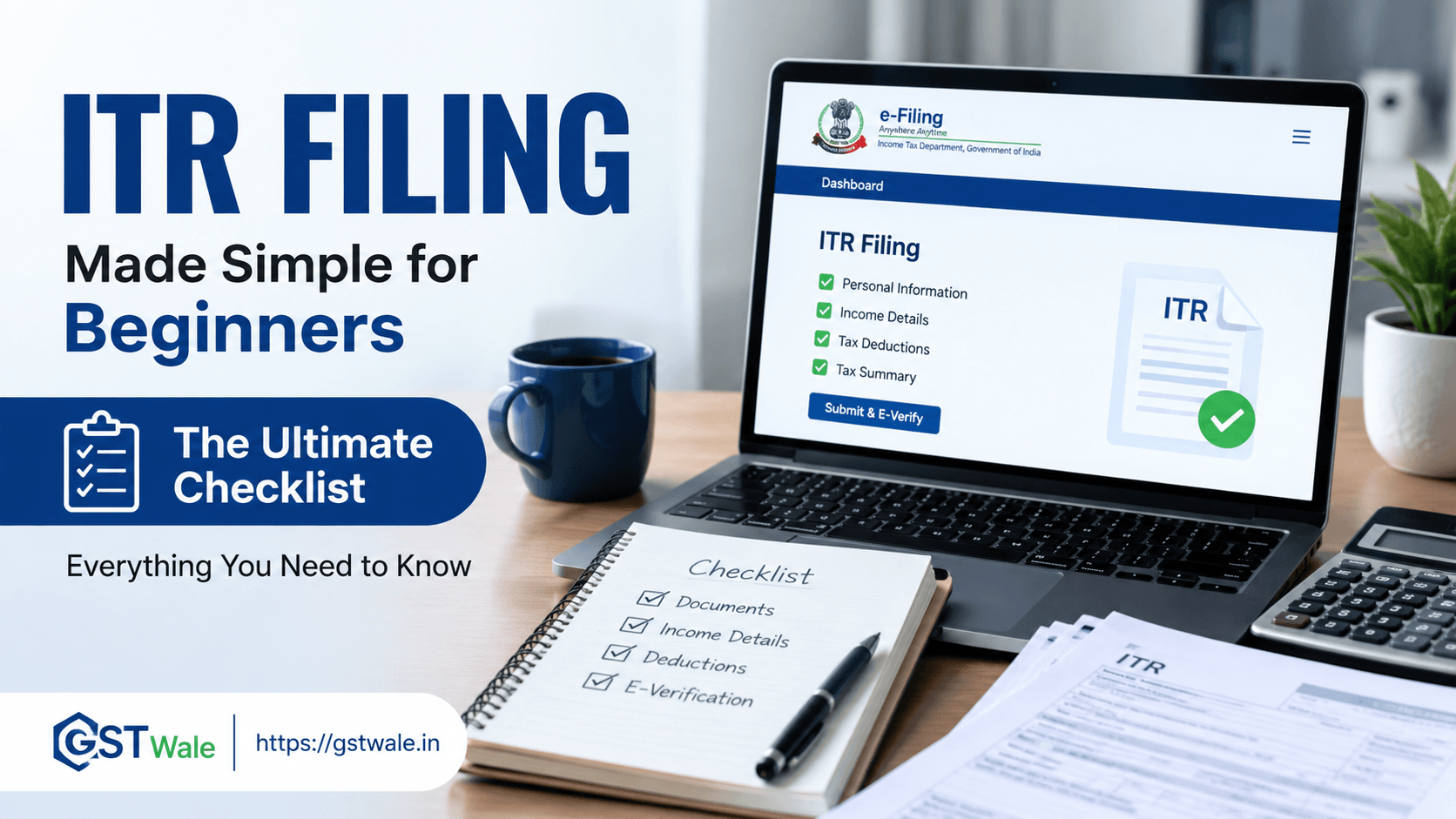
If you are filing your Income Tax Return for the first time, the process can feel confusing and stressful. From choosing the correct form to understanding deductions and e-verification, beginners often struggle with multiple steps involved in itr filing. The good news is that once you understand the basics, the process becomes much simpler.
At GST Wale, we regularly help salaried employees, freelancers, small business owners, and professionals complete their tax compliance smoothly. Whether you have salary income, business income, or income from investments, proper itr filing ensures you stay legally compliant and avoid future notices from the Income Tax Department.
If you need expert support for your ITR Filing, our team at GST Wale can help you file accurately and on time without unnecessary complications.
In this beginner-friendly guide, we will walk you through everything you need to know before filing your return in India.
Why ITR Filing Is Important for Every Taxpayer
Many people think itr filing is necessary only if they have high income. That is not true. Filing your return offers several benefits even if your taxable income is low.
Here’s why itr filing matters:
- Helps in easy loan approval
- Required for visa applications
- Acts as proof of income
- Helps claim tax refunds
- Avoids penalties and notices
- Maintains proper financial records
For example, if TDS was deducted from your salary income but your total income falls below the taxable limit, you can claim a refund only after filing your ITR.
Who Should File an Income Tax Return?
You should consider itr filing if:
- Your income exceeds the basic exemption limit
- You are a salaried employee
- You are a freelancer or consultant
- You run a business or startup
- You earn rental income
- You have capital gains from shares or property
- You want to claim a tax refund
Even students and homemakers may need itr filing if they have investment income or foreign transactions.
Understanding Tax Bracket Before ITR Filing
Before filing your return, you must understand which tax bracket applies to you. India currently offers two tax regimes:
Old Tax Regime
This regime allows taxpayers to claim deductions and exemptions such as:
- House Rent Allowance (HRA)
- Leave Travel Allowance (LTA)
- Section 80C deductions
- Medical insurance under Section 80D
New Tax Regime
The new regime offers lower tax rates but fewer deductions.
Choosing the correct tax bracket is important because it directly affects your tax liability. Many salaried employees benefit from the old regime if they invest heavily in tax saving instruments.
Document Checklist for Beginners
One of the biggest mistakes during itr filing is missing important documents. Keeping your paperwork ready saves time and reduces errors.
Essential Document Checklist
Keep the following documents ready:
- PAN Card
- Aadhaar Card
- Bank account details
- Form 16 from employer
- Salary slips
- Interest certificates from banks
- Investment proofs
- Home loan statements
- Capital gains statements
- Rent receipts (if applicable)
If you are self-employed, keep your profit and loss records and expense details ready.
A proper document checklist ensures smooth and accurate itr filing without last-minute stress.
How to Choose the Correct ITR Form
Selecting the correct ITR form is extremely important.
ITR-1 (Sahaj)
Suitable for individuals having:
- Salary income
- One house property
- Income below ₹50 lakh
- Other income like savings interest
ITR-2
Used by individuals with:
- Capital gains
- Multiple properties
- Foreign income
ITR-3
Applicable for:
- Business owners
- Freelancers
- Professionals
ITR-4 (Sugam)
Suitable for presumptive income schemes under Sections 44AD, 44ADA, and 44AE.
Filing the wrong form may result in defective returns and notices from the department.
Important Deductions You Should Know
Tax planning can significantly reduce your liability. During itr filing, beginners should pay attention to available deductions.
Section 80C Deductions
Under section 80C, you can claim deductions up to ₹1.5 lakh through:
- ELSS mutual funds
- PPF
- LIC premium
- Tax-saving FD
- EPF contributions
- Tuition fees
Other Useful Deductions
Section 80D
Medical insurance premium deduction.
Section 24(b)
Home loan interest deduction.
Section 80G
Donations to eligible charitable institutions.
Using proper tax saving instruments helps reduce taxable income legally.
Step-by-Step Process of ITR Filing
Let’s simplify the itr filing process for beginners.
Step 1: Collect Documents
Prepare your complete document checklist before starting.
Step 2: Verify Form 26AS and AIS
Cross-check:
- TDS details
- Salary income
- Interest income
- Investment details
Mismatch in records may trigger notices.
Step 3: Choose Correct Tax Regime
Compare old and new tax regimes carefully.
Step 4: Select the Correct ITR Form
Choose the applicable return form based on your income source.
Step 5: Enter Income Details
Declare:
- Salary income
- Interest income
- Rental income
- Capital gains
- Business income
Step 6: Claim Deductions
Add deductions under section 80C and other sections.
Step 7: Pay Outstanding Tax
If any tax remains unpaid, clear it before submission.
Step 8: Submit and Complete E-Verification
After submission, complete e-verification using:
- Aadhaar OTP
- Net banking
- Bank account validation
- Demat account
Without e-verification, your itr filing remains incomplete.
Common Mistakes Beginners Should Avoid
Even small mistakes can delay refunds or trigger notices.
Incorrect Personal Details
Wrong PAN, Aadhaar, or bank details can create issues.
Missing Income Disclosure
Do not ignore:
- Savings account interest
- Freelance income
- Fixed deposit interest
Choosing Wrong Tax Regime
Many taxpayers select the wrong regime without proper calculation.
Ignoring AIS and Form 26AS
Always reconcile your income records.
Delaying Password Reset
Many taxpayers face login issues during filing season. Keep your registered mobile number and email updated to avoid password reset problems on the income tax portal.
What Happens After Filing Your Return?
Once your itr filing is completed and e-verification is done:
- The department processes your return
- Refund is issued if excess tax was paid
- Intimation under Section 143(1) is generated
Usually, refunds are processed faster when returns are filed correctly and early.
Benefits of Filing ITR Early
Avoid waiting until the last date. Early itr filing offers several advantages.
Faster Refunds
Returns filed early are generally processed quickly.
Better Financial Planning
You get a clear picture of your tax liability.
Reduced Errors
Last-minute filing often leads to mistakes.
Avoid Penalties
Late filing may attract penalties and interest.
For beginners, itr filing may initially seem technical, but with the right guidance and proper planning, it becomes manageable. Understanding your tax bracket, preparing a proper document checklist, selecting the correct form, and completing e-verification are the key steps toward hassle-free compliance.
At GST Wale, we believe taxpayers should focus on growing their income while experts handle compliance smoothly. Whether you are a salaried employee, freelancer, or business owner, our experienced professionals can simplify your itr filing process and help you avoid costly mistakes.
Get in touch with GST Wale today for reliable, accurate, and stress-free tax filing support.
 Previous