


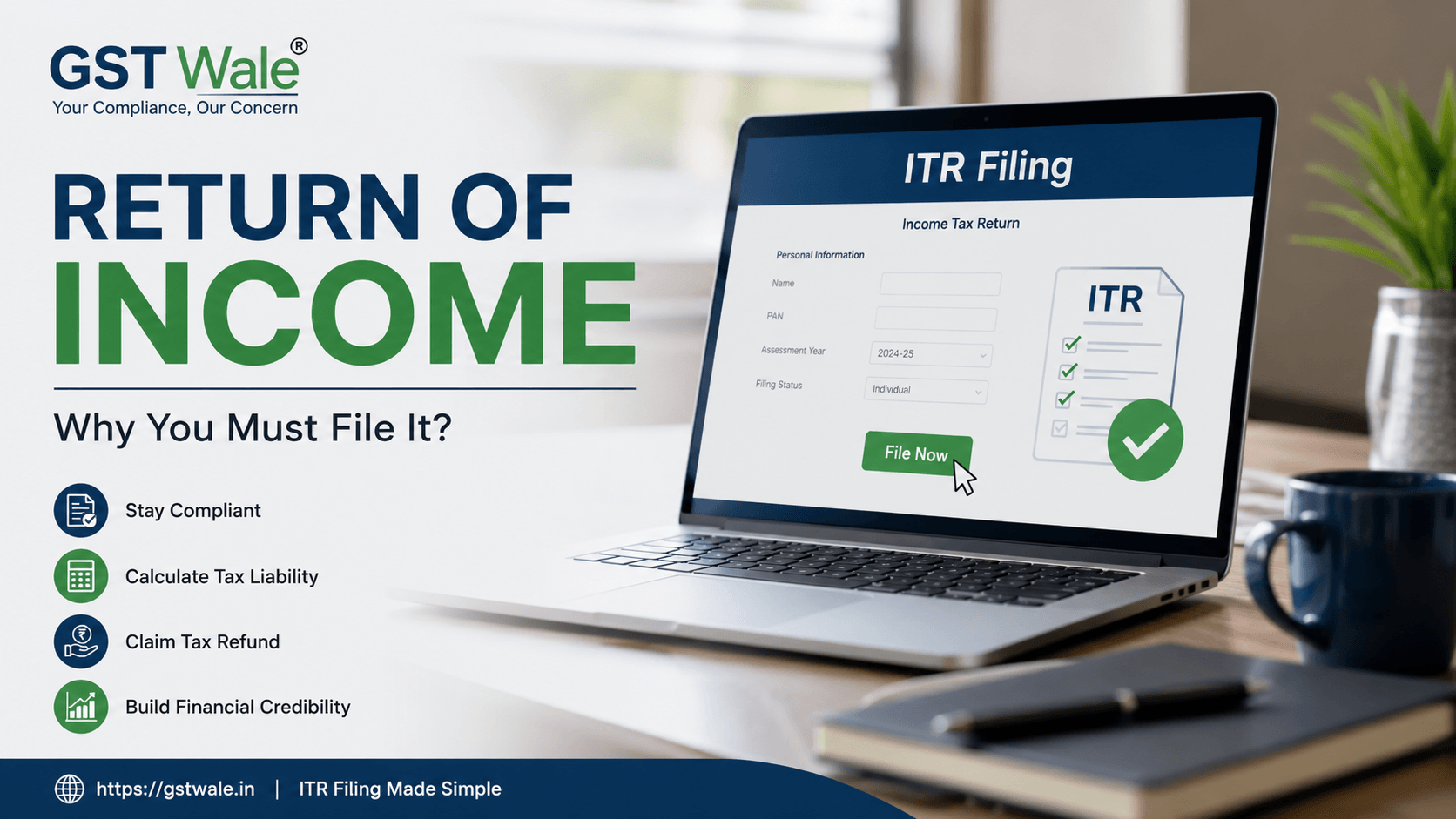
Understanding the Basics: What Is a Return of Income and Why Must You File It?
Understanding the Basics: What Is a Return of Income and Why Must You File It?
When people hear the term return of income, many assume it is just another tax-related formality that applies only to large businesses or high-income individuals. In reality, it is an important financial document that affects almost every taxpayer in India. Whether you are a salaried employee, freelancer, small business owner, startup founder, or self-employed professional, understanding the concept can save you from penalties and unnecessary complications later.
At GST Wale, we often meet individuals who delay filing because they believe they do not have enough income or because they think taxes are only about payments to the government. Filing taxes is much more than that. Proper ITR Filing helps create a reliable financial history and ensures compliance with tax laws.
In this article, we will explain the basics of return of income, why it matters, who should file it, and the practical benefits of staying compliant.
What Is a Return of Income?
A return of income is a document submitted to the Income Tax Department that contains details of a person's earnings, deductions, taxes paid, and overall tax calculation during a financial year.
Simply put, it is a declaration of your income and tax-related information to the government.
The document generally includes:
- Salary income
- Business or professional income
- Rental income
- Capital gains
- Interest earned from banks
- Tax deductions and exemptions
- Taxes already paid
After submitting the return of income, the tax department determines whether you have paid the correct amount of tax, owe additional tax, or are eligible for a refund.
Why Filing a Return of Income Is Important
Many taxpayers think filing is only necessary when taxes are due. However, the importance goes far beyond paying taxes.
It Helps You Stay Legally Compliant
The government has specific rules regarding mandatory filing requirements. Failure to comply may result in:
- Penalties
- Interest charges
- Notices from the tax department
- Difficulties in future financial transactions
Staying compliant protects you from unnecessary legal stress.
It Creates a Financial Footprint
A return of income creates a reliable financial footprint that becomes useful for several purposes:
- Applying for home loans
- Seeking business loans
- Obtaining visas
- Credit card approvals
- Investment verification
Banks and financial institutions often ask for previous years' tax returns before approving financial products.
Helps Claim Tax Refunds
Suppose your employer deducted excess TDS from your gross salary, or your bank deducted tax on interest income.
If you do not file your return of income, you may lose the opportunity to claim your refund.
Carries Forward Business or Capital Losses
Business owners and investors can carry forward certain losses to future years only if returns are filed within prescribed timelines.
For example:
Rahul owns a small trading business and incurred losses during the year. Since he filed his return of income on time, he can use those losses to reduce future tax burdens.
Who Needs to File a Return of Income?
The requirement depends on several conditions and not only on earnings.
Generally, filing becomes necessary if:
- Your gross total income exceeds prescribed limits
- You run a business or profession
- TDS has been deducted from your income
- You have foreign assets or foreign income
- You want to claim tax refunds
- You want to carry forward losses
- Specific regulatory conditions apply
Even if your income falls below the limit, filing may still be beneficial.
Understanding Gross Total Income and Taxable Income
People often get confused between these terms.
Gross Total Income
Gross total income refers to the total income earned from all sources before deductions.
Examples include:
- Salary
- Business profits
- Rental earnings
- Interest income
- Capital gains
Taxable Income
Taxable income is the amount left after applying eligible deductions and tax exemption benefits.
For example:
Suppose Priya earns:
- Annual gross salary: ₹8,50,000
- Interest income: ₹20,000
Total income becomes:
₹8,70,000
Now assume she claims deductions under eligible sections amounting to ₹1,50,000.
Her taxable income becomes:
₹7,20,000
The return of income captures all these details and calculates actual tax liability.
Situations Where Return Filing Is Commonly Ignored
At GST Wale, we regularly see taxpayers making assumptions that later create issues.
Freelancers and Consultants
Many freelancers believe that because no employer exists, they do not need tax filing support.
But freelance earnings are still taxable and should be reported properly.
Small Business Owners
Business owners sometimes avoid filing when profits are low.
However, maintaining proper records through a return of income helps establish business credibility.
Young Salaried Individuals
Fresh employees often assume their employer handles everything.
While TDS may be deducted, filing remains important for:
- Refund claims
- Correct income reporting
- Future financial requirements
Step-by-Step Process of Filing a Return of Income
Understanding the process makes things easier.
Step 1: Gather Income Documents
Collect:
- Salary statements
- Form 16
- Bank statements
- Interest certificates
- Investment details
- Business income records
Step 2: Calculate Total Income
Add income from all relevant sources.
Step 3: Apply Deductions and Tax Exemptions
Identify available deductions and tax exemption benefits.
Step 4: Determine Tax Liability
Calculate final tax liability after deductions.
Step 5: Submit the Return
File the return of income accurately within prescribed timelines.
Step 6: Verify the Return
Verification completes the filing process.
Common Mistakes to Avoid While Filing
Many filing errors happen due to lack of awareness.
Avoid these mistakes:
- Ignoring small income sources
- Reporting incorrect bank details
- Missing deduction claims
- Filing under the wrong category
- Delaying filing beyond deadlines
- Not checking tax calculations
Even small mistakes can create notices or delays.
FAQs
Is filing a return compulsory if I have no tax liability?
Not always. However, certain conditions trigger mandatory filing, and filing can still offer benefits such as refunds and financial record building.
Can I file a return of income even if my income is below taxable limits?
Yes. Many individuals voluntarily file a return of income to maintain financial records and support future applications.
What happens if I miss the due date?
Delayed filing may result in penalties, interest, and loss of certain tax benefits.
Does a salaried employee need to file separately if TDS is already deducted?
In many situations, yes. TDS deduction alone does not eliminate the need to file.
Why do banks ask for income tax returns?
Banks use them to verify income consistency and assess repayment capability.
Understanding the basics of return of income is not just about following tax rules. It is about maintaining financial discipline, creating a strong financial footprint, avoiding compliance issues, and making future financial activities easier.
Whether you are a salaried individual, freelancer, or business owner, timely filing helps you stay ahead and avoid unnecessary stress. A properly filed return of income also ensures that your tax liability is calculated correctly and that you receive all eligible benefits.
At GST Wale, we simplify the process and help individuals and businesses file accurately without confusion. If you want expert assistance, personalised guidance, and hassle-free support, connect with GST Wale today and keep your tax journey smooth and compliant.
 Previous