


Salaried Employee Special: The Efile ITR Guide for Form 16 Holders
Salaried Employee Special: The Efile ITR Guide for Form 16 Holders
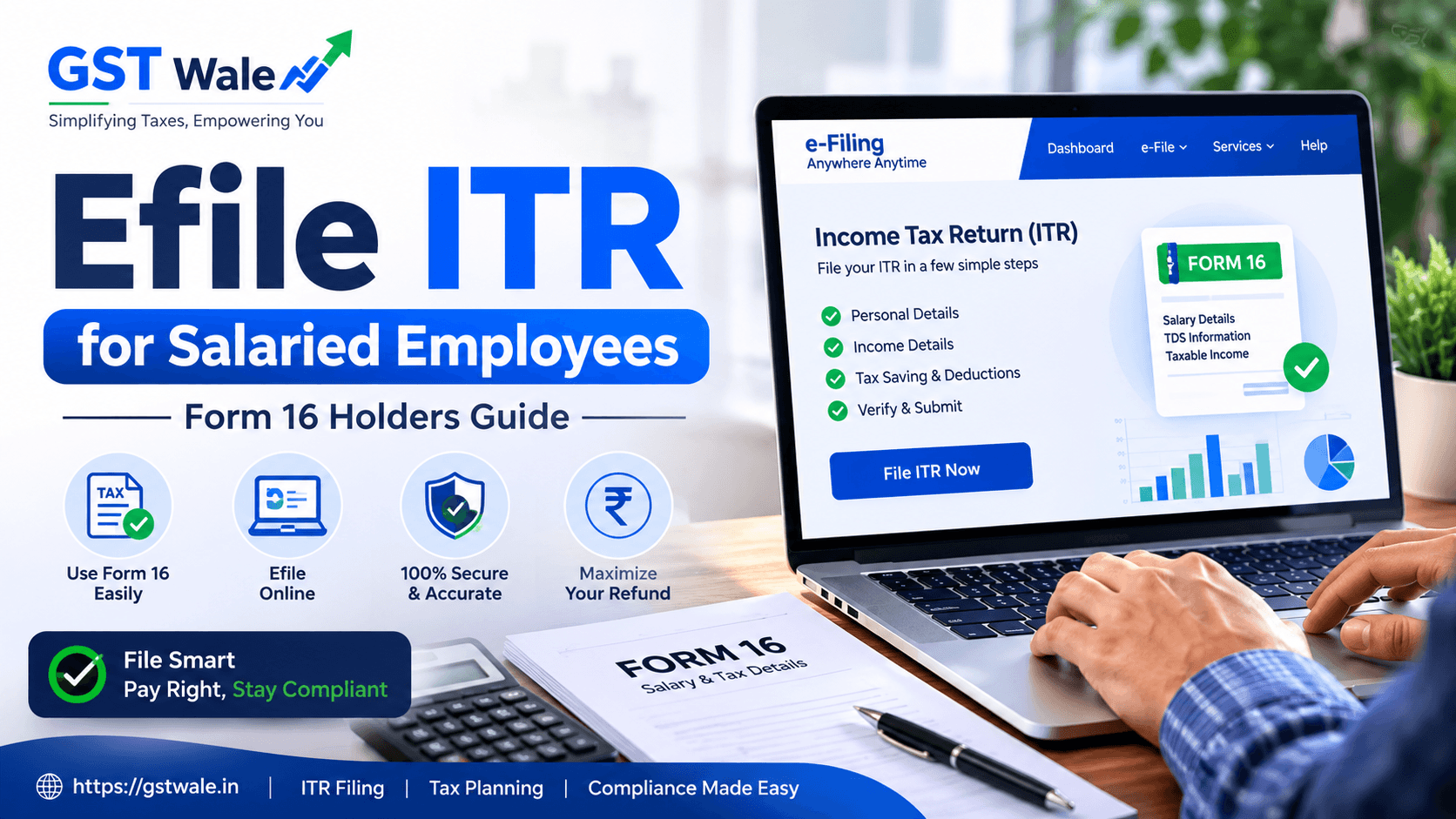
It’s that time of the year again when salaried individuals start scratching their heads over their tax liabilities. If you are a salaried employee, your Form 16 is your best friend during this season. Understanding how to efile itr accurately is not just about avoiding penalties; it is about ensuring you pay the right amount of tax and, more importantly, getting your hard-earned refunds on time. At GST Wale, we believe that tax compliance shouldn't be a nightmare, which is why we offer professional ITR Filing services to take the burden off your shoulders. Let’s dive into how you can navigate the process smoothly.
Understanding Form 16 and Its Role in Your Taxes
Many employees receive their Form 16 and stash it away, assuming the tax deducted by the employer is the final word. However, as a professional CA, I often see cases where tax positions change or additional income streams are missed.
Form 16 is essentially a certificate issued by your employer detailing the salary paid and the tax deducted at source (TDS). When you sit down to efile itr, this document acts as your primary roadmap. It tells the Income Tax Department exactly what your employer has already reported. Your job is to verify that these figures match your bank statements and salary slips before you hit the submit button.
Step-by-Step Guide to Efile ITR for Salaried Professionals
The process to efile itr has become significantly more streamlined on the e-filing portal over the years, but the documentation requires precision. Follow these steps to ensure your return is error-free.
1. Gather Your Financial Documents
Before logging into the portal, keep these documents handy:
Form 16: Provided by your employer.
Form 26AS & AIS/TIS: These can be downloaded from the Income Tax portal. They provide a consolidated view of all TDS deducted and high-value transactions linked to your PAN.
Investment Proofs: Details of life insurance premiums, PPF, ELSS, or home loan interest—essential to claim tax deductions effectively.
2. Choose the Right ITR Form
For most salaried employees, ITR-1 (Sahaj) is the standard form. However, if you have capital gains, multiple house properties, or foreign income, you may need to file ITR-2. Choosing the wrong form is a common mistake that leads to notices from the IT Department.
3. Login and Verify Data
Once you log in, navigate to the e-filing tab. Many of your details will be pre-filled based on your Form 16. However, do not just click "Submit." You must verify that the income details, TDS, and bank account information are accurate. When you efile itr, you are personally declaring that all information is correct to the best of your knowledge.
Common Mistakes to Avoid When You Efile ITR
Even the most diligent taxpayers can slip up. As someone who handles income tax for employees daily, here are the pitfalls I suggest avoiding:
Ignoring Income from Other Sources: Many think salary is the only income. Don’t forget interest from savings accounts, dividends, or rental income. These must be included in your salaried tax return.
Incorrect Bank Account Validation: If your bank account is not pre-validated on the portal, your income tax refund will be stuck.
Missing Out on Deductions: Many employees forget to report health insurance premiums (under Section 80D) or donations, which could lower their overall tax outgo.
Delaying Verification: Once you efile itr, the process isn't complete until you e-Verify the return using Aadhaar OTP or net banking.
Why Professional Assistance Matters
While the government has made the portal user-friendly, tax laws are dynamic. Whether it is navigating the transition between the Old Tax Regime and the New Tax Regime or ensuring you are eligible for specific allowances, professional guidance can help you optimize your tax strategy.
At GST Wale, we don’t just fill out forms; we analyze your financial profile to ensure you are compliant and efficient with your Form 16 filing.
Frequently Asked Questions (FAQs)
What is the deadline to efile itr for salaried employees?
Generally, for individuals not subject to a tax audit, the deadline is July 31st of the assessment year. Always check for official extensions.
Can I revise my return after I efile itr?
Yes, under Section 139(5), you can file a revised return if you discover an omission or a wrong statement in your original filing, provided the time limit has not expired.
Is it mandatory to efile itr if my tax is already deducted?
Yes. Even if your entire tax liability is covered by TDS, filing an ITR is the only way to formally declare your income, claim potential refunds, and maintain a clean financial record.
Do I need to submit hard copies of my documents?
No, the process is entirely digital. You do not need to submit physical copies to the Income Tax Department; however, you should maintain digital records for at least six years.
Taking control of your finances is the first step toward wealth management. Learning to efile itr correctly empowers you to manage your taxes without stress. However, if you feel overwhelmed by the complexities of the tax codes or simply want to ensure your online ITR submission is perfectly optimized, we are here to help.
At GST Wale, we specialize in making tax filing seamless, transparent, and accurate. Don't leave your tax compliance to chance. Reach out to us today, and let our experts handle your filings so you can focus on what you do best—growing your career.
 Previous