


Old vs. New Tax Regime: Which One Lowers Your Income Tax Filing Liability?
Old vs. New Tax Regime: Which One Lowers Your Income Tax Filing Liability?
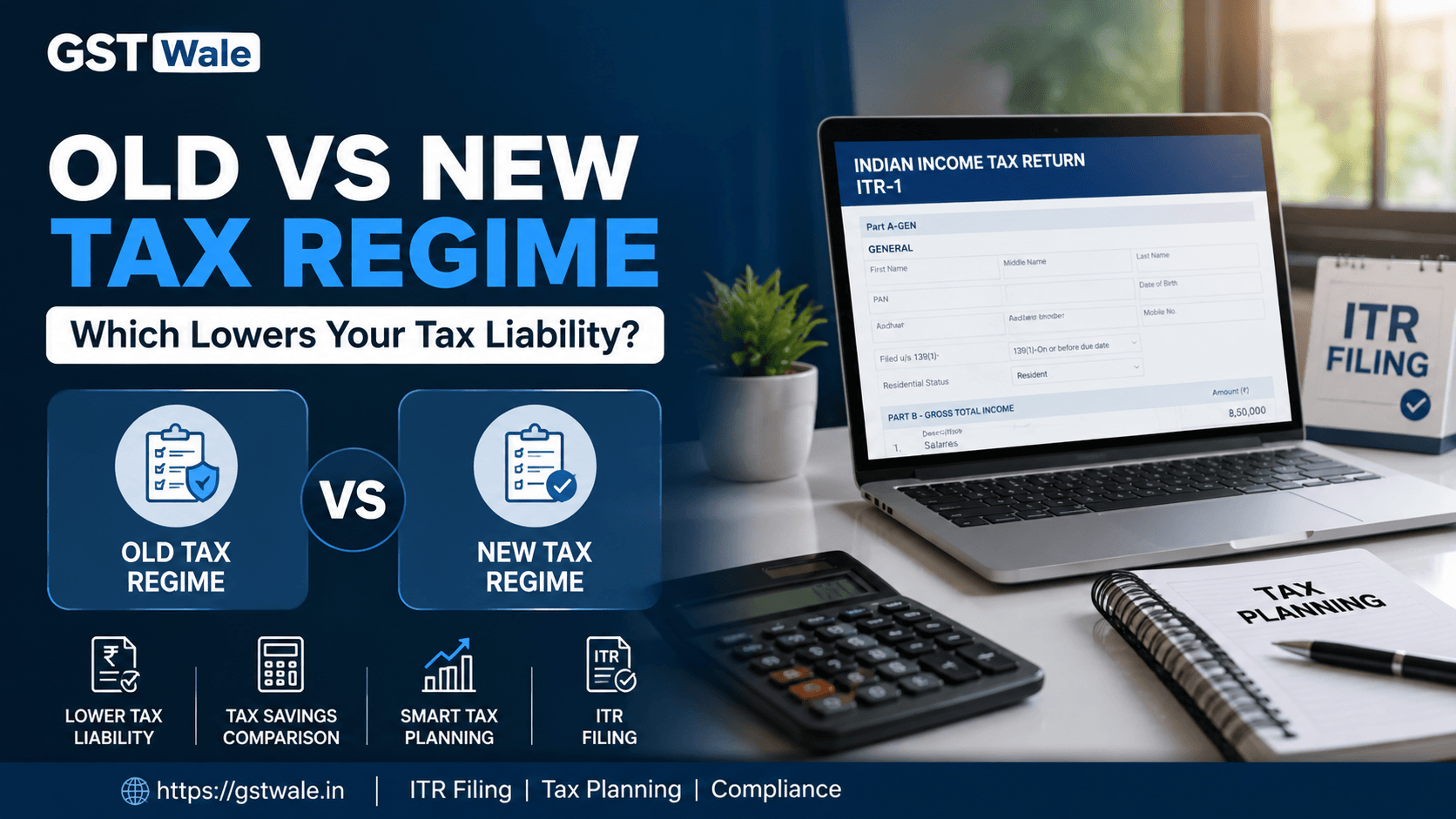
Old vs. New Tax Regime: Which One Lowers Your Income Tax Filing Liability?
When it comes to income tax filing, one of the biggest questions taxpayers face is whether to choose the old tax regime or the new tax regime. The answer is not the same for everyone. Your salary structure, deductions, investments, and financial goals all play an important role in deciding which option saves you more tax.
At GST Wale, we regularly help salaried individuals, professionals, and business owners make the right choice during income tax filing. If you're planning your taxes or preparing your ITR Filing , understanding the difference between these two regimes can help you avoid paying more tax than necessary.
In this guide, we'll compare both tax regimes, explain who benefits from each, and share practical tips to help you make an informed decision.
Why Choosing the Right Tax Regime Matters for Income Tax Filing
Selecting the correct tax regime directly affects your income tax filing liability. A wrong choice could mean paying thousands of rupees more in taxes every year.
The government introduced the new tax regime to simplify taxation by offering lower tax rates while removing most deductions and exemptions. On the other hand, the old regime continues to reward taxpayers who actively invest and claim eligible deductions.
Before filing your return, always compare both options instead of selecting one by default.
Understanding the Old Tax Regime
The old tax regime has been in place for many years and allows taxpayers to reduce taxable income through various deductions and exemptions.
Major Benefits
Some of the most commonly used benefits include:
- Standard deduction
- Section 80C investments
- Section 80D medical insurance deduction
- HRA exemption
- Leave Travel Allowance (LTA)
- Home loan interest deduction
- Education loan interest
- Donations under Section 80G
These deductions make the old regime attractive for taxpayers who already invest regularly or pay housing rent and insurance premiums.
Understanding the New Tax Regime
The new regime offers simplified taxation with lower tax rates but removes most deductions and exemptions.
The government has also introduced revised new tax slabs, making this regime the default option for many taxpayers.
Key Features
- Lower income tax rates
- Fewer exemptions
- Simplified compliance
- Reduced paperwork
- Suitable for taxpayers with limited deductions
Recent changes have also made the new regime more attractive by allowing the standard deduction, providing additional relief to salaried employees.
Old vs. New Tax Regime Comparison
A proper tax regime comparison should always consider your actual financial situation instead of just looking at tax rates.
| Particular | Old Tax Regime | New Tax Regime |
|---|---|---|
| Tax Rates | Higher | Lower |
| Standard Deduction | Available | Available |
| Section 80D | Available | Not Available (except specified cases) |
| HRA Exemption | Available | Not Available |
| Home Loan Benefits | Available | Mostly Not Available |
| Investment-Based Savings | High | Limited |
| Compliance | Slightly Complex | Simpler |
Who Should Choose the Old Tax Regime?
The old regime generally benefits taxpayers who claim multiple deductions.
It may be suitable if you:
- Invest under Section 80C
- Claim section 80D for health insurance
- Receive HRA exemption
- Pay home loan interest
- Make regular tax-saving investments
- Want structured tax planning
Practical Example
Suppose Rahul earns ₹12 lakh annually.
He claims:
- Standard deduction
- ₹1.5 lakh under Section 80C
- ₹25,000 under Section 80D
- HRA exemption
- Home loan interest
In this case, the old regime may significantly reduce his income tax filing liability.
Who Should Choose the New Tax Regime?
The new regime often works better for taxpayers who don't claim many deductions.
It may be ideal if you:
- Are a young salaried employee
- Have limited investments
- Don't pay house rent
- Don't claim home loan benefits
- Prefer simple income tax filing
- Want minimal documentation
Practical Example
Priya earns ₹9 lakh annually.
She:
- Lives in her own house
- Doesn't invest much under Section 80C
- Doesn't claim HRA
- Has no major deductions
The new regime may provide lower tax with simpler income tax filing.
How the Standard Deduction Impacts Your Tax
One major improvement in recent years is that the standard deduction is now available under both tax regimes.
This means salaried employees receive a fixed deduction without maintaining additional investment proofs.
However, the availability of other deductions still differs significantly, making overall tax calculation important before finalizing your income tax filing.
Section 80D and HRA Exemption: Major Decision Factors
Two deductions often influence regime selection.
Section 80D
Medical insurance premiums can reduce taxable income under the old regime.
This benefit becomes especially valuable for:
- Families with senior citizens
- Self-employed professionals
- Individuals paying higher insurance premiums
HRA Exemption
Employees living in rented accommodation can claim substantial tax savings through HRA exemption under the old regime.
If your monthly rent is significant, this deduction alone may justify choosing the old regime.
Why a Tax Calculator Is Essential Before Income Tax Filing
Instead of guessing, always use a reliable tax calculator before submitting your return.
A tax calculator helps you:
- Compare both tax regimes
- Estimate total tax payable
- Evaluate deductions
- Avoid incorrect regime selection
- Improve income tax filing accuracy
Even a small change in deductions can make one regime significantly more beneficial than the other.
Tax Planning Tips to Reduce Your Tax Liability
Good tax planning starts well before the financial year ends.
Here are some practical suggestions:
- Review your salary structure annually.
- Track eligible deductions throughout the year.
- Invest early instead of waiting until March.
- Compare both regimes every financial year.
- Use a tax calculator before filing.
- Keep supporting documents ready.
- Consult a tax expert if your income sources are multiple.
Remember, effective tax planning isn't about avoiding tax—it's about paying only what you're legally required to pay.
Common Mistakes During Income Tax Filing
Many taxpayers unknowingly increase their tax liability.
Avoid these mistakes:
- Choosing a regime without comparison
- Ignoring available deductions
- Forgetting health insurance benefits
- Miscalculating HRA exemption
- Not reviewing updated new tax slabs
- Filing returns without proper verification
- Relying on assumptions instead of calculations
A little preparation can make your income tax filing more accurate and financially beneficial.
Frequently Asked Questions
Which tax regime is better for income tax filing?
It depends on your deductions, exemptions, salary structure, and investments. Comparing both options before income tax filing is always recommended.
Can I switch between the old and new tax regimes?
Salaried individuals generally have flexibility to choose each financial year, subject to applicable tax rules. Business taxpayers should review the specific conditions before changing regimes.
Is the standard deduction available in both tax regimes?
Yes. The standard deduction is available under both the old and new tax regimes for eligible salaried taxpayers.
Does the new tax regime allow Section 80D deduction?
Generally, section 80D deductions for health insurance are not available under the new tax regime, except where specifically permitted under applicable provisions.
Should I use a tax calculator before filing?
Yes. A tax calculator helps compare both regimes and estimate your final tax liability, making income tax filing more accurate.
Choosing between the old and new tax regime is one of the most important decisions during income tax filing. While the old regime rewards taxpayers who actively claim deductions like section 80D, HRA exemption, and other benefits, the new regime offers simplified taxation with attractive new tax slabs.
There is no universal answer. The right choice depends entirely on your income, investments, deductions, and long-term financial goals. Reviewing both options every year ensures you don't pay more tax than necessary.
If you're unsure which regime is right for you, GST Wale is here to help. Our experienced tax professionals provide personalized guidance, accurate calculations, and hassle-free return filing so you can complete your income tax filing with confidence. Get in touch with GST Wale today and let our experts help you maximize your tax savings while ensuring complete compliance.
 Previous